
Pauline Hanson and the frightening lesson of ‘Years and Years’
Posted on 07 Oct 2026
Our Community's founder and leader, Denis Moriarty, writes that when he watched an over-the-top…
Posted on 07 Jun 2023
By Greg Thom, journalist, Our Community

Smartphone and social media addiction is relentlessly fraying the bonds of community, with potentially dire consequences for workplace productivity and interpersonal relationships, according to the federal government minister responsible for the charitable sector.
Assistant Minister for Charities Andrew Leigh lamented the statistics showing plunging rates in everything from participation in sport to volunteering, which he said are at their lowest levels in a decade.
“Over the past generation, Australians have been less likely to join organised groups. We've seen a decline in membership of scouts, guides, Rotary clubs and the RSL,” said Mr Leigh.
This trend extended to unions, religious groups and political parties.
“If you ask people are they an active member of any organisation, they're less likely to say yes now,” said Mr Leigh.
“Australia has increasingly moved from a country of ‘we’ towards a nation of ‘me.’”
Speaking before a diverse group of NFP and community group representatives at the Connecting Leaders, Connecting Communities event in Melbourne, Mr Leigh intimated to delegates that community connection requires more than just a social media account.
Yet for many Australians, social media obsession is replacing face-to-face interactions with real people.
“If you're trans and living in a regional part of Australia, then joining a Facebook group of like-minded people might be an incredibly important source of community,” said Mr leigh.
“[But too often] checking your mentions [on social media] can become a substitute for phoning a friend... Engaging in a Twitter war can be a substitute for attending a local council meeting,” he said.
“Too much of so-called political engagement has that character. People sitting on the sidelines cheering or jeering rather than actually getting involved in what’s going on.”
Mr Leigh said he believed the use of mobile technology was directly linked to two of the greatest problems facing Australia today – social disconnection and declining productivity.
Exploring the massive impact technology has had in the workplace, Mr Leigh said this had come at the expense of productivity levels in some cases, citing the deluge of email many workers face each day.
“It might be that computerised technologies which we once thought were going to be the source of massive productivity gains have actually now become one of the biggest drags on productivity in the workplace.”
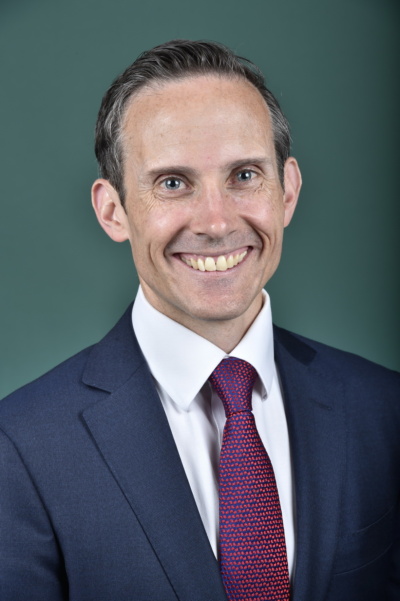
Just as deep work was required to achieve the right balance between technology and productivity at work, an equal level of effort was needed to nurture social interaction and interpersonal relationships in our daily lives, he said.
“[If] we think that we can do politics through Twitter or do community building through online petitions without the face-to-face interactions, then we lose something that makes the glue stick. We lose the ability to mobilise society.”
Mr Leigh also said social media and smartphone addiction could have a negative impact on mental health, particularly among teenagers, a population in which levels of anxiety and self-harm were rising.
“If you look at the mental well-being of teenagers, it's plummeted over the course of the past 10 to 15 years.
“Teens in many cases are talking about the damage that social media and devices are doing to their mental health. The direct lived experience of many people in dealing with these devices is real.”
Mr Leigh described smartphones as “extraordinarily addictive”.
“The temptation to spend time with them is stronger than the willpower of many of us, so it shouldn't be surprising that the time use statistics are going through the roof.”
Mr Leigh said far from being anti-technology himself, he believed it was vital Australians find the right balance and address the challenge of making technology work in their own lives.
“I love technology. I’m a happy adopter of many new innovations. But I do think that unless we use technology intentionally, then the new online technologies and social media could make us a less productive and less connected society.
“If we're to rebuild community in Australia – and my passion as an assistant charities minister is to work on rebuilding community – then we need to figure out how to do so in an era of technological construction.
“We need to figure out how to provide opportunities for people to come together as we are.”
Mr Leigh was speaking at an event organised by leadership-focused not-for-profits the Australian Scholarships Foundation and Kilfinan.
More information
Not-for-profits now more at home with tech tools, but cyber threats are rising
Better together: How the federal budget will build a stronger community
Posted on 07 Oct 2026
Our Community's founder and leader, Denis Moriarty, writes that when he watched an over-the-top…

Posted on 07 Oct 2026
A major public campaign launched this morning is calling on the federal government to restore…
Posted on 07 Oct 2026
The Australian Literacy & Numeracy Foundation (ALNF) has announced a partnership with mining…
Posted on 07 Oct 2026
A conference in Darwin will this morning hear detailed, strategic plans for how Australia could…
Posted on 07 Oct 2026
Joseph Friedman is co-founder and publisher of About Time, Australia’s only newspaper for…
Posted on 30 Sep 2026
There's been a lot of talk about AI this week, and some of it has been frightening. So, is AI good…

Posted on 30 Sep 2026
After the biggest AFL game of the year, one player proudly wore the flag of his birth country and…

Posted on 30 Sep 2026
At 21 years old, Tate Donohoe is the founder of Ecodia, an AI-assisted software development company…

Posted on 30 Sep 2026
Not-for-profit leaders have been warned to be wary of approaches from potential “funding partners”…
Posted on 30 Sep 2026
More than 200 fully funded Centre for Social Impact (CSI) scholarships will help equip for-purpose…

Posted on 30 Sep 2026
Personal stories are among the most powerful tools a charity can have to raise funds and awareness,…

Posted on 23 Sep 2026
In his new book Our Place, policy expert Matt Lloyd-Cope argues that housing must be at the heart…