Pauline Hanson and the frightening lesson of ‘Years and Years’
Posted on 07 Oct 2026
Our Community's founder and leader, Denis Moriarty, writes that when he watched an over-the-top…
Posted on 27 Nov 2023
By Greg Thom, journalist, Institute of Community Directors Australia
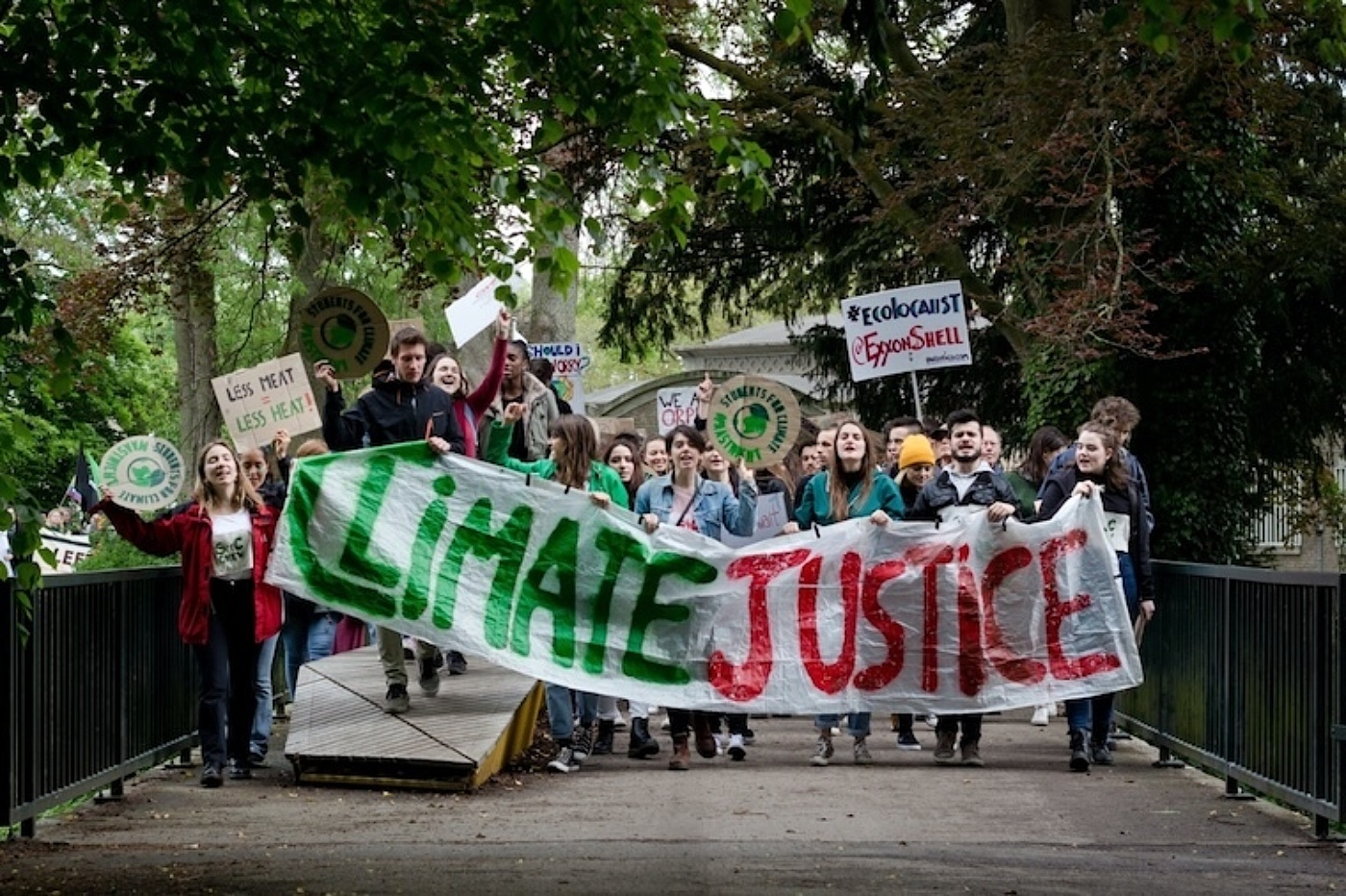
Human rights groups have united to call on governments across the nation to protect the rights of Australians to take to the streets in protest.
The unprecedented move comes amid the introduction of a range of anti-protest laws across Australia.
In response to what it has described as anti-democratic and draconian legislation designed to silence citizens, the Human Rights Law Centre (HRLC) has launched Declaration of Our Right to Protest.
The initiative calls for governments across Australia to adhere to international standards and human rights law to protect protest rights.
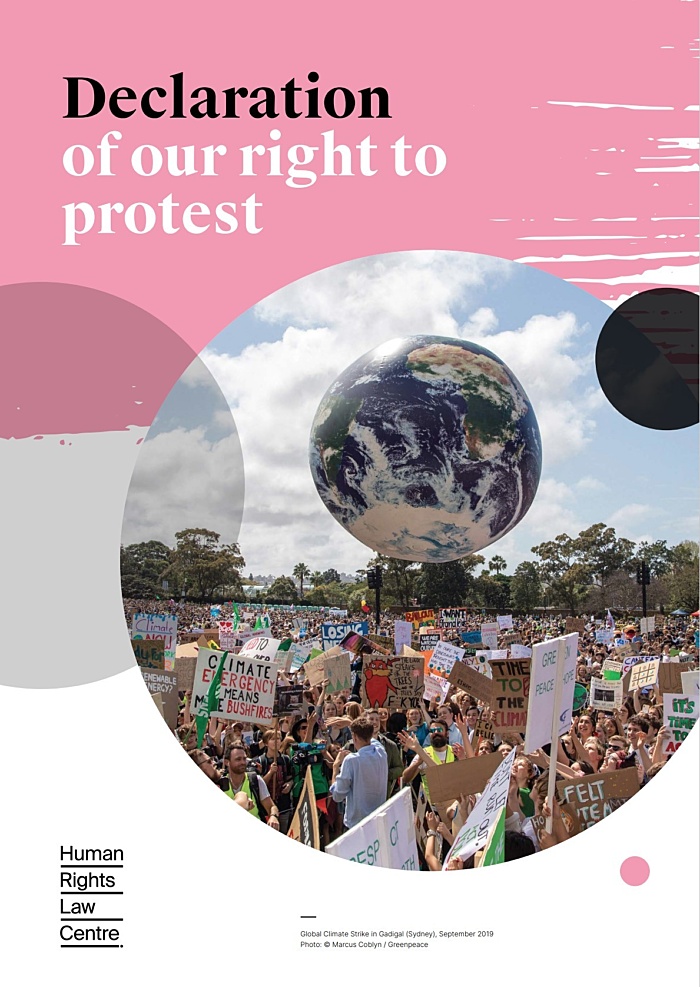
The declaration outlines the 10 minimum protections the HRLC believes are necessary to prevent the right to peacefully protest from being eroded:
“The right to peaceful protest is a fundamental human right that allows us to express our views, shape our societies and press for social and legal change."
The HRLC said the document was also intended to be used as a benchmark against which to measure any new anti-protest law.
The declaration has been endorsed by more than 60 organisations, including the Australian Council of Social Service (ACOSS), Greenpeace Australia, Amnesty International and the NSW Council for Civil Liberties.
Human Rights Law Centre senior lawyer David Mejia-Canales said the right to protest was fundamental to our democracy, how we hold the powerful to account and the ability to speak up about what’s important to us.
“Protest has been crucial to achieving many important social changes, from First Nations land rights to the eight-hour work day, but in recent years, our right to protest has come under sustained attack,” he said.
Mr Mejia-Canales said the HRLC had been tracking the erosion of the right to protest for more than two decades but had noticed that the legislative crackdown on demonstrations had accelerated over the past five years.
“We have seen a lot of legislation being put through parliament across the country and passed into law that really restricts the right to protest, particularly for environmental and climate protest and activism.”
In May, several laws targeting protesters were rushed through state parliaments, even though they were often poorly designed or, in some cases, unconstitutional.
The crackdown ranged from new laws targeting anti-logging protesters in Tasmania to fines of up to $22,000 or jail for anyone found guilty of protesting illegally on public roads, rail lines, tunnels, bridges and industrial estates in NSW.
Some of the nation’s most repressive anti-protest legislation has recently been passed in South Australia, where laws that Mr Mejia-Canales described as “unbelievably vague and broad" include fines of up to $50,000 for blocking roads.
Mr Mejia-Canales acknowledged that the disruptive tactics of climate protest groups such as Extinction Rebellion, whose members have climbed bridges, clamped themselves to buildings and blocked busy intersections in a bid to spread their message, have frustrated police and on occasion members of the public.
But he said disruption was at the heart of effective protest and that Australia has a long and proud history of protests which have led to significant change, including the preservation of Tasmania’s Franklin River, the protection of workers' rights, the apology to the Stolen Generations, women's right to vote, and the advancement of LGBTIQ+ rights.
“Temporary disruption caused by protest is perfectly lawful, but we’re hearing this ugly rhetoric where we must ban any disruption because the city has come to a standstill, but that’s not happening.”
Mr Mejia-Canales said criticism of ongoing protests in relation to the violence in Gaza was also prompting the community to defend the right to protest.
He said it was a vitally important national conversation to have if Australia was to protect its status as a healthy democracy.
“We are kind of sleepwalking into this situation where our fundamental freedoms are certainly being restricted,” said Mr Mejia-Canales.
“People are increasing taking a side on the matter and saying, ‘This doesn’t feel right,’ and I hope that people keep asking those questions because I think we are going to arrive at a better place.”
Mr Mejia-Canales said Australian governments had an obligation to guarantee the right to peaceful protest and to protect protesters.
“The right to peaceful protest is a fundamental human right that allows us to express our views, shape our societies and press for social and legal change.
“Participating in peaceful protest is a way for all of us to have our voices heard and be active in public debate, no matter our bank balance or our political connections.”
Posted on 07 Oct 2026
Our Community's founder and leader, Denis Moriarty, writes that when he watched an over-the-top…

Posted on 07 Oct 2026
A major public campaign launched this morning is calling on the federal government to restore…
Posted on 07 Oct 2026
The Australian Literacy & Numeracy Foundation (ALNF) has announced a partnership with mining…
Posted on 07 Oct 2026
A conference in Darwin will this morning hear detailed, strategic plans for how Australia could…
Posted on 07 Oct 2026
Joseph Friedman is co-founder and publisher of About Time, Australia’s only newspaper for…

Posted on 30 Sep 2026
There's been a lot of talk about AI this week, and some of it has been frightening. So, is AI good…

Posted on 30 Sep 2026
After the biggest AFL game of the year, one player proudly wore the flag of his birth country and…

Posted on 30 Sep 2026
At 21 years old, Tate Donohoe is the founder of Ecodia, an AI-assisted software development company…

Posted on 30 Sep 2026
Not-for-profit leaders have been warned to be wary of approaches from potential “funding partners”…

Posted on 30 Sep 2026
More than 200 fully funded Centre for Social Impact (CSI) scholarships will help equip for-purpose…

Posted on 30 Sep 2026
Personal stories are among the most powerful tools a charity can have to raise funds and awareness,…
Posted on 23 Sep 2026
In his new book Our Place, policy expert Matt Lloyd-Cope argues that housing must be at the heart…