If ethics is so obvious, why is it so hard?
Posted on 15 Jul 2018
By Matthew Schulz, journalist, Our Community
Most not-for-profit leaders aim to set - and expect the people in their organisations to practise - high standards of ethical behaviour that will protect their organisations' reputations and maintain the trust of members, clients and stakeholders.
But experts in the field of human behaviour and management say humans are irrational and tribal, and getting them to behave in a particular way isn't always easy.
The Ethics Alliance - a group of like-minded businesses who've pledged to do better when it comes to ethics - recently hosted an event aimed at exploring these issues, and Community Directors Intelligence went along to learn more.
'Embedding Values and Principles' brought together a psychologist, a behavioural scientist and a top public servant in a session hosted by The Ethics Centre's Dr Simon Longstaff.
Without ethics you cannot lead
The Ethic Centre's executive director, Simon Longstaff, told Community Directors Intelligence that leadership and ethics are in lockstep. He has also written a more detailed examination of ethics and leadership in this edition, but summarised these thoughts at the event.
"In the past, people have tended to think of leadership as something separate, into which one injects a little bit of ethics from time to time.
"But in fact, leadership itself is an ethical practice. It's about moral courage; for example, having the courage to question the conventions of the place where you might be working.
"It's about having a clear sense of purpose and values and principles. And you cannot lead, I'd say, you cannot understand leadership … unless you understand its ethical dimension."
He says one of a leader's top responsibilities is to be able to transmit ethical practice clearly and consistently.
"Be very clear about your purpose. People need to understand that, along with your values and principles. Unless you tell them, there's no basis against which they can calibrate their own conduct, so you need to be very explicit about it."
And he says good leaders must be "relentless in ensuring the consistency of what you actually do, to see that aligns with what you say".
Yet he acknowledges ethical decisions can face strong resistance, and that real leaders must decide how and when it's right to take action.
"Most of the bad things that happen in the world are done by good people doing bad things. So firstly, you've got to understand that in many, many cases, when you ask people, 'Well, why did you do it?', they'll say, 'Well, I didn't see it at the time'. Why did you not see it? 'Because everybody was doing it, because that's just the way we were doing things around here'."
When people realise they're making a real choice between right and wrong, it becomes a true test of leadership.
"There are some cases where [people] actually see what they're doing as wrong, and they do it anyway, because they're under so much pressure. That's where the issue of moral courage comes to the fore," Dr Longstaff says.
"I'm not saying that people have to throw themselves onto the funeral pyre of integrity and disappear with a few brief, beautiful sparks.
"But you do know that there will be times when you have to be willing to take risks, hopefully in a nuanced and intelligent way, in order to try and bring about change."
Tragic death helped company steer true course
Influential Australian business figure and NAB non-executive director Ann Sherry introduced the session at the bank's headquarters in Melbourne.
"In the current environment, where trust for business is low and the perception of poor ethical conduct across business is relatively high, is a good time to talk about what we need to do as individuals, how we address the issues," she said.
Ms Sherry has seen ethical problems play out at close hand: she joined the cruise ship company Carnival Australia as CEO in 2007 just as findings of the coronial inquest into the 2002 overdose death of P&O cruise ship passenger Dianne Brimble were handed down.
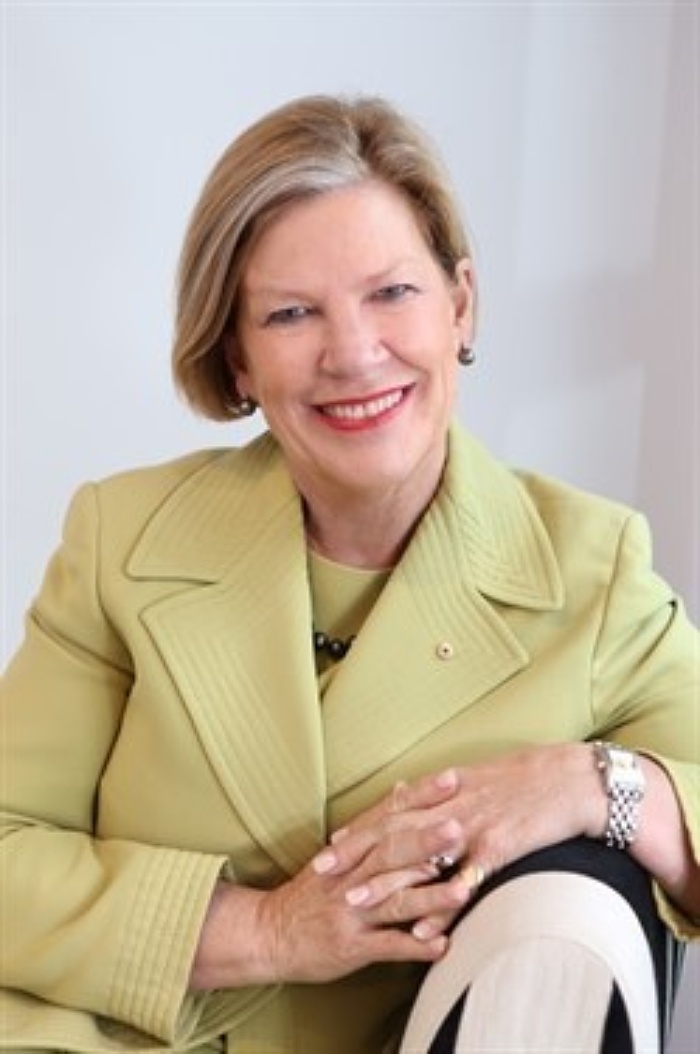
She spoke candidly about the ethical and cultural challenges faced by Carnival (parent company of P&O) amid huge media interest in the sordid details of the case.
"By the time I arrived there, the leadership of the business were hiding under their desks … and couldn't believe the media was being so horrible to them."
Ms Sherry said there had been a gap between public perceptions and the company's actions.
"We didn't believe we could have done anything else, that we acted properly - we called in police, we did … we did ... Yet the way it played out publicly was 'we didn't do enough' to protect Dianne Brimble from the actions of other passengers; [for example] we didn't do enough to manage the amount of drinking on the ship."
She spoke of an "ethical contradiction" where many of the ship's crew, in continuing to sell alcohol despite their own doubts, "thought they were doing what they thought we wanted them to do, not what they thought was the right thing to do".
Under her watch, many changes were made to the business, and high among those was a clear commitment to responsible serving of alcohol as part of a responsibility to all passengers.
"If you don't accept that as a total responsibility then people can drive a wedge into your organisation to say … well, you didn't do the right thing."
"It sat much better with the crew so that they could do the right thing without feeling they were running a contrary line to the management.
The learning from that is … if you listen much more carefully to your organisation … you hear those contradictions."
Leading change in an organisation the size of a city
When it comes to listening, NSW Public Service Commission principal advisor Dr Don Munro needs his ear close to the ground, having the responsibility of wrangling ethical dilemmas and differences in a public service with 400,000 staff across 120 organisations.
The NSW government sets out principles of ethical conduct in "The Code of Ethics and Conduct for NSW Government Sector Employees". However, working out how to apply those principles in the workplace is largely up to individuals.
Dr Munro, who has dealt with such diverse workplaces as classrooms and police stations in his five years in the role, has adopted a two-pronged approach to embedding ethical practices: the first prong is organisational infrastructure, and the second is culture.
Infrastructure refers to policies, training and human resources practices, including hiring and promotions, while conferences and regional tours help to get the word out.
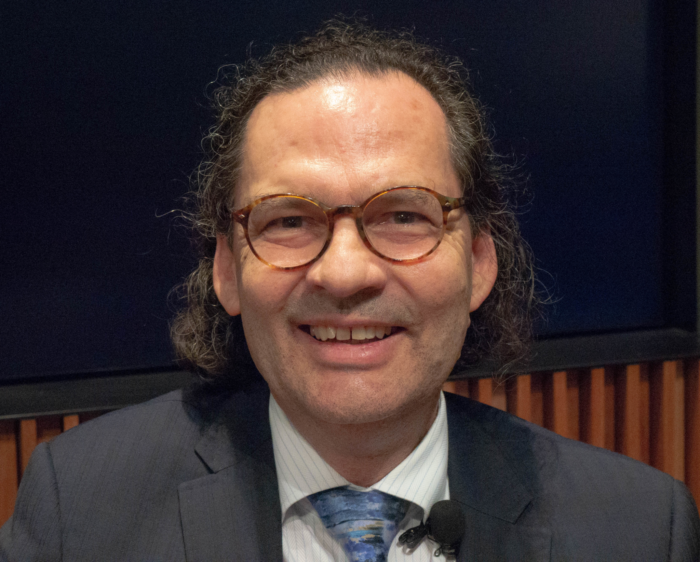
But the most successful driver of change has been a regular census in which staff assess the performance of their own department - with snapshots of the results made available to all levels of organisations.
Dr Munro cites one census that revealed high levels of bullying, which first shocked, then sparked major internal changes across every agency.
He split the change process into the "five Ps": policy, procedures, preaching, performance measures, and punishment.
"A lot of people don't think about punishment and ethics, but what we found in NSW is that once you start sacking senior executives for unethical conduct, that really gets people's attention."
The importance of culture
Dr Munro says attempts to change practices don't work where cultural barriers are too high; for example, where the prevailing attitude is "Yeah, but this is the way we really do things around here".
That culture of shared norms, routines, and stories passed along on by staff can cement problems in place, and compulsory training programs are met with "snoring up the back".
His teams got better results when they engaged with staff, asking, for instance, "What would make this a really good place to work?"
The result? People talking about respect, openess, flexibility with customers, accountability, service, integrity. "We didn't talk about ethics, but they were doing it".
"Hearing each other talking about what makes a good workplace was starting to … reset the norms of what makes good practice. So when people went back to their offices, they knew the people at the top wanted, it their manager wanted it, most people around the table wanted it, and the people who didn't want it … they were the odd ones out."
Three steps to ethical behaviour that work
Asked how leaders within much smaller community organisations can lead change, Dr Munro - who has also done his share of work in the non-government sector - says this:
"Step one: Make sure you walk the talk, because everyone is looking at you, you're the leader. If you walk past unethical practices, or if you do positive things, everyone will pick up that tone at the top, and that will be the most important thing you can do in terms of your personal behaviour.
"Step two: Say what you mean by ethics. Get some measures, so that people can say, 'Ethics means I'm going to treat the clients better' … because just talking about ethics in general is a too vague.
"Step three: Go to your staff, and say, 'Look here are some ethical values or some principles that we need to embed in our organisation. How can we do it in your workplace?' Because what happens in a head office or a corporate office may be very different if you're in the office out in in the bush.
This can mean changed work practices, redesigned jobs or offices, or promoting an organisation differently, he says.
"There are a lot of things you can do often that don't cost a cent, that will then mean people not only understand what those values and ethics mean, but they will then do it, because they are involved in building it themselves."
Why human behaviour and ethics aren't a simple mix
Human nature is not always front-of-mind when you're drawing up a values statement for your organisation, but perhaps it should be.
Behavioural neurogeneticist and clinical psychologist Dr Bob Murray has examined the fields of psychology, genetics and management to get a handle on what works in organisations.
His starting point?
"We simply do not know about other people, but we believe we do."
He says that our society, and our workplaces in particular, "aren't in line with human design specs".
And the implications for ethical behaviour are dramatic: Dr Murray says the real driver of people -and by default organisations - is group behaviour.
He says that it is helpful to look at evolutionary behaviour, which has taught us to cultivate our membership of the "tribe", and that "80% of all genetics and neurobiology is relationship forming".

"We behave the way people want us to behave, whether it's good or bad."
That membership of a group is a critical part of allowing us to better consider "collaboration, community, culture".
"We follow someone because we're invested in the relationship with them. We're relationship-forming animals."
"Now that can be the leader. If you get a skilled leader, you'll get people invested in the relationship with him or her. And once they're invested in that relationship, then they will do what they suggest in order to strengthen that relationship.
"We don't engage in ethical behaviour. We engage in group behaviour. And the ethics of the group are just simply what the group feels is most likely to further their ends. We adopt the behaviors we think will lead to us having more support among the people that we care about."
And the crucial lesson out of this? If you want people to behave ethically, focus on the behaviour, not the ethics.
"What you need to do is say, 'What behaviours do I want to see in my organisation?', not, 'What are the principles or the values that we espouse?' And then discuss that with the people that you lead and sort of refine those, take them into the decision-making process. And then that becomes your behavioural charter, if you like."
Dr Murray says too often, organisations begin with trying to change beliefs, but he argues that's a recipe for failure. Instead, he argues, once you've changed the behaviour, you should reward that response in a feedback loop that will begin to change people's experiences, and finally their beliefs.
Bridging the gap between ethics and actions
Psychologist and behavioural economics expert Bri Williams says marketers and advertisers are familiar with some of the difficulties in predicting people's behaviour and persuading them, and employ a series of techniques that aren't to do with ethics.
It's not hard to find a chasm between people's intentions and actions, and it is in this space that influencers operate.
Take canned tomatoes, for instance. You might tell yourself that you prefer Australian-made, that you want to support local jobs, or reduce "food miles".
"I tell myself that I want to buy Australian," Ms Williams said, "but when I get to the supermarket the Italian tomatoes are on sale ..."
Ms Williams agreed in many ways with Dr Murray's claim about irrational behaviour.
"We're not rational," she declared, citing our attitude to superannuation.
"If we were rational, we would all save for our retirement. We don't!
"There's a gap between what we say we're going to do and what we actually do."
Similarly, Ms Williams says, that statement-action gap can apply to staff questionnaires or surveys about whether they've actually read and understood your ethics policies.
And in a worrying quirk, Ms Williams says, some studies show that ethical behaviour can actually be linked to later unethical behaviour, where people justify bad behaviour on the basis of earlier good behaviour (having earned Brownie points, if you will).
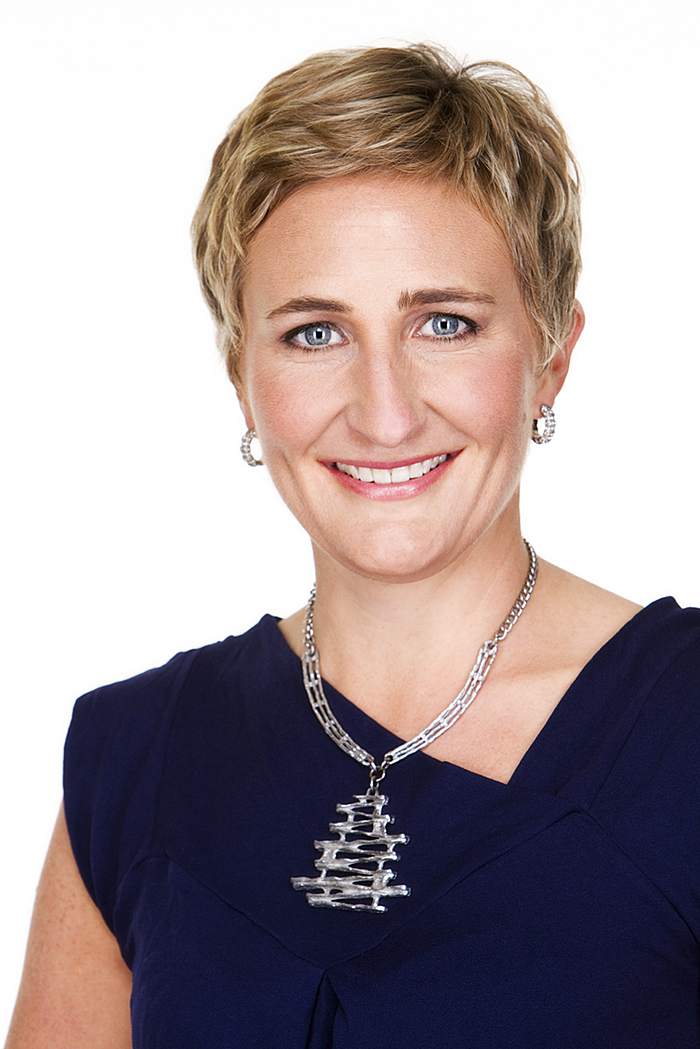
She cited the actions of fallen cycling champion Lance Armstrong, who eased his cheating conscience with his Livestrong cancer foundation.
Ms Williams also discussed how environment, structure, architecture and shape can signal and shape behaviour: think of the impact of round versus angular tables, transparent architecture or even the size of your ice-cream bowl.
"So we can't rely on what people tell us that they'll do, we can't assume that they are rational, and we can't underestimate the impact of the environment."
Overcoming apathy, 'decision paralysis' and anxiety
Ms Williams turned to behavioural economics and theories and summarised the "three buckets of resistance that you're likely to encounter" when asking people to change their behaviour.
Apathy or laziness: "I don't want to think about what you're asking me to do."
She says people won't change if they can't be bothered.
"What we want to make sure that we do is reduce the effort of the change and maximise the benefits."
That means leaders must think about "the pay-off" for stakeholders.
Decision paralysis: "I call it becoming overwhelmed."
Offering too many choices and too much information can cause attempts to change things to get stuck in the mud.
"That's when we're asking them to change, but we're giving them so many things to think about that it's too much. They're like bunnies in the headlights. We need to really clarify what do we want them to do and keep it simple."
Anxiety: "What I have to give up to change my behaviour."
Ms Williams also characterises this behaviour as "loss aversion", drawing a parallel with the second serve in tennis, in which a player will dramatically reconsider how much risk they're prepared to take in order to get the ball over the net, even though the action is technically identical.
"This is when people are scared or worried about changing their behaviour."
She says people won't necessarily expressly say, "I'm not going to do that, because I'm worried about it", but she advises leaders to anticipate that reaction anyway, that nervousness about change.
"So what can you do? Provide assurances and also make sure they're comfortable in making the change."
A simple lesson from this three-part model is this: Think twice before dumping a huge policy document about ethical practices on your stakeholders, because it will play into all three of these barriers.
"The key here is to make sure reward is greater than effort."