Inside Greening Australia's radical cultural transformation
Posted on 15 Oct 2018
By Matthew Schulz, journalist, Our Community
Looking at change? Consider this no-holds-barred Greening Australia presentation charting the organisation's turbulent move from a federated structure to a new, independent, single governance structure.
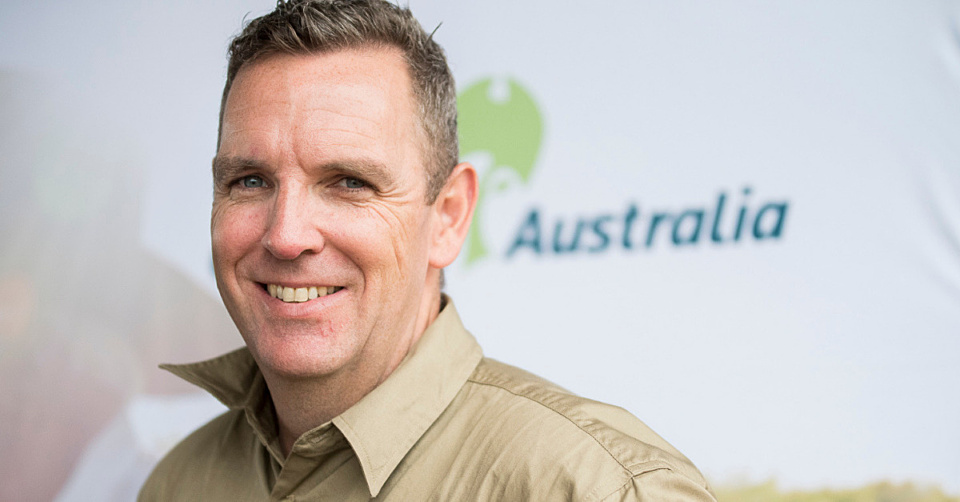
The tough self-assessment by CEO Brendan Foran at the 2018 Community Directors Conference hosted by ICDA painted a picture of an organisation that reinvented itself over a decade, going from a bloated, self-interested and often dysfunctional not-for-profit to one with a powerful environmental agenda to save the world.
Mr Foran, flanked by chair Gordon Davis, left many delegates dizzy with his disclosure of the organisation's story and achievements, in a presentation aptly titled "Warts and all: Transforming a board and an organisation".
Mr Foran, flanked by chair Gordon Davis, left many delegates dizzy with his disclosure of the organisation's story and achievements, in a presentation aptly titled "Warts and all: Transforming a board and an organisation".
- plant 500 million plants
- restore 200,000ha of habitat
- conserve 20 threatened species
- restore 3000 ha of rivers and wetlands
- involve 4000 landholders
- sequester 1 million tonnes of carbon
These will be delivered through five huge programs spanning every state and territory, namely:
- Reef Aid - to boost water quality on the Great Barrier Reef by restoring rivers and wetlands flowing onto it
- Great Southern Landscapes - to restore habitat for Australia's most threatened wildlife with large-scale revegetation and carbon sinks
- Tasmania Island Ark - to save some of Australia's rarest animals
- Nature in Cities - to boost the number of trees, parks, waterways, backyards and open spaces
- Thriving on Country - focused on jobs and opportunities for Indigenous Australians to care for their country
It's an incredibly ambitious agenda, but Mr Foran said Greening Australia very nearly didn't get the chance to tackle the work, having almost "pushed itself off a cliff" by losing its focus on the reason for its existence.
"There was a time … that we had forgotten what really mattered and we were desperately close to disappearing."
He described an overbearing governance structure with nine separate boards, nine chairs, nine CEOs, and a "staggering number" of directors - more than 80, mostly male.
In the seven years he's been at the helm, Greening Australia has downsized to one board, one CEO, and nine directors. It has a fresh focus on diversity - at the board and staff level - and has made a raft of changes that have helped create a new culture and vision, and a better-functioning organisation.
But in 2011, when he first joined, the organisation was in a dire state.
"We were in a state of chronic inertia, and it was because we had forgotten that we did not exist for ourselves and that the world actually needed Greening Australia for something.
"And what the world needed us for certainly wasn't to spend an unhealthy level of our energy and resources on deciding whether a centralised or decentralised and a representative versus independent method of governance was the best for the organisation."
During his first six months in the job, "not once was 'trees' mentioned in the minutes of an organisation that now has a plan to plant 10 billion trees by 2050".
He said it was a waste to have "incredibly smart people around the table, not talking about trees", but instead focusing "on internal politics and governance".
It's probably no surprise that in the three years before he started, turnover among the nine CEOs was "extremely high": 25 in three years.
That was partly because senior managers were drawn into the damaging internal politics, but he maintains they were "doing the best they could in a very, very difficult situation".
The result was the sinking reputation of an organisation "operating on personality and will, rather than system and culture".
Major changes to Greening Australia
The reasons why reform was needed were clear. Here is a summary of the big changes wrought by Greening Australia.
- From nine boards to one, independent, appointed by membership, with limits on terms
- From 80-plus directors, most of them men, to a maximum of nine, with a strong diversity focus
- From nine CEOs to one, with a focus on strategy and growth
- Strategy, vision and mission shift, from budget-driven and internally focused, to focus on strategy, outcome, execution and accountability
- Better financial management, increased investment in organisational capacity
- Building on brand and reputation
- Focus on treating people in the organisation as its "first community" instead of just "staff", and recruiting from a diverse pool
- Shift from operating on "personality and will" to "system and culture"
In terms of diversity outcomes alone, a recent audit showed Greening Australia's gender pay gap was just 1%, compared to the national average of 14.6%.
Two-thirds of all management promotions have been awarded to women in senior leadership and science roles in the past year, with the gender balance of the organisation now almost 50/50.
The demographics of the organisation have also been transformed, with more than half the desks in the Melbourne office now occupied by staff who weren't born in Australia.
"We just did what was necessary to make things right," Mr Foran said.
Mr Foran said that turning the structure upside down had not been easy, and in fact the organisation continued to make repairs, such as revisions to its constitution to undo "compromises" made early in his tenure.
People in the organisation come first, to make ambitious goals possible
Mr Foran said understanding the needs of the organisation's "first community" - everyone who worked at Greening Australia - was paramount.
"It did not need us to be focused on governance and politics, it needed us to focus on what is required to take on great environmental challenges, demonstrate proof of impact, and produce inspirational stories.
"We weren't reforming for ourselves, we reformed because we needed to be more strategic, and we needed to do something that the world needed us to do."
He said the tough organisational transformation at a governance, human resources and - most importantly - cultural level meant the organisation shifted its focus to "enabling and unlocking the resource and energy that sat within the organisation to drive five key priorities" [the five main programs listed above].
He said that was being achieved partly through an investment of $1.5 million in organisational capacity development in the past year, despite the tough economic environment worsened by drought.
The focus is now on strategy execution and accountability, framed by the organisation's reliance on 150 staff spread across some of the most remote parts of the country.
As Mr Foran puts it, Greening Australia has "flipped the equation, from employees serving the organisation to the organisation serving them".
Perhaps that's why the picture that's front and centre on Greening Australia's website, on its annual report, and in Mr Foran's presentation depicted of one of the organisation's community projects officers working with an indigenous elder in the Pilbara, as part of its "Thriving on Country" program.
The relationship between those people was indicative of the "most important relationship in our organisation", Mr Foran said.
"Every time I look at it, I'm reminded of the enormous privilege, and, even more, the obligation that I have to them."
He said Greening Australia has now tasked itself with tackling some of the "toughest problems on Earth", and he has learnt - the hard way - that "when resource and energy is wrongly allocated, and leadership becomes complacent, or fails, we have the necessary ingredients for organisational crises".
Mr Foran closed his gripping address by paraphrasing Alice Gugelev and Andrew Stern of the Global Development Incubator, whose landmark 2015 essay asked "What's your endgame"? (See Board Builder Edition 4, 2015, where their essay was reproduced in full.)
As Mr Foran put it, the big question that should drive your organisational culture, and the change that may be needed in your organisation, is this: What does the world need you to do? And what would it take to put yourself out of business?