
Fence-sitting isn’t going to work if we want better owners corporations
Posted on 21 Oct 2026
The wider not-for-profit sector doesn't pay much attention to owners corporations, but maybe it…
Posted on 04 Feb 2025
By David Crosbie

To cut through the noise, it may be time for the charity and not-for-profit sector to change not just the stories it tells, but how they are told and who they are told by, says the CEO of the Community Council for Australia, David Crosbie.
A lot has happened in the two weeks or so since the US inaugurated a new President.
The fallout is having a global impact, including for some of our own international development charities and other organisations.
Many of us struggle with the ongoing public discourse about Trump’s latest pronouncements. I almost don’t want to hear any more.
And in so many ways, this is the remarkable success of how Trump operates, how he uses the media, and the effect that has politically.
The lessons we can learn from Trump may be particularly relevant for our sector as we move into our national election campaign in the coming months.
A Harvard study of Trump’s first 100 days in his first term as president, in 2017–21, found that he dominated media coverage as no president before him ever had. In those 100 days, he appeared in more than 40 per cent of all news stories.
Trump may have surpassed that number already in 2024.

Perhaps just as importantly, the saturation media coverage of Trump demonstrates how effectively symbiotic relationships can work. While Trump constantly criticises the "fake news" outlets, he needs them and relies upon their extensive coverage to shore up his political power.
The Harvard study found that most of the media coverage of President Trump involved Trump actually talking, or direct quotes. As the researchers noted, this is unusual in political news stories.
The Harvard analysis highlighted an even more important aspect of the symbiotic relationship Trump cultivates with media. He makes the media his public enemy, a strategy practised not just by Trump, but by all his team.
When Trump is campaigning or in power, the media become the opposition. The fact that 80 per cent of the coverage of President Trump was (and is) negative seems to confirm that Trump’s team are right to treat the media as their opposition, and the negative coverage legitimises this strategy to his followers.
The problem here is that the media are not standing for election against Trump. The media are not members of the legislature (Senate and the Congress). If the media are the opposition, where does that leave the actual opposition politicians and their parties?
The Harvard study of Trump coverage found that only 6 per cent of media stories about Trump involved opposing or competing politicians or their parties.
Again, a remarkable figure – Trump has 65 per cent of the airtime or media space, the opposition party spokespeople will get just 6 per cent, and 4 per cent will be given to supportive comments from Trump’s own political party!
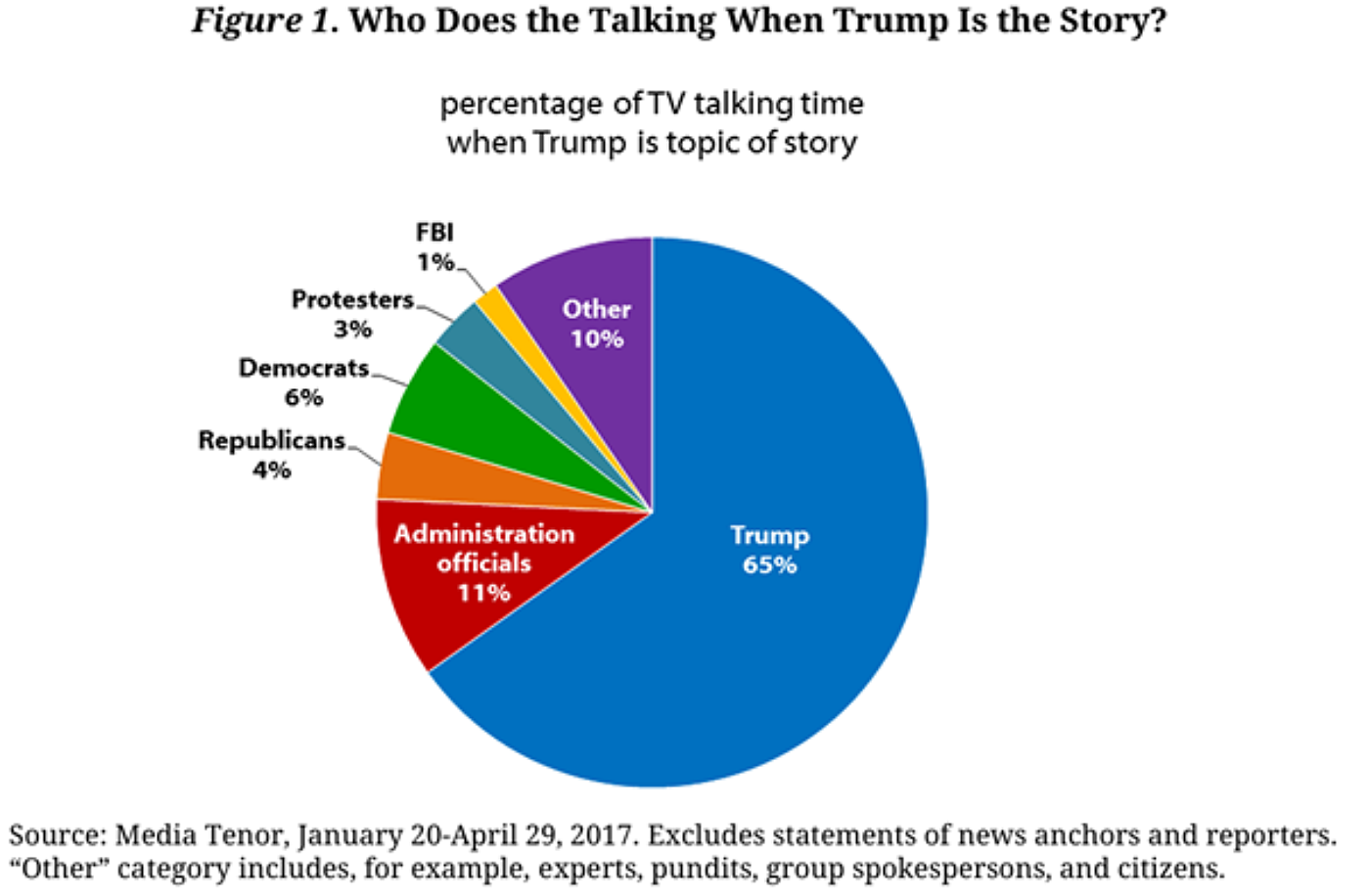
Of course, we don’t have good figures on how various social media and other platforms operate, but there is little to suggest that Trump is less dominant in news stories on other platforms.
In Australia we have seen the attention-grabbling-showman type of politician succeed in part because they were the story, and they got the attention.
As charities advocating for the communities we serve, one of the most important things we can do in the lead up to the federal election, or at any time really, is to try and ensure we promote the voices of our communities, to give the people we serve some real attention.
A study from Western Sydney University provides a good example of how we have devalued and delegitimised young people in our politics and public policy discourse.
“On one unremarkable day in April this year, just over a third of news stories were about issues likely to impact young people, such as policies to address climate change, schoolteacher training, the impact of automation on future employment and proposed social media regulation," wrote Dr Tanya Notley and Associate Professor Michael Dezuanni.
“In total, we analysed 276 news stories across eight national, state and regional newspapers and four national and state television news bulletins. Of all the news stories we examined, only 11 per cent included the views or experiences of young people. Usually, their inclusion was via adult mediators like parents, police and experts. Just 1 per cent of news stories directly quoted a young person.”
And we wonder why many young people aren’t interested in the news.
It’s not just young people who aren’t seen or represented in our news.
Many of the people affected by national policies have no voice. And receive no attention. Many of the experts who know what works or doesn’t work based on extensive experience and study seem to have only a very limited voice. And receive limited attention.
This is a challenge our sector needs to take up over the coming months – we need more attention on our communities, on us, on the voices of lived experience, on the voices of experts who can offer solutions that strengthen our communities, our economy and our environment. This may mean changing our approach to media, to the stories we tell and how we tell them.
We can play a critical role in shifting the narrative in Australia and supporting our communities by shifting who we give voice to in our media and in our work.
David Crosbie has been CEO of the Community Council for Australia for the past decade and has spent more than a quarter of a century leading significant not-for-profit organisations, including the Mental Health Council of Australia, the Alcohol and Other Drugs Council of Australia, and Odyssey House Victoria.
Posted on 21 Oct 2026
The wider not-for-profit sector doesn't pay much attention to owners corporations, but maybe it…
Posted on 14 Oct 2026
In the ongoing political debates about migration levels, Asylum Seeker Resource Centre founder Kon…
Posted on 14 Oct 2026
Over the weekend, federal Liberal leader Angus Taylor told the Conservative Political Action…
Posted on 07 Oct 2026
Our Community's founder and leader, Denis Moriarty, writes that when he watched an over-the-top…
Posted on 30 Sep 2026
There's been a lot of talk about AI this week, and some of it has been frightening. So, is AI good…
Posted on 30 Sep 2026
After the biggest AFL game of the year, one player proudly wore the flag of his birth country and…

Posted on 23 Sep 2026
In his new book Our Place, policy expert Matt Lloyd-Cope argues that housing must be at the heart…

Posted on 23 Sep 2026
There are solutions to counter the rise of One Nation but they might not be residing in the mess…
Posted on 03 Sep 2026
Denis Moriarty has an issue with insurance companies varying premiums because of what they perceive…
Posted on 02 Sep 2026
Yesterday, at a meeting just outside Castlemaine in Victoria, 70 people came together to hear…

Posted on 26 Aug 2026
Our Community's founder and leader, Denis Moriarty, says he commissioned a new piece of street art…

Posted on 19 Aug 2026
Government funding is at the centre of Australia's charity and not-for-profit sector – our number…