Three ways to boost your data capability
Posted on 14 May 2026
By Matthew Schulz, journalist, Institute of Community Directors Australia
Share this article
Our Community’s data science team continues to look for better ways for not-for-profits to use data, and over the past four years it has learnt some crucial lessons about what really works. It appears the answers are often about people, more than the tech itself.
In a report by Our Community’s data science team aimed at funders on building NFP data capability, the advice to NFPs is that they start with a project, scope each data project effectively, and work face-to-face with key people.
1. Most not-for-profits need to start with a project
Starting with a project (rather than a process or a system) and successfully delivering that project “helps an organisation to develop its data culture in an incremental and responsive way”.
Early on in their data journeys, many organisations work “at a program level” or try to use data in just one area of the organisation and aren’t ready to tackle more ambitious activities such as building data maturity, improving data governance or implementing privacy measures.
2. Scoping is an early – and high – hurdle in data projects
Understanding the scope of a project can make the difference between success and failure.
“Through dozens of consultations with not-for-profit organisations, we saw that there was no shortage of interest in building data capability, but they either didn’t know how to approach it or they had an idea of the process but wanted reassurance.
“As time went on, we addressed this by developing a step-by-step data project pathway. We also zeroed in on the scoping stage with a hands-on workshop.
“A major benefit of clearly scoping a data project is that organisations can more easily find the right help. There’s a wellspring of data professionals seeking to use their time to make an impact.”
Those professionals are better able to help where projects are scoped and ready.
3. Face-to-face time cuts through uncertainty and competing priorities
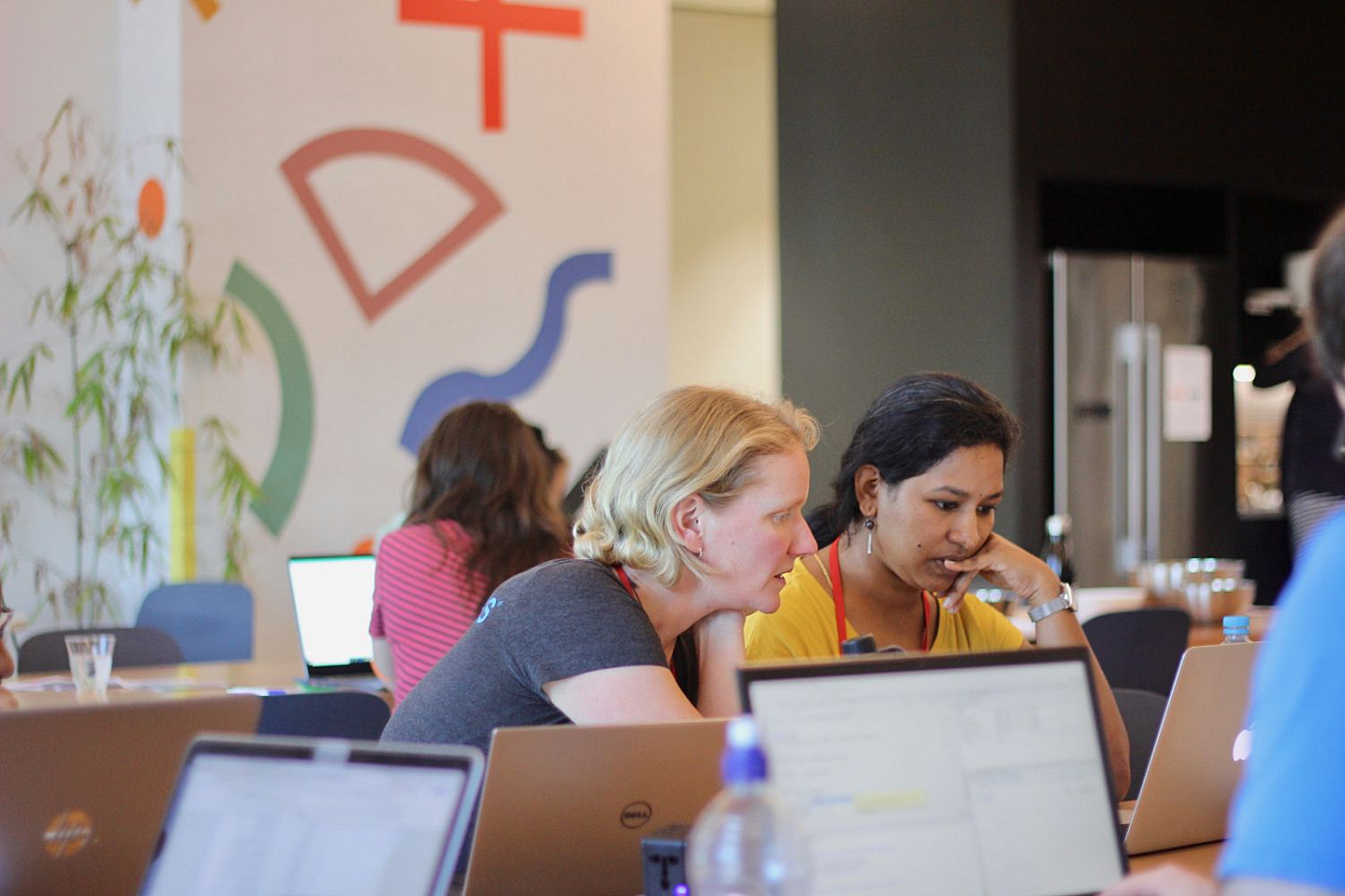
Participants are more likely to “carve out time” for a face-to-face meeting than for an online chat, and this also enables them to more easily learn from others with the “same struggles, questions and decisions”.
“Remember how indispensable face-to-face interaction can be, and see what happens when you get participants in the same room.”
Our Community unlocks data literacy training
The free four-part Data Science for Not-for-profits compact course aims to help groups develop their data projects.
Our Community group managing director Denis Moriarty said data literacy was more important than ever for not-for-profits as developments in technology and AI forged ahead, and the decision to make the course free was an easy one.
“Things are moving quickly for not-for-profits and we want to help them keep pace,” he said.
He expected that participants from thousands more groups than originally planned would have the chance to complete the course, which originally cost $220, creating hundreds of thousands of dollars of value for the sector.
The course features lecture-style videos, quiz questions and other activities. Enrol now.
More information
Free training for NFPs: Data Science for Not-for-profits compact course
Read the full commentary: Lessons in building social sector data capability
Our Community data resources: Developing Data Capability in your Not-for-Profit | Data Projects from Go to Whoa! | Case studies