Why not-for-profits must do data better
Posted on 15 Oct 2018
By Matthew Schulz, journalist, Our Community
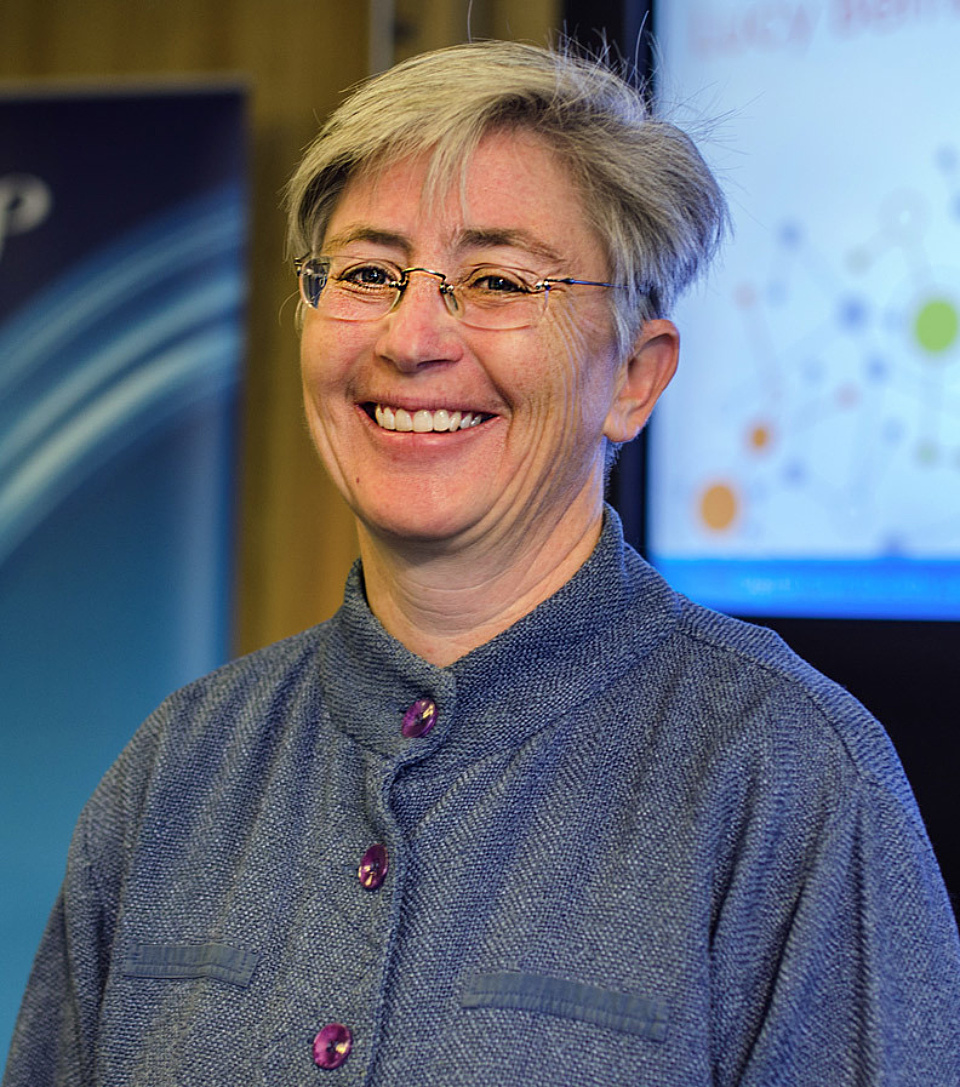
Dr Lucy Bernholz, a world-recognised thinker on digital and data trends, and a specialist in helping not-for-profits manage digital assets better, says groups must improve the way they handle data, in the interests of keeping our civil society strong.
Australians have been among those affected by a global spate of big data and privacy breaches, exposed by new laws or scandals such as the leak of the data of 87 million Facebook users to political consultants Cambridge Analytica.
Dr Bernholz travels the world examining digital trends, and her latest interest is the shape of the emerging “digital civil society”.
She says one of the biggest changes she’s noticed in Australia in the past three years has been a spike in public concern about personal data and how it is managed.
The well-informed debate about the MyHealth database and the growing opposition to an automatic opt-in for the system is just one example, Dr Bernholz says, of a shift in those attitudes.
She has a simple catch-phrase to sum up her views on what should be at the forefront of the minds of not-for-profit leaders: “If you can’t protect it, don’t collect it.”
How much data do you really need?
She gives the example of an organisation seeking proof that a homelessness initiative is working.
“The trap we fall into is thinking we need everybody's name, age, birth date, race, religion.
“Really? No, you don't. You probably need some basic numbers to make sure you're not double-counting or under-counting something, and you can track people over time. But you probably don't need that level of sensitivity.”
Gathering and using that data is also often beyond the capability of not-for-profits without additional resources.
“Most not-for-profits are not going to wake up on Monday and suddenly have two data scientists and a really high-level technological security system on staff.
“So having all that information lying around waiting for the "unicorn moment" when you have the ability to analyse that stuff is just making people vulnerable now.”
Dr Bernholz says people need to “reflect on their own data practices”, when looking at their organisations.
“If everybody in your organisation is constantly on their phone, is not using basic passwords, isn't using two-factor authentication, isn't taking care of their basic data, chances are that organisation's not doing even the first-line easy things.
“What's important when you step into the workplace is to remember that while what's on your phone is yours, what's at your office is not yours. It comes from the people you're trying to serve, and you want to do better by them.”
How to be smarter with less data
What’s needed, Dr Bernholz says, is an “honest conversation … about what are we actually trying to show, what are we trying to prove, and what data do we need to do that”.
Dr Bernholz has seen what can go wrong, and the costs involved. And she has this advice: “What's the least amount of data that you can collect to answer the questions you're trying to answer?”
She acknowledges that this is counter-intuitive for many organisations, who face a barrage of marketing from companies that specialise in data management, marketing software, the cloud and any variety of apps, pressuring them to collect every scrap of information they can.
“We've been marketed it, by companies that have a vested interest in us acting that way, [but] we need to put our thinking caps on and get a little bit more sceptical about this.”
Dr Bernholz says the focus must be on building the data capacity of not-for-profits, which in turn will benefit those who are providing funds.
“Not-for-profit organisations are mission-driven, and most of them are really focused on doing the work they're trying to do.
“The information they may need to know their own progress should be the information that the funder can then figure out how to use, to prove their own impact,” Dr Bernholz says.
Dr Bernholz has seen data models that will work for all parties.
She describes the work of Clara Miller from the F.B. Heron Foundation in New York, which focuses on affordable housing through large-scale social investments.
Ms Miller had spent 20 years in not-for-profits “filling out useless forms demanded by funders” and sought a better way. That better way involved helping all partner not-for-profits to develop common measures, which were stored and managed by a third-party social enterprise, CoMetrics.
“On a daily/weekly/monthly basis, the housing organisations gathered the information they needed to run their business [and] they shared that information with CoMetrics, which allowed organisation A to benchmark themselves against their peers.
“They were only collecting the information that they needed to run their businesses. They benefited because they could benchmark themselves against each other and learn from each other.”
When the foundation needed reports, it went straight to CoMetrics to look at the figures – with the prior agreement of the not-for-profits.
“With a little bit of creativity, not only can we improve the process, we could take out grantee reporting. And I bet you can't find me a not-for-profit that wouldn't be thrilled with that possibility.”
Why data matters for democracy
Dr Bernholz says these types of decisions go to the heart of what makes our democracy function. She is interested in carefully watching the way the way private resources are managed for public benefit in “digital civil society”.
“The reason it matters so much is because we're dependent on digital data and digital infrastructure to a degree that's fundamentally changing what we're able to do, and the kinds of resources that we have to manage.”
While her views are coloured by US politics, trends and funding, her frequent travel has highlighted trends here to her too.
On this visit, she has been struck by the growing number of not-for-profits contracted into roles previously held by government as they chase vital funding – especially in the disability sector.
She believes the extensive data demands placed by government on not-for-profits who have won those NDIS contracts is concerning.
“The data demands there, the data ties between not-for-profits and the government … they're like an invisible leash [that] are really binding the not-for-profits to the government.”
Data security compliance costs are simultaneously likely to squeeze out what she describes as the smaller “homegrown solutions” organisations.
She expects “tremendous consolidation in that part of the not-for-profit sector”, which she paints as one of the “trade-offs for civil society organisations” as they give up their independence for financial security.
And Dr Bernholz maintains that civil society needs independent organisations.
“I truly believe that democracy needs an open, private, permission space for individual people to come together and do something that they want that's not sanctioned by the government, and not sanctioned by the markets. That's the definition of civil society.”
This is particularly significant in the face of the threats faced by civil societies around the globe.
She says Australia has not been immune and describes the push to limit foreign funding of not-for-profits as “an effort to limit the size of civil society”.
Dr Bernholz believes part of her mission is to “equip not-for-profit organisations, funders, and individuals to push back on that, and make sure we always have a space where we can voluntarily come together and do something that benefits other people”.
“We know both from democracy theory, and history, that democracies fall when civil society shrinks.”
She believes that independent funders, philanthropists and corporate groups have the ability to help arrest the retreat of civil society, by giving organisations crucial alternative funding sources.
“If you think about an organisation's overall revenue: To the degree that they become very dependent on a single funder from any one sector, they make themselves vulnerable.
“Part of that independence comes from being able to have multiple sources of funding and therefore be beholden to their mission, and not to any … funder.
“It's very similar to what we often think of about the media. We want them to be able to be beholden to the truth, and we should want not-for-profits to be beholden to their mission.”
Dr Bernholz was in Australia as part of a partnership between Perpetual Ltd and the Stanford Center on Philanthropy and Civil Society, and has been involved in workshops and events for not-for-profits, foundations and civil society groups.