Do I have to have a board?
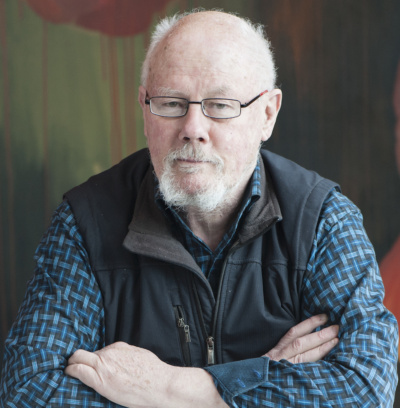
In this help sheet series, Our Community’s resident agony uncle, Chris Borthwick, offers answers to frequently asked questions about issues not-for-profits are facing.
Dear Agony Uncle,
A question I have as a very new and hopefully set-up-right not-for-profit is "Do I have to have a board"? I cannot find any information on this, and it is the one thing giving me a real headache. I do not want to have a board if I do not need one. As the founder, I am hoping that I can grow my NFP and steer it in the way I want to, and hopefully one day it will be big enough that I can hold financial ownership over it and perhaps sell it off. I have a group of passionate advisors that are helping guide me through the days, and it would be great if I can keep it at that.
Agony Uncle's answer
Well, that brings a question from me: in what sense are you an NFP? If you haven’t got a board, you don’t sound all that much like an organisation, and if you’re planning to sell the thing off in the future, that’s incompatible with being a not-for-profit.
More specifically, and answering the questions as if you do want to be an NFP (because that’s where my expertise lies):
1. Do I have to have a board?
It’s not absolutely impossible for a single person to be a not-for-profit – that person can theoretically form a trust – but it’s pretty difficult (and if you want to go that route you’ll definitely have to pay for professional legal advice to keep you on the right side of the tax office). Normally the deal is that you get various tax breaks from the public purse on the condition that you have public oversight of the business, in the form of voting members, and a board, with a constitution to govern their interactions. You can be an unincorporated association, or you can incorporate, but it’s very difficult to be just you.
2. Can I hold financial ownership of it?
No. Flatly. You can’t profit from your relationship with it; that’s exactly and precisely and legally what “not-for-profit” means. The constitution has to include a clause saying that members have no rights to the assets, and that if it’s sold, or if it closes down, the assets have to go to another charity. It’s not impossible for the charity to hire you to work for it, if the deal is done at arm’s length and you’re not involved in the debate, but that’s all.
For example, the relevant clause in the Victorian model rules is this:
Winding up and cancellation
(1) The Association may be wound up voluntarily by special resolution.
(2) In the event of the winding up or the cancellation of the incorporation of the Association, the surplus assets of the Association must not be distributed to any members or former members of the Association.
(3) Subject to the Act and any court order made under section 133 of the Act, the surplus assets must be given to a body that has similar purposes to the Association and which is not carried on for the profit or gain of its individual members.
(4) The body to which the surplus assets are to be given must be decided by special resolution.
I may be wasting my time, though, talking about irrelevances. To guide me, can I ask how you have your NFP set up at the moment? Am I misunderstanding something basic? Are you sure you’re not talking about a social enterprise rather than an NFP?
Best wishes,
Agony Uncle.
Ask Agony Uncle
Has your organisation got a problem? A deal-making dilemma or a constitutional conundrum? Found yourself in a personality pickle or a media muddle? Tap the button below to send in your query.