Whose conflict is it anyway?
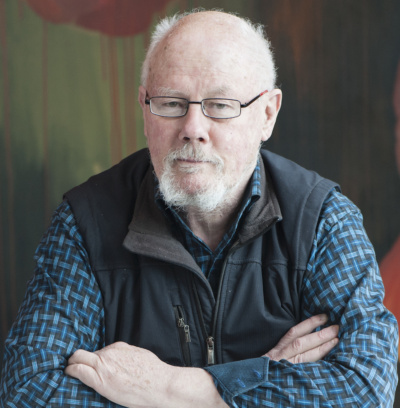
In this help sheet series, Our Community’s resident agony uncle, Chris Borthwick, offers answers to frequently asked questions about issues not-for-profits are facing.
Dear Agony Uncle,
I completed the ICDA Diploma of Governance last year and I was looking for some info on the website when I discovered this Agony Uncle option!
I work for a state peak member association and recently became aware of a situation which I believe to be a conflict of interest within our board, but I’m not sure if anything is being done about it, or whose responsibility it is to address it, or report it.
The chair of our board is the CEO of one of our member organisations (as are most of the board members). In addition to his board chair role and his full-time CEO role, he has recently set himself up as a consultant selling services to other member organisations within our sector. The particular service he is providing likely makes him privy to information about those member organisations that he would not ordinarily have access to and which could influence decisions that get made about our sector at board level. One member of my small team, which is governed by this board has a role, that is directly undermined by the services he is selling to our members.
Similarly, we are aware that another CEO who is chair of the board of our national peak (which oversees our work) has also set up as a consultant selling the same services to other member organisations within our sector.
My team is concerned that this conduct within both the state and the national peak boards is problematic, but we are unsure what we should or could do about it.
Agony Uncle's answer
This sounds fairly complicated, and I'm not going to go deep. I'll make two points, however.
First, there's no bar on conflicts of interest in this situation. What's forbidden is unreported conflicts of interest. Do you know what was said in the minutes? If the board nodded their heads, it's probably okay.
Second, is there a conflict of interest? You say, "The particular service he is providing likely makes him privy to information about those member organisations that he would not ordinarily have access to and which could influence decisions that get made about our sector at board level," which suggests that he may be using his consultancy information to benefit his board work, when a conflict of interest from the organisation's point of view would be if he used his board information to benefit his consultancy work.
I would tend to think that this is an “arguable” point, which is in most cases a euphemism for “unconvincing” or even “losing”. This is perhaps a good thing, because I always find it particularly depressing to lose a fight when I know I'm in the right, and in fights between boards and outsiders, outsiders nearly always lose.
There are no regulators who would be prepared to intervene – they leave that up to the members. The courts are costly and unreliable, and the police have other priorities. Still, if you want to pursue this, the question is this: What do you want to happen? Do you want these people to cease consulting, or cease sitting on the board? Or both?
More help: Handling conflicts of interest | tips for resolving conflict | staff conflict of interest policy
Ask Agony Uncle
Has your organisation got a problem? A deal-making dilemma or a constitutional conundrum? Found yourself in a personality pickle or a media muddle? Tap the button below to send in your query.