
Pauline Hanson and the frightening lesson of ‘Years and Years’
Posted on 07 Oct 2026
Our Community's founder and leader, Denis Moriarty, writes that when he watched an over-the-top…
Posted on 08 Nov 2023
By Greg Thom, journalist, Institute of Community Directors Australia

The early findings, revealed exclusively by the Community Advocate, come from the Digital Technology in the Not-For-Profit Sector report, to be released next week.
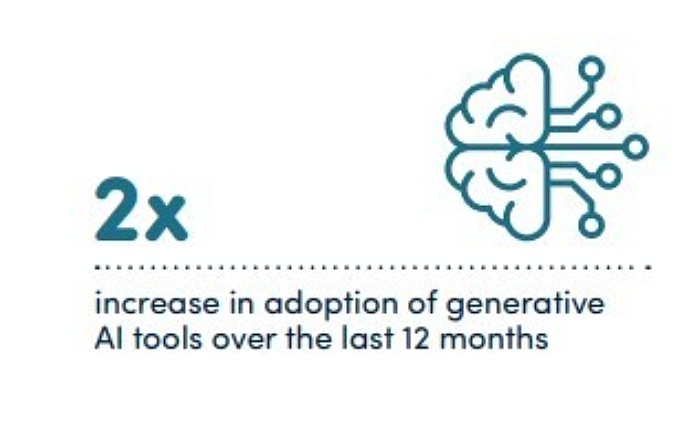
The report draws on an annual survey of NFPs by social enterprise Infoxchange, which shows the use of generative AI tools such as ChatGPT has doubled since last year’s study.
The report also reveals that 69% of NFPs are using or plan to use AI tools in the next year.
“2023 saw the beginning of a new era in digital technology: the explosion of freely available and functional AI tools with widespread adoption,” the report says.
The report found a quarter of organisations will explore the use of big data and machine learning in the coming year achieve their social mission.
Commentary in the report found that: “Together, big data and machine learning can be used to extract valuable insights, which can help organisations make more informed decisions and address emerging problems in their communities.
“This year’s report shows that not-for-profit organisations have a significant appetite to consider and implement new technologies such as AI.”
The latest Digital Technology in the Not-for-Profit Sector report – the largest survey of its type – draws on survey responses from more than 1,000 organisations in Australia and New Zealand.
The annual sense check stands as the sector barometer for identifying the digital needs, readiness, and challenges of a sector under pressure from cyber security threats and rising demand for services fuelled by the cost-of-living crisis.
“Our data shows that not-for-profits are moving quickly to embrace these new tools and the promise of increased productivity in a resource-constrained sector.”
Infoxchange CEO David Spriggs said the sector was adapting to “a new era in digital technology” which would “revolutionise the world of work”.
“Our data shows that not-for-profits are moving quickly to embrace these new tools and the promise of increased productivity in a resource-constrained sector.”
Infoxchange’s digital transformation hub manager Marcus Harvey is spearheading the organisation’s work with technology giant Microsoft to help NFP organisations better use AI tools.

"Artificial intelligence has emerged as an exciting tool for many not-for-profits but given the sensitivity of our data and our clients trust, this must also come with adequate considerations to ensure that information is securely and safely protected,” Mr Harvey said.
"'We are committed to educating the sector on how to utilise these new technologies to boost efficiencies and enhance impact, while also implementing responsible use of these technologies to ensure our communities are safeguarded."
Microsoft’s philanthropy lead Kate Behncken said that “AI can be a tremendous tool for helping nonprofits increase impact” during a tough economic climate that has been negatively affecting donations, grants and budgets.
She said AI tools could help not-for-profits through:
Cost savings. Using AI to automate steps in everything from grant writing to engaging with donors can yield significant cost reductions.
Increased productivity. By automating routine tasks, analysing large amounts of data, and driving informed, data-driven decisions, AI offers a clear path to expanded effectiveness through greater productivity in a time of tighter budgets.
Higher impact. AI doesn’t replace not-for-profit employees. Instead, it empowers them to do more so they can focus on the initiatives that deliver the greatest impact.
In other developments in AI of interest to NFPs:
More information
Report a technology wake-up call for NFP sector
Webinar: Working with robots: how community organisations can leverage AI to amplify their message
NFP leaders, it’s time to upgrade our chat
Can a robot write your next funding application?
Help Sheet: Artificial intelligence and governance frameworks
Posted on 07 Oct 2026
Our Community's founder and leader, Denis Moriarty, writes that when he watched an over-the-top…

Posted on 07 Oct 2026
A major public campaign launched this morning is calling on the federal government to restore…

Posted on 07 Oct 2026
The Australian Literacy & Numeracy Foundation (ALNF) has announced a partnership with mining…

Posted on 07 Oct 2026
A conference in Darwin will this morning hear detailed, strategic plans for how Australia could…

Posted on 07 Oct 2026
Joseph Friedman is co-founder and publisher of About Time, Australia’s only newspaper for…

Posted on 30 Sep 2026
There's been a lot of talk about AI this week, and some of it has been frightening. So, is AI good…

Posted on 30 Sep 2026
After the biggest AFL game of the year, one player proudly wore the flag of his birth country and…

Posted on 30 Sep 2026
At 21 years old, Tate Donohoe is the founder of Ecodia, an AI-assisted software development company…

Posted on 30 Sep 2026
Not-for-profit leaders have been warned to be wary of approaches from potential “funding partners”…
Posted on 30 Sep 2026
More than 200 fully funded Centre for Social Impact (CSI) scholarships will help equip for-purpose…

Posted on 30 Sep 2026
Personal stories are among the most powerful tools a charity can have to raise funds and awareness,…

Posted on 23 Sep 2026
In his new book Our Place, policy expert Matt Lloyd-Cope argues that housing must be at the heart…