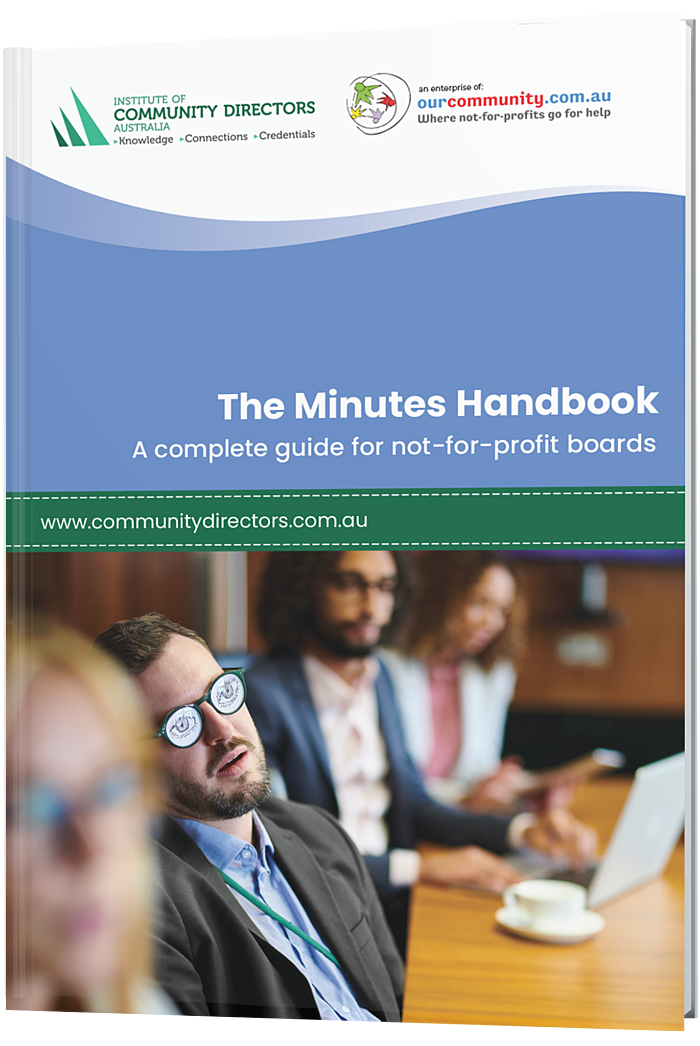
NEW EDITION! The Minutes Handbook: A Complete Guide for Not-for-profit Boards
ISBN: 978-1-876976-77-4
Total pages: 92
Paperback
$39.00 inc. GST
Includes FREE postage within Australia (Shipped Tuesdays and Thursdays)
If the Board can be considered the mind of a community group, the meetings are the heart. This is where all major decisions are made and the Board comes together as a group to steer the organisation towards its mission.
When it comes to recording these meetings though, what's what? What must be recorded and how? Who should manage the minutes and how should they go about it? The Minutes Handbook will guide you from minutes-madness to a better way of minuting in no time at all.
What's inside?
Glossary
Top 10 minute-taking tips
Keeping the minutes safe
Before the meeting
- Standing orders
- What goes on the agenda?
- Routine but important agenda items
- Who sets the agenda?
- Strategy-based agenda planning
- Agenda building timetable
- What makes a good agenda?
- Agenda template
During the meeting
- Who takes notes?
- Should I make an audio or video recording of the meeting? A transcript?
- What’s the role of artificial intelligence?
- Risks and limitations of AI
- What do I actually do during the meeting?
- Online meetings
What you absolutely have to record
- Who’s present
- Conflicts of interest
- New members
- Common seal
- What was circulated
- What people said
- Motions
- Minutes template
What you can record if you want to
- Movers and seconders
- Who votes which way
- Disagreements
- Changing the minutes
Special business
Dealing with confidential issues
Dealing with defamatory comments
After the meeting
- Drafting the minutes
- Follow-up tasks
- Who can vote on the minutes?
- How long do I have to keep the minutes on file?
- Who is allowed to see the minutes?
Ten things the secretary should know about the board
Appendix 1: Sample meetings policy
Appendix 2: Sample standing orders
Appendix 3: Decision-making tool
Appendix 4: What the law says about minutes
- Australian Capital Territory
- New South Wales
- Northern Territory
- Queensland
- South Australia
- Tasmania
- Victoria
- Western Australia
Appendix 5: What the law says about special business
- Australian Capital Territory
- New South Wales
- Northern Territory
- Queensland
- South Australia
- Tasmania
- Victoria
- Western Australia
Bibliography