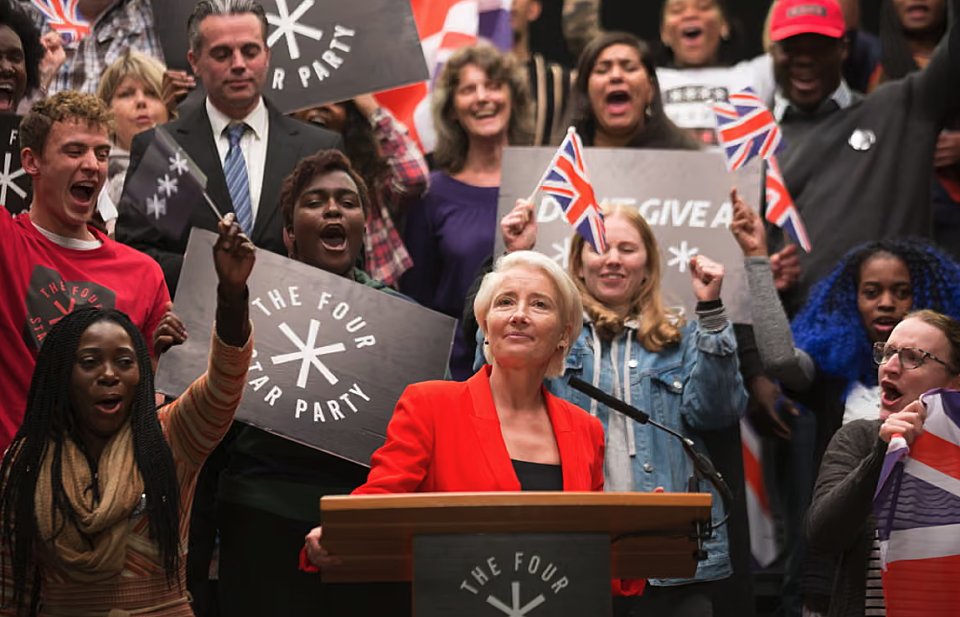
Pauline Hanson and the frightening lesson of ‘Years and Years’
Posted on 07 Oct 2026
Our Community's founder and leader, Denis Moriarty, writes that when he watched an over-the-top…
Posted on 13 Aug 2024
By Rebecca Huntley
We are in the midst of a profoundly challenging time for communities all around Australia.
We are living with a cost-of-living crisis, particularly in the areas of housing and energy. Growing social polarisation. A decline in social cohesion. Disillusioned young people. Individuals, families and communities still attempting to recover from the pandemic and extreme weather events.
Problems such as mental health and family and domestic violence are attracting more and more attention from the media and politicians, but they are not easily fixed.
The result of these many challenges is an Australian people growing more pessimistic about the future and more disconnected from each other.
Against this backdrop, my latest research report, Community Compass, commissioned by Our Community and the Community Council for Australia, suggests room for hope – and the need for a renewed commitment to building up our community sector.
While the report shows that confidence in our future is at a low point, with only a third of us believing things are generally improving, it also finds that a strong majority of us think community organisations make the world a better place and believe community organisations are good at helping to address the problems that governments and the private sector ignore.
This provides a unique opportunity for government to begin addressing the many challenges we face – particularly those related to social cohesion and community connection –through increased support for the community sector.
However, even with increased government support, challenges remain.
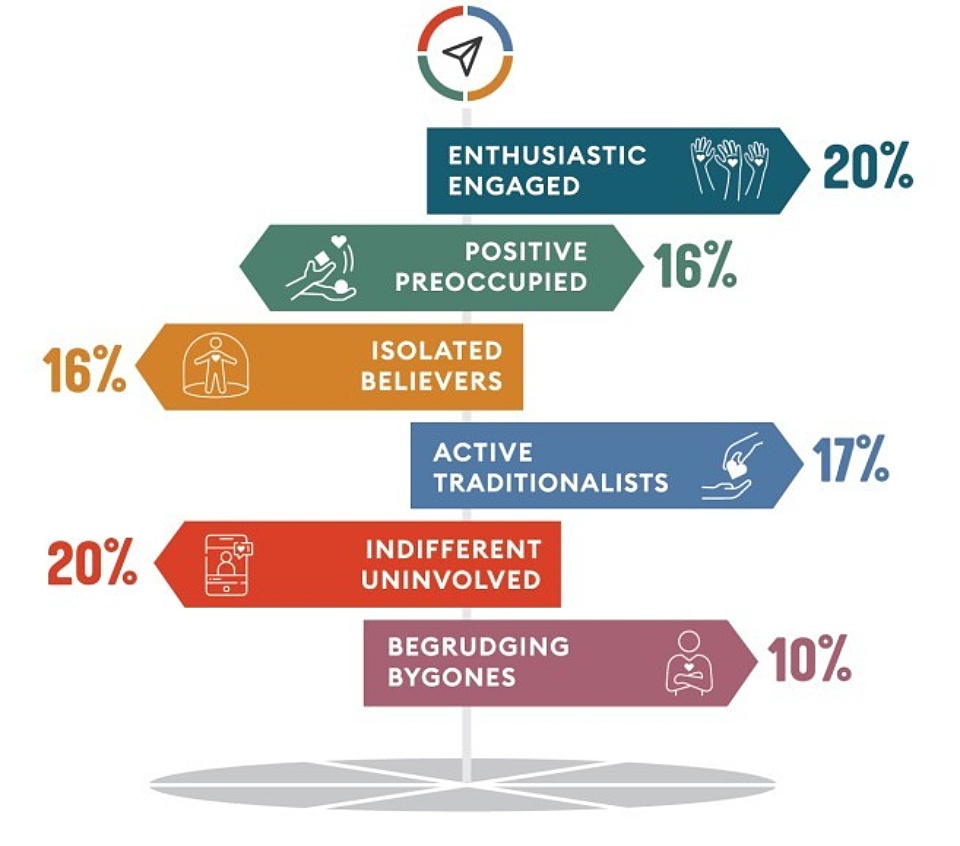
My research shows that many Australians value community organisations and want to be more involved but are unaware of organisations they could join, are unsure how they could help and lack the confidence to get involved.
This suggests that community organisations must find new and creative ways to reach out to Australians and promote the work they do, the positive impact they have, and how community members can play a role.
There is also an urgent need to remove barriers that stop people from getting more involved in their community, especially people who are already isolated, marginalised and vulnerable.
This is particularly important in the case of young Australians, a significant proportion of who report being entirely disengaged from their local communities, and who – we know this from research from the Australian Institute of Health and Welfare and others – feel increasingly lonely and socially isolated.
Despite this disengagement, young people aren’t unreachable and they aren’t “anti-community.” Those under 24 years are more likely than other age groups to consider voting for people with strong community sector policies or encouraging friends or family to vote for “pro-community” candidates or parties. This younger age group is also more likely to have studied or looked into issues raised by the community sector.
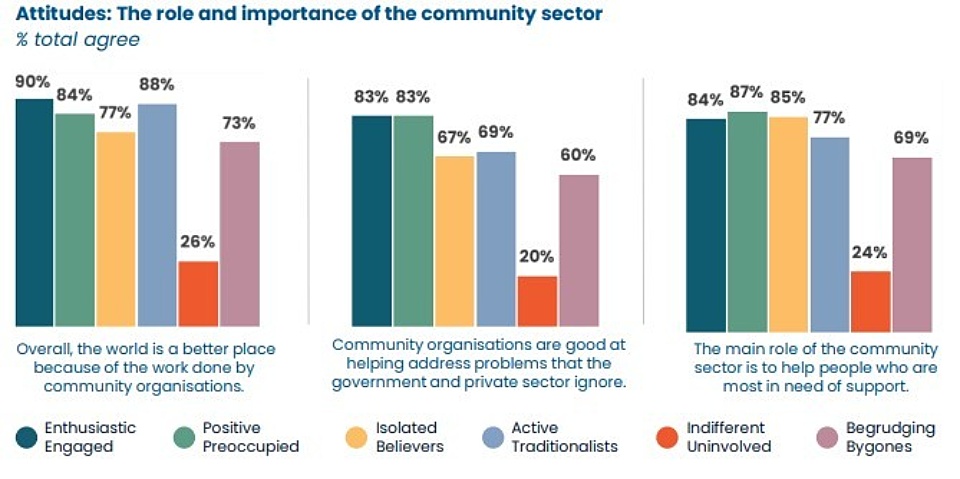
Finding new and meaningful ways to engage with young people, to bring them into community organisations, and to give them a say in discussions on how we address our many challenges and work together to build a better future will be key to our collective progress.
There is no doubt that communities around Australia face daunting and numerous challenges. However, my research shows that there is potential for progress through increasing the role of the community sector in finding solutions, removing barriers to Australians who want to get involved in community organisations, and finding new and creative ways to engage Australians – especially young people – in addressing the many challenges we face.
Dr Rebecca Huntley is one of Australia’s foremost researchers on social trends. She is the director of research at 89 Degrees East, a Fellow of the Research Society of Australia, and the author of How to Talk About Climate Change in a Way That Makes a Difference.
Posted on 07 Oct 2026
Our Community's founder and leader, Denis Moriarty, writes that when he watched an over-the-top…
Posted on 07 Oct 2026
A major public campaign launched this morning is calling on the federal government to restore…
Posted on 07 Oct 2026
The Australian Literacy & Numeracy Foundation (ALNF) has announced a partnership with mining…
Posted on 07 Oct 2026
A conference in Darwin will this morning hear detailed, strategic plans for how Australia could…
Posted on 07 Oct 2026
Joseph Friedman is co-founder and publisher of About Time, Australia’s only newspaper for…
Posted on 30 Sep 2026
There's been a lot of talk about AI this week, and some of it has been frightening. So, is AI good…

Posted on 30 Sep 2026
After the biggest AFL game of the year, one player proudly wore the flag of his birth country and…

Posted on 30 Sep 2026
At 21 years old, Tate Donohoe is the founder of Ecodia, an AI-assisted software development company…

Posted on 30 Sep 2026
Not-for-profit leaders have been warned to be wary of approaches from potential “funding partners”…
Posted on 30 Sep 2026
More than 200 fully funded Centre for Social Impact (CSI) scholarships will help equip for-purpose…

Posted on 30 Sep 2026
Personal stories are among the most powerful tools a charity can have to raise funds and awareness,…

Posted on 23 Sep 2026
In his new book Our Place, policy expert Matt Lloyd-Cope argues that housing must be at the heart…