
Pauline Hanson and the frightening lesson of ‘Years and Years’
Posted on 07 Oct 2026
Our Community's founder and leader, Denis Moriarty, writes that when he watched an over-the-top…
Posted on 01 Jul 2025
By Greg Thom, journalist, Institute of Community Directors Australia
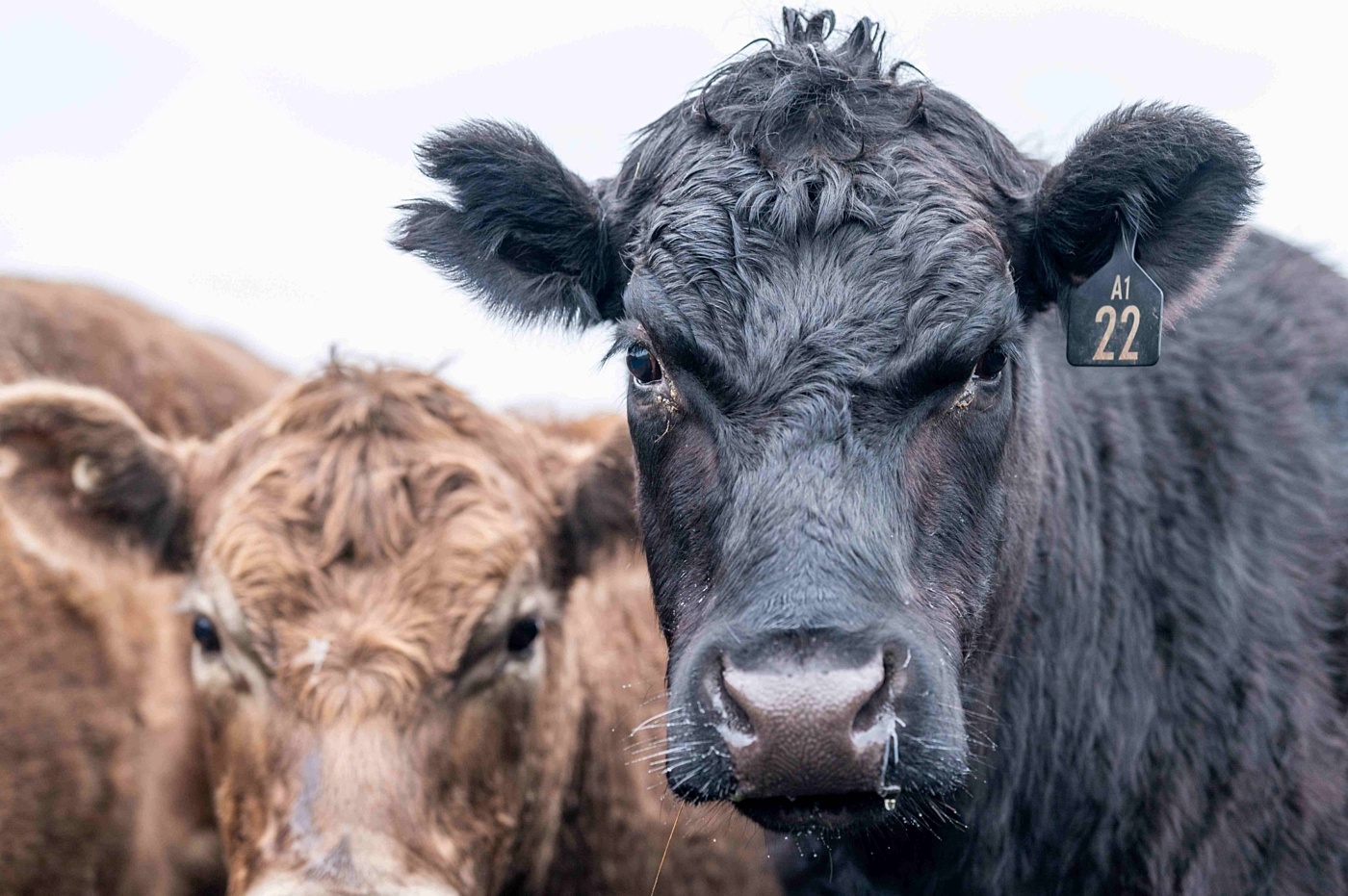
Rural land holders groups have slammed a campaign by the Australian Conservation Foundation (ACF) that activated hundreds of “citizen scientists” to identify the clearing of native species habitat.
Queensland based AgForce and Property Rights Australia called for the ACF’s charity status to be withdrawn over its "Bulldozing the Bush" campaign, which they labelled deceptive.
A total of 675 members of the public identified the clearing of more than 90,000 hectares of land across Australia, using an online tool developed by the ACF, which compared satellite imagery from 2023 and 2024.
The results showing the extent of the deforestation were then sent to ACF investigators for verification.
In its Bulldozing the Bush report, the ACF said most of the clearing – equal in size to 320 Sydney CBDs - occurred on agricultural land, with some of the 176 properties identified located at the edge of a World Heritage Area.
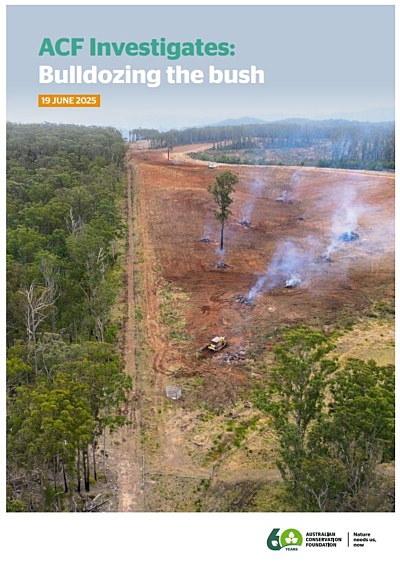
However, AgForce cattle president Lloyd Hick took exception to the ACF’s claim that beef production was the primary driver of destruction of nationally important threatened species habitat.
“The Australian beef industry can rightfully be proud of its credentials and ongoing work in protecting and investing in the environment alongside producing some of the best beef in the world,” said Hick.
“It is therefore deeply disappointing to have a group like ACF write an, at best, misleading report with a sensationalist headline in what can only be assumed is a campaign to derail our industry’s ongoing work.”
Hick said the ACF claimed to care about the environment, yet it continued to act in ways that put the environment at risk.
“The ACF’s accusations of widespread illegal activity by the cattle industry is damaging and defamatory and is a thinly veiled attempt to lobby the federal government to include even more stringent red tape against landholders in the upcoming review of the federal Environment Protection and Biodiversity Conservation Act (EPBC),” he said.
Hick said the ACF campaign came just a month after the European Commission declared Australia at low risk of deforestation.
“The ACF report is full of half stories and mistruths, too numerous to call out here. At it's core though it is dangerous, it must be ignored and called out by policy makers, community, and industry.”
Property Rights Australia described the ACF campaign as a “spurious attack” on Australian farmers.
“The accusations are nothing short of defamation. No case can be made that the landowner actions are illegal and are anything but routine maintenance, conventional farming, or, quite possibly, for wind towers.”
PRA treasurer Joanne Rea said the ACF had been contacting landowners directly to inform them of their obligations around land clearing and reporting transgressions to beef industry supply chains.
“This means many operators identified as bulldozing the bush in this [ACF] analysis risk being locked out of major markets,” she said.
Rea described the ACF as “nothing less than vigilante squads inciting harm against food producers based on their ideology, not the reality of the law.
“Surely making inflammatory accusations when there has been no illegality is defamatory and making emotional appeals for donations is unethical.
“Their registered charity status should be withdrawn.”
“A growing number of farmers, who grow good food while protecting and restoring nature, show agricultural productivity and biodiversity can go hand-in-hand.”
The ACF said that up to 500,000 hectares of habitat is razed in Australia every year. For every 100 hectares cleared, an estimated 2,000 birds, 15,000 reptiles and 500 mammals are killed.
ACF business and biodiversity campaigner Nathaniel Pelle, defended the Bulldozing the Bush campaign and accompanying report.
He said the ACF had a long, proud history of working with farmers and that most were good land managers who wanted to protect trees and healthy ecosystems as habitat for native animals and because they provide benefits to agriculture.
“Most deforestation is carried out by a minority,” said Pelle.
“In Queensland from 2018 to 2020, 364,000 hectares of mature native forest was bulldozed - more than half of it by just 241 landholders.”
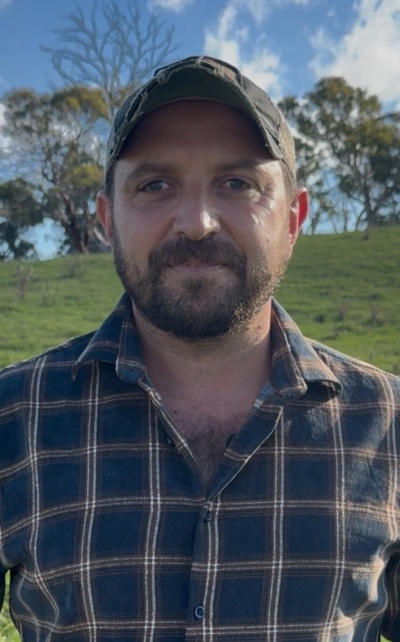
Pelle said most of the 40,000 beef producers in Australia were not involved in deforestation.
“A growing number of farmers, who grow good food while protecting and restoring nature, show agricultural productivity and biodiversity can go hand-in-hand.”
Pelle said the costs of protecting and restoring nature and of shifting to more sustainable practices, should not only be borne by farmers.
“Coles and Woolworths, and billionaire meat processors like Cargill and JBS, make huge profits from Australian beef, while farmers at the other end of the supply chain are pressured to push their land to the edge,” said Pelle.
“We know banks and land valuers encourage deforestation because they fail to value natural capital and place a premium on cleared land.”
Pelle said the ACF investigation had also found regulators culpable for failing to inform farmers of their obligations.
“Our food system doesn’t work for farmers, consumers, or nature. Neither do our environment laws.”
Pelle said Australians who buy a burger at a drive-through or a packet of sausages at the supermarket want to know they aren’t contributing to deforestation.
“[But] at present it’s impossible for them to know, because the big chains and supermarkets don’t differentiate. They also don’t pay farmers a fair price.”
Pelle said the peak agriculture bodies didn't always represent the farmers who were leading the way in sustainable land management.
“We [ACF] campaign for more support for farmers who manage the nature we all benefit from.
“We can't reverse the nature crisis in Australia without the farmers who manage half the country doing some heavy lifting. But we don’t expect them to do it for free.”
Nature-loving keyboard warriors use satellite images to fight deforestation
Posted on 07 Oct 2026
Our Community's founder and leader, Denis Moriarty, writes that when he watched an over-the-top…

Posted on 07 Oct 2026
A major public campaign launched this morning is calling on the federal government to restore…
Posted on 07 Oct 2026
The Australian Literacy & Numeracy Foundation (ALNF) has announced a partnership with mining…
Posted on 07 Oct 2026
A conference in Darwin will this morning hear detailed, strategic plans for how Australia could…

Posted on 07 Oct 2026
Joseph Friedman is co-founder and publisher of About Time, Australia’s only newspaper for…

Posted on 30 Sep 2026
There's been a lot of talk about AI this week, and some of it has been frightening. So, is AI good…

Posted on 30 Sep 2026
After the biggest AFL game of the year, one player proudly wore the flag of his birth country and…

Posted on 30 Sep 2026
At 21 years old, Tate Donohoe is the founder of Ecodia, an AI-assisted software development company…

Posted on 30 Sep 2026
Not-for-profit leaders have been warned to be wary of approaches from potential “funding partners”…
Posted on 30 Sep 2026
More than 200 fully funded Centre for Social Impact (CSI) scholarships will help equip for-purpose…

Posted on 30 Sep 2026
Personal stories are among the most powerful tools a charity can have to raise funds and awareness,…

Posted on 23 Sep 2026
In his new book Our Place, policy expert Matt Lloyd-Cope argues that housing must be at the heart…