AI and charities: it’s all about purpose
Posted on 30 Sep 2026
There's been a lot of talk about AI this week, and some of it has been frightening. So, is AI good…
Posted on 03 Oct 2023
By Greg Thom, journalist, Institute of Community Directors Australia
With less than two weeks to before the referendum, we canvassed a cross section of sector organisations on why they believe an Aboriginal and Torres Islander Voice to Parliament matters.
The purposes that drives charitable, not-for-profit and community sector organisations vary widely, from helping the homeless and advocating for refugees to raising money for medical research or the local footy club.
One issue on which many are in lockstep though, is supporting the Yes case for a Voice to Parliament.
Sector organisations such as the Smith Family, the Alannah and Madeline Foundation, the Brotherhood of St Laurence and the Australian Council of Social Service (ACOSS), to name just a few, have been vocal in their advocacy for the Voice.
Many have gone one step further and joined Allies for Uluru, a coalition of 275 community, non-government and corporate organisations from across the country who have come together to support the implementation of the Uluru Statement from the Heart starting with the establishment of a First Nations Voice to Parliament enshrined in the Constitution.
In recognition of the commitment of much of the sector to the cause, the Australian Charities and Not-for-profits Commission (ACNC) has provided guidance for charities who want to advocate for the Voice.
The Community Advocate approached a cross section of for purpose organisations to gauge why they support the Voice and how they are campaigning for the yes case to succeed in the referendum on October 14.
Diversity Council Australia CEO Lisa Annese
“Diversity Council Australia announced our support for the Voice to Parliament in February this year, four years after publicly backing the Uluru Statement from the Heart in 2019.
“Prior to announcing our official support for the Voice, DCA made a submission to the Federal Government in response to the Indigenous Voice Co-design Process Interim Report in 2021 to show our support for the co-design process and call for a referendum to enshrine a First Nations Voice in the Constitution.
Since then, we have:
• Set up a Yes! Campaign Resource Hub providing helpful links and practical actions to help both organisations and individuals show their support for the Yes! Campaign
• Dedicated our 2023 Anna McPhee Memorial Oration in Melbourne to the Voice Referendum, featuring a keynote from Professor Tom Calma AO, Aboriginal Elder, co-author of the Indigenous Voice Co-design Process Report and 2023 Senior Australian of the Year, who provided a compelling case to vote Yes
• Opened our webinar events, Activate your Voice to Support the Voice and RAPs, Reconciliation and the Referendum up to non-members to attend
• Recognised the impact of the Voice debate on First Nations people in the workplace and held a webinar event, First Nations Identity Strain and Cultural Load at Work to give employers and non-Indigenous colleagues practical advice on how to support Indigenous employees in the lead-up to voting as well as the aftermath
• Sent Inclusion Matters newsletters to our members providing information about the Voice, published blogs and op-eds on the topic. We've been active in our media outreach, successfully generating and contributing to coverage of research and events concerning the Voice.
Australian Conservation Foundation CEO Kelly O’Shanassy
“As the climate and nature crises escalate, we must listen to, learn from and act on First Nations knowledge, wisdom and solutions.
“ACF released a statement in early July outlining why we say Yes to the Voice. In August we joined with 40+ other climate groups to make a strong united statement in favour of the Voice.
“In September we co-hosted a webinar with other environment groups to create a respectful space to listen, ask questions and learn together.
“We encouraged our community groups to participate in the Walk for Yes marches on 17 September. We are participating in ‘calling parties’ – where we phone our supporters and talk with them about the Voice – every Tuesday and Thursday evening from the start of September until the referendum.
“In the first week of October our staff can opt to do two-hour shifts making phone calls to undecided voters.
“Staff can also volunteer to attend pre-polling booths in support of the Yes campaign. ACF’s Carlton office is a distribution hub for Yes corflutes.”
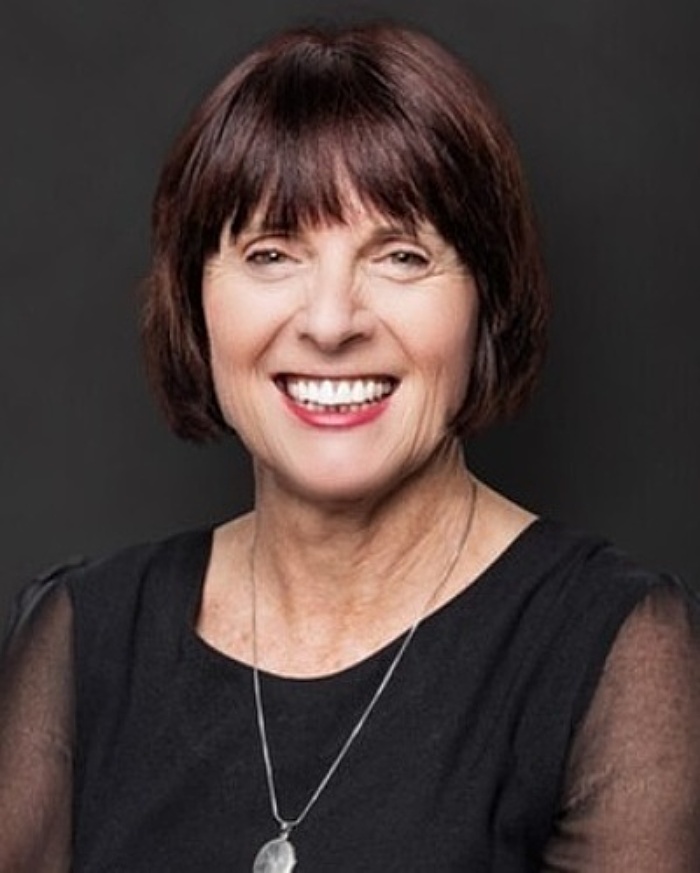
Mission Australia CEO, Sharon Callister
“Mission Australia has been sharing our support for enshrining a Voice to Parliament in the Constitution at the upcoming Referendum in many ways. Externally, we have been sharing our support through social media, our website and involvement in sector events.
“We have also been proactive internally by providing information, empowerment and engagement opportunities for staff.
“These include regular communications from myself, messages of support from senior leaders, staff information sessions, a Voice to Parliament online training course, and an extensive collection of resources on our intranet including ‘Yes’ Teams backgrounds and social media ‘Yes’ tiles available for staff to use as well as an Uluru Statement From The Heart toolkit.
“Our internal social media channels have also provided a platform for respectful and supportive internal discussions and advice with our knowledge group, reference group and Reconciliation Action Plan champions and friends.
“Mission Australia is one of more than 275 civil society and for-service organisations partnering in a mobilised effort called Allies for Uluru.
“Allies for Uluru provides a great collation of information about the Voice, the referendum, and other resources that will guide individuals and other sector organisations in any ways they might want to take in support of the Voice.”
The Fred Hollows Foundation, social justice and regional engagement director Jaki Adams
“The Fred Hollows Foundation publicly supports the Uluru Statement from the Heart in full (Voice, Treaty, Truth) and pledges to vote Yes in recognition of a voice for First Nations Australians.
“In activating this support, the foundation helped launch Allies for Uluru - a coalition of more than 275 organisations supporting the implementation of the Uluru Statement from the Heart, starting with the Voice to Parliament.
“Through Allies for Uluru we act as a conduit for information and action, using our position as leading organisations to generate more awareness and knowledge on the Uluru Statement and amplify the voices of Aboriginal and Torres Strait Islander Peoples.
“The foundation hosted a town hall meeting in September to give our supporters a chance to learn more about the Voice and why we support a Yes vote in the referendum.
“Our board has also issued a public statement of its support for an Aboriginal and Torres Strait Islander Voice being enshrined in the Australian Constitution.
“Among other activities, the foundation has hosted internal working groups, allowed additional leave for all staff to volunteer in support of the referendum, held regular ‘kitchen table’ discussions with our colleagues and had an active social media presence about our position.”
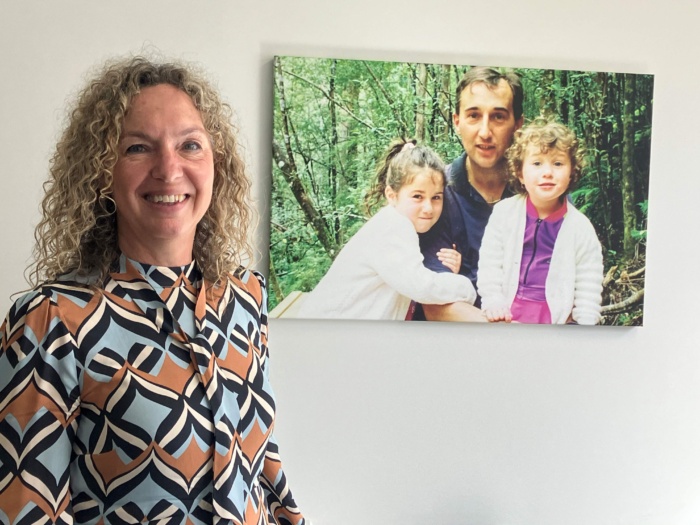
Alannah & Madeline Foundation CEO Sarah Davies
“In March 2023, the Alannah & Madeline Foundation made a public statement supporting the call of the Uluru Statement for a First Nation’s Voice to Parliament enshrined in the Constitution, in the way in which it has been asked.
“We have published this statement and our reasons behind our support of the Voice and are always happy to talk about why we did this as an organisation.
“At our all-staff offsite in June, we were lucky enough to hear from Kenny Bedford, from Yes23, who joined us to talk about the referendum and gave an opportunity for anyone to ask questions and explore issues openly and honestly.
“We discuss the referendum regularly, among ourselves, with staff and board, and through our RAP committee. In particular, we are conscious of the impact on young people of the tone and content of the range of conversations and statements on social media.
“We strongly promote the support of the Australian Human Rights Commission which has great links and resources, from the eSafety Commission and Headspace, among others.
“As an expert in digital and media literacy we see first-hand the significant harms that misinformation and disinformation and poor online behaviour can have on young people.”
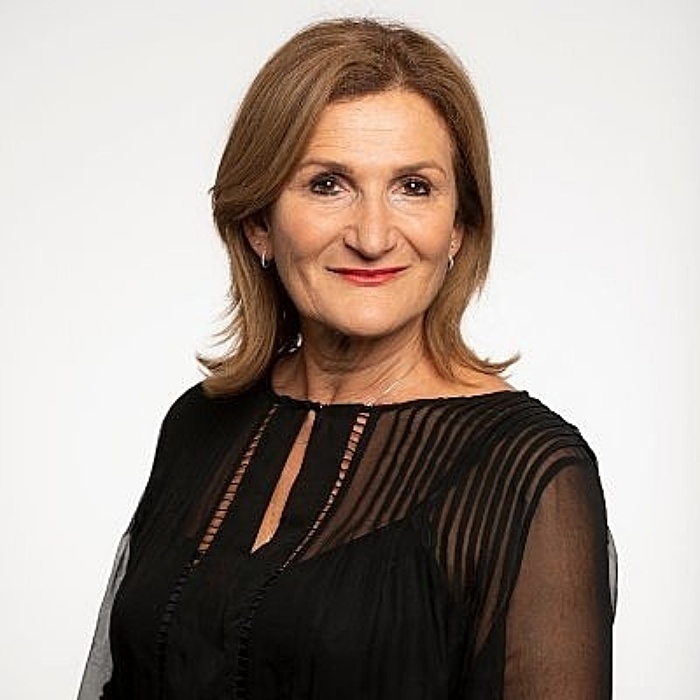
Settlement Services International CEO Violet Roumeliotis
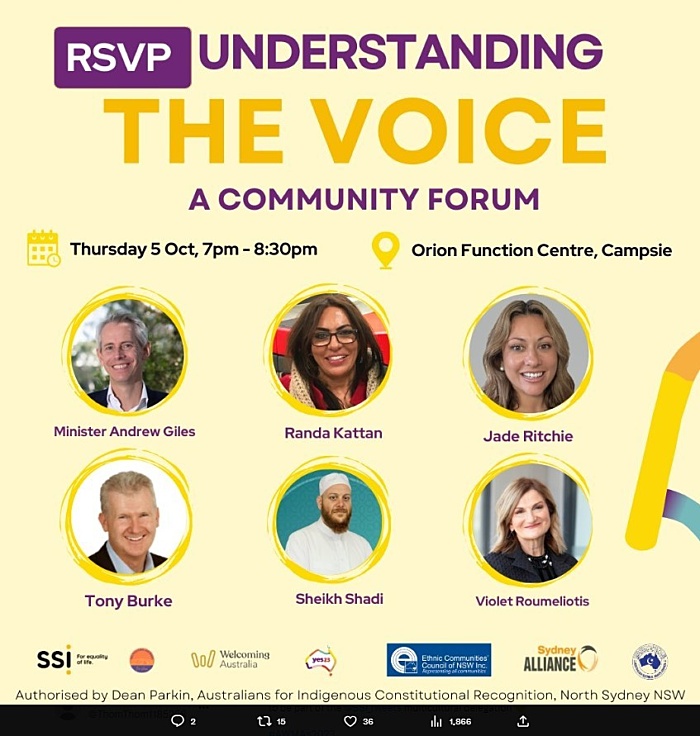
“SSI has prioritised awareness and information sharing to ensure that our staff and community have the facts when they head to the voting booth on referendum day.
“For example, we have held staff ‘lunch and learn’ sessions with a constitutional law expert and tea-break sessions explaining how a referendum works.
“We have also created a dedicated intranet page with in-language resources and FAQs. Externally, we have taken a principled position in favour of Yes through both earned media activity and blog posts and opinion pieces posted our channels.
“And we have partnered a number of other community organisations to host community information townhalls in Melbourne, Brisbane and Sydney.”
Infoxchange CEO David Spriggs
"Infoxchange has been an active member of Allies for Uluru (a network of civil society organisations supporting the Voice to Parliament) and sought to amplify the key messages and education on the referendum.
“This has included a submission to Parliament, internal education and opportunities for discourse (yarn circles), social media endorsements and the launch of our digital referendum resource on Ask Izzy.

“With a single click from the Ask Izzy home page, those who use our site to complete over 250,000 searches each month for community support services can now access simple, straightforward and factual information about the referendum.
“The resource includes how to vote, details about the Voice to Parliament, language translations, AUSLAN information resources and support for Indigenous people during this time.
“We hope it helps to empower informed decision-making, however people choose to vote. “
Brotherhood of St Laurence CEO Travers McLeod
“BSL has been heavily involved in supporting the Uluru Statement from the Heart and a Yes vote in the forthcoming referendum.
“We are committed to helping to build understanding of how constitutional recognition and a Voice to Parliament can be an example of lasting change, one which improves outcomes for First Nations people and for all Australians.
“BSL was an early backer of the Uluru Statement and invited the co-chairs of the Uluru dialogues, Professor Megan Davis and Aunty Pat Anderson AO, to deliver our annual oration in December 2022.
“Our overarching aim – through a variety of targeted activities – is to inform and educate the communities we work with, as well as our 2,500 staff and volunteers, partners and stakeholders, and the public on the importance of the referendum.
“We have encouraged members of the BSL community to form their own view and discuss the issues respectfully and have explained how a Yes vote aligns with our vision for an Australia free of poverty.
“Specific initiatives include operating weekly bus tours to our various sites across Victoria to chat with our staff and volunteers about the referendum, supporting the promotion and distribution of resources for CALD communities (including fact sheets in 50+ languages and creating over 1000 Yes badges in various languages other than English), championing a Yes vote across our social media and internal communications with videos and infographics produced inhouse and providing all BSL sites with posters and resource packs to hand out to visitors.
“We’ve held two BSL Talks webinars on the Voice to Parliament and the practical benefits of voting Yes. We’ve also hosted leaders from the Yes campaign, such as Professor Megan Davis, Pat Anderson AO and Noel Pearson, to speak about the referendum and what a yes result would mean for Aboriginal and Torres Strait Islander people.
“People passing through the CBD will have seen our huge Listen to the Heart, Say ‘YES’ to the Voice banner displayed on St Paul’s Cathedral opposite Flinders Street Station and Federation Square, and we’re a proud and active member of the Allies for Uluru Coalition.
“We’ll continue to strongly advocate internally and externally in the lead up to 14 October – as an organisation we firmly believe a Yes vote is the fair and just outcome.”
Diversity Council Australia CEO Lisa Annese
“DCA supports constitutional recognition through a Voice to Parliament because it is a fair and practical change that will give Aboriginal and Torres Strait Islander people the chance to have a say on policies that impact their lives.
“DCA’s mission is to create a more inclusive and diverse Australia where everyone can feel supported and accepted. Supporting the Yes campaign and encouraging our members to be active in their support for a First Nations Voice to Parliament is a way we can tangibly bring life to this vision.
“Our 2021-2022 Inclusion@Work Index shows that three out of four Australian workers support or strongly support their organisation taking action to create a workplace that is diverse and inclusive. Genuine inclusion must begin with reconciliation.
“There can be no genuine workplace inclusion while First Nations Peoples are excluded from opportunities, and we as a nation do not address race relations, equality and equity, unity, institutional integrity, and historical acceptance by including First Nations people in the Constitution.”
Australian Conservation Foundation CEO Kelly O’Shanassy
“When we see the beauty of Australia’s stunning natural landscapes and wildlife, we witness the enduring strength of Aboriginal and Torres Strait Islander cultures.
“That connection to Country is a precious gift for all of us, because we need to learn from Aboriginal and Torres Strait Islander cultures about the protection and care of nature. But to learn, we must first listen.
“Listening to First Nations peoples will drive better and fairer outcomes for First Nations communities: for health, housing, and more.
“And it will drive better outcomes for all Australians, including protecting the ancient culture and landscapes we love.”
Mission Australia CEO, Sharon Callister
“While we acknowledge differences of opinion including amongst Aboriginal and Torres Strait Islander peoples and their communities, Mission Australia supports enshrining a Voice to Parliament in the Constitution at the upcoming referendum.
“We also acknowledge that sovereignty has never been ceded and that holistic conversations and action around treaty and truth need to complement proposed changes regarding a Voice to Parliament.
“Having an enshrined First Nations Voice to Parliament, to bring Aboriginal and Torres Strait Islander peoples’ perspectives to the laws and policies that impact them, is important for our work at Mission Australia.
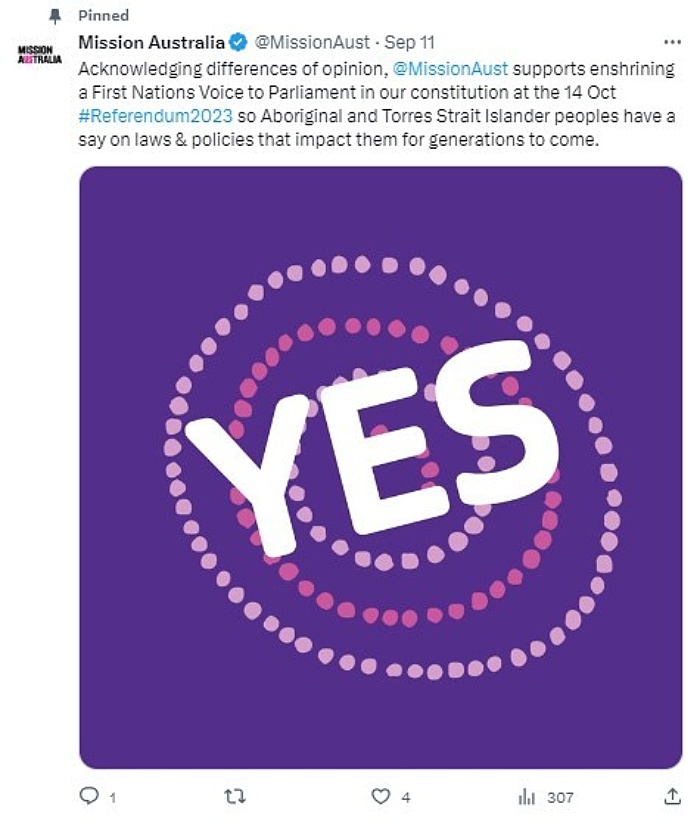
“We have long worked with Aboriginal and Torres Strait Islander people as colleagues, as providers of support, as people we serve and as partners in our communities, and reconciliation is a key part of our work.
“Across our areas of service, we want to make sure that we are listening to and understanding what works for Aboriginal and Torres Strait Islander communities – nothing about them, without them.
“The Voice to Parliament will empower Aboriginal and Torres Strait Islander people to have a say on the laws and policies that impact them. It will be a permanent institution that will provide advice to the Parliament and Government on important issues.
“The Referendum is an historic opportunity to reimagine our nation. It is our chance to come together to deliver real change for Aboriginal and Torres Strait Islander people so they can have a say and lead the work that affects them, for generations to come.”
Fred Hollows Foundation social justice and regional engagement director Jaki Adams
“The Fred Hollows Foundation has always supported elevating the voices of Aboriginal and Torres Strait Islander Peoples, and our support of the Yes campaign is an extension of this.
“We support the Uluru Statement from the Heart (Voice, Treaty, Truth) specifically because the reforms set out within it are fair and practical, and long overdue.
“Professor Fred Hollows was a staunch supporter of fairness, justice, and self-determination of Aboriginal and Torres Strait Islander Peoples, and the foundation continues his legacy.
“We also know that many of the drivers of inequitable eye health are linked to, and are a result of, inequity in broader health, social and economic outcomes.
“We believe constitutional recognition through a Voice is critical to closing the gap in eye health and improving longer-term outcomes for Aboriginal and Torres Strait Islander people.
“It will improve health outcomes and have a tangible impact on other issues impacting eye health, such as diabetes.”
Alannah & Madeline Foundation CEO Sarah Davies
“Having consulted with staff, the board, and our First Nations partners and stakeholders, we supported the Voice for two simple reasons:
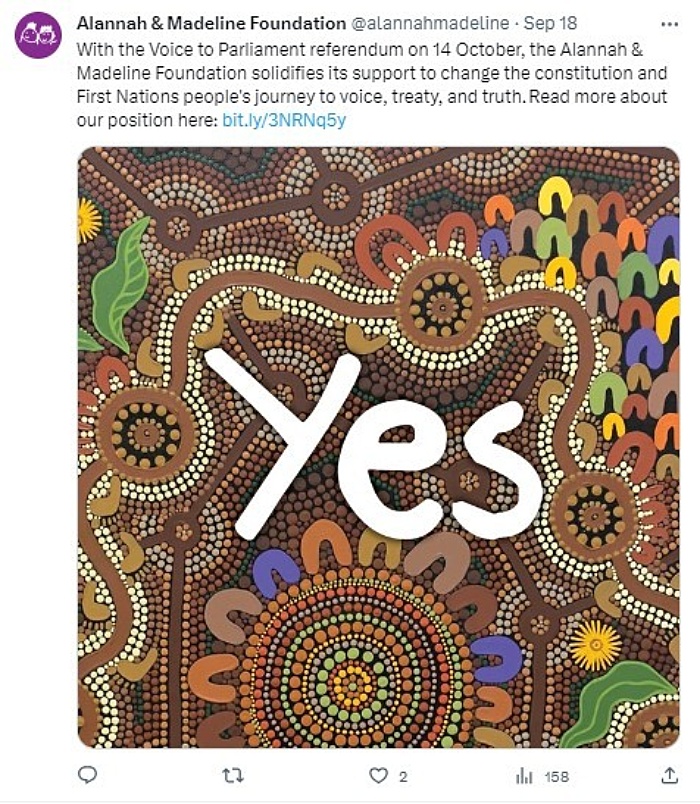
“As a national not-for-profit organisation dedicated to keeping children and young people free from violence and trauma, the Alannah & Madeline Foundation has three principles which underpin all its work and values:
Four core implementation principles of a child rights-based approach are:
It is a government's responsibility to ensure that children's best interests are met, and that responsibility includes ensuring the underlying conditions, such as enabling regulation, structures and processes are in place.
The Voice represents these exact same principles.
Settlement Services International CEO Violet Roumeliotis
“As a leading human service organisation in Australia, we work with and welcome the thousands of refugees and migrants who come to our country from all over the world each year.
“We welcome them to a place where First Nations people have had a continuous connection to the land for more than 65,000 years, contributing culture, wisdom and care for the land.
“This has not always been acknowledged, respected, or considered, including in Australia’s 122-year-old Constitution. We have an opportunity to change that.”
Infoxchange CEO David Spriggs
“Infoxchange' vision is technology for social justice. We work throughout Australia, supporting First Nations people and Indigenous-led organisations with technology to empower the services and support they provide for their communities.
“The Voice to Parliament represents a critical moment in history and is a necessary and fundamental step towards a fairer and more just Australia.
“We fully support the Uluru Statement from the Heart in its entirety.
“Constitutional recognition through an Aboriginal and Torres Strait Islander voice is the form of recognition chosen by Elders and leaders of Indigenous communities across Australia and we support this self-determined position, resulting from years of Indigenous-led conversations, reports and community consultation.”
Brotherhood of St Laurence CEO Travers McLeod
“There are many reasons why BSL supports the campaign for constitutional recognition and establishment of a Voice to Parliament, including alignment with our overall values and purpose as a social justice organisation and our vision for an Australia free of poverty.
“BSL’s experience working across the Australian community shows that listening to those most impacted by policies and services delivers better services and better outcomes.
“This is what the Voice to Parliament enables. Most importantly, Indigenous people have themselves organised, consulted and determined that this is the best way forward to achieve change.
“In this spirit, we accept the generous offer of Aboriginal and Torres Strait Islander people to walk with them in a movement for a better future.
“We’re committed to helping to build an understanding of how constitutional recognition and a Voice to Parliament can be an example of a long overdue and lasting change, one which improves outcomes for First Nations people and for all Australians.”
Diversity Council Australia CEO Lisa Annese
“The Voice to Parliament referendum represents a pivotal moment in Australian history, and organisations have an important role to play.
“Publicly announcing your support for the Voice is a powerful and influential step alongside providing education opportunities and resources for employees, stakeholders and customers.
“Research has found that consumers expect brands to take a stand on equality issues and companies with a strong ESG approach tend to do better financially than those who don’t.
“DCA has compiled a list of things organisations can do to support the Voice, including hosting an event, rolling out training and resources, showing support on social media and encouraging employees to volunteer.”
Australian Conservation Foundation CEO Kelly O’Shanassy
“It’s up to other groups to choose how they can best be involved, but it is so important that Australians have access to accurate information from trusted groups about the Voice to counter the flood of misinformation that’s out there.”
Mission Australia CEO, Sharon Callister
“Clearly stating your organisation’s support for a Voice to Parliament both internally and externally, and providing resources, learning opportunities and accurate information sources to staff are important ways engage people in the lead up to the referendum.
“There are some fantastic resources out there that can be used to support the Yes vote, including educational resources from Yes23 and Uluru Dialogue.
“We also recommend joining and supporting advocacy groups, including the Allies for Uluru Coalition which is made up of more than 275 community, non-government and corporate organisations from across the country that have come together to support the implementation of the Uluru Statement from the Heart, starting with the establishment of a First Nations Voice to Parliament enshrined in the Constitution.”
Fred Hollows Foundation social justice and regional engagement director Jaki Adams
“The Fred Hollows Foundation encourages all Australians to find out more about the Voice and educate themselves so they can make an informed decision at the referendum.
“With less than two weeks until the referendum on 14 October, the time to activate is now. We say ‘write Yes’ for a better future for all Australians.
“If other organisations would like to join us in pledging Yes and showing support, we very much welcome that!
“One way not-for-profits can get involved is by joining the Allies for Uluru, a network of more than 275 civil society organisations who have proudly come together to support the Voice.
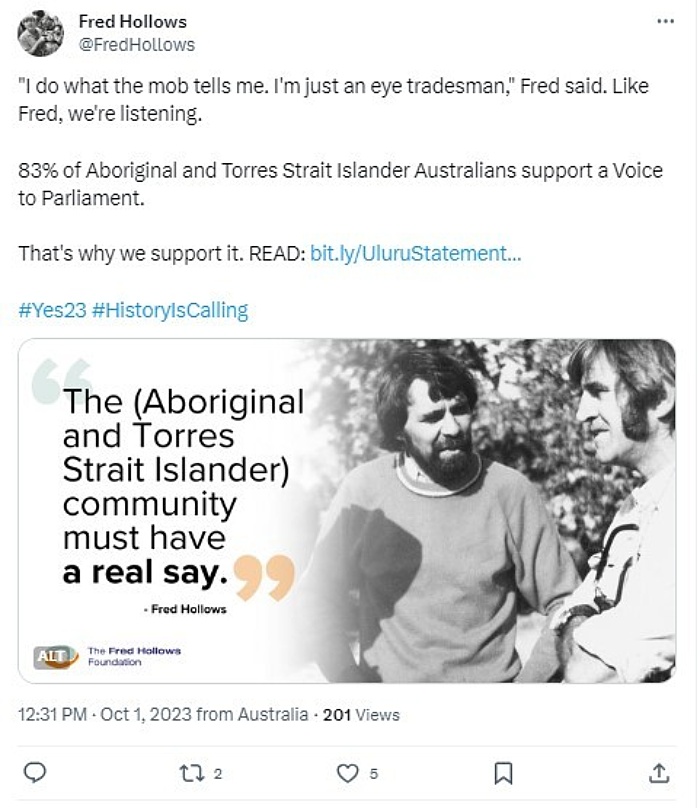
“By becoming a member of the coalition, groups are supported to engage with resources on the Voice and given ideas on how to activate their networks to secure a Yes vote at the referendum.
“Organisations can encourage their staff and networks to read the Uluru Statement from the Heart, share their position on social media and support staff to become Yes volunteers.
“Support can also be as simple as encouraging people to have conversations with friends and family about issues affecting Aboriginal and Torres Strait Islander peoples.”
Alannah & Madeline Foundation CEO Sarah Davies
“I think that has to depend on their purpose, their communities, their philosophy and their values.
“The Alannah & Madeline Foundation does not support the Voice for any political reason.
“We support it because it aligns with the principles we have deliberately chosen to underpin our work and approach, in particular the right of every child to express their views, feelings and wishes in all matters affecting them, and to have their views considered and taken seriously.
“We all know that good advice leads to good decisions, and good decisions lead to better outcomes. Other organisations have to make their own judgments about what matters to them, what is needed for them to fulfil their purpose, and how.
“I’d also strongly recommend the ACNC commissioner’s guidance on charities’ role in the Referendum.”
Settlement Services International CEO Violet Roumeliotis
“One of the biggest issues plaguing the progress of the Voice to Parliament is a high volume of misinformation in communities, social media and media settings.
“Everyday conversations with our family, neighbours and co-workers are one of the more simple but powerful tools at our disposal. Yes23 has even created guides to support you in these discussions.
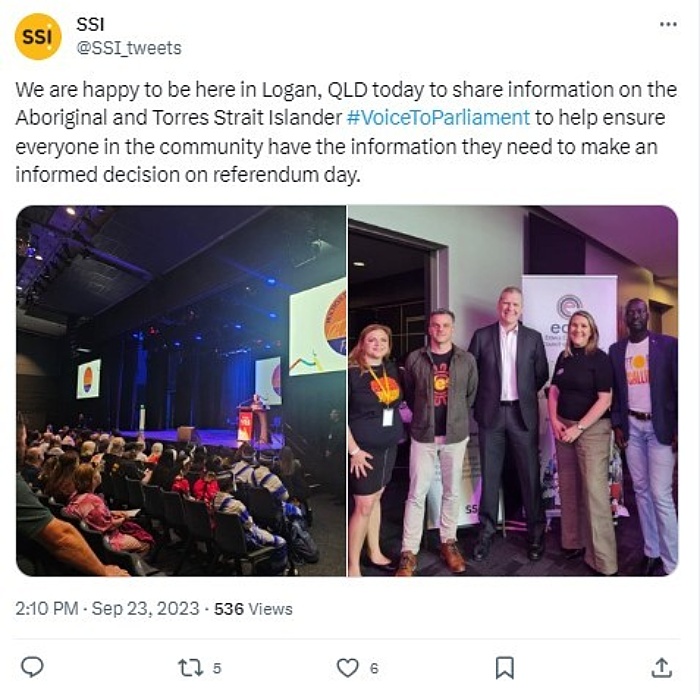
“As sector organisations, we can also do our part to disseminate accurate information to our staff and community base.
“The government has created a wealth of resources in a number of languages to help people better understand both the referendum and the proposal they are voting on.”
Infoxchange CEO David Spriggs
“Consult with the communities you serve and show your solidarity and endorsement as appropriate. Consider membership of Allies for Uluru and how your networks can help distribute or amplify factual and trustworthy information on the referendum.”
Brotherhood of St Laurence CEO Travers McLeod
“With only a few weeks left, the focus must be on practical and achievable actions to support the Yes campaign.
“The most important thing is ensuring you’re equipped to educate people you have a relationship with who may have barriers to informing themselves about the referendum – we encourage other organisations to find ways to provide accessible information to the communities they work with.
“Be proactive in reaching out to people and instigate open, transparent and factual conversations on the importance of a Yes vote.
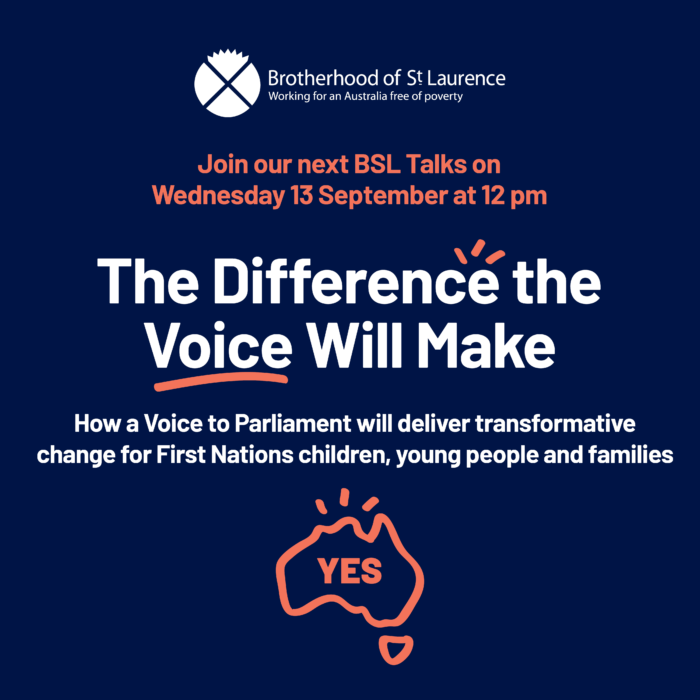
“You don’t need to reinvent the wheel. There are many resources available through the Yes 23 and Uluru Statement websites – but where appropriate, tailor the way in which you present the message to the people you know in a way that will make sense to them.
“In these final weeks it’s critical to focus on open conversations with people about the Voice – this is the most significant way to reach those who are undecided.
“At BSL, we’re operating street stalls to engage with community groups and centres. We encourage other organisations to do the same.
“We must be mindful this is an incredibly difficult time for Aboriginal and Torres Strait Islander people and do our best to show empathy, understanding and support either side of the vote on 14 October.”
Posted on 30 Sep 2026
There's been a lot of talk about AI this week, and some of it has been frightening. So, is AI good…

Posted on 30 Sep 2026
After the biggest AFL game of the year, one player proudly wore the flag of his birth country and…

Posted on 30 Sep 2026
Not-for-profit leaders have been warned to be wary of approaches from potential “funding partners”…
Posted on 30 Sep 2026
More than 200 fully funded Centre for Social Impact (CSI) scholarships will help equip for-purpose…

Posted on 30 Sep 2026
Personal stories are among the most powerful tools a charity can have to raise funds and awareness,…

Posted on 23 Sep 2026
In his new book Our Place, policy expert Matt Lloyd-Cope argues that housing must be at the heart…

Posted on 23 Sep 2026
There are solutions to counter the rise of One Nation but they might not be residing in the mess…
Posted on 23 Sep 2026
A just-released major global survey of charities has found that demand for charity assistance has…
Posted on 23 Sep 2026
Fresh from welcoming delegates to last week’s Philanthropy Australia conference in Brisbane,…
Posted on 23 Sep 2026
A national strategy to develop Australia's regional cities is needed to break the housing…

Posted on 23 Sep 2026
Eight years after a report to Treasury first suggested the charities regulator should be more…
Posted on 17 Sep 2026
Australia’s biggest gathering of philanthropists, which drew more than 1200 delegates to Brisbane…