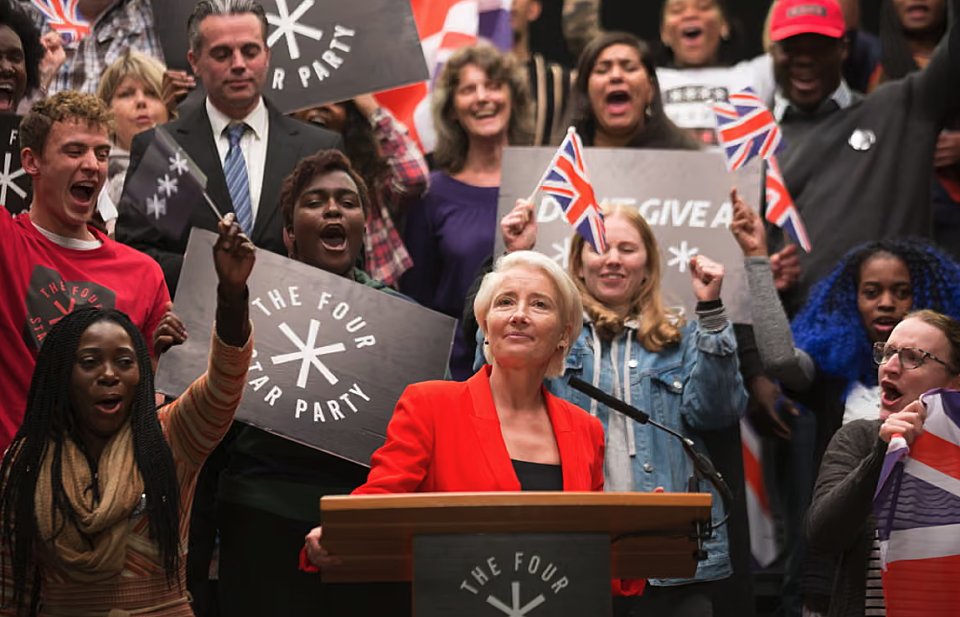
Pauline Hanson and the frightening lesson of ‘Years and Years’
Posted on 07 Oct 2026
Our Community's founder and leader, Denis Moriarty, writes that when he watched an over-the-top…
Posted on 07 May 2024
By Greg Thom, journalist, Institute of Community Directors Australia

In a sporting first, a not-for-profit organisation dedicated to preventing violence against women will provide face-to-face educational training to all AFL players.
Our Watch, a national leader in the prevention of violence against women and their children in Australia, will partner with the AFL to deliver educational workshops to all teams in the men’s and women’s competitions.
The training aims to provide players with an understanding of:
The initiative comes as anger over violence toward women culminated in protest marches across the country last week.
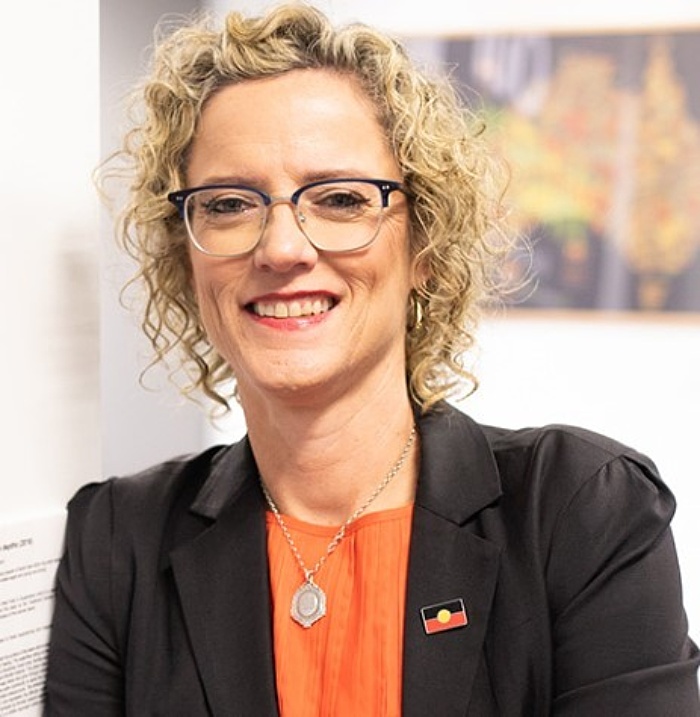
The movement prompted the Albanese government to call an emergency national cabinet meeting to discuss the issue, culminating in a pledge to commit $925 million in next week’s federal budget to support women escaping violent relationships.
Our Watch CEO Patty Kinnersly said it was fantastic that the AFL and its players were taking the initiative to better understand violence against women and the attitudes that drive it, and to be part of the change.
“Preventing sexism and inequality in sport is about cultural change, changing the rules by which we play, and the environments we operate in,” said Ms Kinnersly, who is also vice president of AFL club Carlton.
“It’s about extending principles of equality and fairness beyond the field into the boardroom, the coach’s box, the stands, the change rooms, and the media.”
Ms Kinnersly said that statistics indicated there are AFL and AFLW players in every team who have witnessed or experienced violence against women.
“Players are in a unique position to lead the change in attitudes that both create a fair and inclusive sport and help end violence against women in the broader community.”
The educational workshops are designed to complement the AFL’s Respect and Responsibility Policy, which focuses on creating a safe and inclusive environment for women and girls, men and boys, and people of diverse genders.
Players have previously completed online education on the issue, but it was hoped the face-to-face workshops would help ensure players felt supported and encouraged to build healthy relationships and act appropriately.

“Preventing sexism and inequality in sport is about cultural change, changing the rules by which we play, and the environments we operate in.”
The AFL's executive general manager of inclusion and social policy, Tanya Hosch, said the partnership with Our Watch was important for players and the broader community.
“AFL and AFLW players are role models for thousands of people, and we felt it was important for us to take a whole-of-sport approach to this crucial piece of education and work.”
“The AFL is committed to promoting gender equality and ensuring a safe, fair and inclusive environment for everyone, including women and girls.”
Ms Hosch said that the as leaders, the AFL had a responsibility to ensure that players are educated, supported, helped to understand and develop respectful relationships, and helped to understand how to be active bystanders for gender equity.
“The training reinforces we are all responsible for treating women and girls with respect,” said Ms Hosch.
Hawthorn player Chad Wingard said there was no place in society for violence against women.
“As players and leaders in the AFL, we must all stand up and speak out against this violence, be the voice for those who cannot be heard and help enact change.
“I applaud the football industry for being proactive in this space. We have to be better and do whatever we can do create a safer future for women, everywhere.”
Phillip Ripper, CEO of No to Violence, the peak body for organisations working with men to end family violence, said the national cabinet meeting on violence against women was a missed opportunity.
“We need radical change to focus on the real problem, and that is men using family violence.
“While we welcome the Prime Minister’s national leadership, ending family violence requires a focus on the men who use family violence.”
Mr Ripper said women, children, and communities deserve to live safe and dignified lives free from the threat of family violence – a situation not possible under the current system.
Mr Ripper called for a national perpetration strategy to focus on the source of family violence and men’s use of violence.
Anti-domestic-violence music program hits the right note among young boys
Domestic violence victim-survivors find freedom in a fresh start
Posted on 07 Oct 2026
Our Community's founder and leader, Denis Moriarty, writes that when he watched an over-the-top…

Posted on 07 Oct 2026
A major public campaign launched this morning is calling on the federal government to restore…

Posted on 07 Oct 2026
The Australian Literacy & Numeracy Foundation (ALNF) has announced a partnership with mining…
Posted on 07 Oct 2026
A conference in Darwin will this morning hear detailed, strategic plans for how Australia could…
Posted on 07 Oct 2026
Joseph Friedman is co-founder and publisher of About Time, Australia’s only newspaper for…

Posted on 30 Sep 2026
There's been a lot of talk about AI this week, and some of it has been frightening. So, is AI good…

Posted on 30 Sep 2026
After the biggest AFL game of the year, one player proudly wore the flag of his birth country and…

Posted on 30 Sep 2026
At 21 years old, Tate Donohoe is the founder of Ecodia, an AI-assisted software development company…

Posted on 30 Sep 2026
Not-for-profit leaders have been warned to be wary of approaches from potential “funding partners”…
Posted on 30 Sep 2026
More than 200 fully funded Centre for Social Impact (CSI) scholarships will help equip for-purpose…

Posted on 30 Sep 2026
Personal stories are among the most powerful tools a charity can have to raise funds and awareness,…

Posted on 23 Sep 2026
In his new book Our Place, policy expert Matt Lloyd-Cope argues that housing must be at the heart…