Pauline Hanson and the frightening lesson of ‘Years and Years’
Posted on 07 Oct 2026
Our Community's founder and leader, Denis Moriarty, writes that when he watched an over-the-top…
Posted on 19 Jun 2024
By Greg Thom, journalist, Institute of Community Directors Australia

One of the not-for-profit sector’s peak representative bodies has joined forces with the federal Opposition to address issues arising from the government’s recently passed legislation on fixed-term contracting.
The Community Council for Australia (CCA) is working with shadow Charities spokesman Dean Smith to seek a solution to the problem of unintended consequences of changes to the Fair Work Act.
A key amendment, which became law in December 2023, limits the length of fixed-term contracts and introduced new rules governing when they can be used.
The CCA said that while its members – which number more than 70 organisations – overwhelmingly support the intent of the government’s Secure Jobs, Better Pay package, the change to contracting rules means many sector organisations are now unable to align employment and funding contracts.
The changes have raised fears the new contracting laws will increase overhead costs and negatively affect service delivery for charities and not-for-profits that are already under pressure.
“It should go without saying that it is financially irresponsible to put people on permanent contracts if an organisation only has short-term funding,” said CCA CEO David Crosbie.
“And yet that is what many charities are now being forced to do under the new IR legislation that restricts repeated fixed term contracting for people who earn under $167,000.”
Mr Crosbie said making charities put people on permanent contracts made them less viable, less able to retain skilled staff and less able to guarantee the services that communities rely on.
“We need a change to the legislation in recognition that many charities only exist through fixed-term funding, and they are only financially viable if they can continue to contract skilled staff in line with their funding requirements.”
Despite the concerns, calls for the government to address the issue have allegedly fallen on deaf ears.
The CCA has already met twice with Senator Smith, and a third meeting is planned for this Friday to discuss a potential legislative solution to the problem.
“The real-life consequences of this are now being contemplated and are actively being discussed in charity organisations themselves.”
In an interview with the Community Advocate, Senator Smith said while the change in the law was not in doubt, the lack of clarity for charities and community groups on how they are affected was of concern.
“The Parliament’s view is clear: the law has changed,” said Senator Smith.
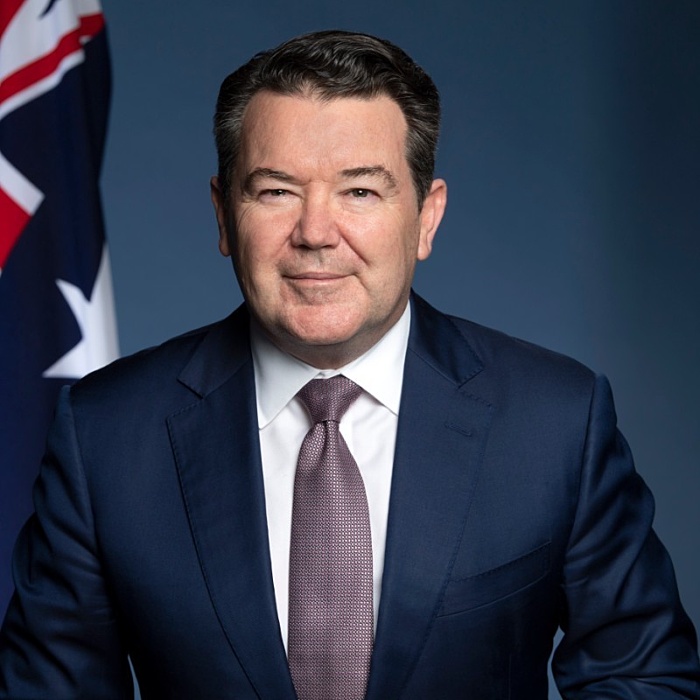
“What’s very clear to me is that how the law will apply to the charities sector is not clear.”
Senator Smith said despite attempts to find out more information and engage with Fair Work Australia, the sector has been unable to get legal clarity on what the changes mean.
“The real-life consequences of this are now being contemplated and are actively being discussed in charity organisations themselves.”
Senator Smith said faced with little flexibility under the new laws and an inability to obtain solid advice or certainty, charities and NFPs were being forced to adapt their operations based on the law as it stands.
“And that’s going to be very unfortunate for the sector because costs will increase, services will be delayed or declined and people that have been making valuable contributions over a long period of time, in an environment where those employment contracts are different, will all be lost.”
Senator Smith conceded the changes to contracting would not affect all sector organisations equally, with larger NFPs and charities able to adapt more easily.
"The experience across the sector is different in regard to these workplace changes, and some of the sector participants have different views about the level of flexibility they should be given in the workplace changes scheme of things.
"So, a key question for the sector is: to what extent do people support each other even if they’re not impacted, or, even if they have a different policy or philosophical view to what some sector participants are trying to achieve."
Senator Smith said he believed there was a way to achieve a better outcome for the sector.
"I’ve got some ideas about how I can bring some advocacy, and it’s an advocacy not about the politics, it’s about giving the sector the certainty that it needs and deserves, given the demands that are being placed on it at the moment.
"I think [the contracting issue] is a really powerful example of how the sector has been willing to give the government the benefit of the doubt, but then it finds itself at this critical juncture at the eleventh hour.
"So, then my job is to support and to bring some pressure to bear but in a way that gets the [right] outcome for the sector."
While he said it was important not to politicise efforts to achieve a positive outcome for charities and NFPs on contracting, Senator Smith took a swipe at Charities Minister Andrew Leigh for not doing enough to address the sector’s concerns.
"[I'm surprised by] the lack of urgency or the lack of attention that this issue has been given – and I’ve got to say on this occasion the lack of attention by Minister Leigh, who should be the sector’s advocate in the government," said Senator Smith.
"The sector shouldn’t have to go and engage with government. That is Andrew Leigh’s job – to be the sector’s advocate in the government.
"So, I’m surprised that it’s got to this very fragile point."
Charities Minister Andrew Leigh said that under the former Liberal Government, too many people struggled with insecure work.
"This put more pressure on charities such as food relief services," he said.
Mr Leigh said Labor’s workplace law changes are aimed at providing more people with secure, well-paid jobs.
"We will continue to engage with the charity and non-profit sector to avoid any unintended consequences for organisations that rely on government grants to support their work."
Don’t mention the war ...on charities
Steps toward a stronger sector
Posted on 07 Oct 2026
Our Community's founder and leader, Denis Moriarty, writes that when he watched an over-the-top…

Posted on 07 Oct 2026
A major public campaign launched this morning is calling on the federal government to restore…

Posted on 07 Oct 2026
The Australian Literacy & Numeracy Foundation (ALNF) has announced a partnership with mining…

Posted on 07 Oct 2026
A conference in Darwin will this morning hear detailed, strategic plans for how Australia could…
Posted on 07 Oct 2026
Joseph Friedman is co-founder and publisher of About Time, Australia’s only newspaper for…

Posted on 30 Sep 2026
There's been a lot of talk about AI this week, and some of it has been frightening. So, is AI good…

Posted on 30 Sep 2026
After the biggest AFL game of the year, one player proudly wore the flag of his birth country and…

Posted on 30 Sep 2026
At 21 years old, Tate Donohoe is the founder of Ecodia, an AI-assisted software development company…

Posted on 30 Sep 2026
Not-for-profit leaders have been warned to be wary of approaches from potential “funding partners”…
Posted on 30 Sep 2026
More than 200 fully funded Centre for Social Impact (CSI) scholarships will help equip for-purpose…

Posted on 30 Sep 2026
Personal stories are among the most powerful tools a charity can have to raise funds and awareness,…

Posted on 23 Sep 2026
In his new book Our Place, policy expert Matt Lloyd-Cope argues that housing must be at the heart…