
Save Izzy: campaign calls on government to restore funding for vital services directory
Posted on 07 Oct 2026
A major public campaign launched this morning is calling on the federal government to restore…
Posted on 28 Jan 2026
By Nick Place, journalist, Community Directors

The headlines don’t last long. The fire roars, the news is dominated by images of smouldering car shells, exhausted fire fighters, and tangled metal that was once houses or farm sheds, and then the media caravan moves on, frequently to the next natural disaster.
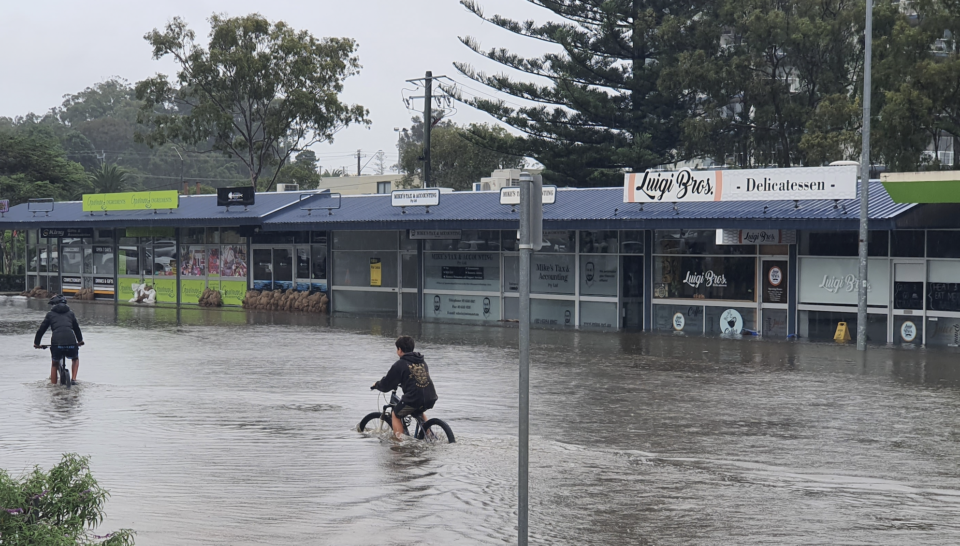
But for the communities left in the ashes of what used to be their town, or in the murk of receding flood waters, recovery takes a lot longer and is often extremely complex.

With this in mind, the Foundation for Rural & Regional Renewal (FRRR) has launched a disaster recovery appeal, as fires continue to roar across Victoria and flooding subsides in Queensland. The appeal aims to provide medium to long-term recovery support, as experience shows that communities need recovery plans that last months or years, to assist healing beyond rebuilding.
While the Victorian Government has offered immediate support through emergency relief payments, mental health support and the like, organisations such as FRRR and dedicated rural and regional charities have found that they need to work to a longer post-crisis timeline.
“Every community is different and needs will change and evolve, especially once the immediate relief efforts have concluded,” FRRR CEO Natalie Egleton said. “It will be important there is support available in the medium to longer term.
“We are experienced in what will be needed as they work through the recovery, and welcome donations to our recovery appeal. As always, our focus will be on the local community groups and organisations that are currently playing and will continue to play a vital role in the recovery – offering flexibility, trusted community knowledge, and a long-term lens as needs and priorities evolve.”
“Recovery isn’t just about replacing fences and houses and livestock, but it’s about rebuilding the social fabric at the same time, getting the local sporting clubs happening again, getting the community fetes happening again.”
The reaction to the Victorian fires and the almost simultaneous floods in north Queensland caused by ex-Tropical Cyclone Koji has underlined the increasing need for regional Australia to be adaptable and ready for the inevitable disasters to come.
The Australian Local Government Association (ALGA), the peak body for local councils, has called for more untied funding for councils so they have better capacity to step in during the evermore frequent times of crisis.
Quoted in Government News, ALGA president Matt Burnett said untied funding, through Commonwealth financial assistance grants, needed to be unconditional, allowing councils to spend money on what they recognised as local priorities. Untied funding helped local councils “build critical capacity and capability to recover from disasters, as well as strengthen their disaster mitigation and resilience,” he said.
The Australian Institute for Disaster Resilience has offered local governments, neighbourhood houses, health care networks and small business groups its suite of guides, advice and practices for helping affected communities recover from disaster, including quick guides, recovery resources, a webinar series on the subject, and emergency planning materials.
FRRR’s head of partnerships, Deb Samuels, said the foundation’s appeal was directed at communities affected by the Victorian fires and the Queensland floods, as the challenges ahead were similar, even if the devastation couldn’t be more different.
“Our focus is on the medium to long-term recovery of the affected communities, as we know from experience that recovery will take years. It’s critical that funds are there for local organisations when they are ready to activate community-led recovery efforts, which is often long after the immediate relief efforts have ceased and other funding has been exhausted,” she said.
“We will work closely with and support local community groups and not-for-profit organisations. These grassroots organisations are often first to respond and the last ones standing, providing critical support and services that are integral to recovery efforts – but they typically find it hard to access funding. Funds raised through our appeal will be used to support the projects that these local groups prioritise.”
Charities Minister Andrew Leigh agreed, telling the Community Advocate that he admired the work of community foundations as critical players in regional communities recovering from disaster.
“I see the work of community foundations as being a great way of fostering recovery and recognising the recovery isn’t just about replacing fences and houses and livestock, but it’s about rebuilding the social fabric at the same time, getting the local sporting clubs happening again, getting the community fetes happening again. A community foundation can invest in both the hard infrastructure and the soft infrastructure around recovery,” he said.
Responding to the call for more untied funding for local councils, Minister Leigh said the federal government had “given record funding to local governments, and those financial assistance grants are an important way in which the Commonwealth looks to support their work. Obviously, the Commonwealth government budget is in deficit at the moment, and so we’re having to make a range of tough choices, but in that context, local governments have done well, and we have provided significant funding to them. In the Regional Development Minister, Kristy McBain, you’ve got a former mayor, somebody who very much understands what’s the situation of local governments and is sensitive to that as she makes those funding decisions.”
FRRR disaster recovery appeal here.
Posted on 07 Oct 2026
A major public campaign launched this morning is calling on the federal government to restore…
Posted on 07 Oct 2026
The Australian Literacy & Numeracy Foundation (ALNF) has announced a partnership with mining…

Posted on 07 Oct 2026
A conference in Darwin will this morning hear detailed, strategic plans for how Australia could…

Posted on 30 Sep 2026
Not-for-profit leaders have been warned to be wary of approaches from potential “funding partners”…
Posted on 30 Sep 2026
More than 200 fully funded Centre for Social Impact (CSI) scholarships will help equip for-purpose…

Posted on 30 Sep 2026
Personal stories are among the most powerful tools a charity can have to raise funds and awareness,…

Posted on 23 Sep 2026
A just-released major global survey of charities has found that demand for charity assistance has…
Posted on 23 Sep 2026
Fresh from welcoming delegates to last week’s Philanthropy Australia conference in Brisbane,…

Posted on 23 Sep 2026
A national strategy to develop Australia's regional cities is needed to break the housing…

Posted on 23 Sep 2026
Eight years after a report to Treasury first suggested the charities regulator should be more…

Posted on 17 Sep 2026
Australia’s biggest gathering of philanthropists, which drew more than 1200 delegates to Brisbane…
Posted on 16 Sep 2026
A new partnership between Paul Ramsay Foundation (PRF) and Atlassian Foundation aims to attract…