
Save Izzy: campaign calls on government to restore funding for vital services directory
Posted on 07 Oct 2026
A major public campaign launched this morning is calling on the federal government to restore…
Posted on 11 Mar 2026
By Nick Place, journalist, Community Directors
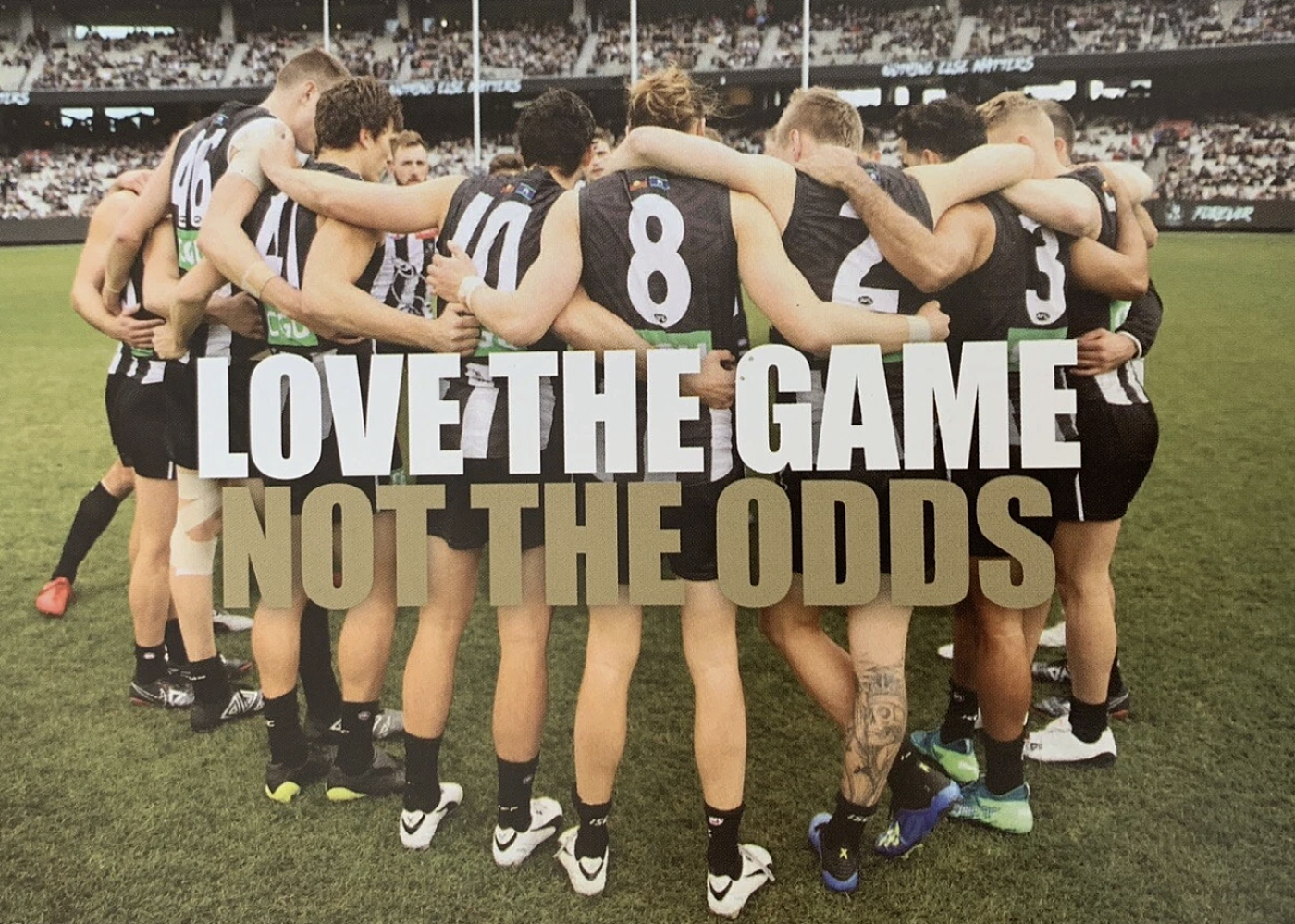
Footy is back, from rugby league in Las Vegas to Aussie Rules at the MCG, and you know what that means: wall-to-wall gambling advertisements.
As the NRL and AFL seasons begin, the calls are louder than ever for the government to take action against gambling advertising and retention techniques – techniques the industry uses to keep gamblers active and spending on online platforms.
The Alliance for Gambling Reform's CEO Martin Thomas says the damage caused by gambling addiction to teenage sports fans is catastrophic. Recent research by the Australia Institute found there are more Australians under 18 betting on sport than actually playing organised sport, including all codes of football, soccer, cricket and other sports.

“Over 902,000 teenagers (12–19-year-olds) gambled in the past year, of which around 600,000 were aged just 12–17 years old – this is 33.8 per cent of all teenagers, or enough to fill the MCG nine times over,” said the Australia Institute discussion paper from March last year.
“Australians gamble more than any another nation. Gambling starts well before the age of 18 – almost one in three (30 per cent) 12–17-year-olds gamble,” the paper said. “This increases to almost half (46 per cent) of 18–19-year-olds, and these habits persist into adulthood. Without greater regulation the losses associated with gambling are likely to grow.”
The Australia Institute research found that Australian teenagers gamble an estimated $231 million a year, and the damage only builds as they become adults.
Thomas said Roy Morgan research showed that one in two Australian men aged 18–24 reported gambling, while one in four reported a gambling problem.
The Alliance for Gambling Reform has renewed its call for the federal government to adopt the 31 recommendations of its own report You Win Some, You Lose More, the result of an inquiry by the House of Representatives Standing Committee on Social Policy and Legal Affairs, chaired by the late Labor MP Peta Murphy.
On March 24, the Alliance says, Murphy’s report will have sat on a shelf, without action, for 1000 days since being released.
Teal Independent MP Monique Ryan is using the occasion to push a private member’s bill calling for gambling harm to be treated as a public health issue, something Wesley Mission CEO Rev Stu Cameron supports.
“Unchecked gambling harm is fuelling a public health catastrophe in Australia, affecting millions of people and families,” Cameron said. “Our frontline teams see the daily toll, from housing stress and domestic and family violence to mental health distress and suicidal ideation.
“For too long gambling harm has been treated as purely economic and personal, allowing powerful interests to shape the narrative. Governments must act decisively to prevent and reduce gambling harm through strong evidence-based public health measures that will positively impact and save lives.”
“I think we are being slowly cooked alive by gambling ads.”
A key recommendation of the Murphy report was to phase out and eventually ban gambling advertising, something that current polling suggests 75 per cent of Australians endorse, yet when the major football codes gear up this week, betting company adverts will as usual dominate TV coverage and social media, as well as appearing at sporting venues.
“I think we are being slowly cooked alive by gambling ads,” Martin Thomas told the Community Advocate. “The nature of gambling in Australia has changed over the last 10 years. For a long time, the focus and the biggest losses were around poker machines, and they still represent $17 billion in losses, they’re still incredibly harmful.
“But now, the number of people that are gambling online, on their phone, is just surging. It’s growing at about 40 per cent every year, and instead of the traditional old man sitting in a smoky corner of a pub playing a poker machine, instead it’s young people, teens, particularly men 18 to 24, but virtually every demographic is gambling on their phone,” he said.
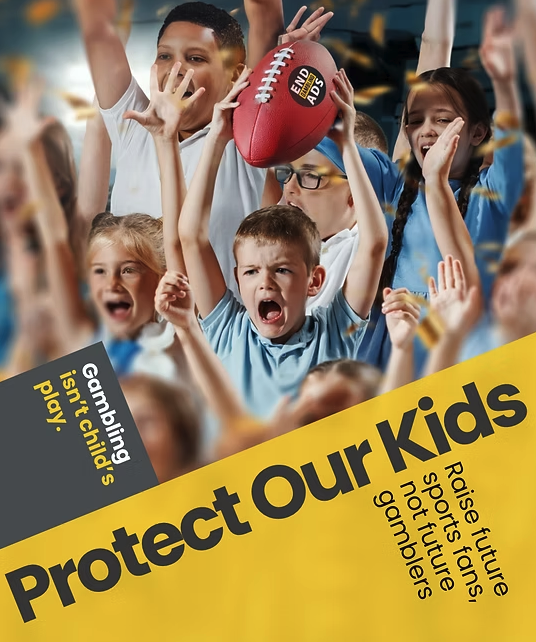
“It’s a legal adult product, but because it’s harmful we need to restrict the way it’s advertised and we need to particularly restrict the way kids get exposed to it,” he said. “We have mums and dads that say our eight-year-old kids keep asking us what a ‘multi’ is … it’s crazy.”
Thomas said online gambling was particularly dangerous because of its lack of a shopfront. Instead, it lived on the phones of vulnerable teens.
He said Australia urgently needed to ban gambling advertising, appoint a national gambling regulator, and end the constant gambling enticements to young people, where incentives are offered to those who have stepped away from gambling, potentially because of financial losses.
“If you’re gambling, you might have a bit of a flutter and then you decide to stop, particularly if you’re finding, oh gee, I’m losing my shirt here, I’m going to stop,” Thomas said. “But these companies employ thousands of what you could call case managers, for want of a better word, and they’ll reach out via text or whatever, to say: we miss you. Here’s $4,000 in free bets, if you match it, and you’re off again. Or they’ll text you about the latest hot tip in the Melbourne Cup. We've heard of people being offered free VIP tickets to the football and other events. It makes it extremely hard for someone to actually give up gambling when they’ve decided to.”
Thomas said there was a human toll to this, citing the case of a family who prefer to stay anonymous but have agreed for their story to be used as a warning to others. They lost a son when he took his own life, citing an inability to stay clear of such inducements.
“He left a note behind that was the most eloquent kind of tragic document I think I’ve ever read,” Thomas said.
The Alliance believes it is essential that the federal government steps in to stop foreign companies – which make up about 80 per cent of the online gambling business – being able to take advantage of the Northern Territory’s lesser demands for transparency, through special purpose documents.
“I think it’s going to take a federal government intervention, and given the federal government’s not doing much on anything to do with gambling, I can’t see that happening unfortunately, but the idea of a national regulator would solve a lot of those problems,” he said.
The Alliance for Gambling Reform said it was not waiting for the government to act, but working to develop education, resources and tools to help the one in four young Australians who report a gambling problem.
Thomas likened the current crisis to the prelude to Australia’s ban on tobacco advertising.
“I grew up with Benson & Hedges cricket posters on my wall,” he said. “Formula One was a race between Rothmans and Marlborough. Australia was ahead of the curve in banning tobacco ads and it’s the same now with gambling ads. They’re the driver, and particularly around young people, and even kids, so if we can ban it online particularly, if we can ban it in the stadium, if we can ban it on players’ jerseys, I reckon in another 10 years, we’ll look back and we will have treated gambling ads like tobacco and we will think what idiots we were for waiting so long.”
Australia Institute report on teenage gambling in Australia
Love the game, not the odds website
Alliance for Gambling Reform website
Posted on 07 Oct 2026
A major public campaign launched this morning is calling on the federal government to restore…

Posted on 07 Oct 2026
The Australian Literacy & Numeracy Foundation (ALNF) has announced a partnership with mining…

Posted on 07 Oct 2026
A conference in Darwin will this morning hear detailed, strategic plans for how Australia could…

Posted on 30 Sep 2026
Not-for-profit leaders have been warned to be wary of approaches from potential “funding partners”…

Posted on 30 Sep 2026
More than 200 fully funded Centre for Social Impact (CSI) scholarships will help equip for-purpose…

Posted on 30 Sep 2026
Personal stories are among the most powerful tools a charity can have to raise funds and awareness,…

Posted on 23 Sep 2026
A just-released major global survey of charities has found that demand for charity assistance has…
Posted on 23 Sep 2026
Fresh from welcoming delegates to last week’s Philanthropy Australia conference in Brisbane,…

Posted on 23 Sep 2026
A national strategy to develop Australia's regional cities is needed to break the housing…

Posted on 23 Sep 2026
Eight years after a report to Treasury first suggested the charities regulator should be more…

Posted on 17 Sep 2026
Australia’s biggest gathering of philanthropists, which drew more than 1200 delegates to Brisbane…
Posted on 16 Sep 2026
A new partnership between Paul Ramsay Foundation (PRF) and Atlassian Foundation aims to attract…