
Save Izzy: campaign calls on government to restore funding for vital services directory
Posted on 07 Oct 2026
A major public campaign launched this morning is calling on the federal government to restore…
Posted on 20 May 2026
By Nick Place, journalist, Community Directors
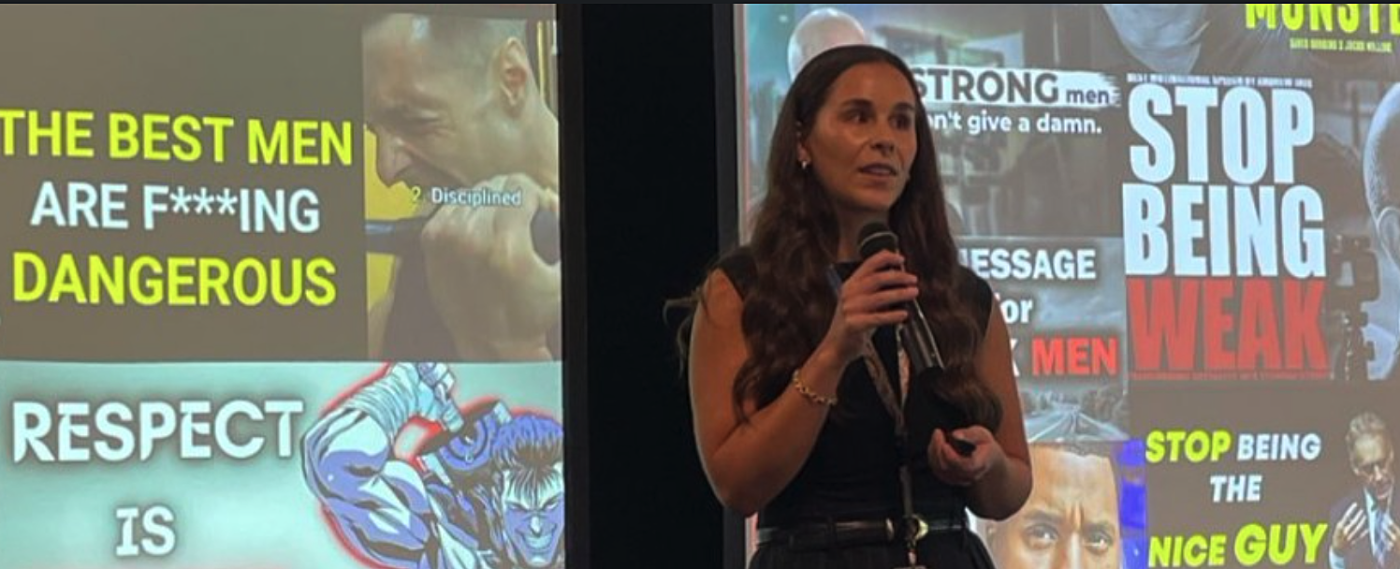
A Movember Institute academic, Dr Krista Fisher, has achieved a world first by creating a unique evidence-based tool for categorising masculinity content, as the basis of the just-announced Masculinity Content Classification Framework (MCCF).
In essence, she’s mapped the manosphere.
It would be fair to say Dr Fisher, a research fellow who leads the Movember Institute of Men’s Health’s online masculinity initiative, and her fellow researchers took a hard road to their achievement. They studied more than 2000 TikTok videos from the feeds of young men in Australia, the United States and the United Kingdom to document the content streams, language, tags, categories and other specifics of social media content for young men.
“I’ve been studying this for two years,” Fisher told the Community Advocate. “The first paper that has just been released, that’s part one of a broader research initiative – to be able to develop that framework for masculinity content. That’s the major piece of the puzzle to then allow us to measure how that content exposure is associated with the young men’s reported mental health, relationships, and attitudes towards seeking help, all those kinds of things, which is part two of the study that we aim to release in the next six months. I’m doing the data analysis now.”

Fisher said the project was designed to test the general assumption that the manosphere is “one thing – one ideology, one type of influencer, one type of young man.” The Movember Institute research team watched videos from the “For You” page of 142 young men aged between 16 and 25.
“It was myself and two other co-authors, watching the same videos with me. That allowed us to ensure that we’ve reliably coded the videos the same way,” she said.
The data showed that 38 per cent of videos on the young men’s feeds were classified as “cultural touchpoints”, including videos about sport, gaming, fitness and everyday entertainment. Six per cent of content was “masculine status” content, promoting “stereotypical ideals of manhood across dating, appearance and financial success.”
Less than one per cent was “degrading health” content, the researchers said. This meant videos glorifying nihilism, self-harm, misogyny and violence.
“‘Degrading health’ content is what dominates headlines, but it doesn't exist in isolation,” Fisher said. “It sits at the end of a pipeline starting with the football highlights and the gym motivation videos. It’s the cultural packaging through which intensifying exclusionary attitudes and violence gets diluted. Harm and hate is hard to see – until it’s not.”
The Masculinity Content Classification Framework was announced in an academic paper published last week in Telematics and Informatics. Fisher said establishing a rigorously researched and “standardised measurement of a currently elusive cultural ideology” was essential because it offered a practical tool for researchers, policymakers, regulators, parents, teachers and young men to use to chart what is being served up to impressionable brains.
The idea was to “map the full road” of social content for that cohort, instead of taking what Fisher called “a traffic light approach to regulation – waiting for content to cross a red light and then get removed.” With the MCCF, patterns that enable extreme content to occur can be identified, high-risk viewing behaviour can be monitored, and researchers can evaluate whether current moderation approaches are working, or not.
“Degrading Health content is what dominates headlines, but it doesn’t exist in isolation. It sits at the end of a pipeline starting with the football highlights and the gym motivation videos.”
Fisher’s goal is to “build and scale healthy masculinity content – that promotes flexibility rather rigidly, encourages attitudes and behaviours that keep girls, women and others safe, and provide information, guidance and community to young men in a way that matters to them.”
As a central part of her research, Fisher, an Australian woman in her early thirties, created a TikTok account and surfed other forums using the persona of “Liam”, a 17-year-old American boy. Then she watched the difference in what algorithms dished up to their feeds.
It was profound. As Fisher wrote in an article for Women’s Agenda, “Krista’s feed: Anne Hathaway’s ‘ageless face.’ The latest six-star BookTok recommendation. High-protein recipes and #WIEIAD videos.
“Liam’s feed: a new ‘research laboratory’ selling Retatrutide. Dating tips to escape the ‘friend zone.’ BDSM scenes from Euphoria. NBA highlights from Luka Dončić’s sixty-point game.”
“Switching between Krista and ‘Liam’s’ for-you pages was like crossing a chasm between parallel digital universes that rarely touch,” she wrote. “Different messages. Different pressures. Different ideas about identity, gender roles, relationships, body image – all delivered through hyper-personalised algorithms that learn and weaponise our vulnerabilities the minute we enter our gender, age and interests.”
Speaking to the Community Advocate, Fisher acknowledged that witnessing the messaging to teenage boys had taken a toll. As “Liam”, she watched on when a 16-year-old posted a selfie on a subreddit and asked for an “honest” rating of his appearance and how he could improve it. The audience piled on with gleefully savage scores out 10 for appearance, and one suggested he should have major facial surgery or kill himself.
Asked whether she felt a need to shower after watching such interactions, she said, “Oh, gosh, yeah. There were some days where I needed more than a shower, I can tell you that much. A lot of the content that I saw did stick with me. There were times where I could scroll heaps of videos and not necessarily think too much about it. And then there were other moments or videos that, for whatever reasons, struck a much deeper chord with me, that unearthed something, either an assumption or a new level of empathy, and taught me a lot.”
For parents concerned about what their sons might be absorbing on Tik Tok or other social feeds, Fisher’s advice is that the key is to approach the topic from a position of curiosity, not judgment.
“We need to open up conversations with young men from a place of curiosity, not leading with assumptions, not leading with generalisations or ways we as adults might see or understand the manosphere to be,” she said. “Actually let them drive the conversation, let them share what they think about some of the content that they’re seeing, stories that they’re seeing, because every individual feed is so different. When we come in with assumptions, we shut down conversations, and we can’t do that.”
Social media evolves at such a pace that the entire digital landscape Fisher was charting shifted during the two years of the project.
“When I started, the manosphere and masculinity content was becoming a bigger issue in young men’s worlds. We knew that it was impacting the way that they were formulating ideas about masculinity, but also that it related to their health and well-being and their relationships with other people,” she said.
“But the field two years ago was in such a different place. Our conversations about the manosphere have changed. Research in that time has changed. Much more evidence has come out to suggest that link between content exposure, with the manosphere ideologies becoming much more mainstream, the self-improvement content, and the impacts of that being beneficial for young men, especially their self-help content, self-improvement content.
“Young men are telling us that they’re finding that motivational, that they’re getting guidance from that content, that they feel it’s giving them a kind of greater sense of hope and optimism about the world.
“But equally, they’re reporting poorer mental health outcomes from engaging with that content.”
As Fisher toils away on part two of her work, she is hopeful it will be embraced by the social media gatekeepers.
“I’m very hopefully that moderators at TikTok, and experts at eSafety, can use this framework to find a better way of actually understanding the full spectrum of masculinity content,” she said. “Not just wait for that extreme content to arise, which crosses the line.”
Movember’s summary of the work is here.
The Masculinity Content Classification Framework is here.
Dr Krista Fisher’s personal take on the experience of conducting the research is here (Women’s Agenda).
The academic paper (published in Telematics and Informatics, via ScienceDirect) is here.
Posted on 07 Oct 2026
A major public campaign launched this morning is calling on the federal government to restore…

Posted on 07 Oct 2026
The Australian Literacy & Numeracy Foundation (ALNF) has announced a partnership with mining…

Posted on 07 Oct 2026
A conference in Darwin will this morning hear detailed, strategic plans for how Australia could…

Posted on 30 Sep 2026
Not-for-profit leaders have been warned to be wary of approaches from potential “funding partners”…
Posted on 30 Sep 2026
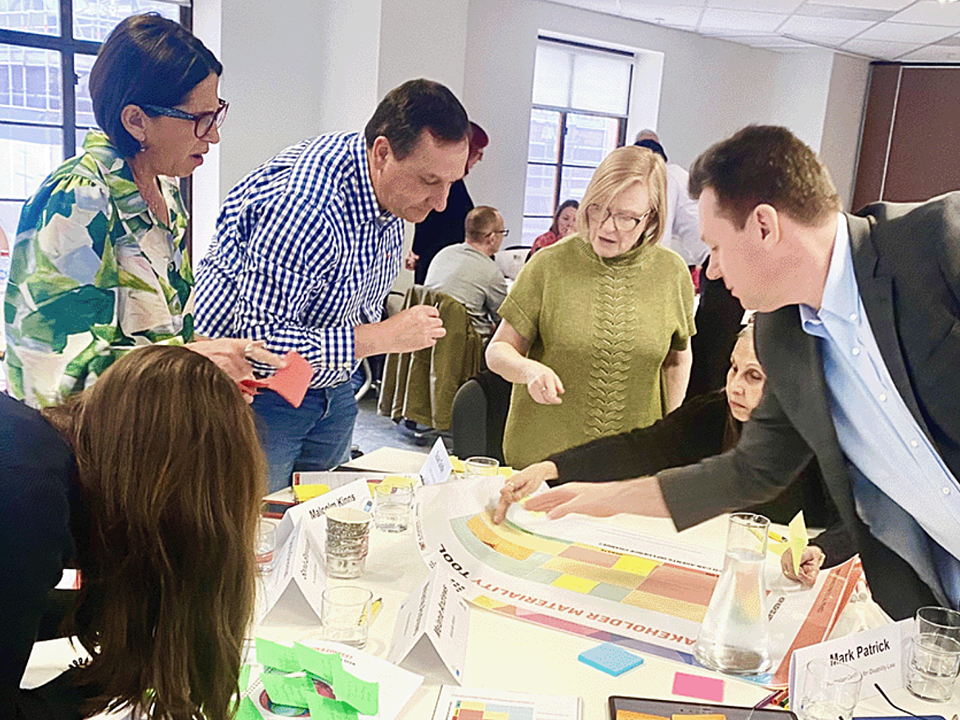
More than 200 fully funded Centre for Social Impact (CSI) scholarships will help equip for-purpose…

Posted on 30 Sep 2026
Personal stories are among the most powerful tools a charity can have to raise funds and awareness,…
Posted on 23 Sep 2026
A just-released major global survey of charities has found that demand for charity assistance has…
Posted on 23 Sep 2026
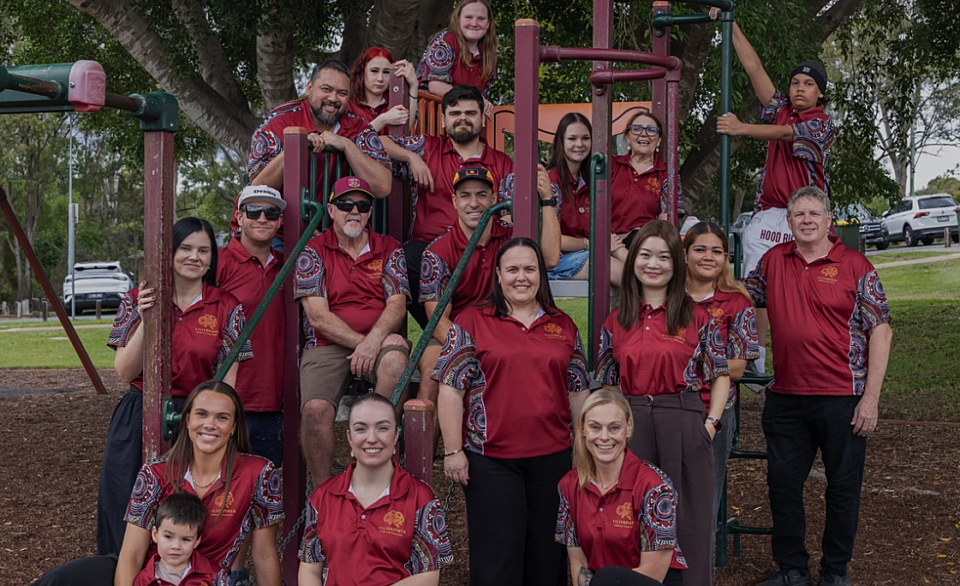
Fresh from welcoming delegates to last week’s Philanthropy Australia conference in Brisbane,…

Posted on 23 Sep 2026
A national strategy to develop Australia's regional cities is needed to break the housing…

Posted on 23 Sep 2026
Eight years after a report to Treasury first suggested the charities regulator should be more…
Posted on 17 Sep 2026
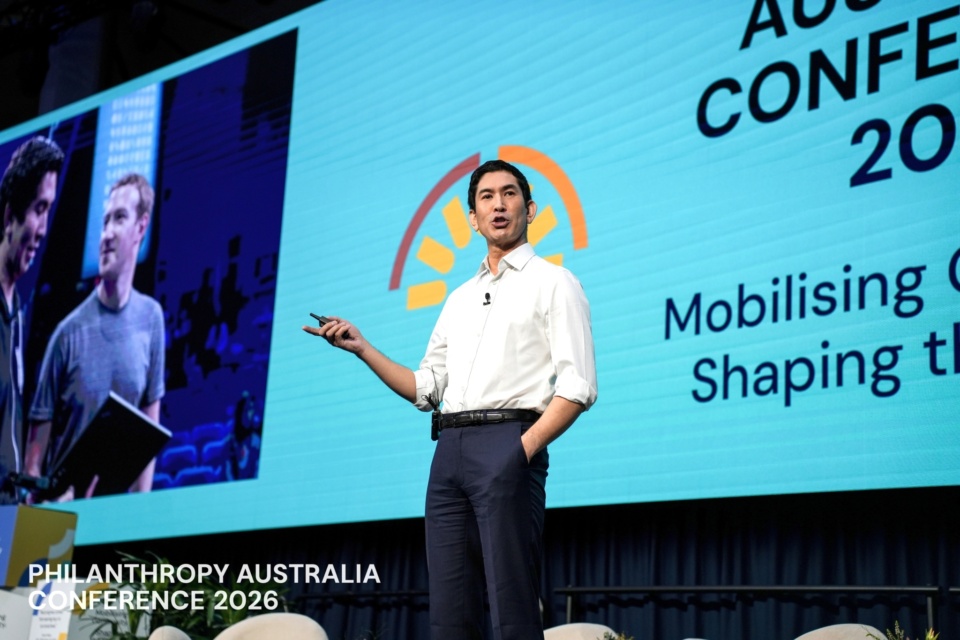
Australia’s biggest gathering of philanthropists, which drew more than 1200 delegates to Brisbane…

Posted on 16 Sep 2026
A new partnership between Paul Ramsay Foundation (PRF) and Atlassian Foundation aims to attract…