
Save Izzy: campaign calls on government to restore funding for vital services directory
Posted on 07 Oct 2026
A major public campaign launched this morning is calling on the federal government to restore…
Posted on 06 May 2026
By Nick Place, journalist, Community Directors

Communication is everything. That was the key takeout from a webinar held late last week that examined “lessons from failure”, from a funder’s perspective. Funders made it clear that while they understand that most philanthropic investments involve risk, if they aren’t informed when things are going wrong, they can’t help.
The webinar was the second in a series hosted by Social Enterprise Australia, funded under the federal government’s Social Enterprise Development Initiative (SEDI) and convened by Think Impact.
The unavoidable reality is that projects and entire charitable organisations can and will fail, so the webinar was designed to give funders their say.
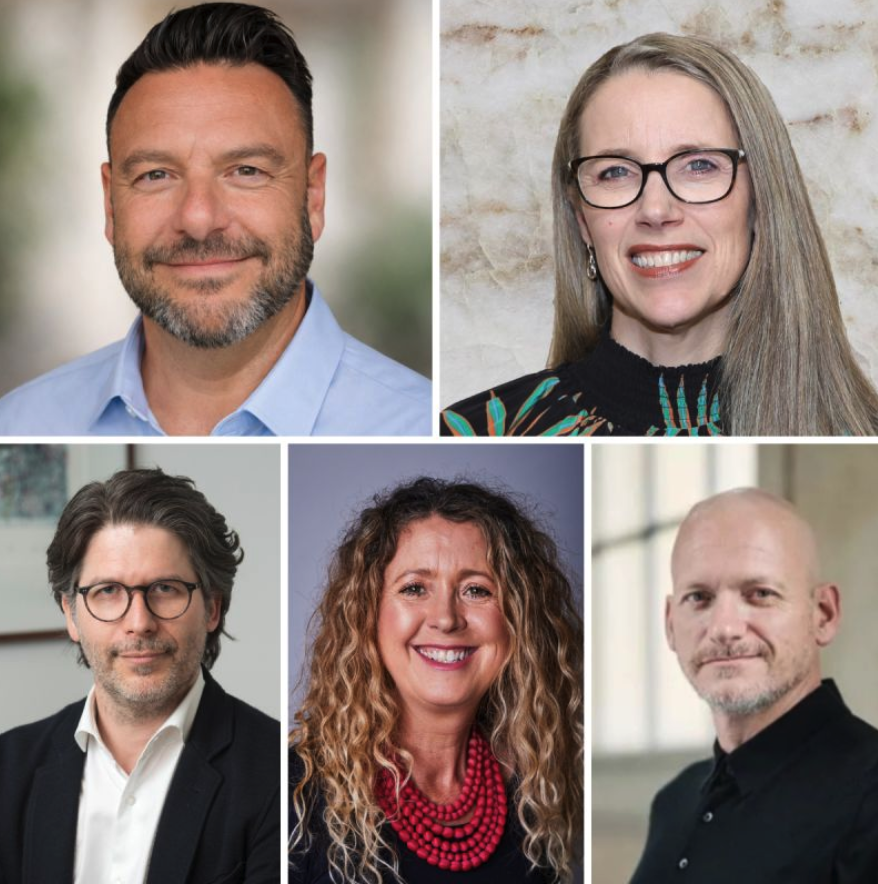
It started hot, with host Kevin Robbie – formerly managing director of Think Impact but now head of the Australian Philanthropic Services Foundation – suggesting that when he started working for not-for-profits in Scotland, the accepted thinking was that funders were like mushrooms – “to be kept in the dark and fed s***.”
“It flowed from the perception in the sector that it was best not to mention failure,” he said. “Funders didn’t want to hear about it. They didn’t want to know about it. So you just kept them away from anything that wasn’t working.”
Not surprisingly, the Ian Potter Foundation’s senior program manager, Alberto Furlan, was not a huge fan of that strategy.
“I suppose the problem with keeping us in the dark is that we find out sooner or later,” he replied. “We always encourage very much an open conversation and a share of issues. A, because we like to know what’s happening, and B, because we learn from it. The spirit of considering failure as a learning opportunity fails if you keep us in the dark. Also, as a third thing, if we know, perhaps we can help.”
The CEO of the Brian M. Davis Charitable Foundation, Anita Hopkins, agreed, saying her foundation had seen several of the organisations it had supported fail last year, and she considered the lessons from those failures to be essential. She also agreed with Furlan that as a key source of finance, her foundation couldn’t help if she didn’t know there were struggles. Hopkins drew on “organisational learning theory about intelligent failure, that well-designed experiment that generates useful knowledge that you can learn from.”
A lack of communication from a flailing organisation killed any chance for learning or support, she said.
The head of investments at philanthropy collective DEInvestments, Matt Knopp, said it was worth asking why charities often felt reticent with their funders.
“Why do people feel they need to keep funders in the dark?” he asked. “That’s a little bit on you as a funder, I would say.”
As the former social enterprise funding lead for the Paul Ramsay Foundation, Knopp said he had always tried to help grant recipients feel they could be honest by sharing his own vulnerabilities and failures as a signal that they could do likewise. The way funders design contracts, agreements and reporting requirements all play into whether a charity believes the funder is open to hearing bad news as well as good, he said, and the ability to show vulnerability was key to open communication that might save a charity – and investment – from sinking.
“I was always so aware of the unspoken dynamic in the relationship,” he said. “I think if you lay things out in a very transactional way, you’re going to end up with a transactional relationship, which doesn’t necessarily lead to good transparency.
“Definitely, if you don’t have a platform to be honest with funders about how things are going, that’s partly on the funder, number one. But secondly, we will find out. And if we find things late, it means you have so little time to try and work out something. I’ve had people say, ‘Oh, we might go under next week’. We could have known that six months ago, right?”
Social impact leader Stephen Torsi said he felt clear communication between funders and social enterprises had evaporated during the struggle of surviving the covid-19 pandemic.
“There’s kind of like BC and AC: Before Covid and After Covid,” he said. “And before covid, there was a lot more certainty in the way that philanthropists communicated, what their intent was and what their aspirations were when working with grant partners.
“The spirit of considering failure as a learning opportunity fails if you keep us in the dark. Also … if we know, perhaps we can help.”
“I think that tendency has evaporated because we’re all a lot more uncertain now, and I think it’s a shame because when I was at Greater Melbourne Foundation, we really signalled that we were committed to venture and catalytic philanthropy. We said: we will be the first funder, we will accept the risk, we will try and de-risk the risk, and hopefully that will give other funders confidence. So, that was a particular posture that we took at Greater Melbourne Foundation. Other philanthropists took that as well.
“But I think that’s evaporated quite a lot since covid, which is a shame. There does have to be a balance, but it would be good to see some of that return and for us to be a lot more open about philanthropy’s role in de-risking or taking on some of that risk.”
Knopp said that when in charge of a $45 million portfolio across 30 jobs-focused social enterprises while at the Paul Ramsay Foundation, he had never seen one fail because the quality of the organisation’s outcome wasn’t good enough. “It was always a business issue,” he said. “I can’t think of anything that wasn’t genuinely a business issue.”
Scaling up revenue meant scaling up overheads, leaving organisations vulnerable to a downturn in the market, meaning a funder needed to remain tuned to a grant’s health, he said.
CEO Anita Hopkins reminded the webinar of the human side of constant adaptation to survive. “I think a failure on our side was that we [the Brian M. Davis Charitable Foundation] had supported certain organisations, and maybe this is a bit of a post-covid thing, to pivot so often and to keep trying new business models, new way of working,” she said. “There was an expectation that they would be able to keep doing that without an acknowledgement of the just sheer exhaustion involved in doing that and what it takes to keep doing that for a long period of time. I think that's a real learning for us as funders.”
“We always say philanthropy should take risks and we are all open to failure and programs that don’t work, and we will learn from it,” Alberto Furlan said, “but there’s a lot at stake, and when you employ vulnerable people, obviously there’s even more at stake.”
While nobody wanted to see organisations that keep vulnerable people in work fail, there had been a profound realisation, he said, that “unless the outcome costs are covered, most social enterprises will not be sustainable, as in financially sustainable as a business itself.”
Matt Knopp agreed, saying that if there were no questions about a social enterprise leader’s integrity or skills, then the funder should tell that leader to simply go out and make their business great, instead of manacling them with demands.
“If we can create great businesses and solid businesses, that can then build a bit of cash into their models, the longer term of building outcomes and proving it will work better,” he said. “The problem, of course, is that funding tends to be in two-, three-year cycles, and people want to see quantifiable outcomes from that point. I think that, in itself, becomes a problem.”
Westpac Foundation senior advisor Lisa Waldron said the foundation had recently released research reports on the role of philanthropy in social enterprise, and on how philanthropists could better work together with grant recipients. The research had shown the need to plan for failures as well as potential success.
“Having those discussions really early and anticipating that there will be ebbs and flows and ups and downs and not just growth,” she said, “and actually factoring in and planning it will happen. Asking what will we be able to do to support as you’re going through this.”
Waldron said funders could push social enterprises or charities to create ambitious forecasts without recognising that this could increase risk as impact costs grew. “We want to be able to simplify that and not mask the financial risk and just be walking alongside them and asking, What does this organisation need from us at this time? That’s a new way of working,” she said.
Furlan said those receiving grants should also be open to learning from failure. “Because of funders, don’t try to be what you’re not,” he said. “A lot of organisations try to expand in businesses or in aspects of the businesses they fundamentally are not able to deliver on, despite the support or in spite of the support of funders. Almost inevitably, that comes to a pretty nasty conclusion.”
Just as funders needed to avoid driving organisations into areas they shouldn’t be attempting, organisations needed to admit when they couldn’t or didn’t want to do aspects of the work, Furlan said.
“Just be honest with yourself and don’t go for that grant if the environment it produces in the long term is worse than the one where you don’t have it,” he said. “That’s one of the learnings.”
Posted on 07 Oct 2026
A major public campaign launched this morning is calling on the federal government to restore…

Posted on 07 Oct 2026
The Australian Literacy & Numeracy Foundation (ALNF) has announced a partnership with mining…

Posted on 07 Oct 2026
A conference in Darwin will this morning hear detailed, strategic plans for how Australia could…

Posted on 30 Sep 2026
Not-for-profit leaders have been warned to be wary of approaches from potential “funding partners”…
Posted on 30 Sep 2026
More than 200 fully funded Centre for Social Impact (CSI) scholarships will help equip for-purpose…

Posted on 30 Sep 2026
Personal stories are among the most powerful tools a charity can have to raise funds and awareness,…

Posted on 23 Sep 2026
A just-released major global survey of charities has found that demand for charity assistance has…
Posted on 23 Sep 2026
Fresh from welcoming delegates to last week’s Philanthropy Australia conference in Brisbane,…

Posted on 23 Sep 2026
A national strategy to develop Australia's regional cities is needed to break the housing…

Posted on 23 Sep 2026
Eight years after a report to Treasury first suggested the charities regulator should be more…

Posted on 17 Sep 2026
Australia’s biggest gathering of philanthropists, which drew more than 1200 delegates to Brisbane…

Posted on 16 Sep 2026
A new partnership between Paul Ramsay Foundation (PRF) and Atlassian Foundation aims to attract…