
Save Izzy: campaign calls on government to restore funding for vital services directory
Posted on 07 Oct 2026
A major public campaign launched this morning is calling on the federal government to restore…
Posted on 15 Jul 2026
By Matthew Schulz, journalist, Community Directors

The nation’s peak body for charities and not-for-profits has launched a campaign to put faces to the nation’s huge and influential sector.
The Community Council for Australia (CCA) from tomorrow will host a national storytelling campaign urging charities, not-for-profits and their supporters to help make the case for the sector, arguing it remains little understood, despite its massive economic and social scale.
The CCA’s push follows research from the Community Compass, which found that despite the widespread goodwill toward the sector, people had a shaky grasp of what it was.
The Community Compass study, which was commissioned by the CCA and Our
Community (Community Directors’parent company), found that only 45 per cent of
Australians were aware of the community organisations operating in their local
area.
Community Directors executive director Adele Stowe-Lindner said the finding reflected a pattern she saw constantly in her professional network.
"In every circle I mix in – corporate, government, politics – the people around that table are also the netball club treasurer, the CFA volunteer, the person running the school canteen roster. They don't think of themselves as 'the community sector'. But with 600,000 not-for-profits, so many of us are in the community sector. Whoever you're sitting next to on the train, the bus, the tram – chances are they are too.”
The campaign invites charities and not-for-profits to share stories and photos showing their impact, by submitting them to the CCA and by posting on social media.

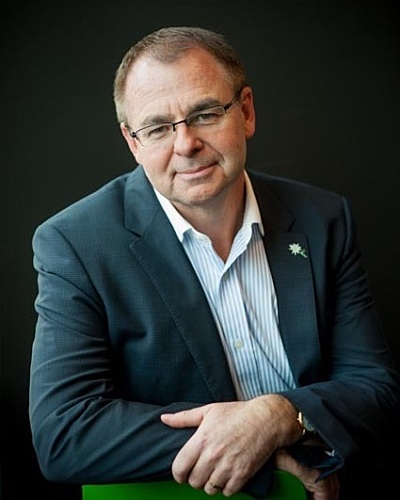
CCA chief executive David Crosbie said the campaign aimed to fill a data and awareness gap that was holding the sector back.
"Charities are 11 per cent of our workforce. They turn over more than $239 billion a year – 8 per cent of our GDP – and hold over $500 billion in assets. They employ more people than retail, and are bigger than the construction industry, and yet we know so little about them," Crosbie said.
The latest figures from the regulator, the Australian Charities and Not-for-profits Commission, show the sector now employs 1.6 million people, spends $128 billion a year on staffing, and relies on 3.9 million volunteers. Workforce numbers have grown strongly in the past decade, but Mr Crosbie said there was still no national workforce plan, and data on employees' conditions, qualifications and diversity was limited.
The funding relationship with government was similarly under-documented, he said. Almost half of all charity income – more than $100 billion – comes from government, but there is no clear picture of contract lengths, reporting burdens, organisational autonomy or funding arrangements.
"We can't say, with evidence, what value the sector contributes back to communities across Australia. We know it does good, but what does that mean in human, environmental and economic impact?" Mr Crosbie said.
He said the lack of data left the sector unable to model the impact of policy changes the way other major industries could, and it meant that charities remained largely locked out of finance that could help smooth short-term government funding cycles.
Mr Crosbie also pointed to a cultural barrier: charities exist to serve their cause rather than their own organisation, meaning collective advocacy for the sector's sustainability can feel self-serving, and as a result receives little money, time or priority.
"If we don't tell our story and engage people with our value, no one else will."
"None of this is fixed by another roundtable or another set of recommendations that go nowhere," he said. "It starts with data: a proper workforce plan, transparency on government contracting terms, and a genuine effort to measure the value charities create. It continues with access to capital – even modest lines of credit – so organisations aren't rebuilding themselves from scratch every funding cycle. And it requires charities to accept that investing time and money in the sector's own advocacy isn't a distraction from the mission. It's what makes the mission possible."
"If we don't tell our story and engage people with our value, no one else will," Mr Crosbie said.
The campaign is built on what Mr Crosbie said was the aspiration of a just, fair, safe, inclusive, creative, confident and compassionate Australia, and invites the public to help make that vision tangible.
The campaign's hashtags and guiding values echo the CCA's Australia We Want research series, which benchmarks Australia's progress against a set of values identified by charity sector leaders.
The campaign will employ the #AusWeWant and #ImagineAustralia hashtags, and Community Directors will highlight some of the best stories.
Charities and not-for-profits can share stories and photos by emailing auswewant@communitycouncil.com.au or by tagging CCA on social media.
Posted on 07 Oct 2026
A major public campaign launched this morning is calling on the federal government to restore…
Posted on 07 Oct 2026
The Australian Literacy & Numeracy Foundation (ALNF) has announced a partnership with mining…
Posted on 07 Oct 2026
A conference in Darwin will this morning hear detailed, strategic plans for how Australia could…

Posted on 30 Sep 2026
Not-for-profit leaders have been warned to be wary of approaches from potential “funding partners”…
Posted on 30 Sep 2026
More than 200 fully funded Centre for Social Impact (CSI) scholarships will help equip for-purpose…

Posted on 30 Sep 2026
Personal stories are among the most powerful tools a charity can have to raise funds and awareness,…
Posted on 23 Sep 2026
A just-released major global survey of charities has found that demand for charity assistance has…
Posted on 23 Sep 2026
Fresh from welcoming delegates to last week’s Philanthropy Australia conference in Brisbane,…

Posted on 23 Sep 2026
A national strategy to develop Australia's regional cities is needed to break the housing…

Posted on 23 Sep 2026
Eight years after a report to Treasury first suggested the charities regulator should be more…
Posted on 17 Sep 2026
Australia’s biggest gathering of philanthropists, which drew more than 1200 delegates to Brisbane…
Posted on 16 Sep 2026
A new partnership between Paul Ramsay Foundation (PRF) and Atlassian Foundation aims to attract…