
Pauline Hanson and the frightening lesson of ‘Years and Years’
Posted on 07 Oct 2026
Our Community's founder and leader, Denis Moriarty, writes that when he watched an over-the-top…
Posted on 08 Jul 2026
By Matthew Schulz, journalist, Community Directors
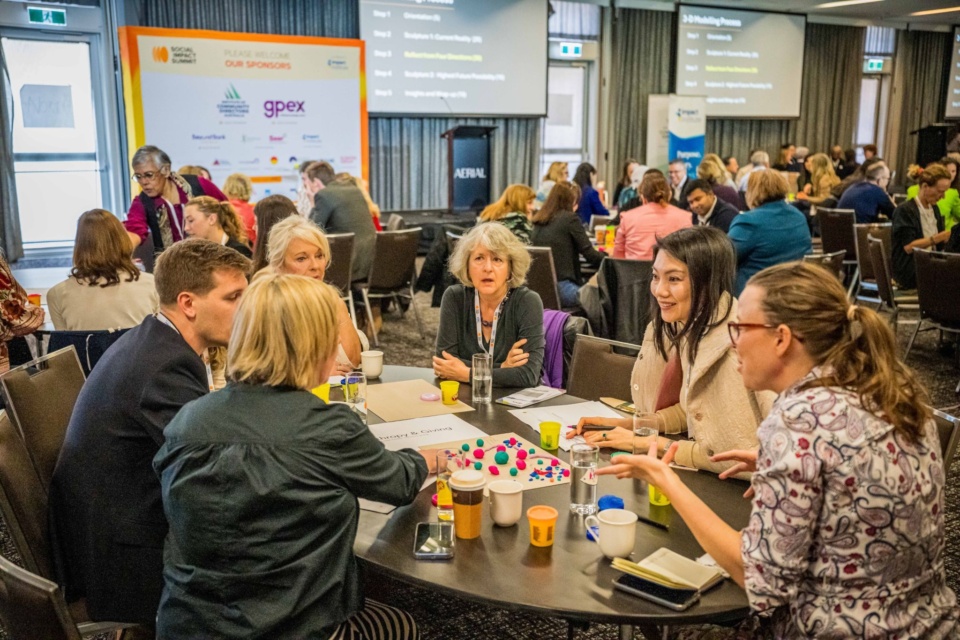
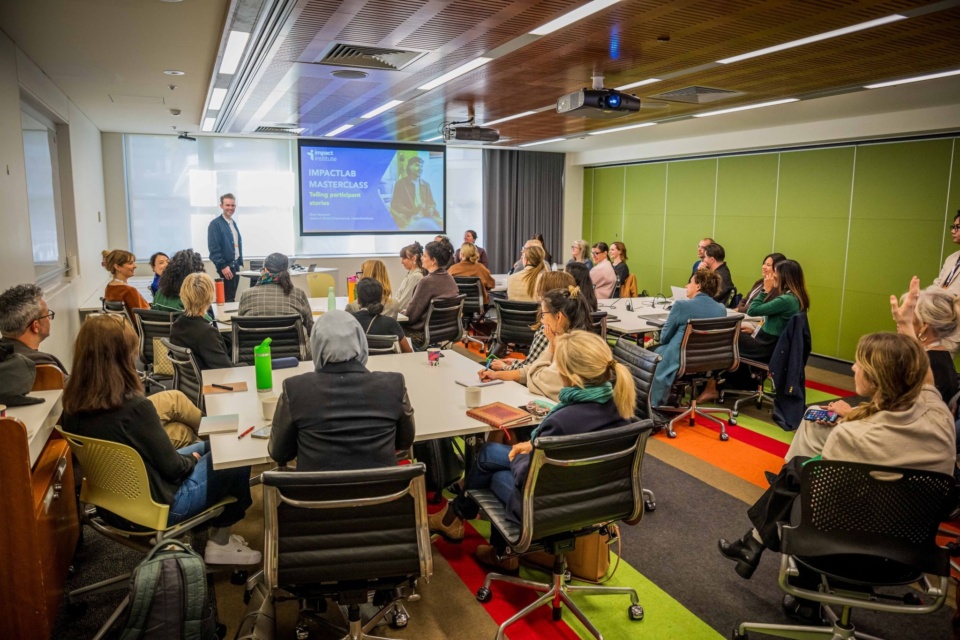
The Social Impact Summit held in Sydney early this month will distil the thoughts of hundreds of delegates into a special report on the state of social impact in the country.
Now in its fourth year, the two-day event explored issues such as impact measurement, housing affordability, equality, democracy, social cohesion, community building and funding, with “clarity” as the central theme.
Held at the University of Technology Sydney’s Aerial centre, the summit brought together more than 300 not-for-profit CEOs and leaders, government officials, grassroots activists and advocates, community builders, bankers and funders, leadership trainers, and strategic thinkers.
The event was full of surprises, including leadership expert Dr Renu Burr’s interactive keynote address which saw small groups use Play-Doh models to rethink issues such as democracy and good government and develop new perspectives on wicked problems.
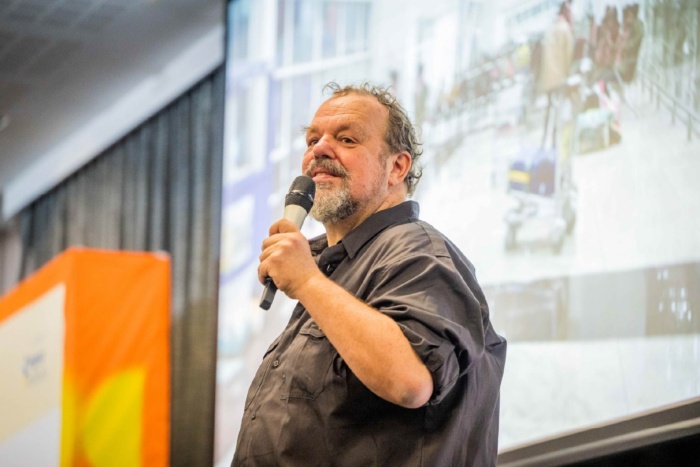
Keynote speaker Professor Arnold Dix prompted tears and laughter as he recounted his volunteer role in leading the rescue of 41 Indian miners trapped inside a collapsed Himalayan tunnel. The whip-smart Aussie larrikin engineer’s message of humanity, certainty and empathy in the face of daunting odds – delivered with a sheen of perspiration, and in his socks – resonated through the whole event.
Delegates repeatedly returned to Dix’s notion that trust, mission and honesty were at the heart of problem solving in discussions across the summit’s three streams: profit and purpose, people and communities, and collective transformation.
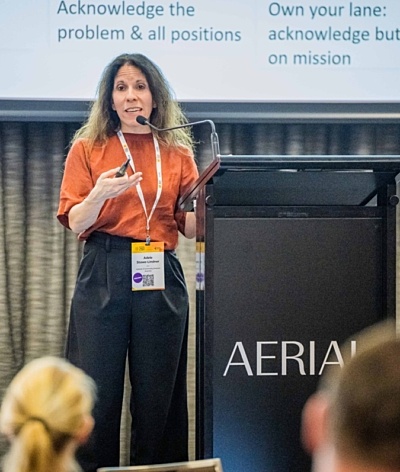
Community Directors executive director Adele Stowe-Lindner led a workshop tackling the topic “Leading for social cohesion in contested environments”.
“The event delivered a great combination of inspiration and a hard-core focus on the practical skills needed to make a social impact, whether that’s in community or capacity building, program design, analysis, measurement, strategy or the use and governance of data and artificial intelligence,” Stowe-Lindner said.
“None of this is easy, but at Community Directors we know you need clarity about your purpose in a complex environment. That’s what my workshop was about and so was the conference too. One of the main reasons that we’re a gold sponsor of the summit was that we knew that we’d be among our people.”
“There are problems that are simply too large for any one sector to solve alone."
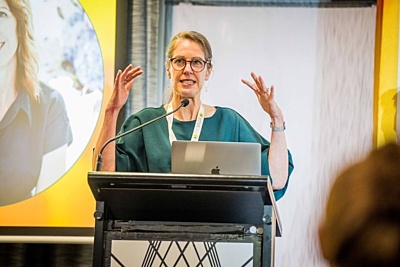
Paula Cowan, the managing director of the Impact Institute, which hosted the event, said the summit brought together C-suite leaders in from the government, corporate, not-for-profit and social enterprise sectors.
The summit aimed to “really get to grips with what social impact means across all sectors” and involved best-practice case studies and research, grounded in human stories, she said.
“There are problems that are simply too large for any one sector to solve alone. Take housing, for example. It’s a wicked challenge in Australia and can only really be addressed when business, government and social sector providers all come to the table together.
“We’re seeing the summit grow every year. This is our biggest year yet, both in attendance and in program participation. Many presenters are people who first attended the summit, went away, collaborated with others they met here, and have now returned to share those case studies and lessons with everyone else.”
Cowan said the connections made at the event were “incredibly important” in building a community of peers to offer honest feedback and support. She said there was a growing awareness of the value of measuring social impact.
“There is an investment involved in setting up, measuring and evaluating social impact, but we see it as an investment over time. It should drive continuous improvement, provide the data that funders and stakeholders need, and generate stories that help organisations connect with their stakeholders, beneficiaries and government where advocacy is required.
“Social impact measurement can be seen as a cost, but it’s also a significant value driver. Over time, we’ve seen organisations that clearly understand and demonstrate their impact gain access to resources they didn’t previously have, enabling them to grow.”
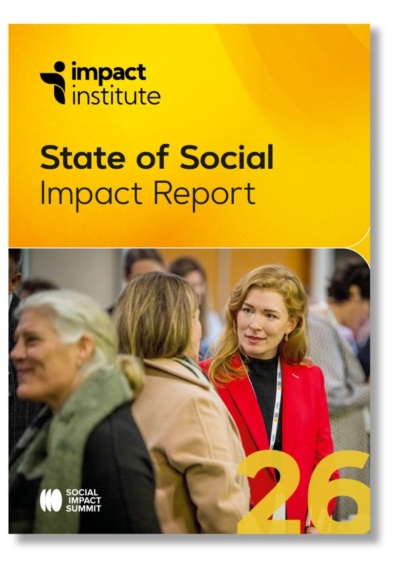
Cowan said that insights shared at the event would be used to inform the Impact Institute’s annual State of Social Impact report. The report scans the social impact challenges facing the nation, including poverty, disease and the social and economic costs of environmental change.
Posted on 07 Oct 2026
Our Community's founder and leader, Denis Moriarty, writes that when he watched an over-the-top…

Posted on 07 Oct 2026
A major public campaign launched this morning is calling on the federal government to restore…
Posted on 07 Oct 2026
The Australian Literacy & Numeracy Foundation (ALNF) has announced a partnership with mining…
Posted on 07 Oct 2026
A conference in Darwin will this morning hear detailed, strategic plans for how Australia could…
Posted on 07 Oct 2026
Joseph Friedman is co-founder and publisher of About Time, Australia’s only newspaper for…
Posted on 30 Sep 2026
There's been a lot of talk about AI this week, and some of it has been frightening. So, is AI good…

Posted on 30 Sep 2026
After the biggest AFL game of the year, one player proudly wore the flag of his birth country and…
Posted on 30 Sep 2026
At 21 years old, Tate Donohoe is the founder of Ecodia, an AI-assisted software development company…

Posted on 30 Sep 2026
Not-for-profit leaders have been warned to be wary of approaches from potential “funding partners”…
Posted on 30 Sep 2026
More than 200 fully funded Centre for Social Impact (CSI) scholarships will help equip for-purpose…

Posted on 30 Sep 2026
Personal stories are among the most powerful tools a charity can have to raise funds and awareness,…
Posted on 23 Sep 2026
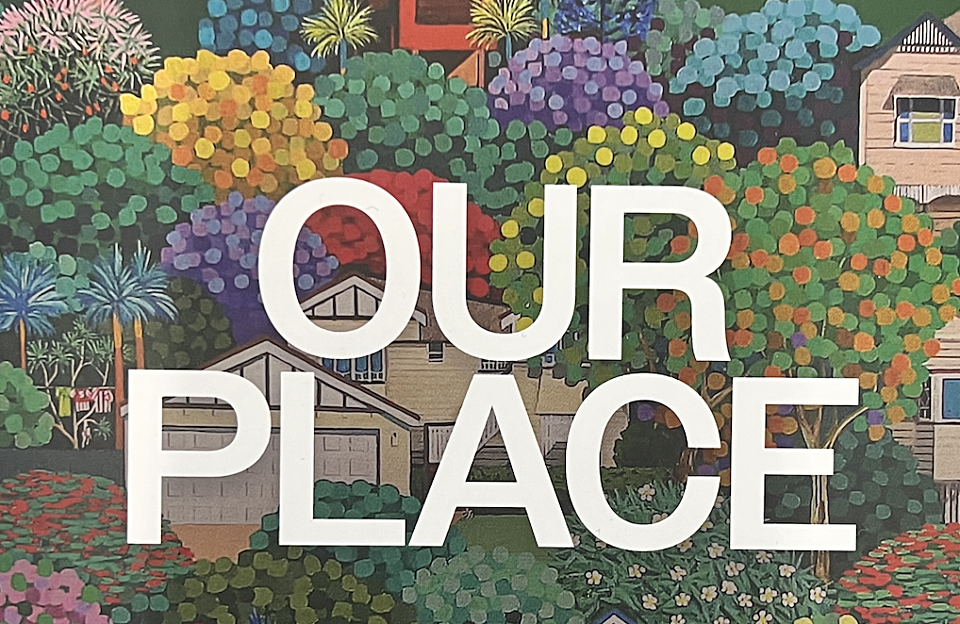
In his new book Our Place, policy expert Matt Lloyd-Cope argues that housing must be at the heart…