

NFP tech experts urge orgs to scale up cybersafety
Posted on 15 Oct 2026
Good cybersecurity must be the foundation of not-for-profits’ efforts to adopt artificial…
Posted on 13 Aug 2026
By Matthew Schulz, journalist, Community Directors
Most new purpose-driven projects falter in the early phase because there’s no one assigned to the work of holding the effort together, according to a Community Directors graduate who is helping not-for-profits get their projects off the ground.
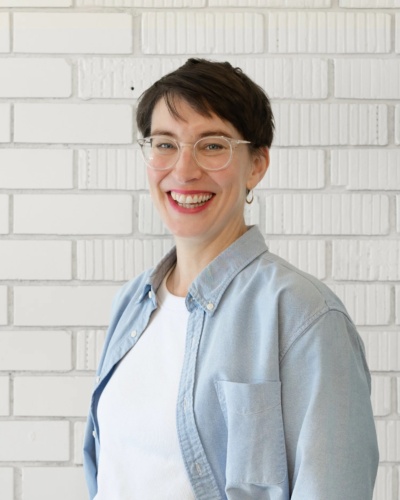
Leah McPherson is a project set-up and delivery specialist who has a long history in community development, social enterprise, gender equality campaigns and local government policy, in both Australia and the UK.
She now works with not-for-profits and purpose-driven organisations to help them activate programs that have won funding but not yet put the right people or systems in place.
McPherson says in her experience, the key to success is the “glue” that ultimately holds a project together.
“I’m calling this glue work. And without it, the project that felt so real and exciting in February slips to the end of the agenda and feels like a full bucket of hard work by June,” McPherson said.
She said that the glue work she referred to was hard to define, but easy to spot when things go wrong.
“Glue work is hard to name and harder to fund. But the absence of it shows up in every project that loses momentum not because people stopped caring, but because nobody had the bandwidth to hold it together.
“Glue work is invisible – hence the metaphor. It brings cohesion but dries clear. When it's done well, nobody says, 'Thank goodness someone held all of that together.' The best glue work leaves no trace of itself – only a project that came together and is moving forward with direction and energy.”
She nominated three things that can boost the chances of project success: dedicating someone to delivery capacity, restructuring to ensure that the administration and governance legwork is shared, and being honest about the project’s scope and sometimes taking less on.
"Clients call me when something important needs to happen and there's no one with the time, or the role, to make it happen," McPherson said. "Maybe new funding has come through and everyone's looking at each other wondering who's going to deliver it. Maybe there are three leaders all doing their best, but no one actually owns the thing."

"The best glue work leaves no trace of itself – only a project that came together and is moving forward with direction and energy."
McPherson is a 2023 graduate of the Community Directors Diploma of Governance who supplements her advice to leaders by pointing them to Community Directors’ newsletters, training, webinars and policy bank. She said that an enduring memory of the course was “thinking that even though I'd been working in governance for a long time, there was so much I didn't know”.
It’s a common refrain heard from many Community Directors students, and the refreshed insights no doubt helped in more recent experiences, such as running major projects and campaigns at the Victorian Women's Trust and project managing the establishment of the Disability Dialogue, a new civic engagement initiative in the disability sector.
Earlier in her career, she founded an urban farm in London that grew food on once derelict land, creating jobs and featuring on a series with TV chef Jamie Oliver. She’s also worked with the School for Social Entrepreneurs and led policy development at a UK council.
More recently, she spoke with six NFP and social enterprise sector leaders to explore why projects stall, and what their experiences had been.
McPherson said one of the main reasons why projects stalled, according to sector leaders, was that stakeholders couldn’t see “what’s in it for them”.
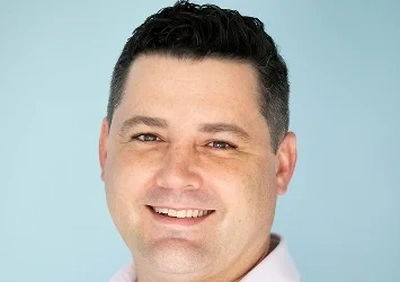
John Kostopulos, general manager of the Football Integration Development Association, for example, told McPherson that without early consensus on a plan, people started disengaging by month three, first in small ways, then all at once.
"That's not a project management failure," McPherson said. "The tasks were tracked, the meetings happened. What was missing was someone whose job was making sure the plan made sense to everyone else too, not just the people who wrote it."
McPherson said it was the "glue work" that was lacking in this situation. This work needed to be distinguished from project management tasks, which were focused on accountability and tracking – who was responsible for what, and when.
That glue work is different: “It’s translating a funding agreement into something you can actually run, the building of governance infrastructure from nothing, the figuring out which stakeholders need to be in the room and in what order. It's reading stakeholders closely enough to know how things actually get done, what the sensitivities are, and who needs to be brought along carefully rather than just informed.”
A big issue facing already-stretched organisations when a new project landed was delivery capacity in an environment where success was a common goal.
“Purpose-driven organisations are full of people who are already overloaded and find it genuinely hard to say no. Come in heavy-handed and you'll get compliance without commitment,” McPherson said.
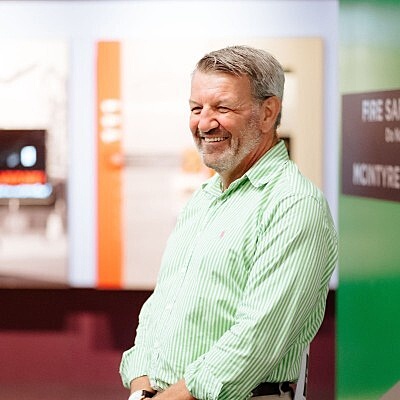
Andrew Vodic, until recently CEO of Community Disability Alliance Hunter, summed up the extra drag, telling McPherson that bringing on a new project didn’t just add a task to his list, but pulled him out of leadership and into management. As a result, he tended to become the point of contact between the project, staff and community.
“I heard numerous times from the leaders I spoke with that the engagement, cognitive and operational load of new projects is most often absorbed personally by them,” McPherson said.
"The project isn't flagging because it doesn't matter. "It's flagging because everything matters, and there's only so much of everyone to go around."
McPherson described this type of failure as structural.
“Setting up a new project is a different kind of work to running an organisation and business as usual. It has a different cadence, a different level of urgency, and a completely different cognitive load. When a leader holds both at once without any additional support, one of them loses. And it's usually the new thing.”
McPherson said one way to stop a project from stalling was to recruit or deploy someone whose whole job was the glue work.
That person was “a senior person sitting outside business as usual – with the experience and nuanced judgement to know what to move forward quickly and what requires collaboration with stakeholders, the CEO, or the board,” she said.
That person would ideally have “no other agenda. Not being pulled off the work at 2pm on a Tuesday to celebrate a birthday or attend a staff meeting. Their attention is undivided.”
She said the “project glue” lead would ideally have clear entry and exit points, after which, “The systems are in place. The governance is running. The team has momentum.”

An alternative to this approach, McPherson said, was to restructure the project team.
She said Melbourne-based communications and engagement leader Rebecca Young, for example, had witnessed a project lead buried under “admin and governance legwork – the board papers, agendas and minutes, the follow-ups from every conversation, the paper trail”.
Young has worked across for-purpose organisations, government and health and had a stint in a “Big Four” consultancy. Young said the contrast between those different types of organisations had informed her observation.
“In a well-resourced environment, the coordination legwork sits with project management office support, and a project coordinator or two. In for-purpose organisations, the project manager is usually doing all of it themselves,” Young told Community Directors.
"In for-purpose organisations, the project lead is almost always doing at least two jobs: delivering the project, and doing all the coordination that holds it together. Only one of those was in the position description. What I've seen across my career is that it holds together on goodwill until someone takes leave, and then the gap becomes obvious."
"The steering committee papers, the minutes, the follow-ups after every conversation, that is real work and it takes real time. Resource it early, or it sits with the project lead on top of everything they were hired to do."
McPherson said she believed those responsibilities
could sit with a junior or part-time coordinator instead.
“Budgeting for that second, cheaper role often protects momentum just as effectively as adding more seniority,” McPherson said.
Finally, organisations should face the reality of their capacity, “being honest about scope rather than stretching capacity to meet it”.
Matthew Taylor, managing director of Melbourne’s Folio Collective, told McPherson he deliberately keeps new projects small and self-funded, sized to what his volunteer team can absorb, rather than risk over-stretching capacity.
“Sometimes the answer [is] to take on less, so there's less glue needed in the first place,” McPherson said.
Download our free 32-page guide NFP Innovation on a Shoestring | Ten practical innovation tips for NFPs
Special editions: technology | artificial intelligence | change management
Find more resources in our tools and resources section
Posted on 15 Oct 2026
Good cybersecurity must be the foundation of not-for-profits’ efforts to adopt artificial…

Posted on 15 Oct 2026
A few years ago, I sat on a small community board that was still held together by email threads and…

Posted on 15 Oct 2026
“Build a better mousetrap, and the world will beat a path to your door”, the old saw goes.…

Posted on 15 Oct 2026
The nation's digital inclusion advocate is pushing for more equity in the rollout of AI in light of…

Posted on 15 Oct 2026
Not-for-profit leaders should be conducting regular “fire drills” that replicate AI-powered…

Posted on 15 Oct 2026
Boards that leave cybersecurity to the one director with IT expertise are leaving their…

Posted on 15 Oct 2026
Community Directors has a warehouse-style office filled with artworks, and if I glance up towards…
Posted on 15 Oct 2026
As the manager of a palliative care service, Stephanie Kirkman Meikle has learnt that the prospect…

Posted on 14 Oct 2026
A special guest with her finger on the pulse of one of the biggest issues facing Australia –…

Posted on 17 Sep 2026
Australia’s biggest gathering of philanthropists, which drew more than 1200 delegates to Brisbane…
Posted on 17 Sep 2026
Experts in Australian philanthropy say there are stark differences between philanthropic money and…

Posted on 17 Sep 2026
One of Australia’s foremost fundraising observers says Australian not-for-profits must get the…