
NFP tech experts urge orgs to scale up cybersafety
Posted on 15 Oct 2026
Good cybersecurity must be the foundation of not-for-profits’ efforts to adopt artificial…
Posted on 15 Oct 2026
By Matthew Schulz, journalist, Community Directors

The nation's digital inclusion advocate is pushing for more equity in the rollout of AI in light of alarming figures showing one in five Australians is shut out of technology.
The Australian Digital Inclusion Alliance (ADIA) has urged a Senate inquiry to make equity a top priority as Australia embraces artificial intelligence (AI).
In a submission to the inquiry, the ADIA said the National AI Plan's promise to spread the benefits of AI had not reached the 20.6 per cent of Australians who are digitally excluded.
Infoxchange formed the ADIA in 2017 to advocate for action on digital inclusion. Its work rests on three pillars: access, affordability and digital ability. It now represents more than 500 not-for-profits, businesses, researchers and government agencies and operates with the support of Telstra and Google.
“AI presents a risk of further compounding or accentuating digital exclusion,” the submission to the Senate inquiry into AI and data centres said.
"While the National AI Plan includes high-level aspirations to spread the benefits and mitigate the risks of AI, we are yet to see this translate into meaningful action to ensure that digitally excluded people are not left out or more vulnerable."
But the submission also argues, “AI has a very real potential to enhance the capacity and capability of the not-for-profit and community sector working at the frontlines of disadvantage and digital exclusion.”
In its submission, ADIA called for a national common language on digital ability, a definition of digital literacy, and a minimum benchmark for the level of digital ability all Australians should reach.
But it flagged concerns that the Office of AI – announced by the prime minister in July – may lack the scope to address the challenges the alliance outlined in the submission and in a major paper published last year, A National Approach to Digital Inclusion.
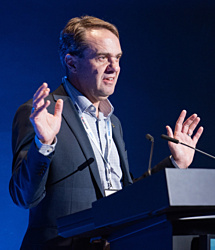
ADIA chair David Spriggs – who is also chief executive of Infoxchange – said developing digital skills would be central to the adoption of AI.
"Improved digital skills and literacy will be fundamental to ensure all Australians are able to engage confidently and safely with AI, and we are hopeful that the Office of AI can play a role in coordinating responses in this area," he said.
The inquiry is expected to report in mid-November.
"What we've seen is that more people are online than ever, so more people have access to digital technologies, but the real sticking point is affordability."
The ADIA’s work draws heavily on the Australian Digital Inclusion Index – produced in a joint venture between tertiary institutions and Telstra – which identifies larger digital exclusion gaps for First Nations communities, older Australians, people with disability and those from low-income households.
The latest index, released in November, found around one in five Australians (20.6 per cent) are digitally excluded. Rates are highest among people aged 75 and over (66.5 per cent), people who did not finish secondary school (54.5 per cent), public housing residents (45.2 per cent) and First Nations people (40.9 per cent).
People with a disability scored 11.4 points lower on the on the index than those without a disability. The report also found more than 10 per cent of households had no fixed internet connection.
Despite the gaps, Australians' digital ability rose rapidly in the two years to 2025, with over-75s recording the largest gains, despite that cohort still facing the biggest inclusion gap.
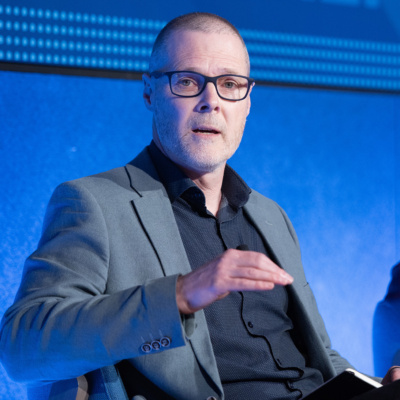
Index chief investigator Professor Anthony McCosker, of Swinburne University of Technology, told a digital inclusion panel at Infoxchange's conference in May that cost was the main barrier.
"What we've seen is that more people are online than ever, so more people have access to digital technologies, but the real sticking point is affordability," he said.
Generative AI use was concentrated among young people, students, professionals and the well-educated, he said.
"We're just seeing the signs of a new digital divide and a new AI divide opening up in that space as well," he said.
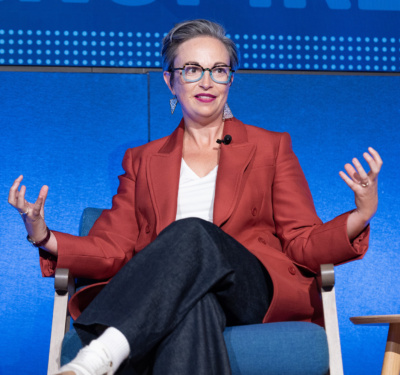
Tech Policy Design Institute (TPDI) co-founder Johanna Weaver told the same panel that a national survey by the institute had found only 1 per cent of Australians fully trusted AI.
She said a separate TPDI assessment of the National AI Plan found it had an inclusion narrative with no initiatives or funding to back it.
Weaver said low trust in AI heightened the risk that the most excluded would be left further behind.
"If we're not increasing trust, the most excluded people will be the people who are already digitally excluded," she said.
"When you look at digital inclusion, I don't think you can separate digital inclusion from access and availability of artificial intelligence anymore. I think they are actually two sides of the same coin."
Weaver said the NFP sector was best placed to show how AI could be used responsibly and inclusively, "by using the examples of what happens when you actually get this right, when people are included”.
She urged NFPs to have a strong governance plan in place when using AI.
"If you want to be using artificial intelligence to deliver the social good that you're all here for, you have to make sure that you've got that governance, the social licence to be using it, and have that in place," she said.
"You need a relationship that's based on trust."

First Nations Australians are twice as likely as other Australians to be digitally excluded according to the Mapping the Digital Gap: 2025 Outcomes Report published in December by RMIT University and Swinburne University of Technology. The report is a supplement to the Index.
The report found three quarters of First Nations people in remote and very remote communities are digitally excluded, with access proving the largest barrier.
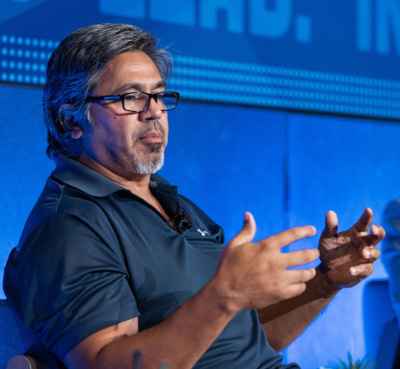
Che Cockatoo-Collins, executive manager of Indigenous affairs at NBN Co and a member of the First Nations Digital Inclusion Advisory Group, told the Infoxchange conference panel there was little commercial incentive to build infrastructure in remote areas. He said governments needed to step in where building it meant taking a loss.
He said the advisory group's roadmap, with its 30 recommendations, called for industry and all levels of government to work together.
Cockatoo-Collins described a remote Western Australian region with about 1,300 people where community-wide wi-fi was installed following a recommendation from the advisory group. Within three months, residents were using it to access their myGov accounts and banking services, he said.
But he stressed that whether programs proceed must be a decision for communities.
"From a community perspective, they know what's best for them, and as long as we understand that our purpose is to serve them, then I think that's a great basis," he said.
Speaking with Community Directors, Cockatoo-Collins said NFPs needed constant engagement with communities, whether they were delivering infrastructure or a program.
"You need a relationship that's based on trust. It works when you have a First Nations employee, or a voice that you can rely on within those communities, because it's so complex," he said.
He said organisations coming into communities as outsiders should be prepared and show humility.
"You might think you're trustworthy, but people don't see that," he said.

The Smith Family's head of evidence and impact, Suzie Riddell, told the panel that 44 per cent of the 72,000 children and young people on the Smith Family’s Learning for Life scholarship are digitally excluded.
"If there's one thing that I convey today, I want to amplify the message that we want to take digital inclusion from being seen as an individual or a household responsibility to being seen as essential infrastructure," she said.
Riddell described a single mother of three who had turned off the household internet to cope with rising costs. She said the woman’s next step was skipping meals so her children could eat.
Riddell said children in those households were learning digital skills at school but could not follow up at home.
"If you think about the fact that nine out of 10 jobs of the future require post-school qualifications and some skills in being able to digitally navigate the world, what does it mean if – for your entire school years from K–12 – your family's not digitally included?" she said.
She said many households were relying on ageing digital devices they could not afford to replace. In response, The Smith Family has provided 12,000 devices to Learning for Life students in the past four years, along with free training in how to use them safely and free Internet access, in partnership with organisations such as the Telstra Foundation, WorkVentures, the National Device Bank, Optus and NBN Co, she said.
Riddell said the organisation addressed barriers such as language, education levels, mental ill health, disability and trauma. She said addressing those issues relied on a high degree of trust.
"It might be quite difficult for people to trust the federal government or Microsoft, but it might be quite natural for them to trust a school teacher, or a partnership person who works at the Smith Family and has been working with them for over a decade, or it might be the local community centre," she said.
“I think that's the great challenge in taking the big plans and the big frameworks and the bold ideas down to households, classes, groups, friendship groups, whatever that might be, and building that infrastructure and that capability and that trust at ground level.
“There are places that do this really well: libraries, councils, all sorts of amazing initiatives, and some states are doing some great things.”

"If we're asking frontline workers to help build others' digital skills and respond to all of these digital issues in our communities, and they don't have the skills themselves, then we've got a massive problem."
Spriggs told an online ADIA gathering this year that Infoxchange's latest studies had found 44 per cent of staff and volunteers at community organisations were confident with digital technologies, which was down on previous measures.
And while two-thirds used AI, just 14 per cent had a policy or guidelines about how to use it.
"If we're asking frontline workers to help build others' digital skills and respond to all of these digital issues in our communities, and they don't have the skills themselves, then we've got a massive problem," Spriggs said.
He said budget and staff capacity were the biggest barriers.
Others in the online gathering described what works. MercyCare multicultural support services manager Jacqui Whelan said her team focused on everyday tasks more than classroom learning.
"So rather than focusing on digital literacy as an overarching term, what we tend to describe our work with more is supporting people with digital functionality," she said.
MercyCare senior case worker Mu Lay Songsaeng described a young woman whose mother needed frequent medical appointments. After three sessions with a digital mentor who spoke her language, the young woman began booking appointments online for the whole family.

Good Things Australia chief executive Jess Wilson backed the hands-on learning approach, noting that one-third of this year's Digital Sisters mentors – women helping migrant and refugee women with digital skills – were former users of the service.
She said learners' top priorities were staying safe online, accessing government services and keeping in touch with family. Wilson said 83 per cent of Digital Sisters had increased their AI literacy through the program.
Regional Development Australia Tasmania's Kaitlin Roach told the meet-up that many people engage with technology only when they need to solve an urgent problem.
"Their experience with digital technology is poor because it is often not on their own terms, and it's a high-stakes scenario," she said.
Spriggs said the discussion showed the need for dedicated funding.
"It reinforces the importance of funding and budgeting and paying for these roles, rather than purely relying on the generous contributions of volunteers across the community," he said.
Community Directors hosts thousands of pages of free guidance, such as this help with your tech: Damned Good Advice on Cybersafety and Fraud Prevention | 10 questions every board member needs to ask about cybersecurity | Preparing a technology plan for your organisation | Cybersecurity policy | Data retention and destruction policy | More help with tech | More help with artificial intelligence
Find more resources under tools and resources on the Community Directors website.
Posted on 15 Oct 2026
Good cybersecurity must be the foundation of not-for-profits’ efforts to adopt artificial…

Posted on 15 Oct 2026
A few years ago, I sat on a small community board that was still held together by email threads and…

Posted on 15 Oct 2026
“Build a better mousetrap, and the world will beat a path to your door”, the old saw goes.…

Posted on 15 Oct 2026
Not-for-profit leaders should be conducting regular “fire drills” that replicate AI-powered…

Posted on 15 Oct 2026
Boards that leave cybersecurity to the one director with IT expertise are leaving their…

Posted on 15 Oct 2026
Community Directors has a warehouse-style office filled with artworks, and if I glance up towards…

Posted on 15 Oct 2026
As the manager of a palliative care service, Stephanie Kirkman Meikle has learnt that the prospect…

Posted on 14 Oct 2026
A special guest with her finger on the pulse of one of the biggest issues facing Australia –…

Posted on 17 Sep 2026
Australia’s biggest gathering of philanthropists, which drew more than 1200 delegates to Brisbane…

Posted on 17 Sep 2026
Experts in Australian philanthropy say there are stark differences between philanthropic money and…

Posted on 17 Sep 2026
One of Australia’s foremost fundraising observers says Australian not-for-profits must get the…
Posted on 17 Sep 2026
As direct giving dries up, charities face growing dependence on big donors and negotiating the…