
NFP tech experts urge orgs to scale up cybersafety
Posted on 15 Oct 2026
Good cybersecurity must be the foundation of not-for-profits’ efforts to adopt artificial…
Posted on 15 Oct 2026
By Matthew Schulz, journalist, Community Directors

As the manager of a palliative care service, Stephanie Kirkman Meikle has learnt that the prospect of death means people are forced to focus on what's important, but also to think about what comes afterwards.
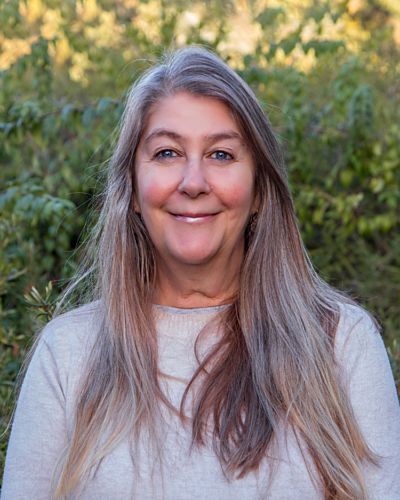
"I think it's important to live where you are now," she says. "Deal with the most important first. It's a hierarchy. Try not to get caught up in the minutiae and the distractions, and to set time to focus for yourself, focus for what you are there to build, and make it as robust as you can so that when you move on, it's all good. You don't leave a mess behind."
These capabilities are something that those facing a short time on Earth need to grapple with, but they are also important to board members and CEOs.
Kirkman Meikle – a recent graduate of the Community Directors governance diploma –manages Palhelp, a Hobart-based palliative care support service where trained volunteers spend long stretches of time with people living with a terminal illness. Clients’ concerns are often immediate and practical.
"Am I leaving a mess to my family? Who's going to look after the dog? What's going to happen when I can't have a conversation with my daughter because we're still feuding about the car?"
Palhelp’s volunteers can also help clients with their legacies.

One of Palhelp's newer programs is a volunteer-led biography service for people with palliative illness. Trained volunteers spend extended time with clients, helping them record their memories, family histories and practical wishes. The result is a printed biography, a legacy document for the family, but there’s more to the outcome than a physical product.
"The most important part of it is the time they spend in reminiscing, which has real positive effects on them at this time in their life. It helps people to deal with past trauma. It helps them put them in a space where they're looking back on the best parts of life and get acknowledgement."
Volunteers are trained to understand a relationship that must soon end, and deal with the challenge this presents: "At the end of this, this person will die. How do I want to walk out of this? What is my exit strategy?"
It’s a reminder that wellbeing is critical for both Palhelp’s large volunteer base and smaller staffing group.
"My role isn't to disrupt."
Kirkman Meikle came to Australia after nearly a decade leading Harrogate Skills 4 Living in North Yorkshire, where she was general manager and executive director until 2017. In the UK, unlike Australia, not-for-profit executives often have a vote on the board.
"It was a big role to have without training at that point," she said.

After arriving in Australia she became CEO of Bethlehem House Tasmania, which provides accommodation and support to people experiencing homelessness, and since 2022 she has managed Palhelp. This year, she also joined the board of the Drug Education Network, and she has skills in the disability and domestic violence fields too.
All these experiences have helped Kirkman Meikle understand how boards and executives work and prompted her to look at the differences in their operations across the globe. For example, in Australia there is a greater commitment to promoting board members from within, whereas in the UK, boards are more likely to recruit by looking at established late-career operators.
"I see people really being brought on from within organisations, and a genuine commitment at board level to bringing in younger people and upskilling them. In all of the organisations I've worked with, it's been a focus on looking not just at the skills mix and picking those who've got the longest career history, but looking at who's going to bring fresh energy."
Each system has its benefits, but Kirkman Meikle said it comes down to “connection and network and experience that you can bring, and how you're going to actually help the organisation."
During her career, Kirkman Meikle has accumulated qualifications in managing health services, business development and contracts management, but she said the Community Directors Diploma of Governance made a lot of sense for someone in her field.
"It's specifically about non-profit organisations, which is where I have always worked, where I want to continue working. It's not so much at corporate company director level, which can have a slightly different focus. This is specific to the requirements of the for-purpose, not-for-profit charitable sector, which is where I need to know what the rules of play are, what are the specific and slightly different governance requirements when you're working within a community organisation, and the engagement of members and volunteers in that space."
She said the course tackles real problems from people operating in the same environments and dealing with the same constraints. "They know what you're talking about. They know the space you're operating in, and you can learn from them."
Kirkman Meikle said she had employed her greater governance knowledge to “manage upwards” when needed, to recommend adjustments to her organisations’ constitutions, and to keep directors “on track” at the AGM.
“Altogether, it’s given me a great set of tools.”
At times, she’s had to resist claims that a company directors pathway carries more professional weight than the not-for-profit equivalent.
"I'm not shy about using and explaining my ICDA credentials, often in the face of elitism around the AICD [Australian Institute of Company Directors] pathway."
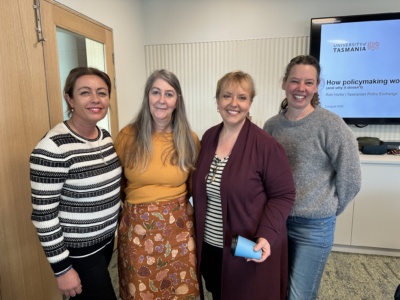
Kirkman Meikle displays the Fellow of the Institute of Community Directors Australia (FICDA) credential on her LinkedIn profile, and she has budgeted for training for her colleagues to undertake training with the organisation.
"I've been very proactive in making those opportunities available to them. And I haven't found it that they've been snobby or elitist about it. I think that the directors that I'm working with have found these qualifications right on point and useful to them."
Community Directors training has made Kirkman Meikle more comfortable in her new role on the board of the Drug Education Network (DEN), a Tasmanian not-for-profit health promotion organisation that delivers drug education in schools, workplaces and community settings across the state. In 2025, DEN delivered 295 training and education sessions to 5,769 individuals and launched a new five-year strategic plan.
Kirkman Meikle is realistic about her role as a newer member joining mid-strategy.
"My role isn't to disrupt. There has been great work by the board members to come up with the five-year strategy. The places that we are able to add value is where we're reviewing policy and where questions are coming up about governance."
Alongside her executive and board roles, Kirkman Meikle is currently standing as the Greens candidate for Kingborough Council, representing the Margate area where she lives. She made the move after completing the three-day Pathways to Politics for Women program this year, which aims to promote more women to politics.
Kirkman Meikle said the politicians who spoke to the group made her realise that away from the floor of parliament, elected officials act much like board members, in that they need to share information and navigate the tricky tensions between their own judgments and collective decisions.
She said after a career in health and community organisations and working with people who were disadvantaged, her guiding principle in work, on boards and in politics remained “first do no harm, then let’s make things better”.
She said she was motivated by wanting to “speak up on behalf of our communities and to focus on solutions”.
Posted on 15 Oct 2026
Good cybersecurity must be the foundation of not-for-profits’ efforts to adopt artificial…

Posted on 15 Oct 2026
A few years ago, I sat on a small community board that was still held together by email threads and…

Posted on 15 Oct 2026
“Build a better mousetrap, and the world will beat a path to your door”, the old saw goes.…

Posted on 15 Oct 2026
The nation's digital inclusion advocate is pushing for more equity in the rollout of AI in light of…

Posted on 15 Oct 2026
Not-for-profit leaders should be conducting regular “fire drills” that replicate AI-powered…

Posted on 15 Oct 2026
Boards that leave cybersecurity to the one director with IT expertise are leaving their…

Posted on 15 Oct 2026
Community Directors has a warehouse-style office filled with artworks, and if I glance up towards…

Posted on 14 Oct 2026
A special guest with her finger on the pulse of one of the biggest issues facing Australia –…

Posted on 17 Sep 2026
Australia’s biggest gathering of philanthropists, which drew more than 1200 delegates to Brisbane…
Posted on 17 Sep 2026
Experts in Australian philanthropy say there are stark differences between philanthropic money and…

Posted on 17 Sep 2026
One of Australia’s foremost fundraising observers says Australian not-for-profits must get the…
Posted on 17 Sep 2026
As direct giving dries up, charities face growing dependence on big donors and negotiating the…