Why winning philanthropic support is complicated
Posted on 17 Sep 2026
Experts in Australian philanthropy say there are stark differences between philanthropic money and…
Posted on 17 Sep 2026
By Matthew Schulz, journalist, Community Directors
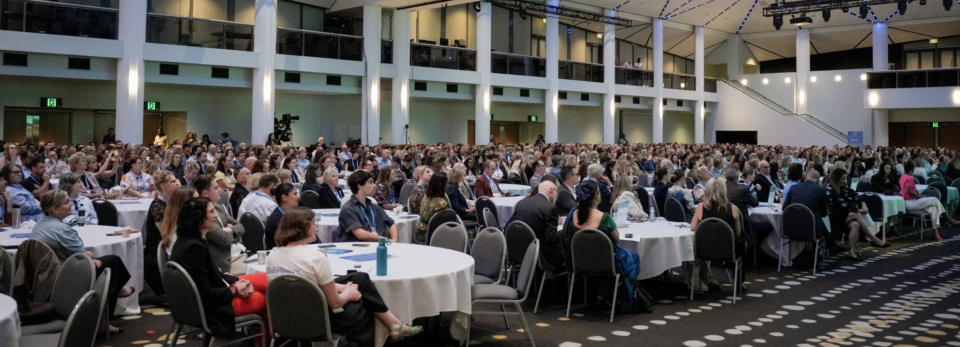
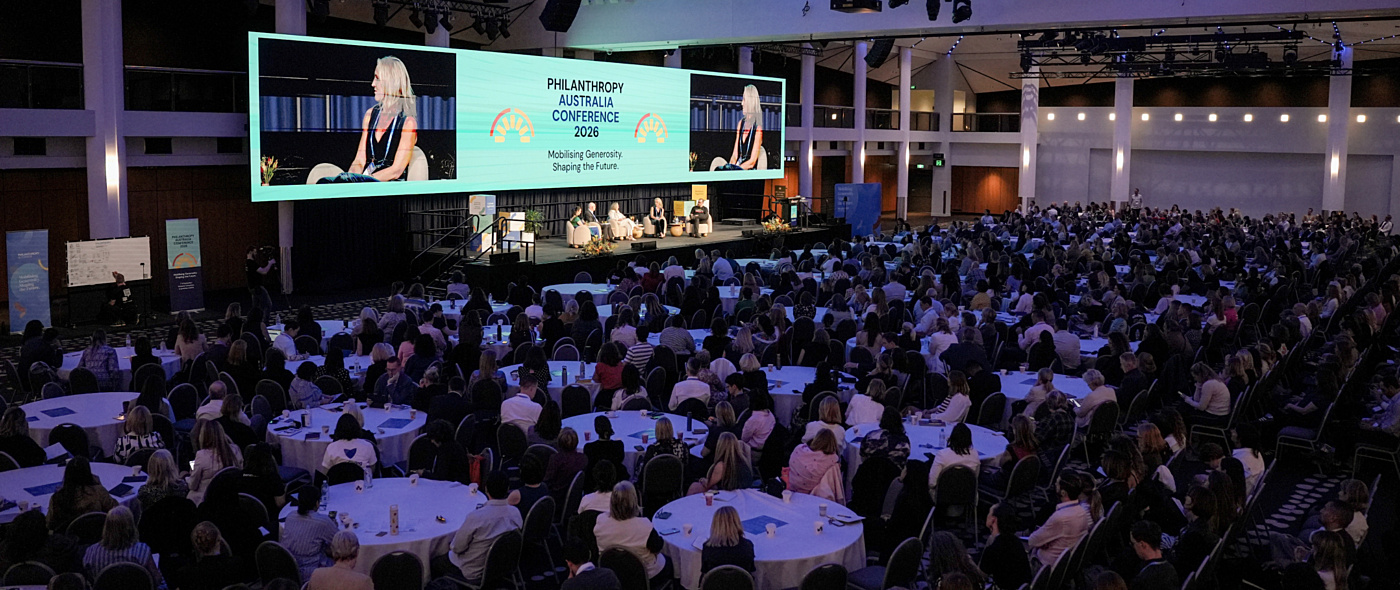
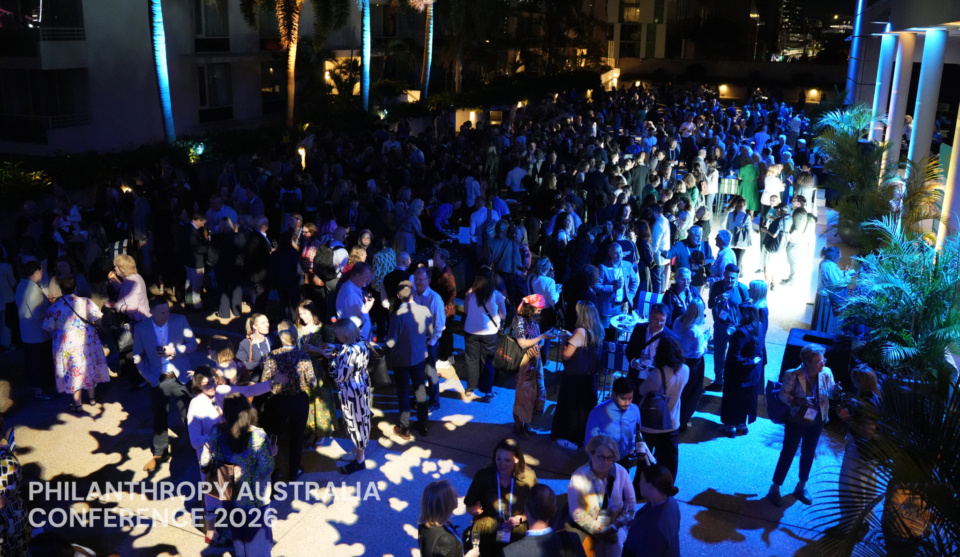
Australia’s biggest gathering of philanthropists, which drew more than 1200 delegates to Brisbane last week, is confident it can make the world a better place, if funders, charities and activists work better together.
Here’s a summary of how the sector’s biggest thinkers believed the future could be shaped for the better during an intense week of conference keynotes, panel talks, tears, laughter and funding pitches at the Philanthropy Australia Conference 2026.
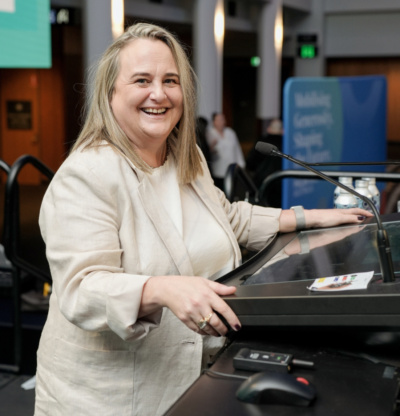
Chief executive Maree Sidey said the event was built on two ideas: mobilising generosity and shaping the future.
She told Community Directors before the conference that the program had been designed to look at giving "through the eyes of young people", an aim that led the organisation to schedule young MCs, panellists and moderators throughout the three days, in pursuit of "what the future needs from us now in terms of good philanthropic practice".
“It has truly been a transformative three days. And that's why we do this, right?"
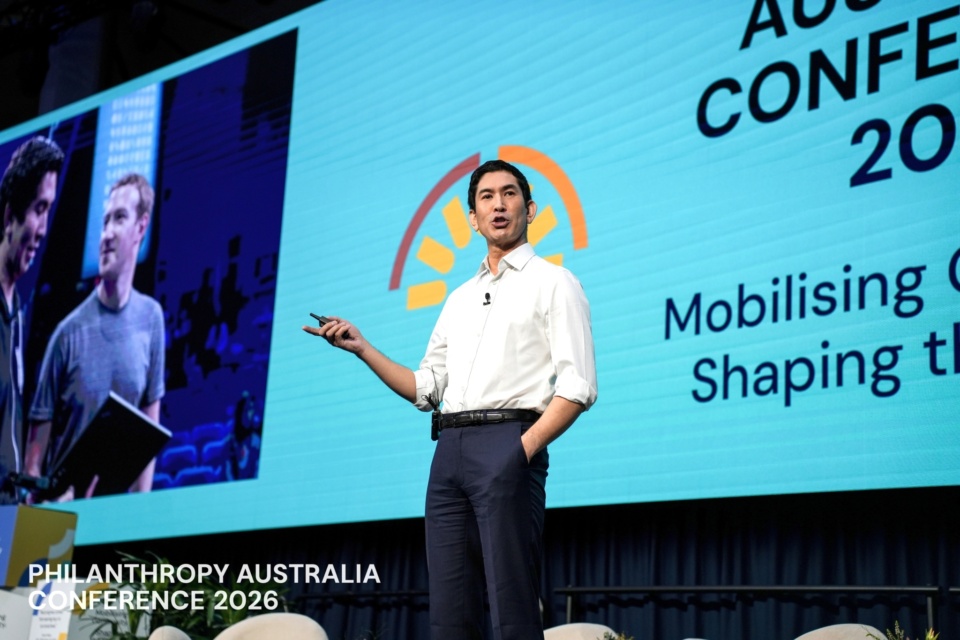
Dex Hunter-Torricke, founder of the UK-based Center for Tomorrow, opened the conference session "AI, Power and the Public Good" with a blunt prediction. "The next decade is going to be the most disruptive moment in history," he said.
Hunter-Torricke spent close to two decades inside Facebook, SpaceX and Google DeepMind but quit in February over his concerns about big corporations’ concentration of power, instead forming a not-for-profit aimed at steering the new tech towards benefitting society.
"Tech should be something deeply hopeful. When it's managed well, it should be about serving everyone in the world, not just the interests of a privileged few."
He said a "dark factory" outside Beijing that could assemble a smartphone every second without a human on the floor was “representative of what happens if a very small number of companies or ecosystems or countries might get the advantages of this technology, but the rest of us are left out of that future".
He said “unbelievable technology” should not come at the cost of social breakdown, stressing that this was not inevitable.
"The future is not a tidal wave … It is not a thing that will just happen to us. It is not a thing that Elon Musk has decreed will unfold for Australia or anywhere else in the world. We get to choose the future. The future is a set of choices."
He appealed to the philanthropist leaders filling the conference’s main room to heed the dangers.
"There is no other room coming to save us," he told delegates. "If you don't take this seriously... we will defer to the entrenched power of a set of guys who have a very clear vision of what they want to achieve, and we are not going to like it."
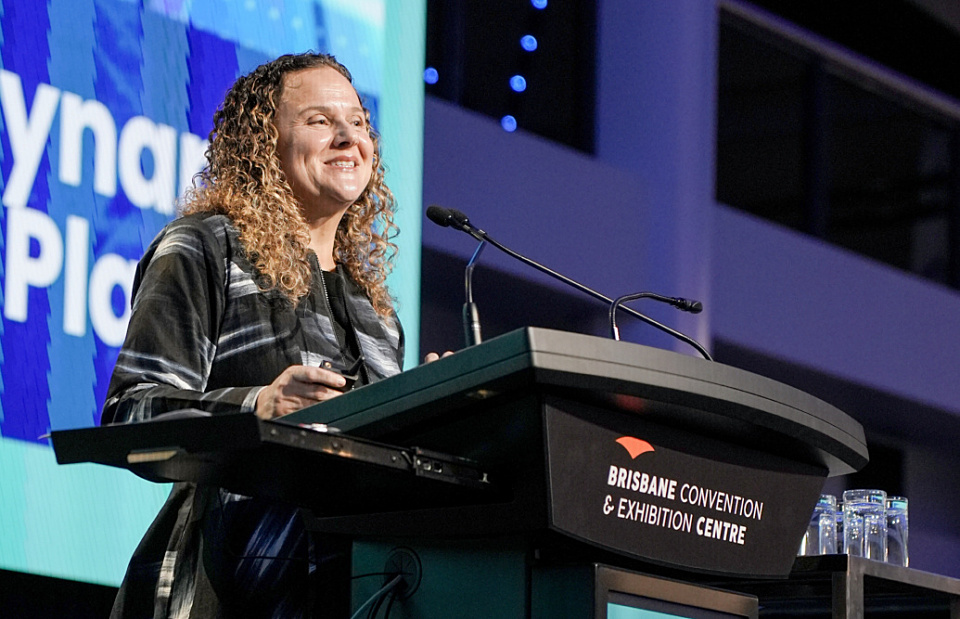
Trista Harris, a "philanthropic futurist" and the president of the US-based consultancy Future Good, said the alarming-looking future was also an opportunity.
"I deeply believe that we are five years from utopia," she told conference delegates.
"If we think of all of these collapsing systems, [it] is a new path being cleared for us so that we can build our ideal future. All of our systems are collapsing at the exact same time. That gives us the room to build something completely new ... We actually have the opportunity to change all of that in this moment. You are each founders of this new future."
Her provocative claim underlined the need for leaders to steer the future.
"Our responsibility is to decide what we want the future to look like," she told Community Directors in a conversation directly after her keynote.
"It isn't about predicting ... a lot of my work is really helping people get clear about their highest hopes instead of their biggest fears of the future."
She said not-for-profits were well placed to do that work. "I think nonprofits are actually best positioned to shape the future, because we have a value set that's about taking good care of people, and that's what the future is going to need."
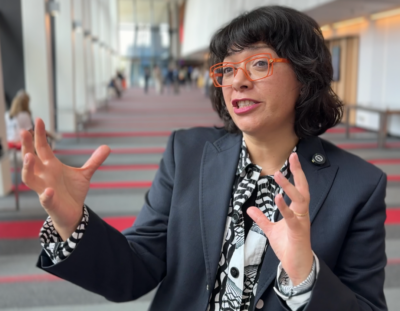
Jess Scully, chief executive of the RadicalXchange Foundation, made a parallel case in a breakout session titled "AI – Finding Australia's Way: The role of philanthropy in securing the future we want". Her argument was that the sector often underestimated its own position.
"The thing that we underestimate when we're in the for-purpose sector is that we have connection with meaningful ideas and we have connections with real communities," she said.
"Those are incredibly valuable assets. They are gateways into true meaning, true belonging and real impact that the rest of the world needs access to."
"You are trusted stewards of those relationships," she said. "So how can you collaborate in service of those relationships and those communities, but also do it in a way that brings them into shaping the future?"
Asked whether that was realistic given how stretched the sector is, she was direct: "It is possible. It is challenging, but it's possible."
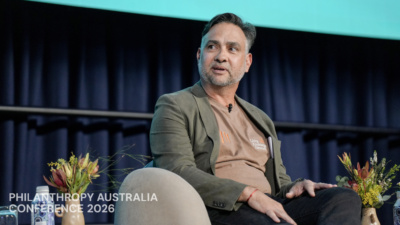
Craig North, a Bidjara man and the executive director of the Living Knowledge Network, said generosity must be considered over long timeframes.
"Generosity is properly framed as a sense of responsibility, something that we carry as First Nations people; [it] stems from our old people and ancestors, and we think a lot about what future generations are going to enjoy. I think generosity ultimately will be judged by what it looks like in 200 or 300 years.”
North said, "despite the land dispossession, despite taking children from families, despite all these bad things – the Voice, racism”, First Nations custodians were still committed to caring for the land, because “Country comes first. It's a part of belonging.”
"We know if we look after our country – the lands, the waters, the skies, the sea, the stories and the teaching – we will be happy and our well-being will be strong.”
"I think we need to think about generosity as a responsibility – not just a good thing to do – because we all have responsibility around the future generations, and it does need to start now. Generosity will be judged on what we start doing now … to enable us to have a better future for our kids."
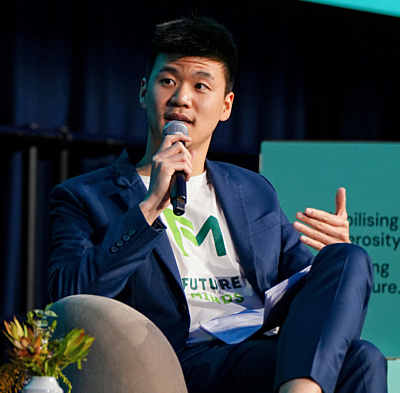
Nathaniel Diong, chief executive of Future Minds Network, moderated the conference's final session, “Letters to the Future”.
The heart of the session was an emotionally-charged letter read by Angel Owen to her unborn daughter. The national director of the Seed Indigenous Youth Climate Network declared, "I want you to inherit a world where you can thrive." Her work seeks to “build the young people around me so we can all plant the seeds of the trees that we will never see … because one day my daughter will sit beneath those trees and I wanted to know that I helped plant them for her.”
Speaking to Community Directors, Diong said his message was that the sector needed to listen to get its priorities right.
"If we want to talk about the future, we need to talk about the people who are living it most, and that's young people," he said.
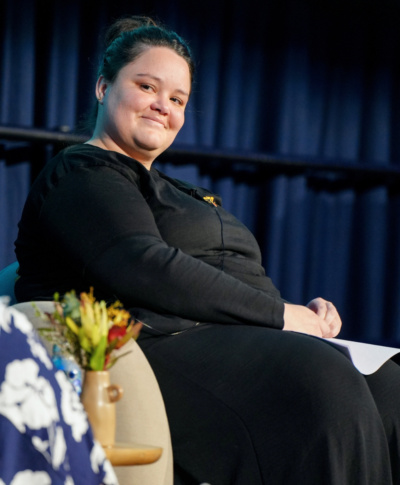
"Young people are not the most empowered cohort when it comes to philanthropy."
He said philanthropy needed to cede more power to the young to really make a difference.
"The thing that really needs to shift is beyond getting people involved in giving – it's demystifying what the world actually looks like. It's one thing to get people in the door, but it's another to make them feel welcome and want to stay."
He was direct about what that required. "For this to happen, some people are going to give up some power," he said. "And that's not something that some of the people are used to doing."
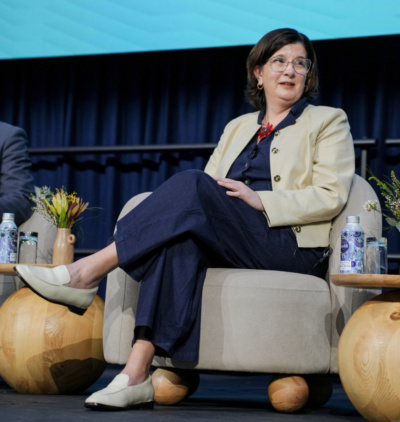
Sonja Hood, of the Scanlon Foundation – which has produced the Scanlon-Monash Index of Social Cohesion for 18 years – said Australians’ trust in each other and their institutions was essential for a future worth having.
She was speaking in the conference plenary “Divided Times: Rebuilding trust in an age of polarisation”.
Social cohesion, she said, is "the degree to which people in a society feel connected to one another, trust shared institutions, and are willing to cooperate for the common good despite their differences... the frame within which we can disagree respectfully."
She said cohesion had been declining for years except for a “startling and surprising” peak during covid-19 – and the reasons for that rise were the subject of a great deal of analysis.
“We ran the survey twice just to check it wasn't a measurement error,” Hood said.
Prompted to consider reasons for the peak, Hood speculated that during covid-19 many people had turned to their local communities and neighbours, and those social circles had become much more meaningful.
Since then, cohesion had continued its downward trajectory, but people had maintained their connections to civic society, and community remained vital, she said.
"All of those factors – the work, the belonging, the sense of acceptance – are declining. Our sense of social inclusion and justice, and the trust we have in our institutions and in fairness, is declining. The thing that's going up, though, is participation. That's: are you writing to a member of parliament? Are you voting? Are you joining a political party? Are you doing something? People are doing more of that. So while we might be becoming unhappier, we are not tuning out, and I think that's important to know.
"I think the other thing to say is that our research shows, and our work shows, that the factor that is most important here in alleviating all of this is community. It's strong communities. People who live in connected, strong communities have better senses of self-worth, better senses of belonging, and better general all-round trust in the environment we're in. So that's where we're putting our effort."
Hood said philanthropists had a vital role in solving the nation’s social challenges, and that task could not be relegated to governments.
She drew a clear line between government and philanthropic funding. "If people want a data template filled, short-term funding, opportunity, they could go and talk to government," she said. "If they want someone who's going to roll in with them and actually help solve the problem, to me, that's what philanthropy should do."
Reflecting the views of many delegates, Hood said there were many reasons to be hopeful about the future, especially from the nation’s newest arrivals.
"Community gives me hope, young people give me hope … migration gives me hope," she said. "No one comes here for a worse life. Everybody comes here to make a better life for themselves, their families. They come here to make a better life for our community.
"If we could actually all just lean in to that beautiful, wonderful sense of aspiration and optimism for a minute, we are the luckiest country on the face of the Earth ... if we go from that place of optimism and strength, we can walk up to [our problems], we can address them, we can fix them."
Another future-focused sector and philanthropy effort discussed at the event was the Digital Futures initiative, which aims to boost the digital and AI capability of not-for-profits through a collaboration of charities, not-for-profits, philanthropists, tech companies and government.
Philanthropy was critical in backing the initiative when government funding was uncertain, and it attracted support from Perpetual, Paul Ramsay Foundation, the Ian Potter Foundation, Minderoo Foundation, Gandel Foundation, Greater Melbourne Foundation and others. Scores of other partners came from across all sectors.
David Spriggs, chief executive of Infoxchange and a driving force behind the project, told delegates that the scale of the digital capability gap facing not-for-profits meant no single organisation, funder or technology partner could close it alone.
Digital Futures was proof of what collaboration could look like. "We thought, well, we can talk about this just as not-for-profits in the room, but how do we bring in philanthropy? How do we bring in tech companies? How do we bring in government? How do we bring in universities?" he said. "I think that's what's been the magic."
Philanthropy had not only funded the project but helped design it, he said.
Tess Stone, of Paul Ramsay Foundation, described the foundation’s support as "patient risk capital”.
"Things take time ... it requires patience, but also the kind of risk capital that comes with cycles of adaptation and try, test, and learn."
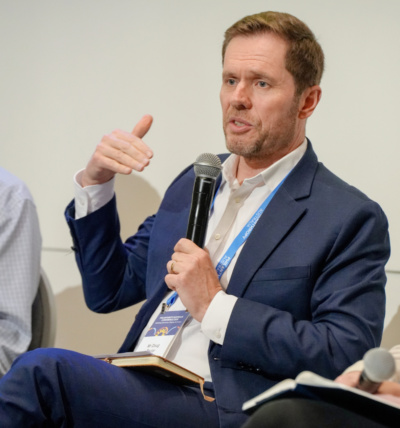
Doug Taylor, chief executive of The Smith Family, spoke of his organisation’s involvement in the project, saying The Smith Family had developed some “scar tissue”, an apparent reference to a well-documented cyberattack in 2022.
His organisation was keen put technology to work, and he described a client portal and AI agents that boost access to resources, cybersecurity that gives priority protection to sensitive data about vulnerable people, and improving digital inclusion.
He said organisations close to the ground were sensitive to – and capable of quickly responding to – the trends affecting society.
Referring to the work of Rita McGrath, the author of Seeing Around Corners: How to spot inflection points in business before they happen, he said, "The best way to predict the future is to look for weak signals, and weak signals are always at the edge of an organisation. They're always at the edge of a system, and they're the best insights into where the future will be."
Speaking at the end of the conference, following her call at the start of the event to boost the nation's generosity, Sidey said the response from delegates had been striking.
“We have been overwhelmed with people who have come up and shared their feedback, who've told us that they were throwing out their strategy, that they were revamping their board, that they're moving people off to make space for people whose voices aren't there, that they're thinking deeply about AI and social cohesion, that they're celebrating and thinking about the kind of campaigns we can win – like marriage equality – when we all work together.”
“It has truly been a transformative three days. And that's why we do this, right? Philanthropy Australia is here to help us come together as a sector and think about how we take the sector forward.”
The next Philanthropy Australia Conference will be held in 2028 in Perth, the first time it will be hosted in Western Australia.
Posted on 17 Sep 2026
Experts in Australian philanthropy say there are stark differences between philanthropic money and…

Posted on 17 Sep 2026
One of Australia’s foremost fundraising observers says Australian not-for-profits must get the…
Posted on 17 Sep 2026
As direct giving dries up, charities face growing dependence on big donors and negotiating the…

Posted on 17 Sep 2026
Charities reported $14.8 billion in donations and bequests last financial year, the second-highest…

Posted on 17 Sep 2026
My father often googles my name, and as a result, years ago, I received a surprising gift in the…
Posted on 17 Sep 2026
Where Evelyn Mugisha grew up in rural Uganda, the subjects and careers considered suitable for…
Posted on 09 Sep 2026
A global gathering of philanthropists in Brisbane this week is aiming to tackle society’s biggest…
Posted on 09 Sep 2026
Media attention about women's philanthropy has more than doubled in three years, according to new…
Posted on 26 Aug 2026
Sector leader Violet Roumeliotis has called on funders to stop treating not-for-profit…
Posted on 13 Aug 2026
As a teenager, I attended summer camp for seven years, first spending two weeks at a time camping…

Posted on 13 Aug 2026
Not-for-profits are full of people with great ideas, but that doesn’t mean they are set up for…
Posted on 13 Aug 2026
Charities Minister Andrew Leigh – a former professor of economics at the Australian National…