Billion-dollar community funding pool is making a difference
Posted on 21 Oct 2026
Backed by tangible successes and government support, community foundations are gaining momentum as…
Posted on 09 Sep 2026
By Matthew Schulz, journalist, Community Directors
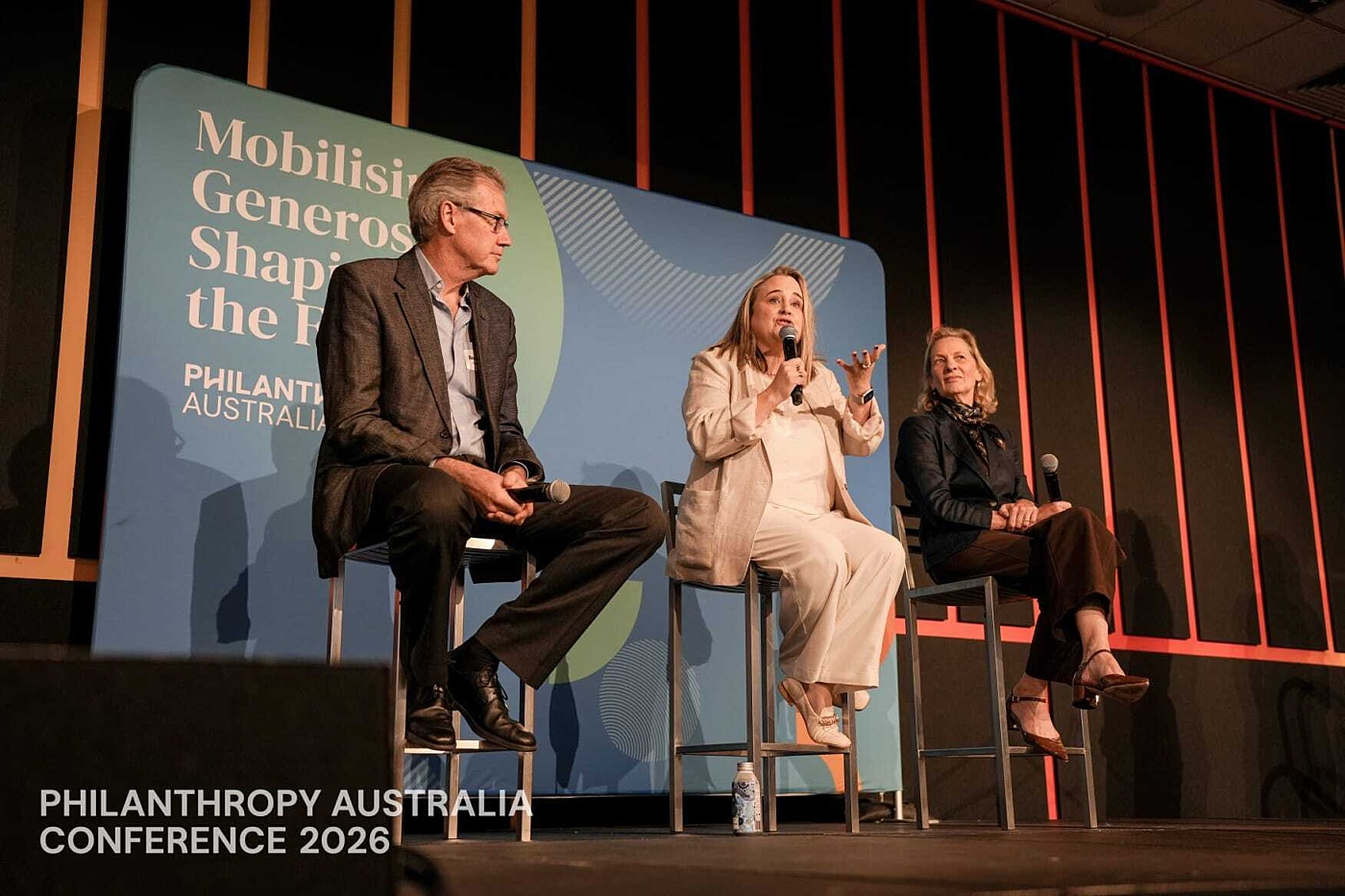
A global gathering of philanthropists in Brisbane this week is aiming to tackle society’s biggest social issues by boosting generosity to shape the future.
The Philanthropy Australia conference comes as philanthropists are increasingly relied on for gifts and grants to counter a slump in small-scale donations.
According to the latest charity statistics, structured philanthropic giving in Australia is worth more than $10 billion each year, not including the billions more given by individual donors.
With that volume of giving, it’s not surprising that 1200 delegates filled the Brisbane Convention and Exhibition Centre – 200 more than in 2024 – for the three-day conference which kicked off on Tuesday, spilling off into a series of masterclasses, informal sessions and a blitz of networking that spanned the whole week.
Speakers hailed from across the nation, the United States, Europe and Asia, and delegates represented a spread of old-money philanthropists, emerging “collective giving” groups and young activists seeking to shake up the sector.
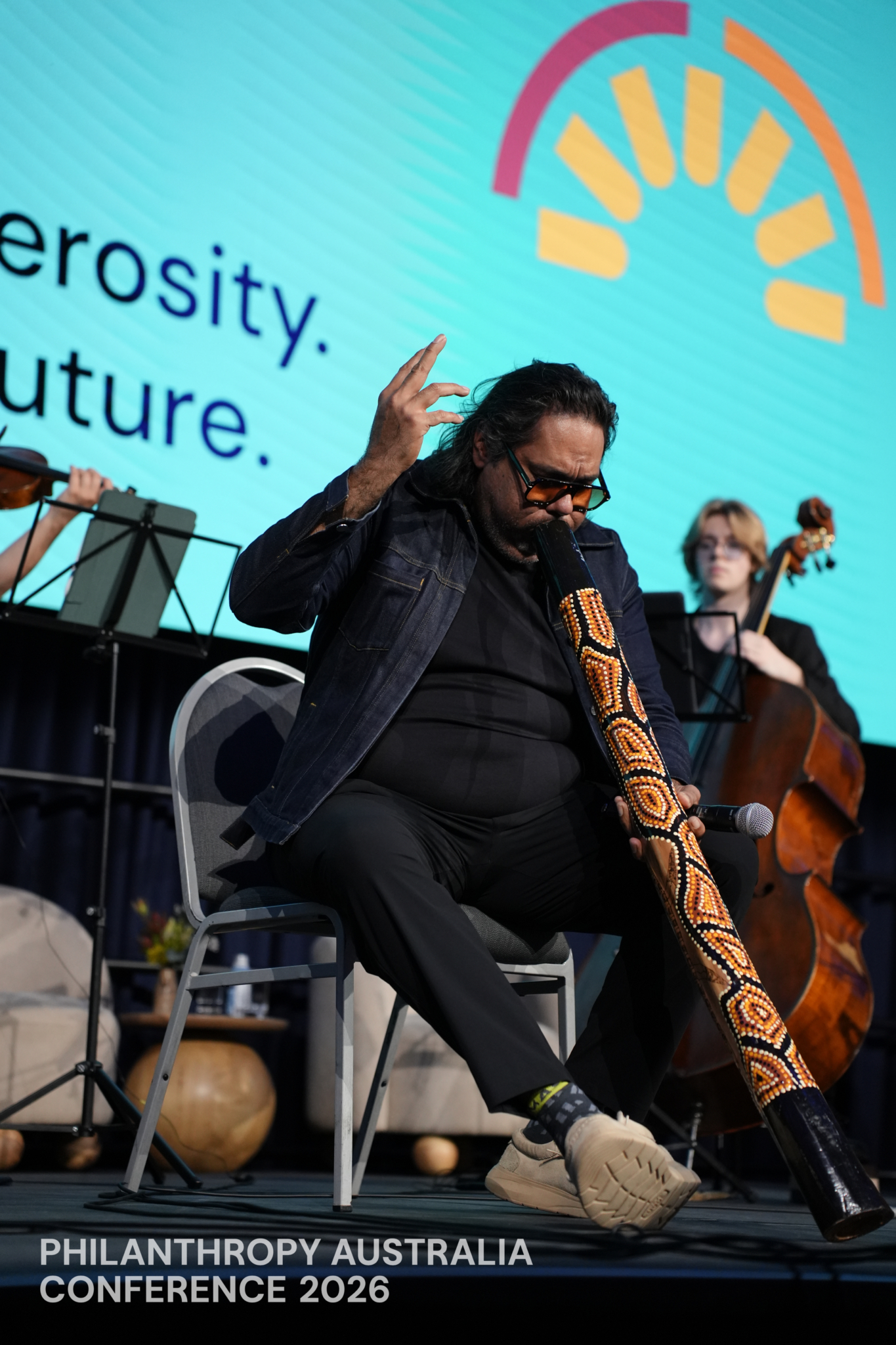
Scores of representatives in the audience and on the podium also represented First Nations groups, foundations and philanthropists. That representation gave the traditional welcome to Country emotional punch, and delegates stood as one at the end of a spine-tingling performance melding voice, guitar and didgeridoo by former Queenslander of the Year and Kalkadunga man William Barton.
In her welcoming address, Philanthropy Australia chief executive Maree Sidey revealed she’d torn up the original speech produced by her team.
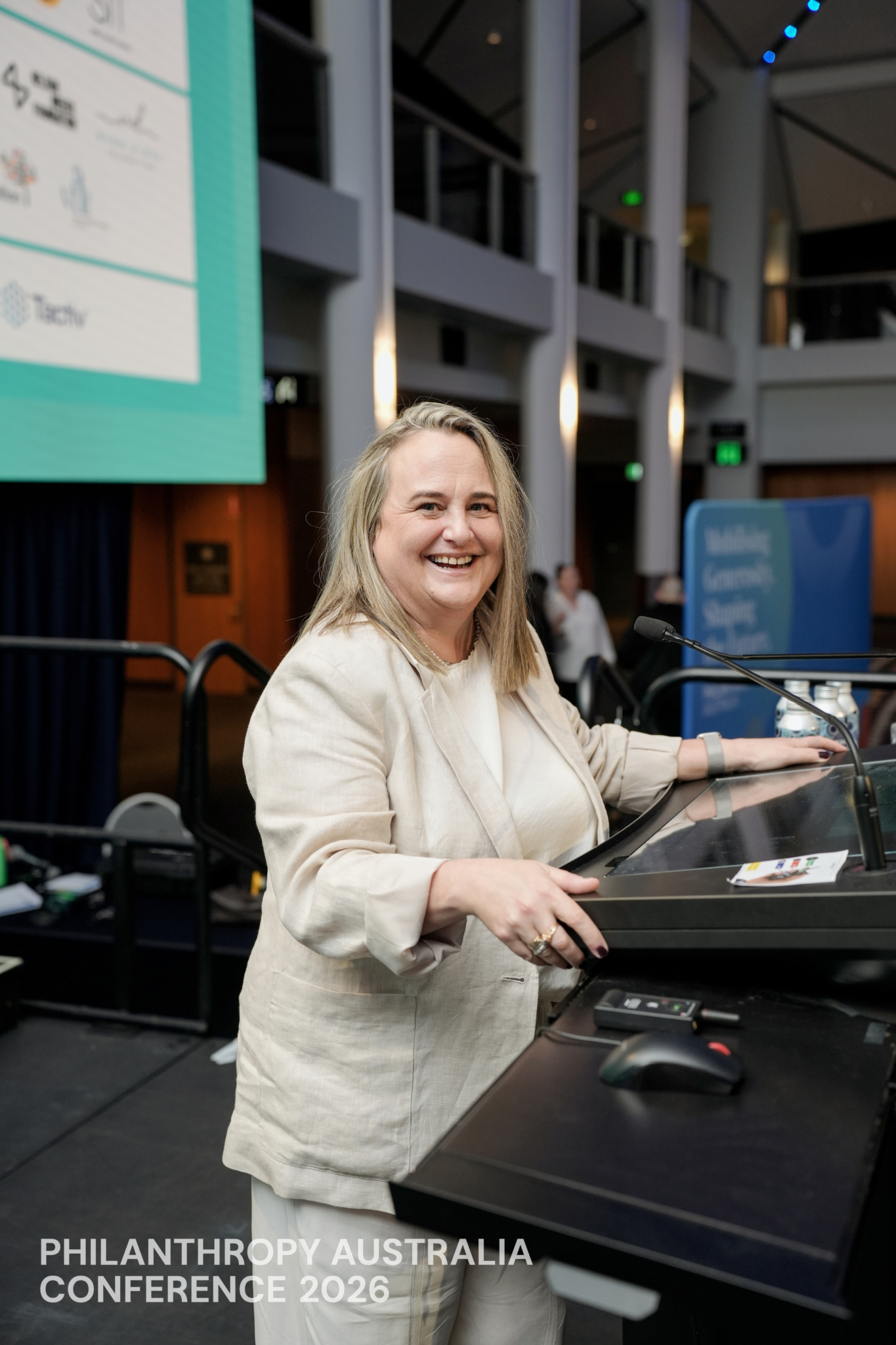
“I realised I didn’t want to spend these five minutes simply giving another speech. I wanted to talk to you instead about a question I have been really wrestling with since stepping into this role: How do we mobilise generosity?”
Sidey said Australia had “ambitious goals around growing giving” and the government’s push to “double giving” was spoken about by other countries with envy.
“We all agree mobilising generosity is desirable: that’s why you’re all here, right? We need more giving: our charities and for-purpose organisations are increasingly relying on it. But our ambition to grow giving is not the same as knowing how to achieve it.”
While “Australia is a wealthy nation, growing wealthier all the time”, “we have this weird conundrum … while we are getting wealthier, our overall giving – the number of Australians actually involved in giving – is in decline.”
“So many Australians think giving is something someone else can do.”
Sidey suggested that years of discussions had focused on fundraising, policies, tax settings and campaigns. And while these were important, they did not explain why people chose to give.
“Giving is an action, but generosity is a feeling. It’s the feeling that leads to the action,” she said.
And yet it was possible that Australians’ increasing wealth and privilege could be undermining their generosity, she said, an idea in line with the “mind bender” that some of the least wealthy nations were the most generous, according to figures from the World Giving Report.
She drew attention to a simple data point most had overlooked: that communities with a strong sense of belonging gave three times as much.
“People are substantially more likely to give – and give at higher levels – when they feel a sense of connection and belonging. This applies across wealth levels. This means belonging is not simply a nice to have, it is essential to cultivating generosity.
“Giving is an action, but generosity is a feeling. It’s the feeling that leads to the action.”
“Better still, it gives us – all of us in this room – something practical to work with. Belonging is something we can action: we can build it, fund it, foster it. We can strengthen and cultivate it through our communities, networks and institutions.”
Sidey urged conference delegates to spend the event thinking more about building that sense of belonging.
Sidey told Community Directors before the gathering that the event sought to look anew at giving “through the eyes of young people”, an aim that had prompted the organisation to program young MCs, panellists and moderators across the packed schedule as it sought to find out “what the future needs from us now in terms of good philanthropic practice”.
Other key themes included social cohesion, the role of AI and technology, and the great responsibility that comes with wealth.
Sidey said philanthropy – and society – had changed “enormously” since the organisation’s 2024 conference in Adelaide.
“We’re seeing all parts of society making huge shifts in response to some of these pressures. We’re seeing a steep rise in giving to environmental and climate issues. We’re seeing a big rise in collective giving. We’re also seeing real differences in how young people engage in giving: much more engagement with online giving platforms, where people can give to causes they care about, and activate their volunteering and the causes they want to show up for. And that’s not to mention the big shift in how we understand women's role in philanthropy, through the She Gives campaign. There’s so much happening.”
Soon after her opening address, Sidey moderated a panel discussion titled “The state of generosity: Global trends and local implications”. The panel focused on the findings of the UK-based Charities Aid Foundation, which produces the World Giving Report.
To mark the first time the Philanthropy Australia conference has been held in Brisbane, Queensland Treasurer David Janetzki used the opportunity to spruik the state’s philanthropic and for-purpose efforts and to urge philanthropy to choose Queensland as a base for their activities and initiatives.
Janetzki said his government had established the Office of Social Impact and a roadmap for social enterprise and impact investing, and had funded initiatives in the area to the tune of $20 million a year.
The government had advertised the role of “philanthropy liaison”, a role Janetzki’s staff sometimes described as a “philanthropy concierge”, who would open the door for philanthropists, and connect them to opportunities, communities, government and social enterprises. Janetzki claimed the effort as an Australian first.
He said the Office of Social Impact was employing data to identify funding opportunities and funding gaps for complex problems in the state, with matching money available for some causes through the Social Entrepreneurs Fund.
“It’s about being smarter and more coordinated: identifying where government investment, philanthropic capital and community leadership can contribute to achieve something none of us could achieve alone,” he said.
“Government can create the conditions for partnership. Philanthropy can take risks, back innovation and support ideas early.
“Government can provide scale, data and long-term infrastructure. Social entrepreneurs and community organisations bring the ideas, relationships and ability to deliver. And when those things happen, remarkable things can happen too.”
He said he wanted more foundations and philanthropic teams operating in Queensland, with decisions about Queensland communities being made with Queenslanders “in the room”.
“I call on all of you, bring us the opportunities that you are seeing, the organisations ready to take the next step, the communities with solutions. Tell us what you’re working on. Show us where government investment could unlock philanthropic capital and where philanthropy, government and other investors could build something more.”
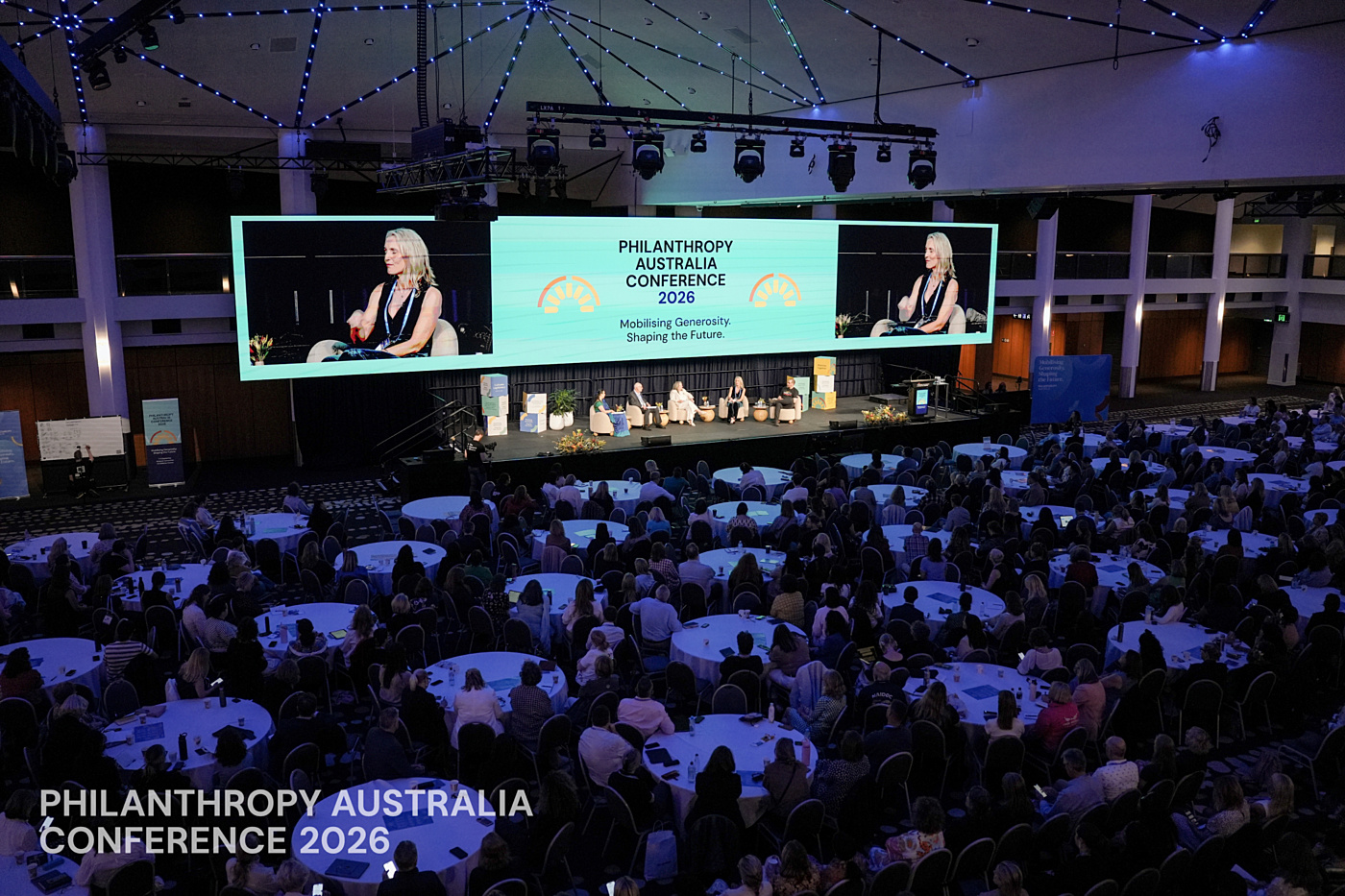
“We may not always move at the same speed, we may not always assess risk in the same way, but those differences cannot become an excuse for standing still. For 50 years, Philanthropy Australia has shown what is possible when generosity is matched with action. Let’s write the next chapter together.”
Major sponsors Tim Fairfax and Gina Fairfax of the Fairfax Foundation also took to the stage to welcome delegates, with Mr Fairfax describing the event as “at its heart … a story about Australians choosing to give. Choosing to back one another. Choosing optimism over difference, community over division, and a future with greater opportunity and hope.”
Charities Minister Andrew Leigh, busy in federal Parliament, sent a video message to delegates, echoing the theme that Australia “remains a generous country, but our civic life is under pressure”.
He noted levels of trust had fallen since 2019 from 55 per cent to 50 per cent and that volunteering had fallen from 30 per cent to 23 per cent.
But he said rebuilding of trust and community could be aided by increased local giving – such as through the new “community charity” category for community foundations, and through more collective giving groups. Bequests could tap into the estimated $5 trillion in wealth to be handed down through estates over the next two to three decades, he said, and everyone could be asked when writing their wills whether they’d consider a bequest.
And he mentioned the government’s role in reforms to support the sector, citing the Productivity Commission’s Future Foundations for Giving report – which seeks to double philanthropy by 2030 – and the sector-driven Not-for-profit Sector Development Blueprint.
He said the federal government had lifted minimum distributions from giving funds, created a new community foundations framework, reformed tax deduction categories, and continued work on fundraising reforms with states and territories.
The conference continues until Thursday. Tap here for our full conference wrap.
Posted on 21 Oct 2026
Backed by tangible successes and government support, community foundations are gaining momentum as…
Posted on 21 Oct 2026
A national campaign to restore federal funding for Ask Izzy has attracted such strong grassroots…
Posted on 21 Oct 2026
In the wake of an act of violence against federal independent MP Helen Haines, Charities Minister…

Posted on 21 Oct 2026
If your charity takes a stance that happens to align with a political party’s stance in a public…

Posted on 14 Oct 2026
The federal government’s special envoy for social housing and homelessness, Josh Burns MP, has…

Posted on 14 Oct 2026
The Reserve Bank’s move to ban card payment surcharges has led to complications for charities and…
Posted on 14 Oct 2026
A special guest with her finger on the pulse of one of the biggest issues facing Australia –…

Posted on 07 Oct 2026
A major public campaign launched this morning is calling on the federal government to restore…
Posted on 07 Oct 2026
The Australian Literacy & Numeracy Foundation (ALNF) has announced a partnership with mining…

Posted on 07 Oct 2026
A conference in Darwin will this morning hear detailed, strategic plans for how Australia could…

Posted on 30 Sep 2026
Not-for-profit leaders have been warned to be wary of approaches from potential “funding partners”…
Posted on 30 Sep 2026
More than 200 fully funded Centre for Social Impact (CSI) scholarships will help equip for-purpose…