
Billion-dollar community funding pool is making a difference
Posted on 21 Oct 2026
Backed by tangible successes and government support, community foundations are gaining momentum as…
Posted on 30 Sep 2026
By Nick Place, journalist, Community Directors

Personal stories are among the most powerful tools a charity can have to raise funds and awareness, but gathering and telling those stories with sensitivity and care is often left to chance and instinct.
To combat this, Kate May from the values-based communications firm Common Cause has created training in “lived experience storytelling”.
“At Common Cause, we continually see the power of lived-experience stories to influence public understanding, attitudes, policy and actions across social, health and environmental movements,” May said in announcing the training.
“But while storytelling can drive connection and support systemic change, without care and strategy, it can also reinforce harm, tokenism and burnout. This training was developed specifically for people with lived experience to explore exactly that.”

Through the training, May helps people to share their personal stories without causing further harm, and she helps the organisations that want to use those stories to do so respectfully, sensitively and effectively.
May, who lives with chronic pain, told the Community Advocate she found it difficult to talk about her pain openly through her twenties for fear of being judged, pigeonholed or even sneered at.
“We started running the training as a bit of an experiment,” she said. “I could see the gap, because people want to share lived experience stories. They’re incredibly powerful, they’re what donors want … the general public is more likely to click on a lived experience story than a CEO talking about how great their charity is, or numbers and statistics.
“But the how-to-do-it, and how to do it in a way that is engaging and gets reach but is also safe and not exploitative? A lot of it is accidental and I just don’t think that the skill set or the norms are there in a lot of spaces. There is huge variability across not-for-profits, particularly in health.”
May felt that somebody needed to establish a set of standards on what to do and what not do when working with people with lived experience, including understanding nuances of consent, agreeing in advance on how stories will be shared, and establishing which parts of a person’s traumatic past are acceptable to revisit.
The training is grounded in evidence-based communication and narrative frameworks, and it explores how to make stories influential and supportive, with an emphasis on strategic communication, ethical practice, values-based messaging and narrative structures.
“People with lived experience might just care about the community and want to get involved, whether working with an organisation, as a volunteer, an ambassador, or peer support person within an organisation,” May said.
“You can tell a really powerful story without telling your deepest, darkest traumas, which is often the thing that people jump to straight away.”
“Lots of people in charities have lived experience, and so we’re looking at how they can tap into their story and work with it in the way that is right for them. It’s not me getting up there and saying this is the best structure to tell a story, make sure you hit this tension point or this narrative arc or whatever.
“It’s presenting ideas and frames of how to look at it, some different structures. Let’s chat about it critically, have a little bit of practice, see what’s right for you. You can tell a really powerful story without telling your deepest, darkest traumas, which is often the thing that people jump to straight away when someone asks you to tell your story. Sometimes that’s not right for the person.”
In fact, May said she had been heartened when workshop attendees had said they were not comfortable completing the final task, which is to write and tell their story. “For me, that’s a good outcome because I’d much rather have people feel comfortable to explore that and then say, actually, speaking in front of an audience or speaking to a journalist about this really rough thing that happened to me, that’s not for me, but I can do other things.
“That’s just as good of an outcome as someone that has a beautiful story that I’m at the edge of my seat listening to.
The relationship between a charity and the people it has helped is a delicate one, especially when it comes to asking those people if they’d be prepared to tell their story for fundraising or awareness purposes. Many will feel an obligation, because of the help they’ve received, but the charity might also be concerned that it could add to the person’s trauma.
Speaking from her own experience, May said the only way to find out whether you were comfortable going public with your trauma was often to try, with support from the charity.
“Sometimes you don’t know until you do it,” she said. “I’ve done a lot of lived experience storytelling myself, having lived with chronic pain and I had a rough twenties, was just in and out of hospital and mostly horizontal rather than vertical.
“I’m pretty open about it, but sometimes when you talk about it, afterwards you’re just exhausted, you feel really shaky or you have used up all your energy and you’re back in bed for two weeks. I kind of learnt the hard way what was right for me with that,” she said.
It was essential, she said, that a not-for-profit be deliberate, sensitive and targeted in why it would ask people with lived experience to go public with their traumatic stories.
“What is your goal for telling a story?” she asked. “What are you asking them (people with lived experience) to do? What’s your intention?
“You know, they don’t necessarily have to tell the giant trauma story, or the worst things ever happened to them to meet that goal and that intention. If they want to, great, but there are a thousand ways to tell stories. People always say ‘share your story’ but we all have thousands of stories, so choose the stories that you want to share.”
Common Cause lived experience storytelling training info is here.
Posted on 21 Oct 2026
Backed by tangible successes and government support, community foundations are gaining momentum as…
Posted on 21 Oct 2026
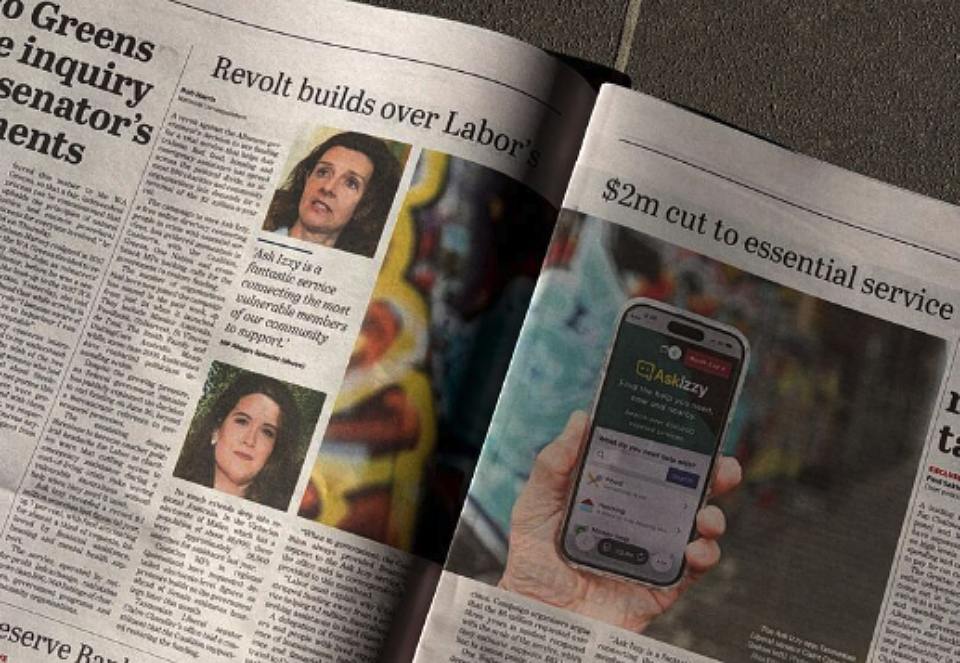
A national campaign to restore federal funding for Ask Izzy has attracted such strong grassroots…

Posted on 21 Oct 2026
In the wake of an act of violence against federal independent MP Helen Haines, Charities Minister…

Posted on 21 Oct 2026
If your charity takes a stance that happens to align with a political party’s stance in a public…

Posted on 14 Oct 2026
The federal government’s special envoy for social housing and homelessness, Josh Burns MP, has…

Posted on 14 Oct 2026
The Reserve Bank’s move to ban card payment surcharges has led to complications for charities and…
Posted on 14 Oct 2026
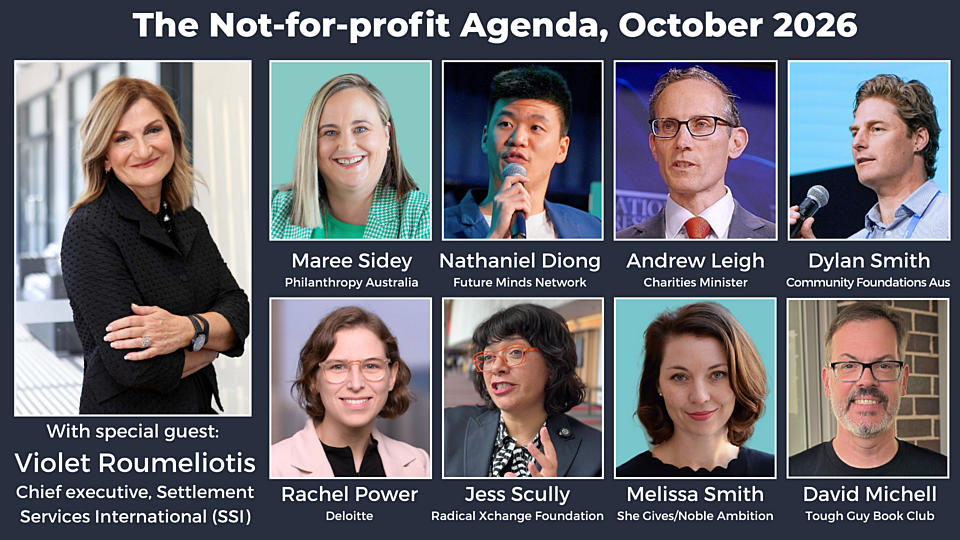
A special guest with her finger on the pulse of one of the biggest issues facing Australia –…

Posted on 07 Oct 2026
A major public campaign launched this morning is calling on the federal government to restore…

Posted on 07 Oct 2026
The Australian Literacy & Numeracy Foundation (ALNF) has announced a partnership with mining…

Posted on 07 Oct 2026
A conference in Darwin will this morning hear detailed, strategic plans for how Australia could…

Posted on 30 Sep 2026
Not-for-profit leaders have been warned to be wary of approaches from potential “funding partners”…
Posted on 30 Sep 2026
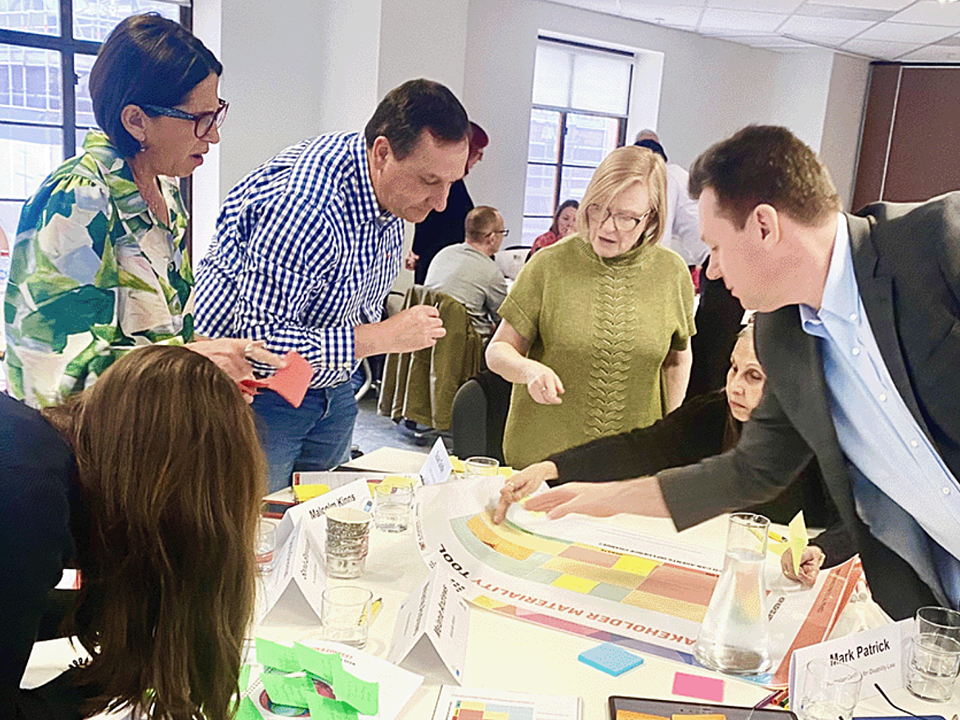
More than 200 fully funded Centre for Social Impact (CSI) scholarships will help equip for-purpose…