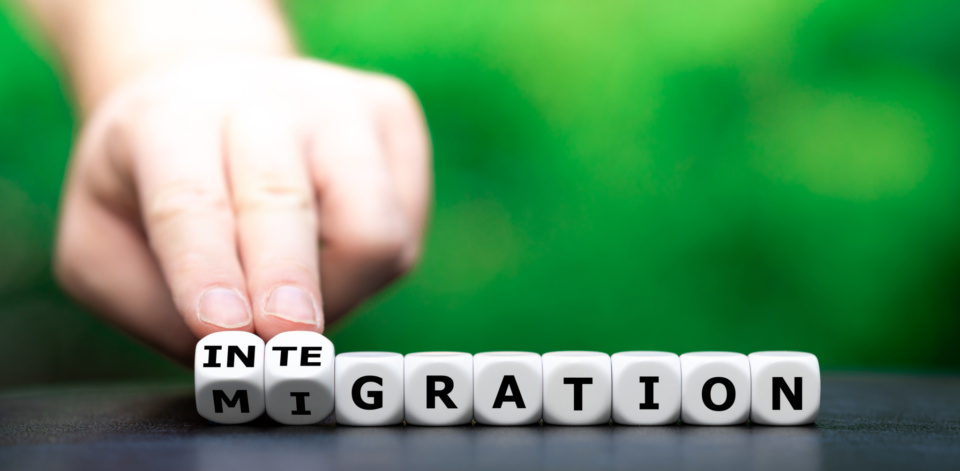
Community sector must contribute to migration debate
Posted on 04 Nov 2026
A leading advocate and service provider for new arrivals in Australia has urged the nation’s…
Posted on 04 Nov 2026
By Nick Place, journalist, Community Directors
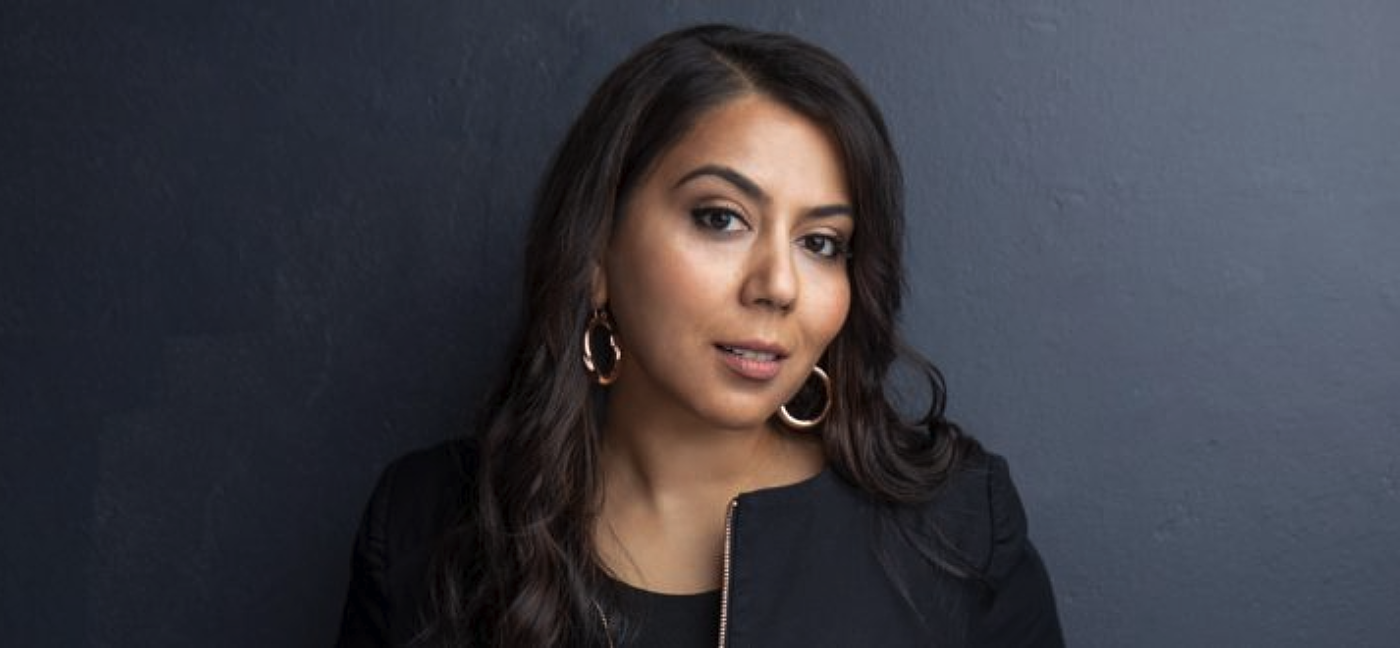
Leading lawyer and anti-racism advocate Mariam Veiszadeh has told a Human Rights Commission audience that it is essential Australia’s National Anti-Racism Framework is finally implemented, two years after it was drafted.
“If you’re in government, adopt the National Anti‑Racism Framework, fund it and legislate a positive duty for race, just as we did for sexual harassment,” she said while delivering Monday night’s Kep Enderby Memorial Lecture, named after the attorney-general who guided Australia’s Racial Discrimination Act through federal Parliament 51 years ago.
Veiszadeh, who is CEO of Media Diversity Australia and founded the Islamophobia Register Australia, among other career achievements, said employers also needed to show stronger leadership in intervening when there is racism in the workplace, and in closing the cultural pay gap. Likewise, the media needed to step up and understand its responsibility to bring true diversity to newsrooms and to who gets quoted.
For everybody else, it was important to name racism when you see and hear it, and back those who call it out, she said, saying, “Silence isn’t neutral, it’s a decision. And if your allyship hasn’t cost you anything, it’s performative.”
In her lecture, Veiszadeh observed that Australia loved migrant success stories, such as those of sport stars, but didn’t leave room for migrants to be ordinary, just living their lives. She was also scornful of populist politicians who went out of their way to blame the problems in society and the economy on migrants, and she took aim at One Nation leader Pauline Hanson’s recent talk of Australia being a monoculture – “as if multiculturalism were some kind of wild experiment on permanent probation”.
Veiszadeh had a different view of what the nation could be.
“Here’s the Australia I believe in,” she told the audience. “One that honours the oldest continuing cultures on Earth, is proud of its migration stories, and has institutions that finally reflect the country we already are. More than half of us were born overseas or have a parent who was. Migrant communities are not a threat to Australia's future. We are its future. Fifty-one years ago, Kep Enderby put racial equality on the page. Our job is to carry it off the page into our parliaments, into our newsrooms, our workplaces, and our school programs.”
The Afghan-born advocate and writer spoke frankly about the racism she and her peers were routinely subjected to, as was her son in the schoolyard. She also discussed the ramifications of this experience, revealing that she has been diagnosed with PTSD, depression and anxiety from dealing with physical, mental and emotional abuse since calling out racism and setting up the Islamophobia Register, a national not-for-profit organisation that tracks, documents, and analyses anti-Muslim incidents and discrimination across Australia.
She stressed that her experience was not unique and not experienced only by Muslims.
“Every form of racism is abhorrent,” she said. “They share common roots, but each is distinct, with its own history, and shouldn’t be conflated. Speaking about one form doesn’t negate the other.
“Every form of racism is abhorrent … an attack on any community is an attack on all of us.”
“Antisemitism has surged and it must be confronted. The Bondi terror attacks were the worst antisemitic attacks ever seen on our shores. Members of our board and I were amongst the first to lay flowers there the next day, because an attack on any community is an attack on all of us.”
Citing other physical attacks, workplace racism and the abuse of people from different cultures, Veiszadeh said one part of the solution was lying in plain sight but was currently ignored.
“I was privileged to sit on the National Anti‑Racism Framework’s Multicultural Advisory Group, so it’s deeply disappointing that almost two years on, it still hasn’t been formally adopted or funded,” she said.
“Implementing it would show every negatively racialised community that we are not fighting one form of racism in a way that tells others that their pain doesn’t count. Hate doesn’t divide its targets neatly. Neither should our response. And getting that response right means getting the balance right and avoiding overreach. That’s why I back the Special Envoy to Combat Islamophobia’s guidance to universities, in which he says, ‘Confront discrimination against people while protecting freedom of speech and academic freedoms.’”
Veiszadeh also questioned Australia’s true commitment to social cohesion, and whether Australian leaders even genuinely understood the term.
“‘Social cohesion’ has become one of the most used phrases in public life, but whose cohesion?” she said. “If the test is that nobody rocks the boat, the people already in the boat will always pass, and the people still in the water will always fail. Ask yourself this: who is in the boat and who is drowning in the water?
“Cohesion isn’t just about keeping the peace, it’s about sharing the space. Racism persists because those who make the decisions, in the top echelons of society, are rarely those who live with the consequences of racism.”
Ultimately, Veiszadeh urged Australian government and business leaders to do better and affirmed that human rights are called that for a reason.
“Whether you arrived last year, or your family has been here for generations, on a skilled visa, a student visa or humanitarian one, your human rights don't depend on how you got here,” she said. “They belong to every one of us, because we are human.”
Posted on 04 Nov 2026
A leading advocate and service provider for new arrivals in Australia has urged the nation’s…

Posted on 04 Nov 2026
As the Scanlon Foundation Research Institute prepared to release its annual social cohesion report…
Posted on 28 Oct 2026
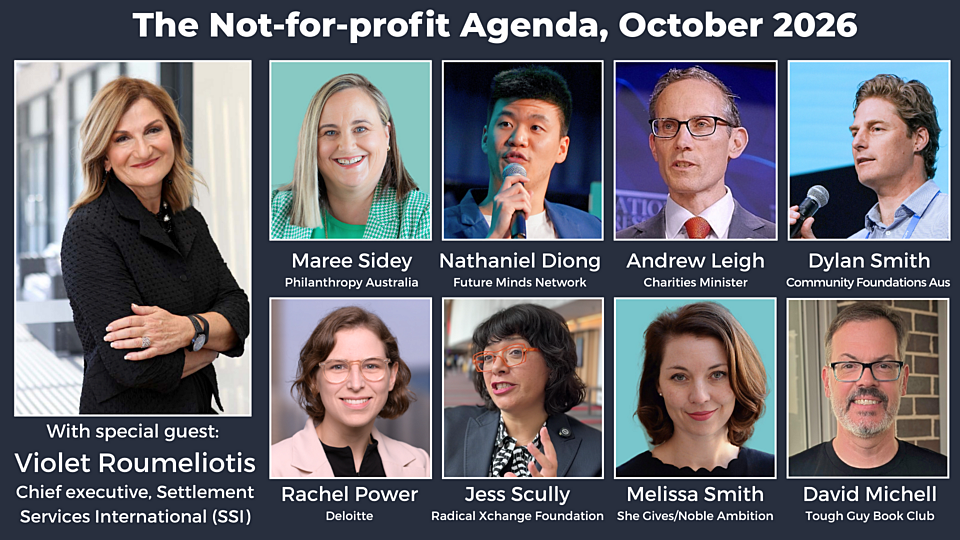
Violet Roumeliotis, the chief executive of Australia’s biggest migrant support organisation, will…
Posted on 21 Oct 2026
Backed by tangible successes and government support, community foundations are gaining momentum as…
Posted on 21 Oct 2026
A national campaign to restore federal funding for Ask Izzy has attracted such strong grassroots…
Posted on 21 Oct 2026
In the wake of an act of violence against federal independent MP Helen Haines, Charities Minister…

Posted on 21 Oct 2026
If your charity takes a stance that happens to align with a political party’s stance in a public…

Posted on 14 Oct 2026
The federal government’s special envoy for social housing and homelessness, Josh Burns MP, has…

Posted on 14 Oct 2026
The Reserve Bank’s move to ban card payment surcharges has led to complications for charities and…

Posted on 07 Oct 2026
A major public campaign launched this morning is calling on the federal government to restore…
Posted on 07 Oct 2026
The Australian Literacy & Numeracy Foundation (ALNF) has announced a partnership with mining…
Posted on 07 Oct 2026
A conference in Darwin will this morning hear detailed, strategic plans for how Australia could…