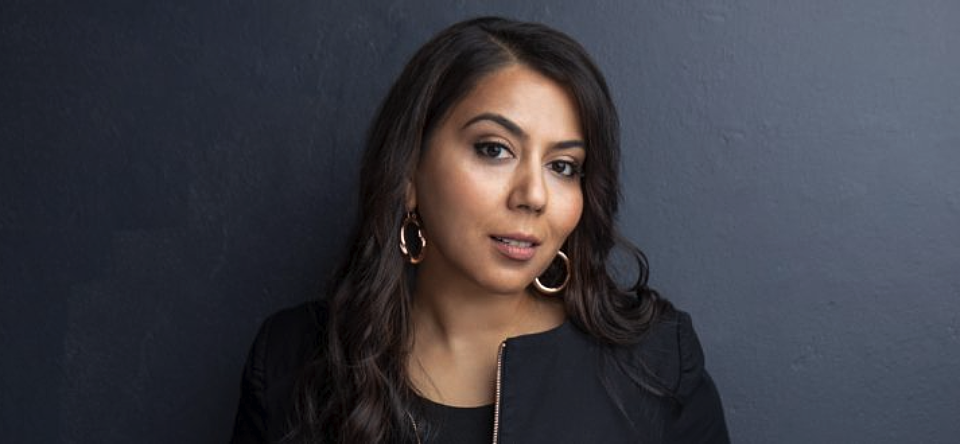
Human rights advocate urges Australia to adopt National Anti-Racism Framework to drive social cohesion
Posted on 04 Nov 2026
Leading lawyer and anti-racism advocate Mariam Veiszadeh has told a Human Rights Commission…
Posted on 04 Nov 2026
By Nick Place, journalist, Community Directors

As the Scanlon Foundation Research Institute prepared to release its annual social cohesion report tomorrow, we spoke to the foundation’s head about how to read and maximise the impact of this vital document.
The value of the Australian Social Cohesion Report, released annually by the Scanlon Foundation Research Institute, lies in its longitudinal depth, its subtleties and its insights into specific elements of where Australian society is faring well or badly when it comes to cohesion, according to the institute’s head.
Every year when the report is released, the question everybody asks CEO Anthea Hancocks, is whether social cohesion is up or down. But that misses the point, she says. In such a multicultural, diverse and complex society as ours, there are all kinds of factors at play under the surface of that headline finding, and these insights are where the report’s value lies, she told the Community Advocate.
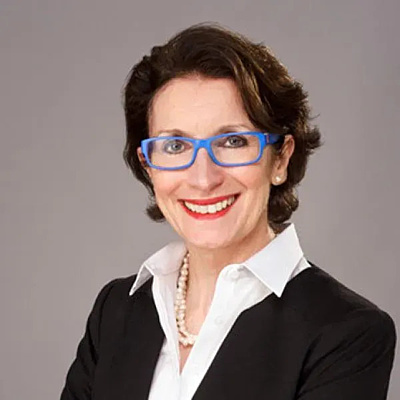
“The report is essentially very comprehensive,” she said. “It’s so important that people appreciate we ask a hundred questions, because one [question] isn’t enough, and just to say to people, ‘Do you think Australia is socially cohesive?’, and we can say 50 per cent say yes and 50 per cent say no, or whatever the number is, that doesn’t tell you anything really about how Australians are dealing with all the things that are going on at the moment.”
Speaking to the Community Advocate before tomorrow’s release of the 2026 report, Hancocks said it was understandable that people associate social division with major disruptive events, such as the Bondi massacre or the recent attack on MP Helen Haines, and assume Australia is becoming fractured.
“People do equate a single incident with social cohesion as a whole,” she said. “And so, they immediately assume that one particular violent incident, such as Bondi, actually is then indicative of us as a society, and what does that say about us? I think this is problematic.”
The survey that led to this year’s report asked 100 questions of more than 10,000 respondents, exploring a range of aspects of social cohesion. “You’re getting a much broader view of the entire complexity of Australian society, rather than this idea that we should have surveyed immediately after Bondi, or we should have surveyed immediately after Helen Haines,” Hancocks said.
In fact, the aftermath of such traumatic events was what really counted, she said.
“What I say to people is social cohesion is everything that happened after Bondi. It’s the same with Helen Haines. It’s everything that’s happened afterwards. It’s the guys that were in the barbershop. It’s the outpouring that’s occurred through social media. It’s the reflections on everything that Helen Haines stands for. All of those things are the elements that we need to appreciate about Australia, and not simply the fact that we were in a circumstance where something bad happened, because conflict does happen in a socially cohesive society.”
“A single number can't describe the entire population.”
The last three annual surveys (2023–25) indicated that Australia’s overall social cohesion remained steady, but Hancocks said the currents running underneath this surface finding were important. The five sub-domains that underpin the report’s overall assessment are constantly shifting, moving, rising and falling, and potentially cancelling one another out in the overall summary.
“A single number can't describe the entire population,” Hancocks said. “It’s the movements that happen underneath. Worth and social justice are integral to an individual’s well-being, as is a sense of acceptance or rejection. The next one is really belonging, and if you have a sense of belonging in a particular area, you may choose to participate more broadly in society.”
Again, the data paints a complex picture, Hancocks said: people can feel they belong at home, or as parents at school, or within social groups or religious organisations, but they might not feel they belong in wider Australian society, or in a suburb they are unfamiliar with.
She said helping migrants and refugees to feel truly integrated into society is more difficult than just “getting them involved” or pushing them to participate in Australian life.
“It’s such an incredibly individual set of experiences,” Hancocks said. “Some people may well say, ‘Okay, I’m in a new country, I’m going to jump in, just meet as many people as I can and I’m sure something will work out’. But then there are others that will say, ‘Hang on a minute. I need time to learn enough of the language. I need enough time to be able to adjust to elements of life such as how do you actually ride a bus? How do you purchase things? I need to know that so I can feel at least comfortable in moving into a different environment.”
Other elements that can drag on our social cohesion include the pressures of daily life. Hancocks said there was no doubt many Australians were struggling with their finances and the cost-of-living crisis, and that social inclusion, justice and people’s sense of worth were “taking a beating at the moment”.
Discrimination against ethnic or religious groups was another factor that could show up in the sub-domain data, she said.
In the lead up to the release of the report, Hancocks has been briefing various levels of government, and she will continue to present the findings to those undertaking advocacy or policy work.
“It’s certainly a topic that everybody is talking about,” she said. “I think it will continue to be a very important set of data. Next year is our 20th year of doing this, and there is no other data source that is as thorough as it is. This year we’ve had more than 10,000 respondents, so this is an extraordinary survey of the population.
“In many [surveys], people ask one or two questions. Ours is a very comprehensive way of looking at the population, rather than taking an economist’s view over here and a health sector’s view over there. It brings a lot of it together.”
The 2026 Australian Social Cohesion Report will be released tomorrow (check our news page then), while the Scanlon Foundation Research Institute will also hold its annual Social Cohesion Summit, tomorrow and on Friday.
Posted on 04 Nov 2026
Leading lawyer and anti-racism advocate Mariam Veiszadeh has told a Human Rights Commission…
Posted on 04 Nov 2026
A leading advocate and service provider for new arrivals in Australia has urged the nation’s…
Posted on 28 Oct 2026
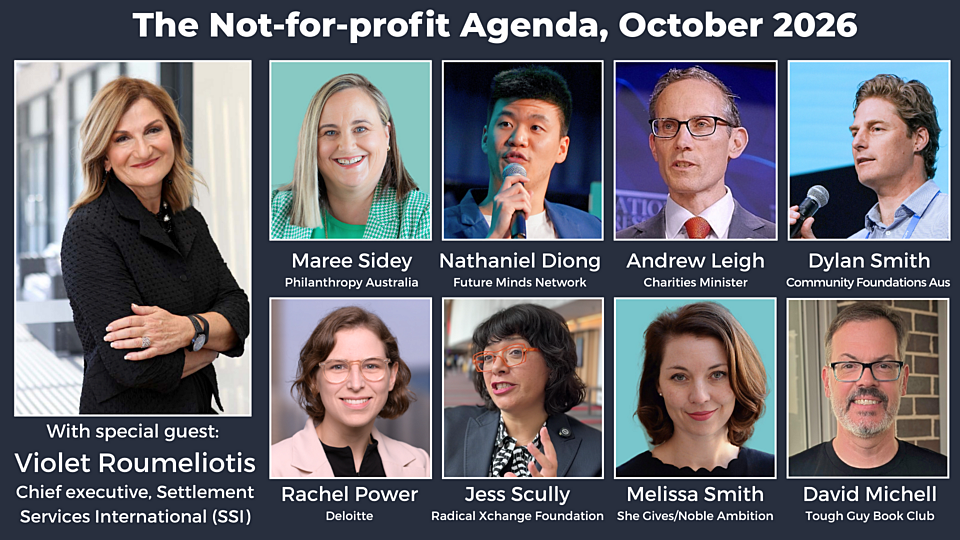
Violet Roumeliotis, the chief executive of Australia’s biggest migrant support organisation, will…
Posted on 21 Oct 2026
Backed by tangible successes and government support, community foundations are gaining momentum as…
Posted on 21 Oct 2026
A national campaign to restore federal funding for Ask Izzy has attracted such strong grassroots…
Posted on 21 Oct 2026
In the wake of an act of violence against federal independent MP Helen Haines, Charities Minister…

Posted on 21 Oct 2026
If your charity takes a stance that happens to align with a political party’s stance in a public…

Posted on 14 Oct 2026
The federal government’s special envoy for social housing and homelessness, Josh Burns MP, has…

Posted on 14 Oct 2026
The Reserve Bank’s move to ban card payment surcharges has led to complications for charities and…

Posted on 07 Oct 2026
A major public campaign launched this morning is calling on the federal government to restore…
Posted on 07 Oct 2026
The Australian Literacy & Numeracy Foundation (ALNF) has announced a partnership with mining…
Posted on 07 Oct 2026
A conference in Darwin will this morning hear detailed, strategic plans for how Australia could…