

NFP tech experts urge orgs to scale up cybersafety
Posted on 15 Oct 2026
Good cybersecurity must be the foundation of not-for-profits’ efforts to adopt artificial…
Posted on 13 Aug 2026
By Andrew Leigh
Charities Minister Andrew Leigh – a former professor of economics at the Australian National University – delves into the forces that drive innovation, and the lessons we can learn from the past. This is an edited extract from his recent book The Shortest History of Innovation.
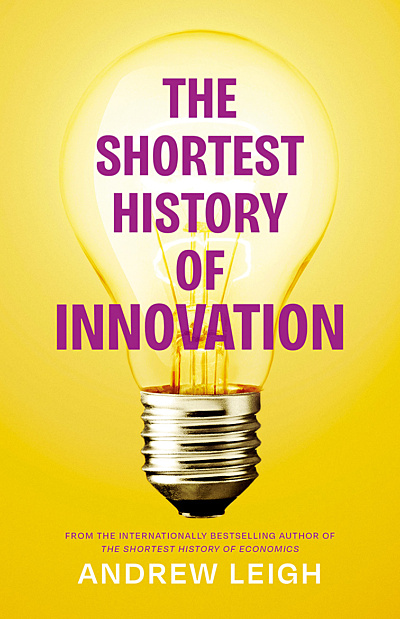
Throughout human history, innovation has been a central driver of progress. Innovation is a major reason we live longer, eat better and laugh more often than our ancestors. Innovation has made it possible to fly across oceans, cure polio and stay comfortable in harsh climates. Innovation doesn’t guarantee that societies will take care of the vulnerable, but without the innovation of recent centuries, a generous social safety net would be impossible. Education is intertwined with innovation. The establishment of universities created a structured environment that fostered new inventions. The invention of the printing press catalysed the Renaissance and laid the groundwork for the Enlightenment.
Certain inventions have left an indelible imprint on the world. Over history, at least twenty-five general purpose technologies have unlocked new frontiers of possibility, catalysing innovation in unexpected ways. Writing led to epic poems. The three-masted sailing ship led to the introduction of new crops. The automobile led to the creation of shopping centres. From their initial emergence, these inventions were improved and put to new uses, creating innovation spillovers in the economy.
A central message of this book is that most great inventions aren’t the result of a lone genius shouting ‘Eureka!’ They’re more often the product of years of slow, painstaking trial and error. Innovation entails tinkering, the work of teams and the trade in ideas across people, organisations and nations.
The role of tinkering shows up in the way that successive inventors build on one another’s work. The first wheels were used to quarry ore out of copper mines, but the invention of the wheelset made them practical for transporting whole families. Early steam engines were stationary devices, until the next innovators made them compact enough to power trains and ships. The phonograph was invented so businesspeople could dictate letters, but others saw its power to transform music. Continual tinkering allows firms to produce products more efficiently, making them affordable to the many rather than the few. In turn, this accessibility can lead customers to find new uses for the product.
"A central message of this book is that most great inventions aren’t the result of a lone genius shouting ‘Eureka!’ They’re more often the product of years of slow, painstaking trial and error."

For proof of the importance of tinkering, consider how often innovation springs from serendipitous moments: fortunate circumstances, playful experimentation and chance discoveries. Tinkering isn’t just fiddling with machines; it’s the habit of turning the unexpected into opportunity. History’s first farmers lived in places that had the good fortune of domesticable crops, good soils and a congenial climate. Leonardo da Vinci was lucky to be born out of wedlock – freeing him from the expectation of carrying on the family notary business. Mozart was lucky that the piano had been invented only a few decades before his birth, giving him the perfect platform to shine as a virtuoso and to compose his celebrated concertos. Mary Shelley was lucky that a volcanic explosion darkened her summer holiday, forcing her indoors with friends who proposed the writing competition that would lead to her novel Frankenstein.
At any given time, multiple innovators are tinkering at the edge of what has been dubbed the ‘adjacent possible’: the limits of what technology and science allow humanity to grasp. From clocks to calculus, evolution to engines, telescopes to telephones, inventors have often alighted upon a new discovery at the same moment. In past millennia, this meant bruised egos and lost reputations. In recent centuries, simultaneous inventions have led to patent disputes, with such contests becoming more frequent. An echo of this can be found among creative innovators too.
One way that innovative firms have encouraged more productive tinkering is to democratise innovation. As we have seen, one of Toyota’s foundational principles is continuous improvement, or kaizen. The firm encourages all employees – from factory workers to executives – to suggest improvements to the production process. Supervisors provide quick feedback, and even small ideas are valued.
While unions are sometimes criticised for opposing innovation, they can play a valuable role as a conduit between workers and management, especially with ideas that improve safety. Mining unions spearheaded the push for mandatory ventilation systems and emergency response teams. Construction unions were instrumental in the adoption of harnesses, safety nets and ergonomically designed tools.
Institutions that encourage innovative feedback also exist in the public sector. In 1971, the US State Department established a ‘dissent channel’, through which diplomats could express constructive dissent with US foreign policy. One dissent channel memo is credited with helping to secure the peace agreement in Bosnia and Herzegovina. Many other US government agencies, including NASA and the Food and Drug Administration, have since established their own dissent channels. Dissent channels democratise innovation by empowering individuals at all levels to contribute diverse ideas, challenge norms and highlight overlooked opportunities.
Another approach is to set aside time for workers to develop their own ideas. 3M lets employees spend 15 per cent of their time on projects of their own choice, leading to innovations such as Post-it notes and Cubitron abrasives. Google lets employees work on projects outside their main responsibilities for 20 per cent of the time; Gmail and Google News originated as 20 per cent time projects.
Customers can also be a source of innovation. Begun as a crowdsourcing pilot in 2008, Lego Ideas allows any tinkerer to build their own Lego creation and submit it for consideration by other fans. Ideas that receive more than 10,000 votes are considered by Lego engineers for commercialisation, with the designer receiving 1 per cent of sales revenue. Successful Lego Ideas kits have included Winnie the Pooh, Doctor Who, Jaws and Ghostbusters. A Lego Ideas kit of the Mars Curiosity Rover was designed by engineer Stephen Pakbaz, who worked on the actual Curiosity rover at NASA’s Jet Propulsion Laboratory. Since its inception, the Lego Ideas community has seen more than 100,000 kits voted on by over 2 million Lego fans.
Most organisations could boost productive tinkering by cutting email time and freeing space for ‘deep work’. As productivity scholar Cal Newport has pointed out, the rise of email has led many office workers to fall victim to ‘multitasking madness’. Allowing knowledge workers to perform at their best requires a revamp of office jobs akin to Ford’s creation of the assembly line. Newport highlights the success of extreme programming, in which a pair of software engineers work side by side to solve a problem with zero distractions, and sprint methodology, in which a team focuses solely on achieving a key task. More modest approaches include email-free hours or changing expectations about response times. In each case, the goal is to avoid the productivity loss that comes from multitasking. Structuring work in this way, Newport argues, allows people to enter a state of ‘flow’, in which they are absorbed in producing valuable work – and new ideas.

"Teams often succeed where lone inventors have fallen short."
Another vital principle in innovation is the role of teams. The emergence of cities brought inventive collaborators together. The rise of universities created a crucible for like-minded scientists to exchange ideas. Early states wanted to centralise knowledge and outpace their rivals in military know-how. Corporations made it easier for entrepreneurs to build a team and raise capital. Intellectual salons fostered cross-disciplinary debates that shaped the Enlightenment. Government research institutions and private research laboratories provided structured environments for technological successes.
Teams often succeed where lone inventors have fallen short. The development of penicillin was carried out by a research team that picked up where Alexander Fleming had left off a decade earlier. Individual German nuclear physicists developed early insights into atomic weapons, but the United States developed the first atomic bomb because it mobilised thousands of scientists for the Manhattan Project. Scientific collaboration, not solo geniuses, was behind the moon landing, mRNA vaccines and artificial intelligence. Individuals win Nobel Prizes, but they invariably credit their teams in acceptance speeches. Indeed, one of the most significant trends in human creativity over the past century is the shift from individuals to teams. The average scientific paper today has nearly three times as many authors as in the 1950s. In disciplines such as biochemistry, crystallography, applied physics and immunology, more than 90 per cent of published work is co-authored. All of which, I realise, somewhat undermines my credibility as a lone narrator.
Part of the strength of teams lies in diversity. Bringing together different perspectives, experiences and problem-solving approaches helps challenge conventional thinking and generate fresh ideas. Teams with gender, cultural and disciplinary diversity are more likely to spot blind spots, rethink assumptions and combine knowledge in novel ways. Their collective intelligence explains why diverse teams often outperform groups of individually smarter but more similar thinkers. As one analyst puts it, ‘If we are intent upon answering our most serious questions, from climate change to poverty, and curing diseases to designing new products, we need to work with people who think differently, not just accurately.’ Diversity improves safety in aviation and healthcare, drives strategic decision-making in the military and boosts innovation in business and technology.
Yet as we’ve seen, the history of innovation has often reflected privilege more than diversity, with many celebrated inventors hailing from prosperous families. Archimedes’s father was an astronomer, whose wealth and influence introduced his son to advanced education and intellectual networks. Raphael was the son of a court painter, allowing him early artistic training and access to the sophisticated court culture. James Watt’s father was a prosperous shipbuilder and merchant. Charles Darwin’s grandfathers were one of the most successful businessmen of the time and a doctor who had been offered the role of physician to the king. Pablo Picasso’s father was a painter and art professor. Bill Gates’s high school had a better computer than many universities did. Elon Musk grew up in a wealthy household in apartheid South Africa, his father an engineer and entrepreneur.

"Providing young people from underrepresented backgrounds with the skills, mentors and financial backing they need is an approach that would boost both innovation and equality."
Historically, innovation has also had a gender skew. Many women have shaped the world, and we have seen the remarkable stories of Sappho, Mary Wollstonecraft, Ada Lovelace, Marie Curie, Lillian Gilbreth, Virginia Woolf, Grace Hopper, Marion Donovan, Stephanie Kwolek, Maya Angelou, Tu Youyou, Katalin Karikó, Jennifer Doudna and more. But although women comprise the majority of the population, they make up a minority of history’s best-known innovators. This remains true in the most recent patent data. The share of patents issued to women was 27 per cent in China, 28 per cent in Korea, 23 per cent in Spain, 15 per cent in the United States and 10 per cent in Germany. This suggests that many innovation teams are missing the gender diversity that might make them more productive.
Careful economic studies find that these patterns hold across large samples of innovators. One analysis of Swedish innovators over the period 1880–1910 found that children who grew up in elite families were fifteen times more likely to become inventors than those born in disadvantaged households. Research on US inventors over the period 1996–2014 found that those who grew up in families with incomes in the top 1 per cent were ten times more likely to become inventors than those who grew up in families with incomes below the median. Crucially, these gaps persisted even among children with comparable early mathematics test scores – suggesting that it is not innate ability, but childhood environments rich in exposure to innovation, resources and role models that drove much of the advantage. Other disparities were also evident. Men were four times more likely to patent than women. White people were three times as likely to patent as Black people.
In recent decades, women and people from minority ethnicities continue to suffer discrimination in the research community, receiving fewer promotions and prizes than might be expected given the quality of their work. A study of biomedical researchers found that the ideas of such innovators are less likely to be adopted by other researchers. Holding quality constant, research by women and people from minority ethnicities receives less attention, in part because these researchers are less connected than white men.
These findings point to the role of culture and institutions in fostering innovation. They suggest that the story of innovation would have been very different if opportunities were extended to everyone. For every Archimedes, Raphael, Watt, Darwin, Picasso, Gates or Musk, there are other children whose brilliance was not nurtured, whose ideas were not funded and who didn’t get the chance to try again after failing. The loss of that innovative potential is not theirs alone; it impoverishes the whole society. How much more effective could innovative teams have been if they had greater diversity – avoiding groupthink and encouraging left-field ideas? Innovation gaps are closing, but at the current pace it will take more than a century for the patenting rate to equalise across gender, ethnic and income groups. Providing young people from underrepresented backgrounds with the skills, mentors and financial backing they need is an approach that would boost both innovation and equality. With greater diversity, teams are likely to make more discoveries.
We must strive to ensure that the benefits of innovation are broadly shared. Those who fear new technology often have a point. The printing press reduced demand for the scribes who produced hand-copied manuscripts. Automobiles took the jobs of many who worked with horses. Automatic telephone switching rendered the job of telephone operator obsolete. Retail cashiers have been displaced by self-checkout machines. One of the starkest examples of this effect can be seen in the manufacturing sectors of advanced countries, where factory automation has reduced the demand for workers. In the post-war decades, manufacturing was a source of well-paying jobs for millions of people with limited formal education. Since about 1980, the real wages of less educated workers in the United States have fallen sharply. Elsewhere, less educated workers have not gone backwards in absolute terms, but they have fallen further behind their higher-educated peers. As machines have become more capable, firms need fewer workers to perform the same tasks, contributing to a global decline in labour’s share of income over the past four decades.
But innovation can be good for workers. The plough made it easier for farmers to till their soil. The watermill meant that farm labourers no longer had to operate mills by hand. Sewing machines replaced the tedium of hand sewing. The mechanical reaper saved hours of backbreaking work at harvest time. Thanks to washing machines, the hours once spent scrubbing clothes by hand have been reduced to just a few minutes of loading and unloading. Few people rue the fact that innovation swept away the jobs of chimney sweeps, night soil collectors, elevator operators, ice cutters and matchstick dippers. Increasingly, people work jobs preceded by a pleasurable morning shower rather than jobs followed by a necessary evening shower.
"Another critical factor in ensuring that the benefits of the coming technological waves are broadly shared is the social safety net."
In other cases, technologically driven job displacement has led people to better jobs. One study looked at what happened when Norwegian dairy farms adopted mechanical milking machines after World War II. The researchers found that the immediate effect was that most of those who had milked cows by hand – generally young women – lost their jobs. Yet they then tended to move to cities, where they got more education and found better jobs. The technological shock boosted the economic status of women relative to men. Mechanical milking machines helped close the gender pay gap.
What will artificial intelligence do to work? No one knows for sure, and past attempts to forecast the impact of tech shocks have proven inaccurate. Statements such as ‘artificial intelligence will cause the employment of lawyers to fall 25 per cent’ should be regarded with the same scepticism as horoscope predictions. The future is stranger than we think. A generation ago, who would have anticipated that people would spend hours watching videos of strangers unpacking boxes?
That said, the economy’s demand for workers with greater skills has been inexorable. Assuming this continues, nations should invest in raising the quality and quantity of their schools, colleges and universities.
Another critical factor in ensuring that the benefits of the coming technological waves are broadly shared is the social safety net. Just as a physical safety net allows circus performers to perform their most daring tricks, the social safety net enables entrepreneurs to push innovation further. Public healthcare, unemployment benefits and aged pensions all reflect the government’s role as ‘risk manager’. When governments provide social insurance, individuals face less obligation to self-insure against the vicissitudes of fate. Since part of success is luck, progressive taxation and targeted welfare effectively transfer a small portion of that good fortune from the lucky to the unlucky. Without a decent social safety net, an inventive child born to a single parent with a disability may never fulfil their potential. With a strong safety net, the child can thrive and society benefits.
A complementary challenge is that for many, the path to a better life isn’t inventing the next breakthrough, it’s gaining access to what already exists. Clean energy, secure housing, quality education, dependable transport and life-saving medicine exist – but not for all. While innovation can help by lowering production costs, it is not sufficient on its own. Innovation can open doors, but only public action ensures that everyone can walk through them.
Across human history, 117 billion people have lived on our planet, just 7 per cent of whom are alive today. The story of innovation is a story of how far humanity has come on our journey. We rarely stop to think about the fact that people once had to invent nails and wheelbarrows; alphabets and books; linear perspective and oil painting; glass windows and windscreen wipers; ball bearings and ballpoint pens; hypodermic syringes and zippers; tin cans and synthetic dyes. From tools and technologies to fresh approaches in art and architecture, innovation surrounds us.
It can be tempting to see all this innovation and wonder if there’s anything left to invent. Yet time and again, each generation believes it has reached the peak of progress – only to be proven wrong. In Tom Stoppard’s play The Invention of Love, a character boldly proclaims: ‘Every age thinks it’s the modern age, but this one really is.’ The scene is set in 1882.
History’s lesson is clear: human ingenuity knows no finish line.
To receive $5 off the cost of The Shortest History of Innovation, tap here, then enter the code OURCOMMUNITY at checkout.
Download our free 32-page guide NFP Innovation on a Shoestring
Special editions: technology | artificial intelligence | change management
Find more resources in our tools and resources section
Posted on 15 Oct 2026
Good cybersecurity must be the foundation of not-for-profits’ efforts to adopt artificial…

Posted on 15 Oct 2026
A few years ago, I sat on a small community board that was still held together by email threads and…

Posted on 15 Oct 2026
“Build a better mousetrap, and the world will beat a path to your door”, the old saw goes.…

Posted on 15 Oct 2026
The nation's digital inclusion advocate is pushing for more equity in the rollout of AI in light of…

Posted on 15 Oct 2026
Not-for-profit leaders should be conducting regular “fire drills” that replicate AI-powered…

Posted on 15 Oct 2026
Boards that leave cybersecurity to the one director with IT expertise are leaving their…

Posted on 15 Oct 2026
Community Directors has a warehouse-style office filled with artworks, and if I glance up towards…

Posted on 15 Oct 2026
As the manager of a palliative care service, Stephanie Kirkman Meikle has learnt that the prospect…

Posted on 14 Oct 2026
A special guest with her finger on the pulse of one of the biggest issues facing Australia –…

Posted on 17 Sep 2026
Australia’s biggest gathering of philanthropists, which drew more than 1200 delegates to Brisbane…
Posted on 17 Sep 2026
Experts in Australian philanthropy say there are stark differences between philanthropic money and…
Posted on 17 Sep 2026
One of Australia’s foremost fundraising observers says Australian not-for-profits must get the…