
Don’t say nothing: why privacy is so important
Posted on 15 Oct 2026
Community Directors has a warehouse-style office filled with artworks, and if I glance up towards…
Posted on 13 Aug 2026
By Adele Stowe-Lindner, executive director, Community Directors

As a teenager, I attended summer camp for seven years, first spending two weeks at a time camping with other teenagers from across Australia, then, from age 16, undertaking youth leadership training with my peers.
We spent two weeks each summer preparing activities for kids, then two weeks as youth counsellors or leaders running the activities.
The camps I attended were Jewish, but I’ve also worked at a camp for Tibetan youth, and more recently, as an adult, I was invited to a Baptist church service where about 15 youth leaders shared their excitement that they would soon be taking 150 young people away on a camp for a week.
Around the same time, one friend mentioned that her son was away on Scout camp, and another friend was experiencing an unusually quiet house while her daughters attended a residential dance camp.
Seasonal residential camps have a lot to offer young people and their young leaders by way of innovation.
Their resources are typically scarce – music, the natural environment, general stationery and cardboard, paint, basic sports equipment, maybe some dress-ups – and yet their leaders are able to create programs and activities anew every day.
Constraint promotes creativity. That’s innovation. Often, innovative ideas come in response to a problem, a gap, a challenge, a constraint. Something is broken and nothing that exists today will fix it, so innovators create something that will.

"Playfulness and innovation often go hand in hand."
That brings me to games in general. There are established games that have fixed rules, like AFL, soccer, chess, noughts and crosses. There are games with loose rules, which players must confirm as “house rules” before starting because everyone plays differently – rock, paper, scissors, tug-of-war, and, in my house, Monopoly Deal and Catan. And then there’s free play. That’s where innovation at camp comes into the picture. Here, the players, not the rules, make the game. Camp isn’t a neatly boxed product with instructions, pieces and a board. It’s about the people, the dynamic they create and the rules they make up together. Here, the game usually starts with “What if we….”, and the leaders build on each other’s ideas until they have created a game together.
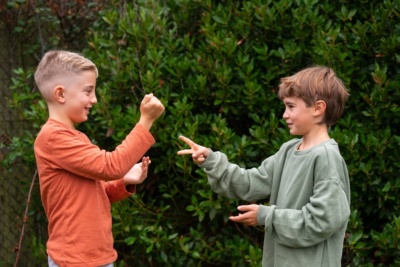
This provides both youth leaders and young people with an experiential, even embodied, understanding of innovation: invent something new, invent the rules, give it a go, find that it doesn’t work the first time, get feedback and finesse it until it does.
Playfulness and innovation often go hand in hand. In fact, almost 50 years ago, in his seminal book The Well-Played Game: A Player’s Philosophy, Bernie DeKoven described the “playing mind” as "innovative, magical, boundless”.
On camp, young people learn the 101 of group dynamics the hard way. A participant might feel left out for a moment and remember that feeling years later when they notice that a child looks a bit lost. A young leader will notice the way a child’s peers adapt their behaviour to follow that child, and they will notice the child who yearns to stand out from the crowd. The young leaders learn how to bring out the best in each of their charges, how to note what drives them, what relaxes them when they’re overstimulated. The young leaders also understand their own strengths in a team, and where they should step back and lean on their co-workers. They get to know themselves: will they go the extra mile because a peer has let the team down? I’m not sure I have ever had a single great idea all by myself, but I’ve been lucky enough to be in, and lead, plenty of inspiring teams who have created incredible things together. In innovation, groups matter.
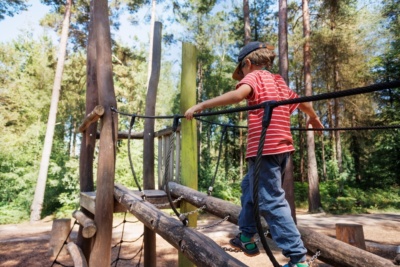
Camp leaders learn about systems without ever using the term “systems thinking” or any jargon at all. They learn about them experientially through consequences. When breakfast runs 20 minutes, the first activity is cut short, which pushes swimming into the hottest part of the afternoon, which means overtired children at dinner and a bedtime routine that takes two hours instead of one. Nobody writes that on a whiteboard, because it’s obvious; no one needs to. Camp leaders feel it in their legs by nine o'clock at night. The next morning someone says, we need to start earlier, and that lesson in systems thinking has landed.
The child who is difficult at four in the afternoon is very often the child who did not eat lunch or is homesick. The activity that fails is rarely a straight-up bad activity; it might have been scheduled at the wrong part of the day or run by someone who wasn’t given enough time to prepare for it. Camp teaches young leaders to look past the presenting problem and to notice that the kitchen, the timetable, the energy of an activity and the mood of the group are all connected, so that pulling on one lever moves the others. It also teaches them that they are part of the system rather than above it. A leader who has not slept or who has just broken up with their partner is a lever too.
Which brings me to leadership, and to why I think this matters for the not-for-profit sector, aside from the fact that so many different youth camps are run by NFPs (thank you – you are creating community leaders).
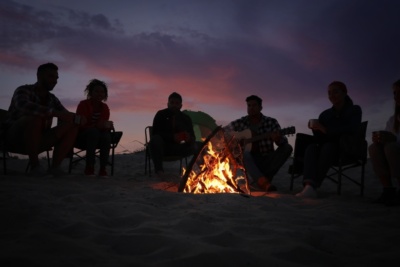
Look at the conditions NFPs work in. They are resource-constrained, often permanently and structurally, not because of a bad year. They are rule-constrained, by constitutions, funding agreements, regulators, acquittal timelines and the reasonable expectations of people who trust them with their money. And they are dense with human dynamics: volunteers, members, boards, staff on modest wages, and communities with long memories and strong views. Those three features are almost always described as a set of deficits. They are also exactly the conditions under which innovation blossoms. Scarcity forces choices. Rules give the game a shape to push against. People are where ideas come from.
However, it’s important to note that playing needs playful energy, and constraint does not produce innovation by itself. Left alone, it produces fatigue, defensiveness and the conviction that nothing can change until the funding does.
Leadership is a variable that can convert that pessimism into playful innovative energy. Leadership doesn’t necessarily mean the role of executive; it means whoever in an organisation is willing to make room for "what if we" to be treated as a serious contribution rather than an inconvenience.
That role is available to a board chair, a program coordinator, a team leader, or a volunteer who has been on the books for 30 years and has seen four strategic plans come and go. Or a young person. I mentioned that DeKoven described the playing mind as "innovative, magical, boundless". In context, he set the playing mind against the gaming mind, which is concentrated, determined and disciplined. His point was that the successful game player is the one who can hold all these qualities.
It’s the same for the ideal not-for-profit leader, who will have the discipline to run the organisation properly, and enough looseness to keep asking whether it should be run that way at all, or whether the rules should be changed a bit.
The sector is unusually well placed to lead communities, and the country, towards solutions, because it sits closest to the problems and already operates in the conditions that promote invention. What NFPs are less practised at is calling it innovation while it is happening, resourcing it on purpose, and telling others about it. Sixteen-year-olds with a roll of cardboard have never had that problem.
Download our free 32-page guide NFP Innovation on a Shoestring | Ten practical innovation tips for NFPs
Special editions: technology | artificial intelligence | change management
Find more resources in our tools and resources section
Posted on 15 Oct 2026
Community Directors has a warehouse-style office filled with artworks, and if I glance up towards…

Posted on 17 Sep 2026
My father often googles my name, and as a result, years ago, I received a surprising gift in the…

Posted on 22 Jul 2026
I spoke at the Social Impact Summit in Sydney this month on a topic that has been sitting with me…

Posted on 10 Jun 2026
There’s a line of thought about AI in the not-for-profit sector that goes something like this: “We…
Posted on 18 May 2026
Like your favourite T-shirt or the song you listen to when you’re feeling low, your organisation’s…
Posted on 15 Apr 2026
Lately I’ve been spending a lot of time in interview rooms.

Posted on 12 Mar 2026
I sat in a room with 1200 people at a fundraising event a few weeks ago, dressed nicely, feeling…

Posted on 10 Feb 2026
As my family dropped our teenage son off at the airport in the first week of January to embark on a…

Posted on 10 Dec 2025
The Institute of Community Directors Australia trains over 22,000 people each year, which gives us…

Posted on 12 Nov 2025
At the Institute of Community Directors Australia, we believe that stronger communities make a…

Posted on 11 Nov 2025
‘It’s not a question of enough, pal. It’s a zero-sum game. Somebody wins and somebody loses’.
Posted on 15 Oct 2025
The Institute of Community Directors Australia team sits physically and figuratively between two…