
NFP tech experts urge orgs to scale up cybersafety
Posted on 15 Oct 2026
Good cybersecurity must be the foundation of not-for-profits’ efforts to adopt artificial…
Posted on 11 Nov 2025
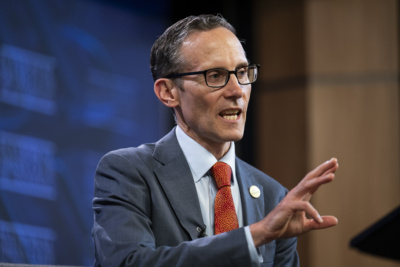
By Andrew Leigh, Charities Minister

‘It’s not a question of enough, pal. It’s a zero-sum game. Somebody wins and somebody loses’.
That line, delivered by Gordon Gekko in Oliver Stone’s Wall Street, captures the cold logic of a worldview that sees progress as nothing more than a fight over spoils. For some, that is not just a film script but a philosophy of life.
It is the essence of a zero-sum mindset. A conviction that the world is a fixed pie. If you gain, then I must lose. If one group advances, then another must fall behind.
I want to argue that politics at its best is the opposite. Politics is about building abundance. Not excess, but capability. The ability of societies to deliver more homes, more affordable energy, more inclusive growth. Abundance is about enlarging the pie so that everyone can share in it. It is about positive-sum outcomes, where cooperation benefits all.
The politics of abundance asks how we can grow together. The politics of scarcity insists we must fight over shares. And in recent years, the politics of scarcity has been on the rise. Too often, debates are framed in zero-sum terms. Immigration is presented as ‘migrants versus jobs’. Gender debates are cast as ‘women versus men’. Climate debates become ‘jobs versus environment’. When politics is narrated this way, ambition shrinks and cooperation falters.
My aim is to show why zero-sum thinking is so powerful, why it is so pervasive, and why it is so damaging. I want to draw on evidence from psychology, from economics, and from Australian politics to show how zero-sum beliefs shape our world. I will begin by explaining what researchers mean by zero-sum thinking and why it matters. I will then turn to Australian data, examining what the Australian Election Study tells us about the prevalence and distribution of zero-sum views in this country.
Next, I will consider international research that traces the origins and consequences of zero-sum mindsets. I will show how they distort political debates, and then set out how abundance politics in housing, in energy, in trade and in inequality can offer a positive-sum alternative. Building an abundant Australia requires both institutions that deliver and citizens who believe that delivery is possible.
Zero-sum thinking is not just a passing phrase. It is a well-established concept in psychology and economics. At its heart, it is the conviction that life is like arm-wrestling, chess, boxing or billiards. If one person gains, another must lose.
One of the best-known demonstrations of this mindset comes from a study by Joanna Różycka-Tran and colleagues, who surveyed people in multiple countries. They asked whether respondents agreed with statements such as ‘If someone gets richer, it means somebody else gets poorer,’ or ‘Life is like a tennis game. A person wins only when others lose’. Large numbers of people across very different cultures endorsed those statements. The authors called this the Belief in a Zero-Sum Game. They found that it went hand in hand with distrust, pessimism and withdrawal from cooperation. People who saw life as zero-sum were more cynical about institutions, less inclined to volunteer, and more likely to believe society itself was unjust.
But this is just one part of a much larger body of work. Psychologists have documented zero-sum assumptions in areas ranging from gender and race relations to perceptions of competition in workplaces. Economists have written about the ‘fixed pie’ bias in negotiation and trade, where both sides assume their interests are opposed and overlook opportunities for mutual gain. Political scientists have shown that zero-sum frames are common in public debate and that they make compromise harder.
This way of thinking is closely linked to populism. Populist movements thrive on dividing the world into ‘us’ and ‘them’. They tell citizens that elites, immigrants or minorities are taking what should be theirs. That framing is powerful precisely because it resonates with zero-sum intuitions: if ‘they’ are gaining, ‘we’ must be losing. Populism turns the psychology of zero-sum into a political program, casting democracy not as a search for common ground but as a perpetual contest between the virtuous people and a corrupt or threatening other.
Shai Davidai and Martino Ongis have added another important layer, showing that zero-sum thinking is not confined to one part of the political spectrum. Their research highlights that people across different ideological positions are capable of seeing life in zero-sum terms. In some contexts people are more likely to perceive the world as a contest between winners and losers, in others they may be more open to positive-sum possibilities. What matters is that zero-sum thinking is not hardwired to ideology, but arises when it fits the way people interpret events around them.
Taken together, this literature shows that zero-sum thinking is common but not inevitable. It is shaped by culture, history and politics. And it carries real consequences. People who think this way are less trusting, more anxious, and more convinced that society is unfair. Negotiators who assume every gain for the other side is a loss for them miss opportunities for cooperation. Politicians who frame issues in zero-sum terms find it harder to build coalitions. And when populism exploits zero-sum narratives, democracy itself risks becoming a theatre of permanent division.
The important lesson is that zero-sum thinking is not a fact about the world. It is a Hunger Games kind of mindset. And once it takes hold, it can narrow horizons and hold societies back.
"That is why democratic engagement is so important. Abundance politics cannot be imposed from above. It requires dialogue. It requires leaders to meet communities where they are, to take seriously their concerns, and to be present for the hard conversations."
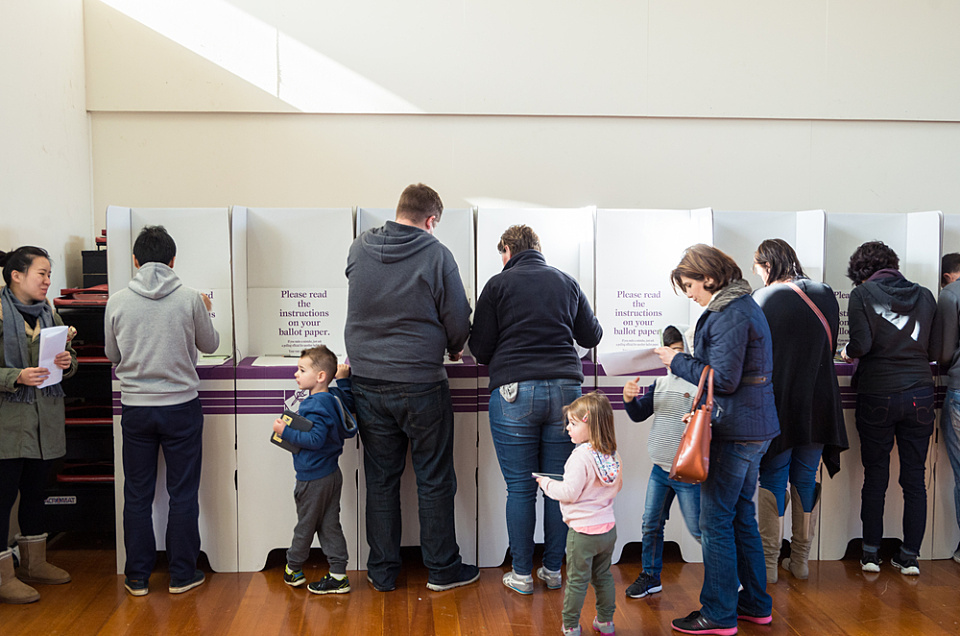
So what about here in Australia? What does zero-sum thinking look like in our own politics? To explore this, I turned to the Australian Election Study, which surveys around two thousand voters after each federal election. Since the 2025 Australian Election Study hasn’t yet been released, I analysed the 2022 survey.
I looked for questions that capture a zero-sum worldview. Three stood out.
The first asked whether people believed government is run by a few big interests looking out for themselves, or for the benefit of all. Fifty-four percent said it is run by a few big interests.
The second asked whether immigrants take jobs away from those born in Australia. Forty five percent agreed.
The third asked whether women seek to gain power by controlling men. Twenty three percent said yes.
At first glance, these questions address very different issues. One is about political institutions. One is about the labour market. One is about gender relations. But when you analyse them together, they cluster. People who endorse one are much more likely to endorse the others. They reveal a common mindset, a way of seeing the world as us versus them, gain versus loss, winner versus loser.
This is zero-sum thinking in Australian politics.
Who holds these views? The patterns are striking. Men are more likely than women to agree with zero-sum statements. Older Australians are more likely than younger ones. Those without a university degree are more likely than graduates.
The political breakdown is just as revealing. Pauline Hanson’s One Nation and the United Australia Party are the most zero-sum. Coalition voters are less zero-sum. Labor and Greens voters are the least zero-sum.
Self-rated ideology shows an even sharper divide. Australians who place themselves on the far right are much more likely to endorse zero-sum beliefs than those on the left.
Why does this matter? Because it helps explain why certain debates in Australia can become so bitter.
Take immigration. If you believe jobs are fixed, then every migrant is a threat. If you believe immigrant builders can help solve the housing crisis, then newcomers are contributors.
Take gender. If you believe power is fixed, then women’s advancement must come at men’s expense. If you believe power can be shared, then equality is positive-sum.
Take politics itself. If you believe government is captured by elites, then every policy must be suspect. If you believe institutions can work for the public, then reform is possible.
These beliefs shape whether we see politics as a constructive project or as a perpetual struggle. They affect whether we approach our neighbours with trust or with suspicion, whether we approach reform with hope or with cynicism.
You can see zero-sum frames all around us. Planning debates are reduced to ‘new development versus neighbourhood character’. Climate debates are reduced to ‘jobs versus environment’. Economic debates are reduced to ‘taxpayers versus welfare recipients’. Each shrinks ambition. Each makes cooperation harder.
By contrast, an abundance frame asks: how do we expand opportunity? How do we design systems where jobs and the environment reinforce one another? How do we build homes that both house families and enrich communities?
Scarcity politics says we’re stuck slicing up the same pizza. Abundance politics says: why not add another topping and order a second one? Australia has choices. And those choices are constrained or enabled by the mindsets that citizens hold.
It is important to acknowledge the limitations of my data analysis. The Australian Election Study is an existing survey. I did not design the questions myself. The items that capture zero-sum thinking lean toward particular expressions, such as concern about elites, anxiety about immigration, or suspicion of gender change. They may therefore capture right-leaning zero-sum beliefs more readily than left-leaning ones.
One aspect of zero-sum thinking that comes up in the literature, but isn’t in this survey, asks people whether they incline towards the zero-sum view that ‘People can only get rich at the expense of others’ or the positive-sum view that ‘Wealth can grow so there’s enough for everyone’. As someone who has written extensively on inequality, I would have liked questions on the survey that allowed me to explore this aspect of zero-sum thinking.
Yet even with those caveats, the patterns are instructive. The clustering of responses shows that Australians often see politics through a zero-sum lens. The demographic and political divides reveal how these beliefs are distributed. And the correlations with populist support show their political bite. In short, the evidence may not be complete, but it is strong enough to tell us that zero-sum thinking is widespread in Australia, and that it matters.
Zero-sum thinking emerges in particular circumstances, and once it takes hold it can persist long after those circumstances have changed.
Economist Stefanie Stantcheva has shown that experiences of growth and mobility matter enormously. When families see that children are doing better than their parents, life feels like an expanding pie. Progress seems natural. But when growth stalls and mobility falters, scarcity starts to feel like common sense. That is why younger generations in many rich countries are more prone to zero-sum beliefs than their parents and grandparents. They have grown up in decades when wages barely moved and housing became less affordable. Their parents could expect each generation to do better. They cannot.
History adds another layer. Professor Stantcheva and her coauthors have found that the legacies of exclusion leave lasting marks. In the United States, the descendants of enslaved people are more likely to see life as zero-sum, as are those whose ancestors lived in societies that practiced slavery. The same is true of the descendants of those forced onto reservations or persecuted during the Holocaust. Conversely, people whose family experienced greater intergenerational upward mobility are more likely to see life as positive-sum. The same sunny views tend to prevail among the descendants of recent immigrants.
The lesson is that zero-sum thinking can feel like common sense in times of scarcity or stagnation, but it does not vanish when circumstances improve. Growth and inclusion help to weaken it, but the memory of exclusion and stagnation can sustain it. Abundance politics therefore needs to do more than deliver policies. It needs to rebuild confidence in positive-sum outcomes.
A few months ago, I spoke at the Chifley Research Centre in favour of an ‘Australian Abundance Agenda’. Drawing on Ezra Klein and Derek Thompson’s book, I argued that abundance is about competence. It is about building systems that deliver more homes, more energy, more research. Systems that replace delay with delivery, and scarcity with capability.
But abundance is not only about systems. It is also about mindsets. Abundance requires belief. Belief that progress is possible. Belief that growth can be shared. Belief that win–win outcomes exist.
Without that belief, zero-sum thinking takes hold. And when zero-sum thinking dominates, politics fragments. Cynicism spreads. Ambition shrinks.
We can see these different visions of the world in books and films. Animal Farm presents power as finite: one animal’s gain requires another’s misery. It’s a bleak, zero-sum, novel. By contrast, the movie It’s a Wonderful Life presents community as infinite: the more George Bailey gives, the richer everyone becomes. It’s a positive-sum film.
The politics of abundance therefore has a double task. It must deliver concrete results through institutions that work. And it must foster the cultural confidence that those results are possible and can be shared.
Abundance politics is therefore not a technocratic agenda. It is a cultural and psychological project as well. It is about building the capacity of institutions and about building the confidence of citizens. One without the other is insufficient. Institutions that cannot deliver breed cynicism. Citizens who cannot imagine positive-sum outcomes will not support reform.
That is why the politics of abundance must confront the perils of zero-sum thinking. It is not enough to build houses, or power lines, or universities, if the public does not believe those investments will expand opportunity. The mindset matters as much as the machinery.
If zero-sum thinking is the obstacle, then abundance politics must be the remedy. Abundance is about expanding capacity and building confidence that progress can be shared. It is about showing that prosperity is not like a game of Monopoly, with a single winner; but more like a game of Lego, where everyone can enjoy building together. It’s true that economic policies sometimes involve tradeoffs, but we should always be looking for sweet-spot solutions where we can make everyone – or almost everyone – better off.
Housing provides the first example. Scarcity politics says that building new homes threatens the value of those already standing. Abundance politics says that more supply means more choice and lower costs. Renters have more options. First-home buyers can see a way forward. Downsizers are freed to move. Communities become more welcoming and more diverse. Expanding housing is not a zero-sum struggle. It is a positive-sum project.
Energy shows the same contrast. Scarcity politics insists that decarbonisation must come at the expense of jobs. Abundance politics recognises that renewables can create new industries, provide cleaner power, and cut household bills. They make the grid more reliable and the air more breathable. Far from being a cost to be borne, the clean energy transition can deliver benefits for households, workers and communities alike.
Trade illustrates the point as well. For centuries, mercantilists insisted that if another country gained, our country must have lost. That thinking still lingers whenever tariffs are defended as protection. But tariffs are the archetypal zero-sum trap. They protect a narrow group while raising costs for consumers, provoking retaliation against exporters, and reducing innovation. Lowering trade barriers, by contrast, expands the pie. Consumers enjoy lower prices. Exporters reach bigger markets. Efficiency improves across the economy.
Inequality is another field where abundance politics offers a way forward. Scarcity politics says that reducing inequality must punish success, that the only way to help the poor is to take from the rich. But that’s like thinking that giving glasses to the shortsighted is unfair to people with 20/20 vision. Abundance politics recognises that opportunity can be enlarged. Education expands the stock of skills. Fairer workplaces are happier places to work. Absolute mobility lifts those at the bottom without dragging others down. When more children finish school, it does not diminish the achievements of those who came before. It strengthens the society as a whole. When barriers to advancement are lowered, one person’s progress does not mean another’s decline. On the contrary, broad-based mobility builds trust and optimism, the foundations of long-term growth.
Each of these examples shows that abundance politics does not ignore inequality or fairness. It tackles them directly, but it does so through expansion rather than division. It enlarges the pie and ensures that more people can share in it.

Policies matter, but so do experiences. Abundance requires not only institutions that deliver but also citizens who believe that delivery is possible.
People are more likely to believe in positive-sum outcomes when they have seen them in their own lives. When children do better than their parents, they believe in mobility. When immigrants are welcomed and succeed, communities see that newcomers expand the pie. When governments act fairly and visibly in the public interest, citizens are less inclined to believe politics is controlled by elites.
That is why democratic engagement is so important. Abundance politics cannot be imposed from above. It requires dialogue. It requires leaders to meet communities where they are, to take seriously their concerns, and to be present for the hard conversations. People will only believe in positive-sum outcomes if they feel they have been heard, if they see that institutions are on their side, and if they can trace the benefits in their own lives.
Australia’s experience with trade reform shows how this can work. In the 1970s and 1980s, governments reduced tariffs on cars, steel and textiles. But they did not simply announce liberalisation and walk away. They listened to industry leaders and workers. They stood in factory lunchrooms and heard people’s fears directly. They introduced adjustment plans, with timetables and support to ease the transition. They invested in retraining and regional assistance. These were not easy conversations. But they built legitimacy for reforms that ultimately made Australia more competitive and more prosperous.
That lesson still holds. Abundance politics depends on persuasion as much as on policy. It requires honesty about the disruptions that change brings, coupled with a willingness to design transitions fairly. It requires faith that the difficult conversations are worth having, because they make reforms durable.
Institutions and mindsets reinforce one another. Institutions that deliver positive-sum outcomes build trust. Citizens with positive-sum beliefs are more willing to support ambitious reforms. It is a virtuous circle, but one that only begins if leaders are willing to engage. That is why abundance politics must be both structural and cultural. It must deliver policies that work, and it must foster the confidence that they can work. Without capable institutions, people lose faith. Without hopeful citizens, institutions cannot sustain ambition. With both, societies can escape the trap of zero-sum thinking.
Too often, we talk as though Australia is a game of musical chairs, as if there will never be enough seats, and someone must always miss out. That is the mindset of scarcity politics. It frames life as a scramble where gains are rare, and where other people’s progress comes at our expense.
The politics of abundance offers a different vision. It says we can add more chairs. It says prosperity can grow, opportunity can expand, and fairness is possible without pulling anyone else down. It invites us to see immigration, gender equality, clean energy and fair growth not as zero-sum struggles but as investments that multiply returns.
The choice is clear. Scarcity politics breeds suspicion and division. Abundance politics builds ambition and trust. Scarcity politics tells us to fight over scraps. Abundance politics calls us to work together to bake a bigger pie, and add extra chocolate chips while we’re at it.
Abundance is not about extravagance. It is about capability: systems that deliver, institutions that can be trusted, leaders willing to listen, and citizens who believe that progress can be shared. It is about rejecting the false comfort of zero-sum thinking and embracing the horizon of positive-sum possibilities.
The challenges we face demand that shift in mindset. To build more homes, to generate cleaner energy, to open wider markets, to expand opportunity, we need to believe it is possible. We need to believe that when one of us rises, we all rise.
That is the politics of abundance. It is not easy. It requires competence, courage and optimism. But it is the only way to meet the challenges of our time.
And it begins with us, choosing to see the future not as a fight over scarcity, but as a project of shared prosperity.
Dr Leigh first made this speech as a guest lecture at the Australian National University. He was a professor of economics at the ANU from 2004 to 2010 before entering politics.
Posted on 15 Oct 2026
Good cybersecurity must be the foundation of not-for-profits’ efforts to adopt artificial…

Posted on 15 Oct 2026
A few years ago, I sat on a small community board that was still held together by email threads and…

Posted on 15 Oct 2026
“Build a better mousetrap, and the world will beat a path to your door”, the old saw goes.…

Posted on 15 Oct 2026
The nation's digital inclusion advocate is pushing for more equity in the rollout of AI in light of…

Posted on 15 Oct 2026
Not-for-profit leaders should be conducting regular “fire drills” that replicate AI-powered…

Posted on 15 Oct 2026
Boards that leave cybersecurity to the one director with IT expertise are leaving their…

Posted on 15 Oct 2026
Community Directors has a warehouse-style office filled with artworks, and if I glance up towards…

Posted on 15 Oct 2026
As the manager of a palliative care service, Stephanie Kirkman Meikle has learnt that the prospect…
Posted on 14 Oct 2026
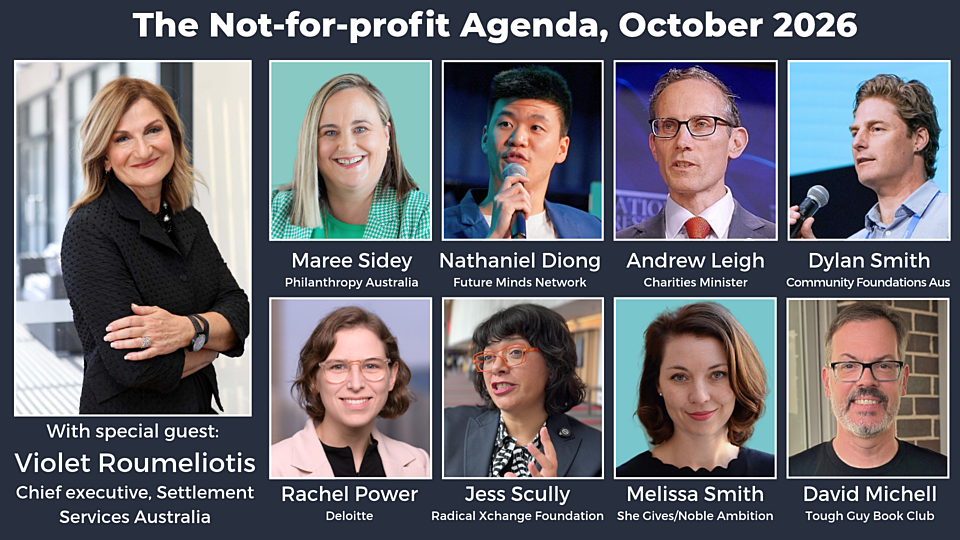
A special guest with her finger on the pulse of one of the biggest issues facing Australia –…
Posted on 17 Sep 2026
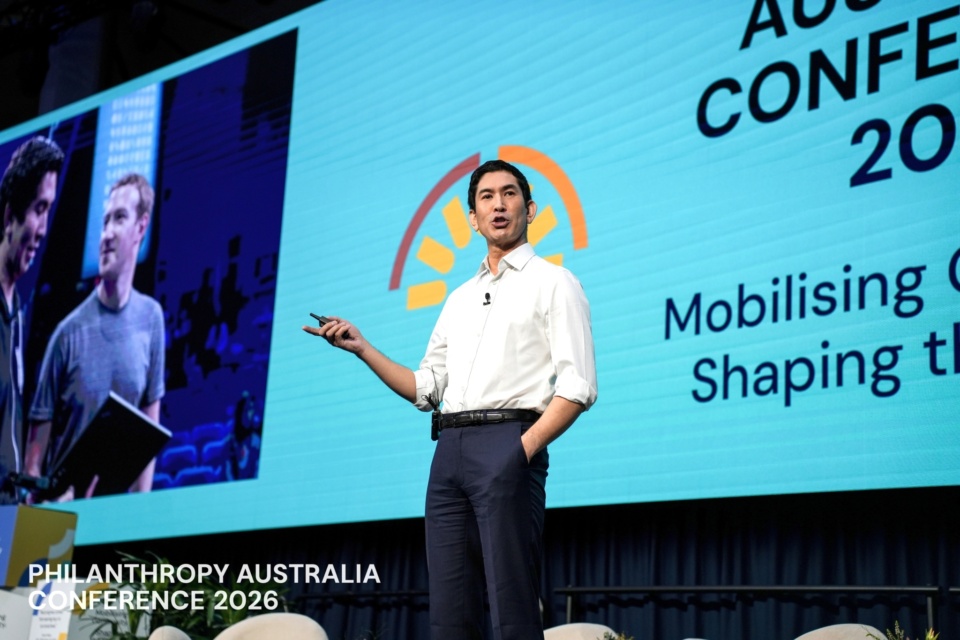
Australia’s biggest gathering of philanthropists, which drew more than 1200 delegates to Brisbane…
Posted on 17 Sep 2026
Experts in Australian philanthropy say there are stark differences between philanthropic money and…
Posted on 17 Sep 2026
One of Australia’s foremost fundraising observers says Australian not-for-profits must get the…