
Don’t say nothing: why privacy is so important
Posted on 15 Oct 2026
Community Directors has a warehouse-style office filled with artworks, and if I glance up towards…
Posted on 10 Dec 2025
By Adele Stowe-Lindner

The Institute of Community Directors Australia trains over 22,000 people each year, which gives us the opportunity to hear from not-for-profit leaders about your concerns and what you would find useful in terms of NFP governance and leadership training and resources.
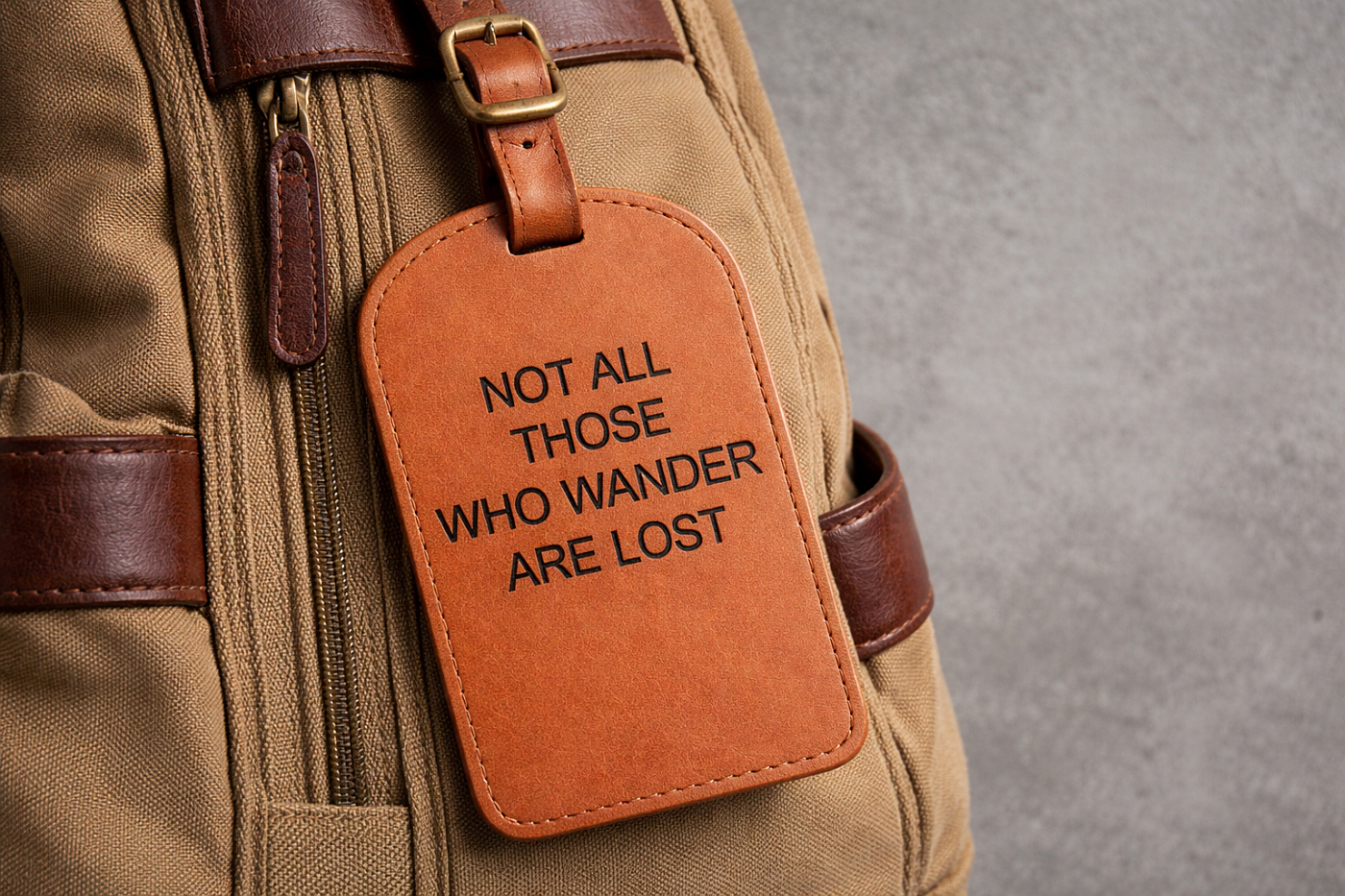
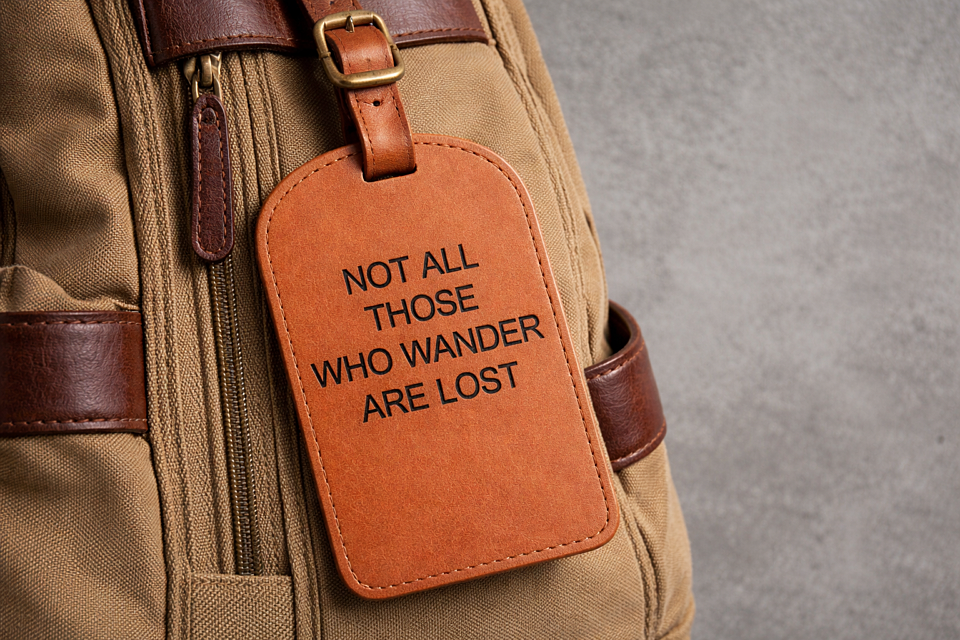
As my family dropped our teenage son off at the airport in the first week of January to embark on a gap year abroad after finishing high school, we gave him a luggage tag that summarised his gap year plans and his choice to defer university for a year. The message stamped on the leather reads “Not all those who wander are lost”.
A year ago, you told us that succession planning on boards was complicated by your concerns for the wellbeing of existing board members.
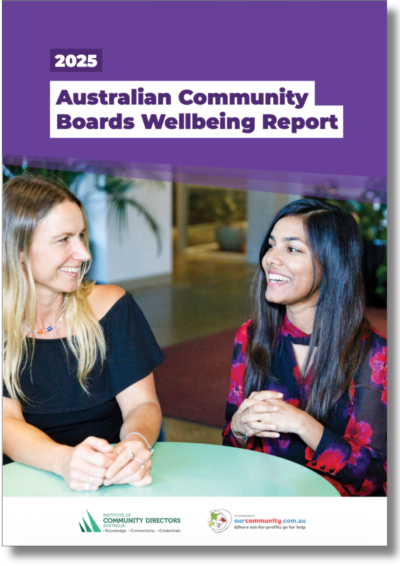
We surveyed 575 board members so we could quantify what you were telling us, and the results formed the basis of our just-published Australian Community Boards Wellbeing Report.
We found that time commitments, governance complexity and interpersonal conflict were the leading sources of pressure on board members. Almost one in five board members reported feeling unsafe expressing dissenting views during board discussions, which is a signal of cultural challenges within governance structures.
Many leadership programs these days – our NFP Leadership Certificate among them – include a unit on wellbeing, because we know that when leaders burn out they are at risk of breaking things. Leaders’ wellbeing is important. The problem is, while it is the board’s responsibility to oversee the wellbeing of the CEO, and it is the CEO’s responsibility to oversee the wellbeing of staff, who takes responsibility for the wellbeing of the board?
In our survey, we asked respondents whether their board had explicit practices or policies to support the wellbeing of its members. Only around one in six (16 per cent) reported having a wellbeing strategy, and just 13 per cent said wellbeing was a standing agenda item.
Amid this failure to cater for the wellbeing of board members, about two-thirds of board members have considered stepping down because of stress and overwhelm. Directors are often stretched for time, are expected to be across incredibly complex and demanding issues, and can be forced to coped with personal clashes with other board members. The tension between community leaders’ incredible commitment to their causes (86 per cent feel aligned with their organisation’s mission) and the pressure they’re feeling lies at the heart of this study.
The words got me thinking. Oftentimes we know who we are and where we want to go, even if we are not clear on the best route to get us there, and there are twists and tuns along the way. It doesn’t mean we are lost, or wrong.
As I try to keep to my new year resolutions this year by increasing the pace on the treadmill at the gym, I watch the news unfold on the TV screen and consider what life for me as a parent and for my children will look like this year.
I expect that in 2026, Australia’s under-16 social media ban will be widely criticised, unevenly enforced by parents and companies, and politically uncomfortable. It will nonetheless begin the slow and critical work of resetting expectations about childhood, privacy and responsibility, which is where its real power lies. It’s a good thing.
Although it sounds lofty, I try to think about this policy as a ban on entry to spaces driven by algorithms, rather than calling them “socials”, because one of the ironies of social media is that they can actually shrink young people’s social lives. When we name these platforms as algorithmic spaces, we’re naming something important: the way children’s social worlds have gradually shifted away from relationships and towards systems designed to maximise engagement and clicks.
This is a systems problem more than a parenting problem. That does not mean denying that online connection has been life-changing for some young people. I know teenagers who have relied on socials for real support at terrible moments. But governments need to look at the overall big picture as well as the individual exceptions. Of course, we should find solutions for the kids who really need the kind of help that socials can offer, but that support should not come at a high cost to general wellbeing.
I do not expect the conversation about the under-16 ban to die down any time soon. Parents of tweens are navigating messy territory where kids who have already had a taste of life online are now being told to step back. I feel for those parents. I consider withdrawing tweens from the algorithmic and addictive spaces to be more difficult than parenting kids who are still blessedly too young to know what they are missing.
The continued rollout of the ban will be imperfect and contested, and this will be used to call it a failure. But I believe if this government and subsequent governments can hold tight, the ban will quietly reset norms and might be one of the most consequential policy decisions of the decade – our future selves will love the hard work we invested in 2026.
Of course, compliance will be uneven. Some families will ignore it. Some platforms will find workarounds. Some kids will still access social media via older siblings, VPNs or grey spaces. Or provide a fabricated date of birth. Or use a parent’s passport as ID. Prohibition in 1920s America comes to mind. Public-health measures are rarely enforced perfectly, but when they work, it’s because they change what is expected, acceptable and normal.
Public debate will continue to be emotional, with the ban framed by critics as government overreach, anti-youth, anti-innovation or anti-“now”, and by supporters as a long overdue correction, a public health measure and an acknowledgement that we have all been learning technology by doing it, but have not been aware of the long-term damage we have let loose.
My hunch is that after they shut the front door, in the quiet of an evening away from friends and colleagues, most parents will be relieved that they no longer have to manage their young kids’ social media use alone. Even if they never say it out loud. I think that towards the end of 2026 and into 2027 and 2028, we will witness a reduction in social comparison, online pile-ons and constant digital mediation of relationships.
"The problem is, while it is the board’s responsibility to oversee the wellbeing of the CEO, and it is the CEO’s responsibility to oversee the wellbeing of staff, who takes responsibility for the wellbeing of the board?"
"Leadership is often about setting norms. The social media ban for youth will reframe responsibility, and this matters to me more than how it is enforced. I think the policy, with bumps in the road, will overall succeed."
One respondent said: “The problem is not for the board or organisation to fix. The problem is a function of a society that seems not to value volunteerism and a bunch of governments who keep increasing complexity (and I feel legal liability) to the extent that I intend to get out of such positions as soon as I can.”
Strong governance starts with people who are properly supported to undertake their roles and well connected to their stakeholders. Boards that take the time to invest in their own wellbeing create the conditions for thoughtful, inclusive and future-focused decision-making that has a positive impact on the organisation, including its staff, members and beneficiaries. Good governance depends on people who can bring their best selves to the boardroom table.
The alternative is a dysfunctional organisation with problems starting at the top. As the saying goes, “The fish rots from the head.”
Giving younger children more time before they enter algorithm-driven spaces (“socials”) will help. It will give their critical thinking ability a chance to develop first. These benefits will possibly not show up quickly in statistics on anxiety and loneliness or even screen-time dashboards, because proper, solid, internalised culture change takes time.
I would love to see, over time, a re-normalisation of boredom in children and in the adults around them. I would love to see less ambient surveillance by peers of where their friends are and who they are hanging with (and why not me?). I would like to see all of us embrace the idea that not everything has to be shared to make it real or good.
The truth is, algorithms are designed to maximise engagement, and individual wellbeing is not the success marker we might want it to be. Expecting families to go up against attention engineering by billion-dollar companies on their own is unrealistic and unfair. I can barely give up sugar, even though I know it’s bad for me, but ingredient labels on processed foods help me make better choices.
Public health programs work when we stop blaming individuals for structural problems and create environments that encourage healthier decisions. For example, Australia has long acknowledged that problem gambling is not just a personal failing, and we know that vulnerable communities have more pokie machines than well-off ones. That change from individual to systemic issue has taken place over time.
The work of the Institute of Community Directors Australia is in governance and leadership. Leadership is often about setting norms. The social media ban for youth will reframe responsibility, and this matters to me more than how it is enforced. I think the policy, with bumps in the road, will overall succeed.
It moves the moral burden away from individual parents and children to governments and platforms (companies) so that when there are instances of bending the rules, as we know there will be, it will be commonly acknowledged that this is not something children should be doing yet.
I am a parent to teenagers, and I’m living the messiness of youth in 2026. Personally, I want to give them the boredom of long summer days, the noisy turn-taking, screaming hilarity of board games, card games, and made-up car games, with or without tangible objects in their reach. I hope they lose in those games as often as they win.
I hope they develop critical minds, so that when they encounter slogans, whether on “socials”, posters or placards, they will wonder: Who is trying to sell me something? What are they selling? An opinion, a lifestyle, a product? What will it cost me? My money, attention, individuality? Do I want it?
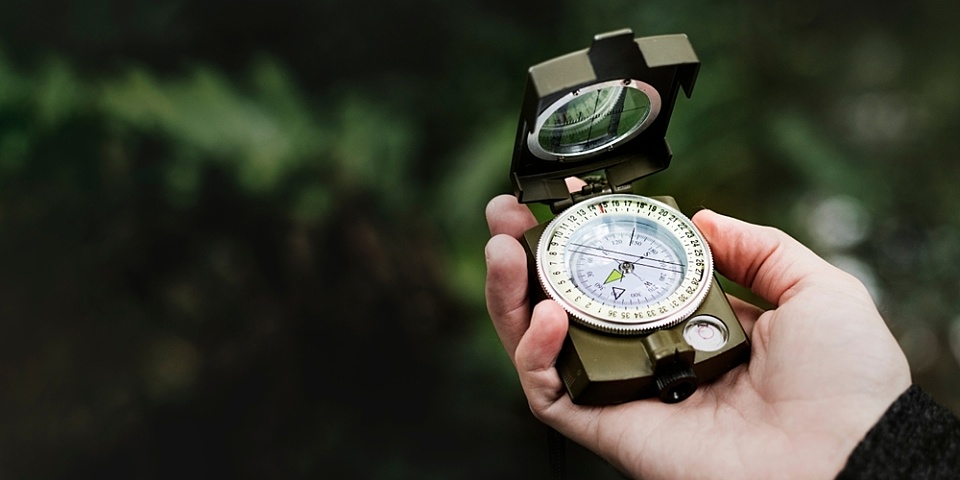
I hope they get the chance to wander, with or without an aim, maybe meet new people by accident when they’re not quite sure where their friends are, because as Tolkien observes in The Hobbit, “Not all those who wander are lost”.
Investing in people might take different forms on different boards. On one, it might mean putting extra effort into recruitment of a diverse range of board members. This, together with the behaviour that supports diversity, can ensure all board members feel comfortable to speak up when they have something to say, especially when they disagree. An organisation like this is less likely to make errors of judgement or experience blind spots.
A different type of board might invest in technology that will save time for board members working through unwieldy packs of board papers.
Yet another might seek training – perhaps training for the chair in compiling a workable agenda and managing discussions so that meetings end on time, or financial literacy training for the treasurer so that their reports make more sense to the rest of the group.
In the future, perhaps boards will be populated by our AI proxies. But in the meantime, humans can and must do what AI agents cannot: empathise, collaborate, listen deeply, create, intuit, and make values-based decisions.
By embedding wellbeing in board culture, we can strengthen our organisations as well as model the kind of compassionate, sustainable leadership our communities deserve.
The Australian Community Boards Wellbeing Report includes a series of recommendations for boards, and we plan to repeat the study annually.
Posted on 15 Oct 2026
Community Directors has a warehouse-style office filled with artworks, and if I glance up towards…

Posted on 17 Sep 2026
My father often googles my name, and as a result, years ago, I received a surprising gift in the…
Posted on 13 Aug 2026
As a teenager, I attended summer camp for seven years, first spending two weeks at a time camping…

Posted on 22 Jul 2026
I spoke at the Social Impact Summit in Sydney this month on a topic that has been sitting with me…

Posted on 10 Jun 2026
There’s a line of thought about AI in the not-for-profit sector that goes something like this: “We…
Posted on 18 May 2026
Like your favourite T-shirt or the song you listen to when you’re feeling low, your organisation’s…
Posted on 15 Apr 2026
Lately I’ve been spending a lot of time in interview rooms.

Posted on 12 Mar 2026
I sat in a room with 1200 people at a fundraising event a few weeks ago, dressed nicely, feeling…
Posted on 10 Feb 2026
As my family dropped our teenage son off at the airport in the first week of January to embark on a…

Posted on 12 Nov 2025
At the Institute of Community Directors Australia, we believe that stronger communities make a…
Posted on 11 Nov 2025
‘It’s not a question of enough, pal. It’s a zero-sum game. Somebody wins and somebody loses’.
Posted on 15 Oct 2025
The Institute of Community Directors Australia team sits physically and figuratively between two…
Posted on 15 Oct 2026
Community Directors has a warehouse-style office filled with artworks, and if I glance up towards…
Posted on 17 Sep 2026
My father often googles my name, and as a result, years ago, I received a surprising gift in the…
Posted on 13 Aug 2026
As a teenager, I attended summer camp for seven years, first spending two weeks at a time camping…
Posted on 22 Jul 2026
I spoke at the Social Impact Summit in Sydney this month on a topic that has been sitting with me…
Posted on 10 Jun 2026
There’s a line of thought about AI in the not-for-profit sector that goes something like this: “We…
Posted on 18 May 2026
Like your favourite T-shirt or the song you listen to when you’re feeling low, your organisation’s…
Posted on 15 Apr 2026
Lately I’ve been spending a lot of time in interview rooms.
Posted on 12 Mar 2026
I sat in a room with 1200 people at a fundraising event a few weeks ago, dressed nicely, feeling…
Posted on 10 Feb 2026
As my family dropped our teenage son off at the airport in the first week of January to embark on a…
Posted on 12 Nov 2025
At the Institute of Community Directors Australia, we believe that stronger communities make a…
Posted on 11 Nov 2025
‘It’s not a question of enough, pal. It’s a zero-sum game. Somebody wins and somebody loses’.
Posted on 15 Oct 2025
The Institute of Community Directors Australia team sits physically and figuratively between two…