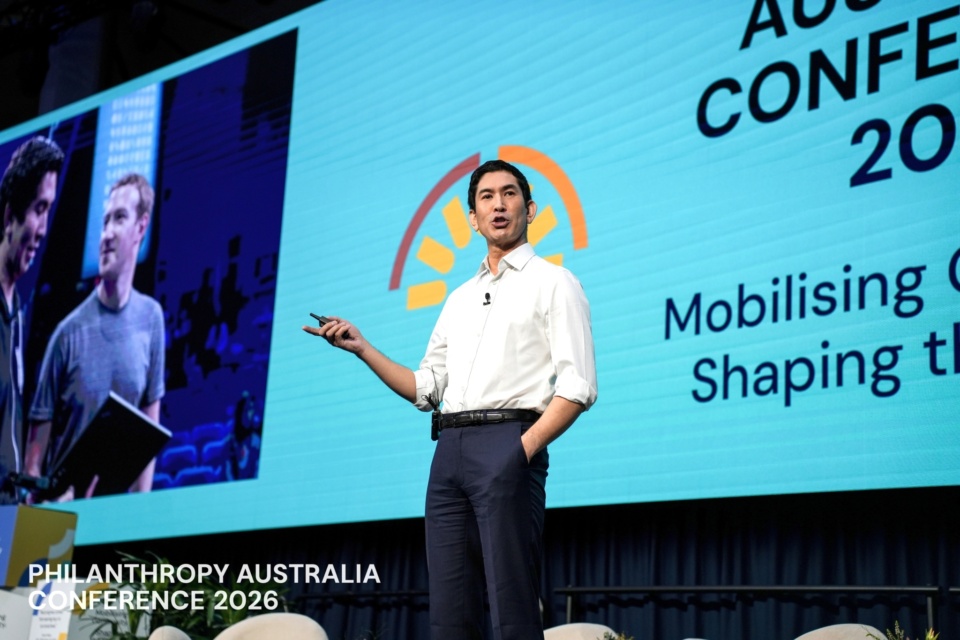
Philanthropists ask: Can we forge a better future?
Posted on 17 Sep 2026
Australia’s biggest gathering of philanthropists, which drew more than 1200 delegates to Brisbane…
Posted on 14 Aug 2025
By Adele Stowe-Lindner

At a time when it often feels as though the social fabric of Australia is being pulled in opposing directions, the question of how we build real connection across difference feels urgent.
Social cohesion is the glue that binds communities together, and that is made from trust, shared values, active participation, and a sense of belonging. Yet these qualities are increasingly under pressure from within our own systems, assumptions and leadership practices.
For-purpose organisations have a critical role to play in building social cohesion. They are not just service providers: they can be architects of trust, equality and participation. In times of division, they can build places where civil discourse and real listening are the norm rather than the exception.
The pressures that pull on Australia’s social fabric do not just manifest in large-scale conflicts or public protests. They show up in our workplaces, in boardrooms, in team dynamics, and in community conversations. They live in the conversations that do not happen, the discomfort we avoid, and the silences we misread as consensus. Amid polarisation and fatigue, many organisations and individuals find themselves unsure how to engage meaningfully with difference, or how to maintain trust when facing noise, how to communicate through grief or outrage. This is the context in which leadership is being tested.
"Deep listening requires being present, reflecting, and suspending judgment, listening for connection rather than understanding or agreement."
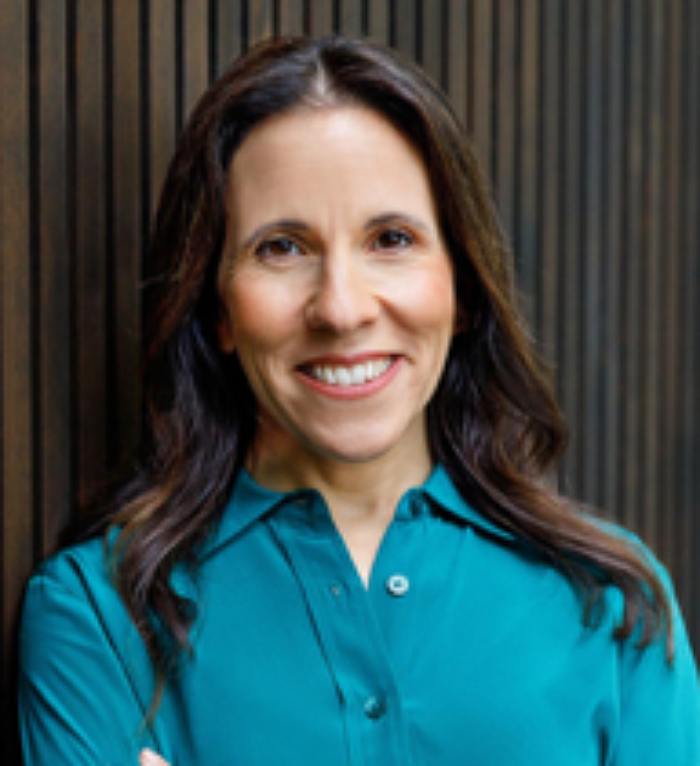
Leadership matters. Not just positional leadership, but the kind that is found in people throughout organisations. We need leaders who build meaning, who show up as bridge builders, who are able to respond to backlash with empathy and integrity. We need people who build trust by being transparent, even when they are saying "no."
Let me share a personal experience. In 2023 I ran a session called “Can you trust yourself to make decisions?” for a group of 40 people. I opened with a simple icebreaker: “Raise your hand if you trust yourself to make decisions.” In 2023, 39 hands went up. Only one brave participant said she was not so sure. The session explored the mental shortcuts that influence the way we make decisions – memory phenomena such as recency bias and availability bias. I ran a well-known memory experiment where I read a list of words to the group, and less than 30 seconds later, different people remembered the list differently: there was one word, the same word, that half the participants remembered and half did not. It was clear and immediate proof that memory is fallible, and that while we can often trust ourselves, we cannot always assume we are right.
I was invited back in 2025 to run the same session, just last week. The experiment had the same results. One group remembered the list of words one way, and one group remember it another way. They argued with one another: did Adele say that word or not? But this time, when I asked the participants again at the end whether they trusted themselves, the same people who had confidently raised their hands at the start raised them again. They had witnessed their own unreliability, and yet nothing shifted. If anything, people seemed more dug in. It made me wonder whether we are becoming more defensive, more unwilling to sit with uncertainty, even when the evidence is right in front of us. Maybe self-doubt has become a threat to ourselves that we cannot entertain.
So what gets in the way of social cohesion, aside from our tendency to dig in? It’s the assumptions we make: that well-performing teams do not need to talk about the hard stuff, that silence equals harmony, that noise equals correctness, that diversity means inclusion, or that recognition is not important because we’re all here for the mission. These myths hold us back from building the connected, trusting organisations and society we need. When lived experience is dismissed, and people are told they are safe even though they feel unsafe, cohesion becomes performance rather than practice.
In governance, conflict of interest is often misunderstood. A conflict of interest arises when a person’s personal, professional or financial interests could influence their decision-making. It is an easy stumble, and one that can quietly shut down complex conversations at board level. When someone is labelled as having a conflict, their perspective is often dismissed, even when their insight could be valuable. This is especially unfortunate given that most conversations at board level are not actually for the purpose of making a decision, but for the purpose of exploring an issue, weighing perspectives and understanding context. When individuals withdraw from these discussions, the group misses out on views that could challenge assumptions or strengthen collective judgement.
Too often, the pain expressed by certain communities is intellectualised, minimised or explained away by those who feel more comfortable debating definitions than engaging with lived reality.
Emily Kasriel, the author and academic who wrote the book Deep Listening, provides a practical tool we can consider. Deep listening means saying, “Tell me more,” resisting the urge to fix discomfort too quickly, and creating psychological as well as physical safety. Deep listening requires being present, reflecting, and suspending judgment, listening for connection rather than understanding or agreement.
For-purpose organisations are most powerful when they move beyond performance and into connection, when they prioritise meaningful, sometimes quiet, conversations that build trust over time. In a noisy world, it is the relational work, not just the symbolic, that moves us towards cohesion.
So I leave you with this invitation: What biases do you carry that might get in the way of cohesion? In what ways are you a bridge builder?
Here are some resources to support you in the vital work of answering these questions:
Posted on 17 Sep 2026
Australia’s biggest gathering of philanthropists, which drew more than 1200 delegates to Brisbane…
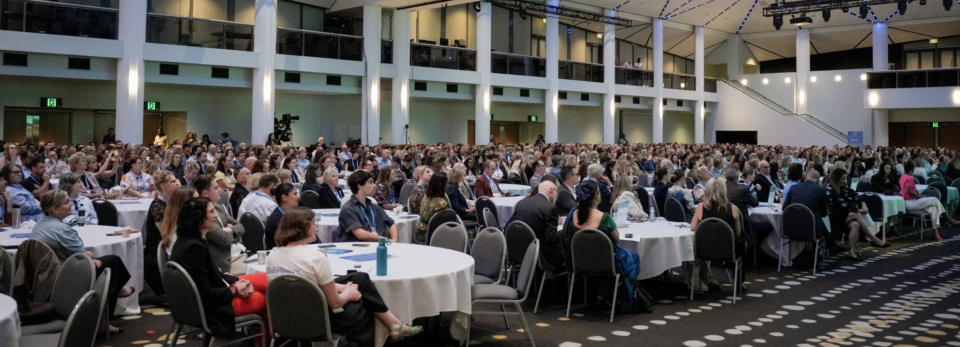
Posted on 17 Sep 2026
Experts in Australian philanthropy say there are stark differences between philanthropic money and…

Posted on 17 Sep 2026
One of Australia’s foremost fundraising observers says Australian not-for-profits must get the…
Posted on 17 Sep 2026
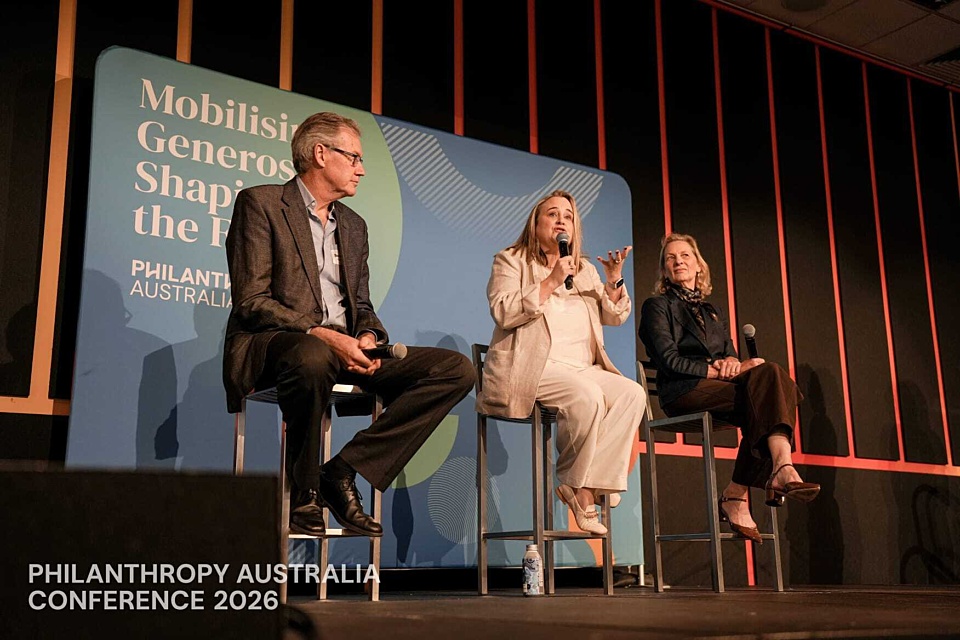
As direct giving dries up, charities face growing dependence on big donors and negotiating the…

Posted on 17 Sep 2026
Charities reported $14.8 billion in donations and bequests last financial year, the second-highest…

Posted on 17 Sep 2026
My father often googles my name, and as a result, years ago, I received a surprising gift in the…
Posted on 17 Sep 2026
Where Evelyn Mugisha grew up in rural Uganda, the subjects and careers considered suitable for…
Posted on 09 Sep 2026
A global gathering of philanthropists in Brisbane this week is aiming to tackle society’s biggest…
Posted on 09 Sep 2026
Media attention about women's philanthropy has more than doubled in three years, according to new…
Posted on 26 Aug 2026
Sector leader Violet Roumeliotis has called on funders to stop treating not-for-profit…
Posted on 13 Aug 2026
As a teenager, I attended summer camp for seven years, first spending two weeks at a time camping…
Posted on 13 Aug 2026
Not-for-profits are full of people with great ideas, but that doesn’t mean they are set up for…