
Don’t say nothing: why privacy is so important
Posted on 15 Oct 2026
Community Directors has a warehouse-style office filled with artworks, and if I glance up towards…
Posted on 12 Mar 2026
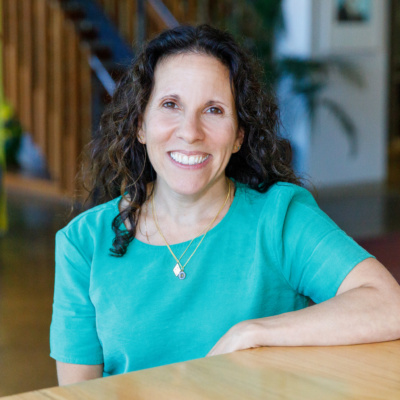
By Adele Stowe-Lindner, executive director, Community Directors

I sat in a room with 1200 people at a fundraising event a few weeks ago, dressed nicely, feeling very lucky to be there and shedding quite a few tears as the keynote speaker told her story.
Halfway through the evening, someone announced from the stage that we would be receiving a text (our phones all lit up) with a link through which we could donate funds.
I knew it would tug at my heartstrings, and yes, of course I gave, typing on my phone with one hand while wiping away tears with the other.
I was crying, yet I felt lucky. Why lucky? Because I had the opportunity to hear from an awe-inspiring woman holding the world on her shoulders who told us to snap out of our problems and do good for others because that’s the fabric of life. I felt lucky because I had the opportunity to hear from a man who reflected on the modern world in such a compelling way that my husband sitting next to me was not blinking or moving and I had to nudge him to see if he was okay.
Who would not want to be at such an event? I was connected to community, inspired, and engaged in both heart and mind.
Even better, we had been invited into this extraordinary community. We were asked for a donation to support the mission that the organisation exists to carry out. We, the lucky ones, were invited to help fix a hole in the world, which this organisation saw and enabled us to see too. And we gave. We were grateful to give, and they were grateful to receive.
I’m sharing this story because often when we sit on boards our stomach clenches when we look at the budget, because we know that before we have time to say “cringe”, the treasurer or some other responsible person will say: we need all hands on deck for fundraising. I too often feel my body tense at the thought of the “ask”.
Yet when I got home last night and my son asked, “How was it?”, I didn’t talk about what I’d donated. I talked about what I’d learnt, and how I felt. I was still filled with gratitude.
This is all to say that in our fundraising role, sometimes it’s important to get out of our own head and get into the head of the person we are asking for money. In essence, we are inviting them to partner with us in fixing the biggest problem we have identified, a problem whose solution we think they’ll be grateful to participate in.
Some board members will be talented at sitting opposite donors and sharing the organisation’s vision, inviting them to partner and donate a significant sum.
Others who enjoy being active will be happy to run for the cause and seek smaller donations from friends who support of their love of the organisation.
Still others will be good at writing the story of the organisation and the impact it can achieve – also known as writing a funding application.
Some will put their hand in their own pocket because that’s what makes them feel good and because they can.
"When we flinch at the board table about fundraising, we are often focused on our own discomfort. But asking for a donation, when done with integrity and clarity, is not an extraction, it is an invitation."

I began my career as a social worker at a 24-hour emergency homeless shelter in South Melbourne. To this day, I think my best work in that field was done in the weeks after I burnt my foot terribly with an urn full of boiled water while on the breakfast shift.
What did my best work look like? I had to have my injured foot raised all the time, so clients would bring me my cuppa and ask how I was doing, whereas usually I had asked about them and brought them things they needed. In other words, they were giving to me instead of always being on the receiving end. Our conversations shifted and I saw the beauty of being in a position of having something to give.
In those weeks with my foot propped up on a chair, I learnt something that no fundraising seminar has ever taught me. People do not only need help. They need the chance to help.
What if, by inviting someone to give to your cause, you are recognising their dignity? Recognising that they have something to offer, and that contributing to something beyond themselves might be exactly what meets their desire to be useful? What if, by inviting someone to give, you are doing what those shelter clients did for me all those years ago, offering them the chance to contribute, not just consume? What if the “ask” is not an imposition at all (“Give me your money please”), but an invitation to matter?
Last month, in an enormous room with 1200 guests, I saw the same thing play out on a different stage. We were not being pressured. We were being invited to step into something larger than ourselves and participate in the repair of our shared community.
When we flinch at the board table about fundraising, we are often focused on our own discomfort. But asking for a donation, when done with integrity and clarity, is not an extraction, it is an invitation.
Not everyone will accept right away, and that is fine. But many will be grateful to have been asked and treated not as a wallet, but as a partner, and a future advocate for your cause.
Some of the real work of boards is to be clear about the hole in the world we are here to mend, and brave enough to invite others to mend it with us. Fundraising is not a necessary evil. It is a statement of belief that people generally want to contribute, and that community is built through shared responsibility and belonging.
And that, in any room, is something worth feeling lucky about.
Community Directors houses a huge web library of free, practical resources to help you govern better, and the tools and resources section is the best place to start.
Here are some useful resources you can use to improve your fundraising credentials: Establishing a fundraising strategy | Getting your board on board for fundraising | How to plan an EOFY campaign | Fundraising readiness checklist | Board fundraising policy
Explore more resources in our grants and fundraising section and become a member to get easy access and alerts about new materials.
Posted on 15 Oct 2026
Community Directors has a warehouse-style office filled with artworks, and if I glance up towards…

Posted on 17 Sep 2026
My father often googles my name, and as a result, years ago, I received a surprising gift in the…
Posted on 13 Aug 2026
As a teenager, I attended summer camp for seven years, first spending two weeks at a time camping…

Posted on 22 Jul 2026
I spoke at the Social Impact Summit in Sydney this month on a topic that has been sitting with me…

Posted on 10 Jun 2026
There’s a line of thought about AI in the not-for-profit sector that goes something like this: “We…
Posted on 18 May 2026
Like your favourite T-shirt or the song you listen to when you’re feeling low, your organisation’s…

Posted on 15 Apr 2026
Lately I’ve been spending a lot of time in interview rooms.

Posted on 10 Feb 2026
As my family dropped our teenage son off at the airport in the first week of January to embark on a…

Posted on 10 Dec 2025
The Institute of Community Directors Australia trains over 22,000 people each year, which gives us…

Posted on 12 Nov 2025
At the Institute of Community Directors Australia, we believe that stronger communities make a…
Posted on 11 Nov 2025
‘It’s not a question of enough, pal. It’s a zero-sum game. Somebody wins and somebody loses’.

Posted on 15 Oct 2025
The Institute of Community Directors Australia team sits physically and figuratively between two…