
Should you give to an arrogant beggar?
Posted on 17 Sep 2026
My father often googles my name, and as a result, years ago, I received a surprising gift in the…
Posted on 15 Apr 2026
By Adele Stowe-Lindner, executive director, Community Directors
Lately I’ve been spending a lot of time in interview rooms.
I’ve read hundreds of job applications, interviewed 15 people and appointed three to our team at Community Directors in the past few months. At the same time, our work with Cranlana Ethics Centre has caused me to reflect on the contribution recruitment makes to the culture we welcome new staff into. Recruitment is one of the most powerful culture levers we have.
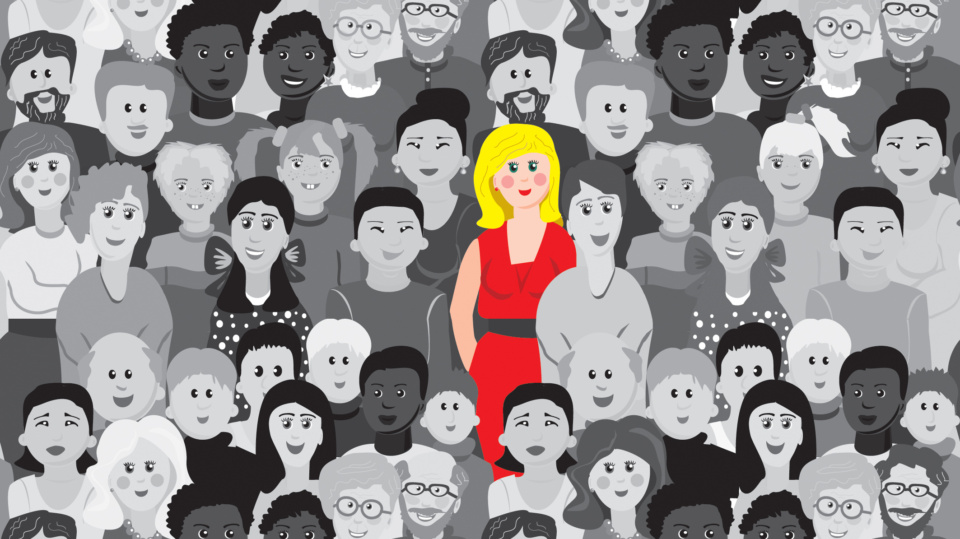
There is a necessary tension in recruitment between homogeneity (“cultural fit”) and diversity. Boards, executive teams, staff and volunteers all contribute to building culture in any organisation, person by person, skill by skill, attitude by attitude and value by value.
Personal characteristics we might assume fall into the bucket labelled “values” include things like voting preferences, dress codes, and how we signal our identity to others. But actually, those characteristics are more commonly expressions of beliefs and life experiences – and they might be short-lived.
For example, young people entering the job market today are typically less focused on the major political parties (or any political parties) than their parents or grandparents. If you employ someone on the basis that their progressive or conservative opinions are aligned with those of your organisation, you may be disappointed when their views shift or turn out to be “inconsistent”.
Employing for cultural fit should be more focused on attitudes and values related to work – after all, you’re employing somebody to work for you. Values can involve preferences as to how work gets done. For example, most workplaces tend towards being more rigid or more informal. If you don’t recognise this, you might end up recruiting a highly skilled and motivated person only to find that your workplace sucks the life out of them because your hierarchy is too rigid, or they suck the life out of your team because it prefers a level of fluidity that your new recruit can’t work with.
Similarly, if your organisation has little capacity to provide strong direction, then you will need recruits who love to initiate and self-direct. People who are easily overwhelmed and constantly need to be made to feel safe and supported will not be a good fit. On the flip side, someone who loves to work in an agile, innovative way will probably be ill-suited to an organisation that has found the “best” way to do things and wants to keep doing them just so.

"Trust is critical in workplaces that are trying to solve problems together and prioritise the impact of the whole organisation over the short-term comfort of individuals who all want to feel they have got something right."
Values such as justice and fairness operate at a different level from these work preferences. They are less about the day-to-day mechanics of how work gets done, and more about the standards to which organisations and individuals try to hold themselves. Taking values into account in HR and recruitment is complex because even when people agree on particular ideals, they can mean different things to different people.
For example, fairness and justice are commonly valued, but they can mean polar opposite things. To one person, fairness means everyone in the workplace gets access to an equal share of a professional development fund, while to another, fairness means the professional development fund is allocated according to seniority and experience.

Collaboration is a strong indicator of culture, often requiring curiosity and a willingness to ask questions. It relies on a level of trust, both that no one will step on your toes, and that work handed to you by others will be the right work. For some, collaborating means openly discussing and testing ideas in a room together. For others, it is quieter, more considered, and happens before or after the meeting.
Trust is critical in workplaces that are trying to solve problems together and prioritise the impact of the whole organisation over the short-term comfort of individuals who all want to feel they have got something right. That kind of environment depends on people being willing to question, to pause, and to say, have we thought about the unintended consequences? Are we missing something? Are we sticking to how we agreed to work?
The cost of just nodding and following along, and even complimenting a product or service that is moving in the wrong direction, is very high because the organisation may still suffer the consequences many years and a lot of dollars into the future. Think about something you built at work during the covid lockdowns, and ask yourself whether it was truly as good as it could have been without a collaborative approach.
Recruiting for diversity means looking at more than crude demographic data on a form, although of course this is important. Diversity of thought can come from different personality types, from extrovert to introvert and all the combinations in between. It can come from different ways of working and diverse skills such as being creative, playing games, or proficiency in mathematics, language or technology. Some people think aloud and others on paper. Recruiting for diversity of thought is protective to your organisation, ensuring it considers unintended consequences of decisions, fine details and big-picture visions.
Back to the interview room. What are we seeking? Ideally, not a mirror of ourselves and also not a complete wildcard. We need a balance of similarity and difference. This requires us to clearly understand our culture. Then, rather than asking, “Will this person fit?”, we might ask, “What conditions help this organisation do its best work, and can this person both thrive in, and contribute to, those conditions?” Similarly, when we start a new job or join a new board, we must consider how the existing team works as well as what it does.

To define culture, ask concrete questions. How do decisions get made when time is short? What does accountability look like on an ordinary day, not just in a crisis? And be honest about trade-offs. Every culture excludes as well as includes. A highly consultative workplace may frustrate people who want speed and clarity, but a tightly structured organisation may frustrate those who are energised by ambiguity.
For boards in particular, recruitment brings an added layer of responsibility. Board recruitment is not just about capability, it is about leadership in a different way. The people invited into governance roles shape not only decisions, but their tone, the questions that are asked, and those that go unasked.
When I am looking to appoint a new board member or new staff, I look for people who genuinely want to be with us because of who we are. They feel lucky to be part of our community, they love our organisation as much as we do, and they will spend their time bringing out the best in the organisation and their colleagues.
Recruitment needs the same focus and attention that we give to strategy and finance. I suggest avoiding trying to find people who simply “fit”, but being very deliberate about the culture the organisation’s people are creating together. At its heart, recruitment is about care for the work, for the people doing it and for the communities we serve. The people we bring in shape what we do, but they also shape how it feels to be part of it. When we get the balance right between alignment and difference we create environments where people can think at their best level, challenge each other constructively, and stay long enough to see the impact of their contribution.
Explore more resources in our recruitment, induction and succession section and become a member to get easy access and alerts about new materials.
Posted on 17 Sep 2026
My father often googles my name, and as a result, years ago, I received a surprising gift in the…

Posted on 13 Aug 2026
As a teenager, I attended summer camp for seven years, first spending two weeks at a time camping…

Posted on 22 Jul 2026
I spoke at the Social Impact Summit in Sydney this month on a topic that has been sitting with me…

Posted on 10 Jun 2026
There’s a line of thought about AI in the not-for-profit sector that goes something like this: “We…
Posted on 18 May 2026
Like your favourite T-shirt or the song you listen to when you’re feeling low, your organisation’s…

Posted on 12 Mar 2026
I sat in a room with 1200 people at a fundraising event a few weeks ago, dressed nicely, feeling…

Posted on 10 Feb 2026
As my family dropped our teenage son off at the airport in the first week of January to embark on a…

Posted on 10 Dec 2025
The Institute of Community Directors Australia trains over 22,000 people each year, which gives us…

Posted on 12 Nov 2025
At the Institute of Community Directors Australia, we believe that stronger communities make a…
Posted on 11 Nov 2025
‘It’s not a question of enough, pal. It’s a zero-sum game. Somebody wins and somebody loses’.

Posted on 15 Oct 2025
The Institute of Community Directors Australia team sits physically and figuratively between two…

Posted on 30 Sep 2025
I am proud of what Our Community, and its exceptional team, have achieved in the past 25 years. As…