
NFP tech experts urge orgs to scale up cybersafety
Posted on 15 Oct 2026
Good cybersecurity must be the foundation of not-for-profits’ efforts to adopt artificial…
Posted on 12 Mar 2026
By Matthew Schulz, journalist, Institute of Community Directors Australia
Artificial intelligence is becoming an essential tool for savvy not-for-profits – especially in fundraising – but too many organisations still lack the basics.
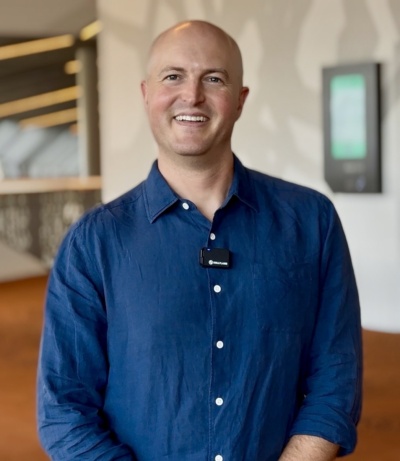
Fundraising innovator Kyle Behrend says organisations should act now by doing three things: establish an AI policy, prepare for transparency with donors, and learn how to provide AI with the context it needs to produce useful results.
Behrend, the founder of the AI Impact Hub and a former crowdraising pioneer at the Victorian animal charity Edgar’s Mission, told hundreds of leaders at the Fundraising Institute Australia conference in Melbourne late last month that organisations risked slipping behind.
Behrend, who has more than 15 years in NFP fundraising under his belt, and who now trains organisations in artificial intelligence, told delegates that 90 per cent of charities were experimenting with AI, yet few have the right foundations in place to use it responsibly or effectively.
Behrend stressed that organisations should set clear rules about how AI should be used, before trying out the latest apps and tools.
He cited the most recent Digital Technology in the Not-for-profit Sector report by Infoxchange, which showed that just 14 per cent of organisations currently have an AI policy. That figure was reinforced by the small show of hands in the audience when asked whether their organisation had such a policy.
The lack of policy frameworks meant many NFP teams were navigating the technology without clear guidance, even as the use of AI exploded.
Even a basic policy provided essential structure and reassurance for staff and stakeholders, he stressed.
“An AI policy is going to give any organisation so much more comfort and structure around actually how to use AI,” he said.
That policy could start as a short document outlining acceptable uses, privacy safeguards and approval processes, but leaders should treat it as “a living document”, regularly revisiting those settings to match the swiftly changing use cases, and to ensure new AI capabilities do not inadvertently breach guidelines.

Behrend said transparency was an essential ingredient of effective AI use and was a complement to good policy.
Behrend encouraged charities to think ahead about how they would answer a simple question from a supporter about their use of AI.
“Maybe a donor phones you and says: do you use AI? You say, ‘Yeah, I think so, but I couldn’t really tell you how’. And then they phone your director or manager and they say ‘no’ or they say, ‘Yes we use it in this way’.”
“Fundraising is all about developing this relationship with people, developing this trust.”
“It is important that you all have the same messaging and that it’s within a policy.”
Organisations should be able to confidently explain when and how AI is used, whether that is drafting communications, analysing donor data, or supporting internal workflows. Knowing these important factors helps organisations set boundaries around data input, particularly when it comes to donor information or sensitive records, Behrend said.
Behrend said most NFP users weren’t taking advantage of the true capabilities of AI, and they tended to treat the tools like they would a search engine: entering a single prompt and hoping for a useful response.
Instead, not-for-profits should develop skills in “context engineering”, he said. While the more widely known term “prompt engineering” refers to the instructions given to an AI system, context engineering involved providing background information AI needs to perform well.
For NFP operators, that context might include mission statements, strategic plans, communications guidelines, impact reports and examples of successful donor emails.
Behrend said the approach could create a “contextually aware ecosystem” where AI tools can reference organisational information as they generate content, using AI settings such as “projects” in ChatGPT.
“The AI … can actually extract the information that it needs to complete the task,” he explained.
As a result, AI outputs were less generic and could better reflect the organisation’s voice and priorities, he said.

Behrend said one way to prevent blandness in AI-generated communications was to employ an “interview method” alongside context engineering.
Instead of asking AI to immediately produce content for a fundraising campaign, for example, users could ask it to quiz them on the campaign, the audience, and key objectives before generating a draft fundraising pitch.
He said this kind of approach created content that sounded more like the NFP in question, “because it is you”.
The more specific the instructions and context, the more useful the output. “There’s an old saying: garbage in, garbage out,” Behrend said. “We cannot expect it to read our minds, so we need to give sufficient information.”
He praised the work of Geoff Woods, author of The AI-driven Leader, who suggested using the CRIT method (context, role, interview, task) to build a better instruction set.
In this scenario, AI users wanting a better result establish context, set out the role of the AI in a particular instance (e.g. CFO, strategist), have the AI interview the user, and only then set it a defined task (such as identify options, identify risks, or write a 90-day plan).
Behrend said AI already offered several practical applications useful for small teams, such as:
While clearly an AI enthusiast, Behrend stressed that AI should complement – not replace – human relationships, with the goal being to free up staff time, allowing human fundraisers to focus on building one-on-one connections with donors.
Behrend’s AI Impact Hub hosts free resources aimed at not-for-profits, including AI adoption models, model policies, and a Beginner’s Guide to AI for Nonprofits.
Community Directors Intelligence: AI edition
Forty-three examples of NFPs and charities using AI
Community Directors: AI tools and resources, including policies, help sheets and more
Posted on 15 Oct 2026
Good cybersecurity must be the foundation of not-for-profits’ efforts to adopt artificial…

Posted on 15 Oct 2026
A few years ago, I sat on a small community board that was still held together by email threads and…

Posted on 15 Oct 2026
“Build a better mousetrap, and the world will beat a path to your door”, the old saw goes.…

Posted on 15 Oct 2026
The nation's digital inclusion advocate is pushing for more equity in the rollout of AI in light of…

Posted on 15 Oct 2026
Not-for-profit leaders should be conducting regular “fire drills” that replicate AI-powered…

Posted on 15 Oct 2026
Boards that leave cybersecurity to the one director with IT expertise are leaving their…

Posted on 15 Oct 2026
Community Directors has a warehouse-style office filled with artworks, and if I glance up towards…
Posted on 15 Oct 2026
As the manager of a palliative care service, Stephanie Kirkman Meikle has learnt that the prospect…

Posted on 14 Oct 2026
A special guest with her finger on the pulse of one of the biggest issues facing Australia –…

Posted on 17 Sep 2026
Australia’s biggest gathering of philanthropists, which drew more than 1200 delegates to Brisbane…
Posted on 17 Sep 2026
Experts in Australian philanthropy say there are stark differences between philanthropic money and…

Posted on 17 Sep 2026
One of Australia’s foremost fundraising observers says Australian not-for-profits must get the…