
Philanthropists ask: Can we forge a better future?
Posted on 17 Sep 2026
Australia’s biggest gathering of philanthropists, which drew more than 1200 delegates to Brisbane…
Posted on 15 Apr 2026
By "Governance Guru" Nina Laitala, training lead, Community Directors
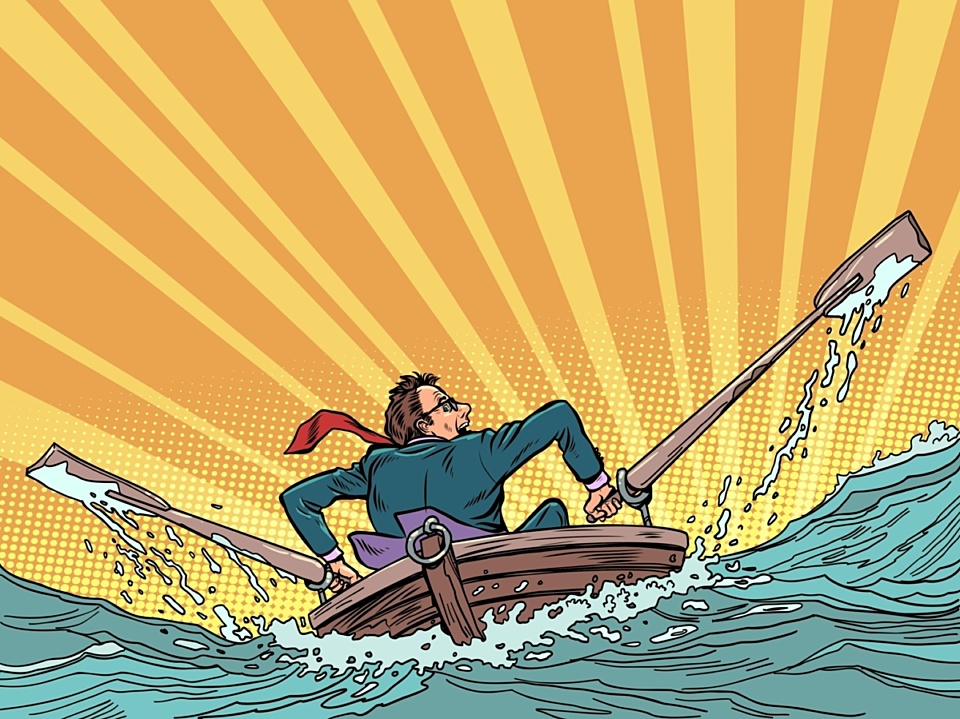
Earlier this year, a nine-member board I worked with lost four of its directors on the same day. It didn’t happen through planned transitions or end-of-term retirements, but without notice.

The issues had been building for a while: a chair who dominated discussions and dismissed dissenting views, a small group of members whose outside relationships were quietly shaping decisions the full board should have been making together, and a workload that kept falling to the same few people while the others coasted or caused problems. When those carrying the load finally reached their limit, they resigned together, suddenly, leaving only five members to pick up the pieces.
The remaining five could still form a quorum, but governing with a much-reduced board, carrying the weight of what had just happened, and being subjected to the community’s hard questions about whether the board could be trusted at all was a very different proposition from the one they had signed up for.
The situation was not, in my experience, as unusual as it should be. In the governance training offered by Community Directors, boards regularly raise concerns about conduct, workload imbalance, and the challenge of managing difficult colleagues. These concerns are not outliers but recurring themes across organisations of every size and type.
Most people understand that volunteer boards are governance bodies, but sometimes we forget that they are also volunteer workforces. The people who sit around that table are giving their time, expertise and energy to the organisation. They have needs, rights and responsibilities just like any other worker. And the board, collectively, has HR obligations towards its own directors that are just as real as its obligations towards paid staff. When those obligations are overlooked, often without any bad intent, the cracks tend to appear slowly and then all at once.
Every board member needs and deserves a clear role description, a structured induction, and access to the policies that apply to them. These include, at the very least, a volunteer policy, a code of conduct, a confidentiality policy, and a work health and safety policy that covers psychological safety as well as physical safety.
These aren't bureaucratic formalities. They are the foundation of a functional, sustainable board. Without them, expectations are unclear, accountability is murky, and when things go wrong, there is nothing to fall back on.
The way a person’s departure is handled matters too. When a board member leaves, institutional knowledge and, often, key relationships walk out the door with them unless there is a deliberate handover process. A short exit conversation gives the organisation valuable feedback it can actually use, and it can make a difference to the departing board member’s impression of the organisation.
If your board hasn't reviewed its induction process, role descriptions or important policies recently, what are you waiting for? It’s a good way to start shoring up the foundation.
"The best time to deal with difficult behaviour is before it takes hold."
Now for the difficult conversation.
The board I described above had all three of the most damaging conduct problems a board can face: bullying and intimidation, undeclared conflicts of interest, and an unfair distribution of workload that burned out the people carrying it. Any one of those issues would have been serious. Together, they were destabilising. And because the chair was at the centre of the problem rather than the solution, nobody felt empowered to act.
Poor conduct on boards is far more common than most organisations acknowledge. It is also, understandably, one of the hardest things to address. Calling out a colleague, particularly one in a senior role, takes courage. But allowing poor conduct to continue is itself a governance decision, and one with consequences.
The best time to deal with difficult behaviour is before it takes hold. A code of conduct only works if it is treated as a living document rather than a sign-and-file formality. Boards should revisit it regularly, refer to it when issues arise, and make sure every new member understands not just what it says but why it matters.
The chair sets the tone. A chair who models respectful, inclusive and accountable behaviour, and who is willing to take appropriate action when things go off track, creates the conditions for a high-functioning board. When that leadership is absent, or is part of the problem, the rest of the board carries a much heavier load.

Bullying and intimidation can be overt, as in the case of raised voices or personal attacks, but it is just as often subtle: dismissing contributions, speaking over certain members, or using seniority to shut down dissent. Both forms are harmful, and both create an environment where good people stop contributing or start looking for the exit.
Where possible, the chair should gently name the inappropriate behaviour in the moment and give the offender an opportunity to adjust. If it continues or is serious, a private conversation and documentation are the next steps. Persistent bullying may warrant a formal process under the organisation's conduct policy. If the chair is the one doing the bullying, the deputy chair or the board collectively will need to find a way to step in, which is difficult but necessary.
Disruptive or disrespectful behaviour in meetings includes talking over others, consistently derailing discussion, or dismissing agenda items. It is exhausting for the rest of the board and erodes meeting culture over time. The chair has both the authority and the responsibility to redirect, and a private conversation is often all that is needed to turn things around.
Breaching confidentiality is a serious matter. Board members are privy to sensitive financial, staff and client information. Sharing it without authorisation can damage relationships, destabilise the organisation, and in some cases carry legal consequences. When a breach occurs, it is worth taking the time to understand what happened and why before deciding how to respond. The response should be proportionate to the severity and intent of the breach.
Undeclared conflicts of interest sometimes arise from genuine unawareness rather than deliberate concealment, which is why regular training and clear processes matter so much. When outside relationships between board members begin to quietly shape decisions that should be made by the full board, that is a governance problem worth addressing directly. A well-maintained conflict of interest register and a standing agenda item for declarations at each meeting go a long way towards keeping this problem in check.
Unequal distribution of workload is often overlooked as a conduct issue, but its impact is real. When the same people carry the load meeting after meeting while others contribute little or create extra work, resentment builds and burnout follows. Honest conversations about capacity, regular rotation of responsibilities, and clear role descriptions from the start can all help prevent the imbalance from taking hold.
Going rogue outside meetings includes making public statements that don't reflect the board's position, lobbying funders independently, and taking actions without authority. Board members have no individual power to act. Authority rests with the board as a whole. A direct conversation that clarifies boundaries, followed by documentation, is usually the right first step.

If a conduct issue persists after informal intervention, the board needs to follow a formal process. Your constitution and conduct policies should outline the grounds for removing a board member and how that process works. If this isn't documented, it is worth addressing before you need it. Trying to remove somebody without a clear process in place is stressful for everyone involved and can create additional risk.
It is worth understanding that formally removing a board member is rarely straightforward. Even where a process exists, it can be slow, resource-intensive, and disruptive to the organisation regardless of the outcome. This is why early intervention matters so much, and why having clear policies and a culture that addresses issues as they arise is far preferable to reaching the point of removal.
In serious situations, external support is appropriate and often a relief. A skilled facilitator, a governance adviser or a lawyer can help the board work through a difficult matter more safely and with less collateral damage than if the board tries to go it alone.
If the chair is part of the problem, as was the case with the board above, the rest of the board will need to act collectively. The deputy chair, the whole board or an external adviser may need to step in. No single person should have to carry this burden alone, and the organisation's wellbeing should always take precedence over any individual's position, regardless of the role they hold.
The board I worked with eventually stabilised, but it took time, external support, and a significant amount of rebuilding. Much of what happened could have been avoided with clearer expectations, better policies, and a willingness to address problems a little earlier.
Most boards are made up of people who genuinely care about their organisation and the community it serves. When conduct issues arise, they are rarely the result of malice. More often they reflect a lack of clarity, inadequate support, or a culture that hasn't made it safe for people to raise concerns. Getting the foundations right and addressing problems with care and consistency when they do emerge is how boards protect both their people and their purpose.
Your code of conduct, your policies, and your chair are your first line of defence. Use them.
And if your board members are ready to talk to each other about how they function as a team, Community Directors' governance training can help you build the skills and confidence to do exactly that.
Posted on 17 Sep 2026
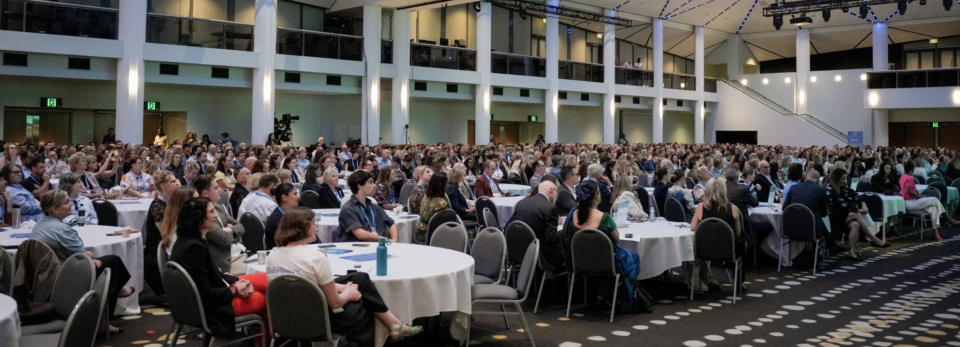
Australia’s biggest gathering of philanthropists, which drew more than 1200 delegates to Brisbane…
Posted on 17 Sep 2026
Experts in Australian philanthropy say there are stark differences between philanthropic money and…

Posted on 17 Sep 2026
One of Australia’s foremost fundraising observers says Australian not-for-profits must get the…
Posted on 17 Sep 2026
As direct giving dries up, charities face growing dependence on big donors and negotiating the…

Posted on 17 Sep 2026
Charities reported $14.8 billion in donations and bequests last financial year, the second-highest…

Posted on 17 Sep 2026
My father often googles my name, and as a result, years ago, I received a surprising gift in the…

Posted on 17 Sep 2026
Where Evelyn Mugisha grew up in rural Uganda, the subjects and careers considered suitable for…
Posted on 09 Sep 2026
A global gathering of philanthropists in Brisbane this week is aiming to tackle society’s biggest…
Posted on 09 Sep 2026
Media attention about women's philanthropy has more than doubled in three years, according to new…
Posted on 26 Aug 2026
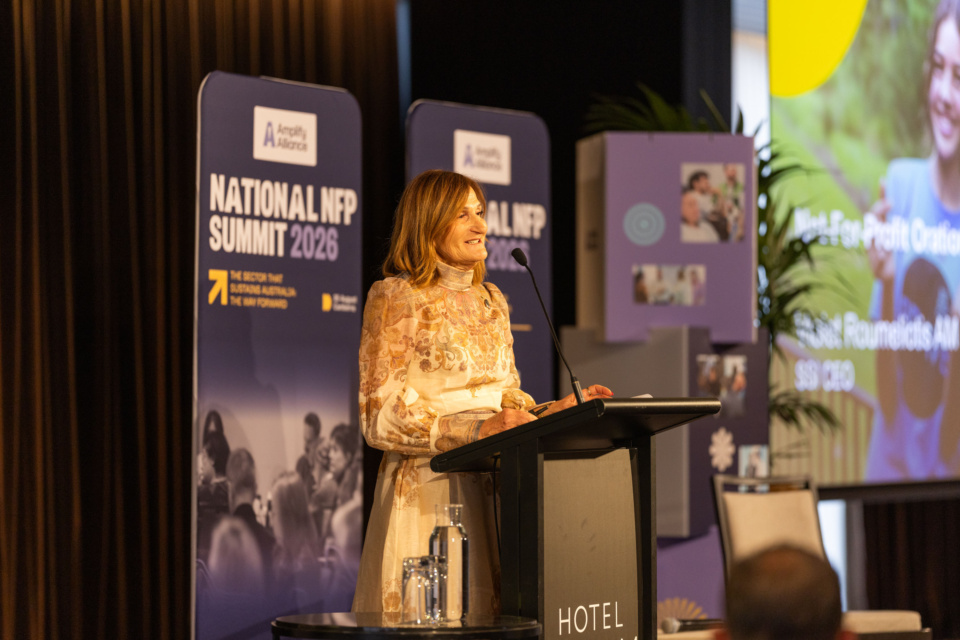
Sector leader Violet Roumeliotis has called on funders to stop treating not-for-profit…

Posted on 13 Aug 2026
As a teenager, I attended summer camp for seven years, first spending two weeks at a time camping…

Posted on 13 Aug 2026
Not-for-profits are full of people with great ideas, but that doesn’t mean they are set up for…