
NFP tech experts urge orgs to scale up cybersafety
Posted on 15 Oct 2026
Good cybersecurity must be the foundation of not-for-profits’ efforts to adopt artificial…
Posted on 15 Apr 2026
By Mike Davis, founder, Shackleton Labs

The average Australian not-for-profit sector employee is less satisfied about the rewards and career opportunities on offer than employees elsewhere.
That gap – backed up by research by the Voice Project is becoming more concerning, especially amid high levels of burnout, which has been demonstrated in multiple studies such as mental health services or in teaching to drive more people to leave their jobs.
Worryingly, the 2025 Pro Bono Australia Salary Survey found that 29 per cent of people who left NFP roles cited burnout as the main reason, up from 21 per cent in 2024.
And a 2023 McKinsey study of 474 Australian nonprofit leaders found 88 per cent were approaching or experiencing burnout, compared to the wider workforce burnout rate of approximately 46 per cent.
The rise reflects a range of converging factors. Many organisations are significantly reducing middle management roles to save money, often in response to chronic shortfalls in reliable, ongoing funding. That funding pressure also limits investment in professional development, succession planning and staff wellbeing.
When I started working in the not-for-profit sector 10 years ago, the “purpose premium” – a salary discount for working in a mission-driven organisation rather than for shareholders – was openly discussed.
I estimated it at about 10–20 per cent of salary that we were willing to leave on the table in exchange for that “purpose premium”.
Ten years on, the cost of living and inflation have increased dramatically, yet not-for-profit salaries haven’t kept up, nor have the perks.
My Jobs are also less satisfying because of a widely held view that every job must contribute to the organisation’s revenue goals. This in turn is leading to more burnout.
Instead of a “purpose premium”, the sector is facing a “purpose penalty”.
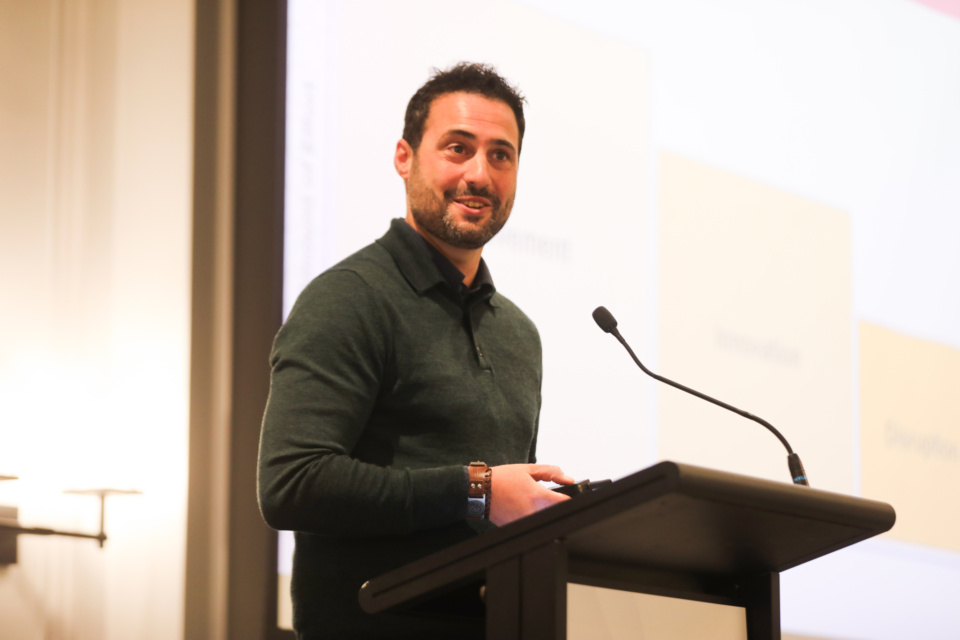
"Not-for-profits wanting to keep their strongest performers must offer interesting work, problem‑solving opportunities, innovation projects and an inclusive culture that encourages people to speak up and recognises their contribution."
Innovation can be a wellspring of inspiration for an over-worked, tired and disengaged not-for-profit sector. I’ve seen how running a strong innovation program – or even just communicating about innovation – can “turn on a light” in so many for-purpose employees.
Where education, wellbeing and professional development opportunities are limited, inclusive innovation programs offer the opportunity for employees to contribute ideas and help bring them to life. It’s an opportunity to manifest creativity, experiment and work “on” the machine rather than solely “in” the machine.
When we ran our first “shark tank” at Good Shepherd ANZ in 2024, there was palpable excitement across our 500 staff members, including frontline workers. In all, 40 per cent were involved in 40 group submissions to the competition.
When we ran monthly “innovation hours”, we would invite guest speakers from a range of industries and sectors to speak about their work, how they innovated in their sector, and what we could do differently and better. These sessions were well attended and sparked uplifting conversations for weeks afterward.
Those activations provided opportunities for employees to think differently and experiment with creativity, entrepreneurship, problem-solving and critical analysis.
When people regularly practise coming up with new ideas through activities like innovation challenges, idea-sharing systems, and working together to design new programs, they feel more engaged, optimistic, and proud of their work. This makes them more likely to stay.
Research suggests that organisations offering flexible, outcomes-based work are better placed to compete for talent in a tough labour market.
McKinsey has found that flexibility is now one of the top three workplace attributes that motivates workers, with organisations that fail to provide it facing higher risks of attrition, while data from Idealist shows that remote not-for-profit roles attract significantly more interest than onsite roles, in some cases receiving many more applications.
Not-for-profits wanting to keep their strongest performers must offer interesting work, problem‑solving opportunities, innovation projects and an inclusive culture that encourages people to speak up and recognises their contribution.
This all provides a way to reduce – or even reverse – the “purpose penalty”.
Not-for-profit retention studies suggest that when staff feel empowered to improve services, have input into decisions and can develop their skills, they are far less likely to look elsewhere even in a hot job market.
NFPs must prioritise learning on the job through a well-structured and engaging innovation program rather than relying on very limited and hard to access professional development budgets and external opportunities.
Innovation is not a nice-to-have for the not-for-profit sector – it is a practical response to workforce pressure, offering a way to rebuild engagement, strengthen skills and make roles more meaningful without increasing costs.
Posted on 15 Oct 2026
Good cybersecurity must be the foundation of not-for-profits’ efforts to adopt artificial…

Posted on 15 Oct 2026
A few years ago, I sat on a small community board that was still held together by email threads and…

Posted on 15 Oct 2026
“Build a better mousetrap, and the world will beat a path to your door”, the old saw goes.…

Posted on 15 Oct 2026
The nation's digital inclusion advocate is pushing for more equity in the rollout of AI in light of…

Posted on 15 Oct 2026
Not-for-profit leaders should be conducting regular “fire drills” that replicate AI-powered…

Posted on 15 Oct 2026
Boards that leave cybersecurity to the one director with IT expertise are leaving their…

Posted on 15 Oct 2026
Community Directors has a warehouse-style office filled with artworks, and if I glance up towards…

Posted on 15 Oct 2026
As the manager of a palliative care service, Stephanie Kirkman Meikle has learnt that the prospect…

Posted on 14 Oct 2026
A special guest with her finger on the pulse of one of the biggest issues facing Australia –…

Posted on 17 Sep 2026
Australia’s biggest gathering of philanthropists, which drew more than 1200 delegates to Brisbane…
Posted on 17 Sep 2026
Experts in Australian philanthropy say there are stark differences between philanthropic money and…

Posted on 17 Sep 2026
One of Australia’s foremost fundraising observers says Australian not-for-profits must get the…