
Philanthropists ask: Can we forge a better future?
Posted on 17 Sep 2026
Australia’s biggest gathering of philanthropists, which drew more than 1200 delegates to Brisbane…
Posted on 15 Apr 2026
By Matthew Schulz, journalist, Community Directors

Many new directors walk into their first board meeting unprepared – not because they lack capability, but because organisations underestimate what it takes to get them board-ready, according to veteran board director Alice Tay.
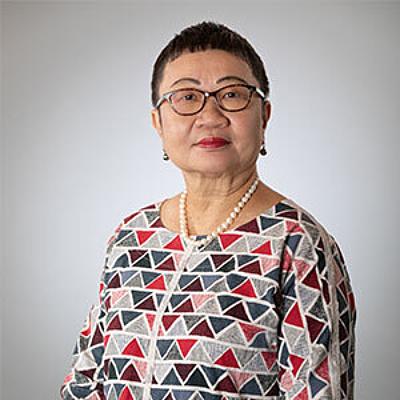
“A lot of times, when you come to your first board meeting, you have absolutely no idea what’s going on,” she says.
Tay has the runs on the board, having spent 30 years as a commercial lawyer before applying that skill and knowledge to board roles across government and the not-for-profit sector.
She remains a director of Community Housing Canberra and is a council member at the University of Canberra. Her previous roles include directorships at the Heart Foundation of Australia, The Fly Program (a men’s mental health charity), Hands Across Canberra and the Commonwealth Club, and she was deputy chair of the ACT Gambling and Racing Commission. Her commitment to community service led to her being awarded a Medal of the Order of Australia (OAM) last year.
Speaking recently to Community Directors Intelligence about advice for new directors that she has produced for Community Directors partners BoardPro, Tay said she had experienced the gamut of boards, from excellent, well-run organisations to an unnamed “not-for-profit from hell”, and she has distilled that experience into invaluable advice for new board members.
Her four tips for processes to follow when a new board member starts cover induction, consultation with the chair, consultation with the CEO, and preparing for the vital first board meeting, and they emerged out of frustration.
“I started by thinking about, as a first-time director, what are the things that really make you feel uncomfortable or irritate you,” she said.

Tay said boards often rely too heavily on formal induction programs, which can create a false sense of preparedness.
Her own experiences have ranged from the most minimal briefings to structured full-day sessions covering directors’ duties, conflicts and risk. Yet even the better versions did not enable her to contribute fully in her new role at the outset.
“No one does onboarding well.
“A lot of induction will say: ‘Oh yes, this is our strategy, look at our website,’ that sort of thing,” she says.
“But what you don’t know are the little things behind it.”
Understanding “the little things” requires direct conversations and sustained exposure to the organisation.
“If you expect your director to contribute from day one, you have to place them in the position as if they have been there all the time,” she said.
“That’s virtually impossible to do.”
Instead, induction should be a longer process that continues well after a directorship posting begins, and it should involve ongoing learning.

At the centre of Tay’s advice is a consistent message about capability.
“I think, at minimum, you need to understand the three things,” she said.
Those “three things” are governance, risk and finance – which she describes as the building blocks of effective directorship.
Only after grasping these fundamentals can directors properly engage with the organisation itself.
For Tay, this meant confronting gaps in her own knowledge.
“I was not financially literate, but I worked hard to understand finance to the extent that I can now contribute meaningfully,” she said.
“Then you need to understand the business of the organisation … what the organisation does [and] what it needs to be looking at in the next 12 months, the near term, the middle term, and the long term,” she said.
Tay advocates for formal training for directors before they take their seats, recommending that all directors complete at least a short governance course.
“Everyone who wants to be on a board … should at a minimum do a short course,” she said.
While some organisations seek specialists to broaden their knowledge, she cautions against appointing subject-matter experts without this grounding.
“I am not a fan of getting subject-matter experts with no governance experience onto boards,” she says.
Instead, those individuals should first join committees or be invited as visiting experts, while building their governance capability.
“Everyone who wants to be on a board … should at a minimum do a short course."
Tay’s practical advice for new directors centres on four actions.
Tay says new directors should attend induction and take it seriously as an essential grounding in the role.
However, she cautions that programs vary widely in quality and should not be relied on as the sole preparation for board work.
She recalls one induction she attended before being formally appointed, which allowed her to observe but otherwise left her to “work things out” alone. Another involved brief meetings with senior staff but did not equip her to participate meaningfully in board discussions.
A more comprehensive full-day program covering directors’ duties, conflicts and risk was more useful, but still insufficient.
“None of these programs have put me in a position where I could participate fully from the very start.”
Induction, she says, must be followed by ongoing learning about the organisation, its stakeholders and its operating environment.
Meeting the chair early helps directors understand expectations and board dynamics, particularly where formal induction misses how boards operate in practice.
“The chair is the first among equals, which is why I say you should speak to the chair … really, really important. Find out, what is it that keeps you up at night?” Tay says.
Key questions to ask the chair (or yourself) include:
Tay says directors need to get insights into operations, while respecting the boundary between governance and management.
“A director’s role is to ‘put their nose in but keep their fingers out’,” she says.
She encourages directors to ask detailed questions about performance, workforce, finances and risk, including what is keeping the CEO awake at night.
“The CEO has intimate knowledge of the organisation’s operations.”.
First meetings can be daunting, but Tay says new directors should focus on listening, learning and building relationships.
“Do not be shy. No question is a silly question,” she says.
“A collegiate board is a good working board.”
Tay says the challenges of getting people started in board roles are closely tied to how boards recruit and refresh themselves.
Volunteer boards often struggle to attract new members, while long-serving directors can be reluctant to step down, and in some cases will remain in the chair for decades. Telling them that it is time to leave can be difficult.
“No one wants to tell their mate that their use-by date is over.”
To manage this, Tay supports staggered renewal.
“You should have a fixed term so that every year one or two people will leave … There will always be people who have been there for four or five years to help people who have just been appointed,” she says.
Nominations committees and skills matrices can help identify gaps and guide recruitment.
“You look at your strategy for your next 10 years… What skills do I need on my board to help us as we go?”
Committees can also serve as a proving ground for future directors.
“I’m a big proponent of having people come onto committees to get to know the organisation, and for the organisation to get to know them.”
Tay says boards must strike a balance between oversight and interference and warns that some smaller boards fall into the habit of simply endorsing management decisions.
In contrast, effective directors ask questions about risk, cost and alternatives, while respecting the CEO’s operational role.
“It’s really, really important that the board looks at the counter-arguments,” she says.
“Your role is to stress-test what your CEO wants to do, in a nice way.”
This article is based on onboarding advice commissioned by BoardPro, a Community Directors partner.
Posted on 17 Sep 2026
Australia’s biggest gathering of philanthropists, which drew more than 1200 delegates to Brisbane…

Posted on 17 Sep 2026
Experts in Australian philanthropy say there are stark differences between philanthropic money and…

Posted on 17 Sep 2026
One of Australia’s foremost fundraising observers says Australian not-for-profits must get the…
Posted on 17 Sep 2026
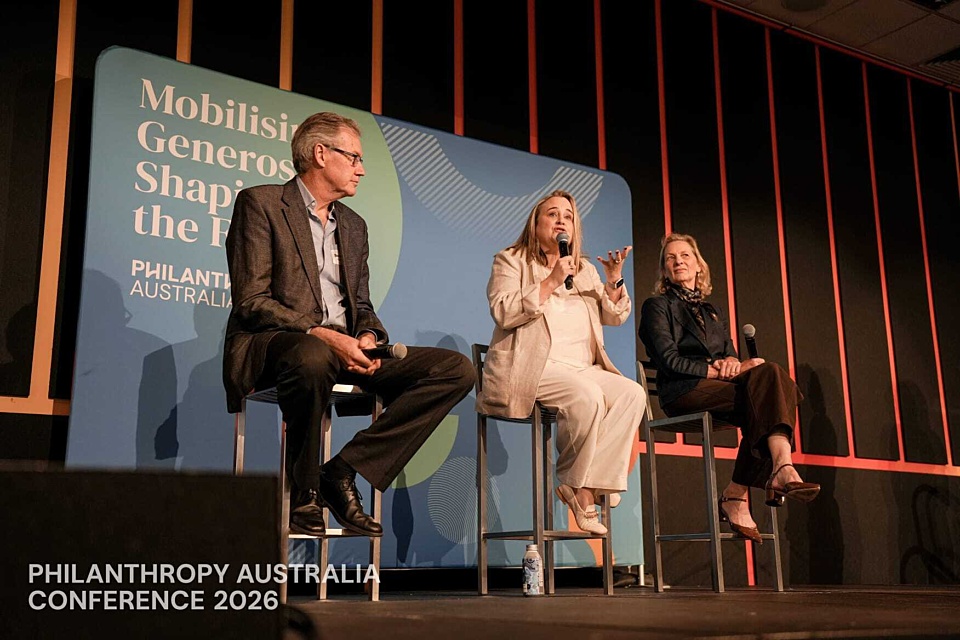
As direct giving dries up, charities face growing dependence on big donors and negotiating the…

Posted on 17 Sep 2026
Charities reported $14.8 billion in donations and bequests last financial year, the second-highest…

Posted on 17 Sep 2026
My father often googles my name, and as a result, years ago, I received a surprising gift in the…
Posted on 17 Sep 2026
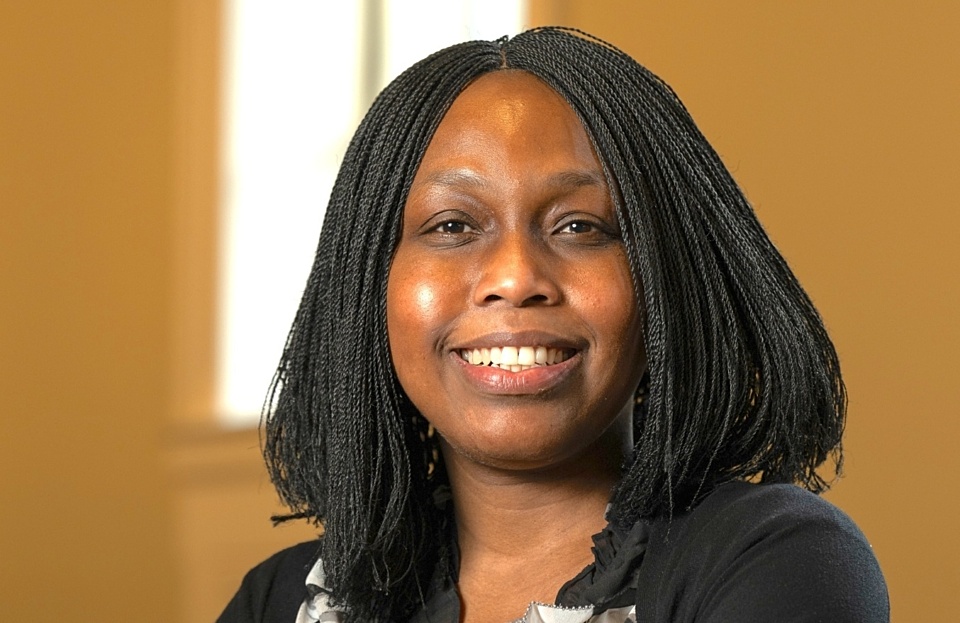
Where Evelyn Mugisha grew up in rural Uganda, the subjects and careers considered suitable for…
Posted on 09 Sep 2026
A global gathering of philanthropists in Brisbane this week is aiming to tackle society’s biggest…
Posted on 09 Sep 2026
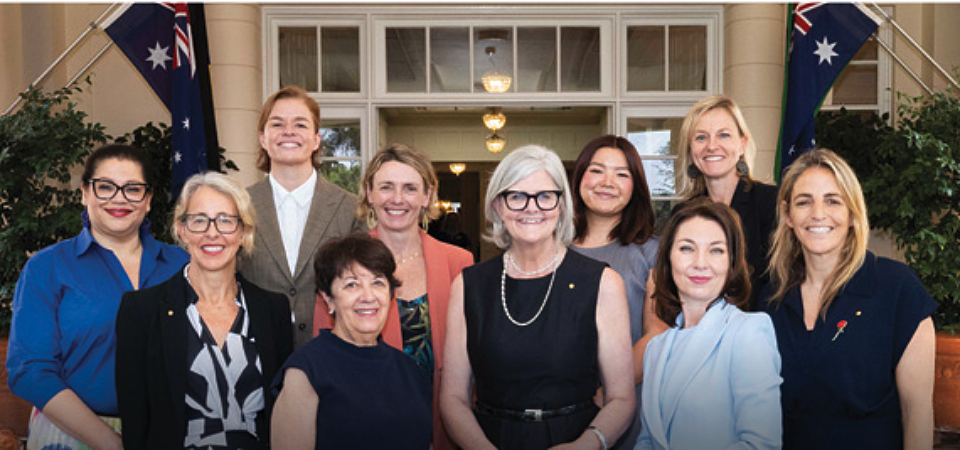
Media attention about women's philanthropy has more than doubled in three years, according to new…
Posted on 26 Aug 2026
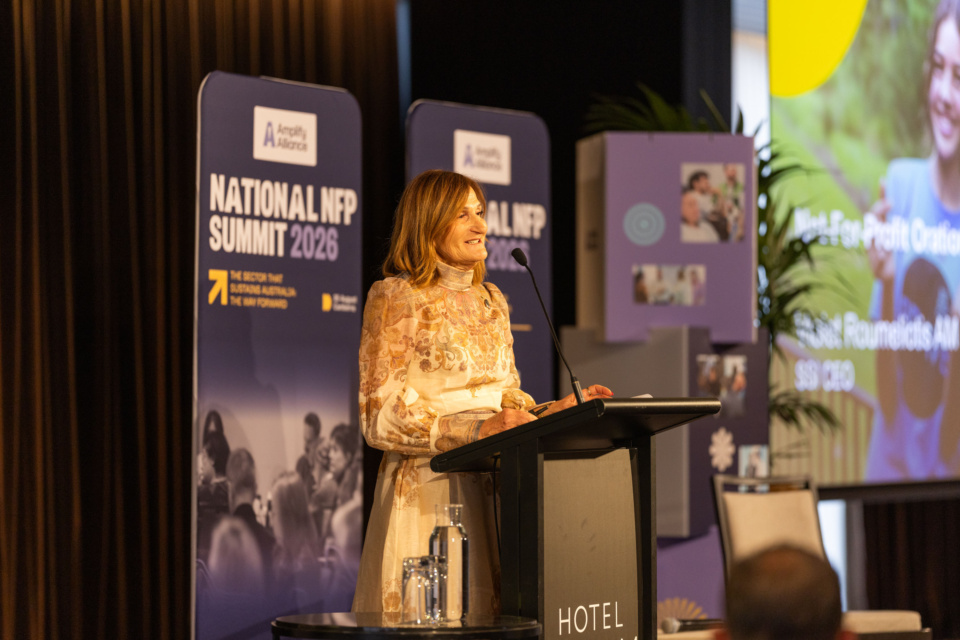
Sector leader Violet Roumeliotis has called on funders to stop treating not-for-profit…

Posted on 13 Aug 2026
As a teenager, I attended summer camp for seven years, first spending two weeks at a time camping…

Posted on 13 Aug 2026
Not-for-profits are full of people with great ideas, but that doesn’t mean they are set up for…