
Constraint, permission and leadership: the ingredients of innovation
Posted on 13 Aug 2026
As a teenager, I attended summer camp for seven years, first spending two weeks at a time camping…
Posted on 17 Sep 2026
By Adele Stowe-Lindner, executive director, Community Directors

My father often googles my name, and as a result, years ago, I received a surprising gift in the mail: a novel published in the USA in 1927 called Arrogant Beggar, by Anzia Yezierska.
The title seemed oxymoronic, which piqued my interest, but as soon as I read the blurb, I understood why my father had sent me the book. The fictional main character's name was my own: Adele Lindner.
The book is a cutting critique of institutional and individual philanthropy. Spoiler alert: the main character, in an inspiring portrayal of 1920s feminist self-realisation, rejects the condescending philanthropy that has trapped her in poverty and diminished her sense of self. Instead, she creates a form of support radical for its time, in which the recipient earns her way, and giver and receiver both say thank you.
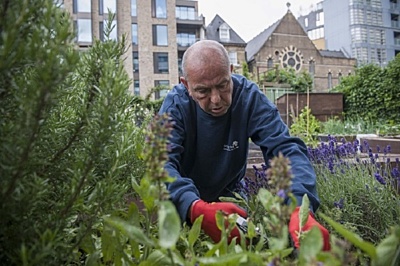
This model of philanthropy was very relevant to my own professional life at the time. I was working at a housing association in London called St Mungo's, where I was responsible for running a gardening program for men and women who were experiencing homelessness. We trained them in professional gardening skills in the public gardens in which they used to sleep rough. I’m talking about the three gardens immediately surrounding London's Waterloo Station, which funnels millions of commuters into the city each year. St Mungo's had successfully tendered for the contracts to maintain and develop the gardens for councils across inner London.

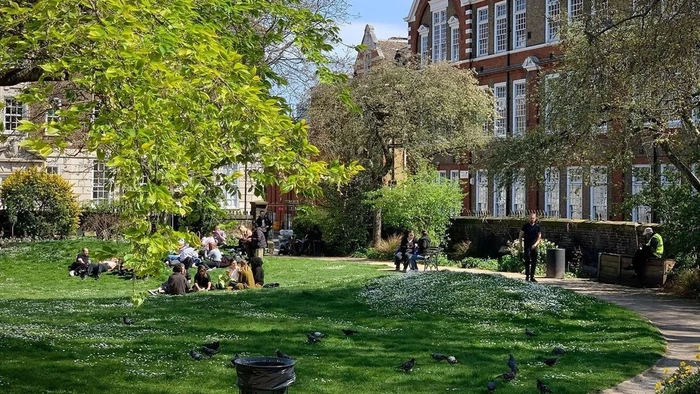
Amid this urban landscape, some of our team of volunteers designed Millennium Green, a park planted with perennial weeds that flower at different times throughout the year. When I questioned this choice, being no green thumb myself, they explained their philosophy, which has stayed with me ever since: “Weed or flower, Adele, it’s all about context.”
Our team of volunteers, who had once slept on the park's benches, was now host to the workers and tourists who visited the garden. They explained the plantings to passers-by and to other staff expertly and with pride. Their identity had shifted.
I became pregnant during this time, and I’ve never been looked after by a more attentive group of people. They brought me my tea, passed me my tools and checked on my wellbeing. Their opportunity to give and my physical need for some help shifted the power dynamic.
Everyone has something to give, and my clients had time, thoughtfulness and physical ability.
Whenever I’ve worked with volunteers, I’ve always invited them to be transparent about what they hoped to get out of the volunteering experience, so that the organisation could make sure they received it and would stay around for a long time. That’s volunteer sustainability 101. Volunteers would often say hesitantly, then with more certainty, "I would love to have something apart from my usual job to talk about with my family over dinner," or "I want human contact," or "I benefited from this cause myself and I want it to continue, so I want to pay back what I owe."
Philanthropists are no different, and we are all philanthropists. If you hand a dollar to someone outside a train station, how do you feel in that moment? Pretty good about yourself, right? That is a transaction right there. You paid for that feeling, and someone benefited. It’s not that different from the philanthropists who donate $100,000 and receive the sense that their legacy is protected, that their values will be protected, that they have done something that will make a difference. It's a transaction for good, and communities are built this way.
"No philanthropist can be a philanthropist without someone who actively receives their gift. Every one of us who gives also receives something we wanted."
"Governance and leadership play important roles in establishing what information-sharing is acceptable, and board members must model the behaviour and culture they want to establish."
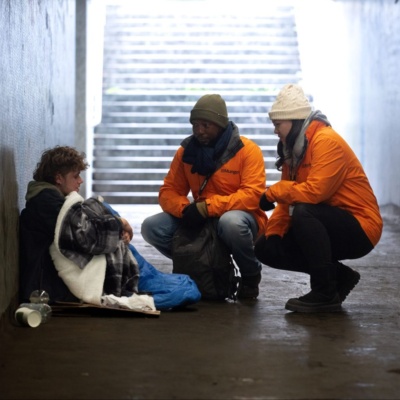
A friend told me recently that she enters her inner-city train station at the same time each morning, and every day she sees a woman sitting outside reading a book, wearing nice clothes, with a sign explaining that she needs cash. My friend finds it confronting. Why is this woman begging for money? She doesn’t look very deserving of help. She isn’t performing destitution.
This woman is the “arrogant beggar” committing precisely the “offence” described in the novel that bears my name. Fictional Adele Lindner's crime is that she refuses to be suitably grateful, will not be suitably diminished, and will not accept the role in which her benefactors cast her.
Victorian England had a vocabulary for this, which the Australian colonies imported. The deserving poor were the widows and the sober industrious labourers who found themselves out of work through bad luck. The undeserving were the drunken, the idle, and anyone who failed to look sufficiently reduced, maybe they looked too proud.
Poverty was assessed on character grounds rather than circumstances, and the woman outside my friend's train station would not have passed the test. I’m not asking anyone to feel bad, but I note that we have not retired those assessments: grant rounds and acquittal reports often ask someone to demonstrate that they are worthy of receiving what is on offer.
Those with financial resources have something to give, but so do those without: they have time, a laugh, a lesson, a conversation that changes someone's afternoon. No philanthropist can be a philanthropist without someone who actively receives their gift. Every one of us who gives also receives something we wanted. This is the arrangement that fictional Adele arrived at in 1927: both parties say thank you.
For donors and volunteers, this starts with naming what you receive from the transaction. When I knew what volunteers wanted to get out of volunteering, I could make sure they kept getting it, and they were rewarded with years of having those needs met.
There is a second benefit, as a donor or volunteer, to naming what you are getting. It is hard to assess whether someone is deserving of your generosity while you openly acknowledge that you are getting something out of the transaction too. Naming what you are getting puts you beside the person rather than above them. You become partners.
The team of volunteers at Waterloo touched on this when they told me, “It’s all about context.” Weed or flower, deserving or undeserving: these are judgements we make according to context, from a position that can change quickly. But we all have our seasons of beauty, and we all deserve to bloom.
Posted on 13 Aug 2026
As a teenager, I attended summer camp for seven years, first spending two weeks at a time camping…

Posted on 22 Jul 2026
I spoke at the Social Impact Summit in Sydney this month on a topic that has been sitting with me…

Posted on 10 Jun 2026
There’s a line of thought about AI in the not-for-profit sector that goes something like this: “We…
Posted on 18 May 2026
Like your favourite T-shirt or the song you listen to when you’re feeling low, your organisation’s…
Posted on 15 Apr 2026
Lately I’ve been spending a lot of time in interview rooms.

Posted on 12 Mar 2026
I sat in a room with 1200 people at a fundraising event a few weeks ago, dressed nicely, feeling…

Posted on 10 Feb 2026
As my family dropped our teenage son off at the airport in the first week of January to embark on a…

Posted on 10 Dec 2025
The Institute of Community Directors Australia trains over 22,000 people each year, which gives us…

Posted on 12 Nov 2025
At the Institute of Community Directors Australia, we believe that stronger communities make a…

Posted on 11 Nov 2025
‘It’s not a question of enough, pal. It’s a zero-sum game. Somebody wins and somebody loses’.

Posted on 15 Oct 2025
The Institute of Community Directors Australia team sits physically and figuratively between two…

Posted on 30 Sep 2025
I am proud of what Our Community, and its exceptional team, have achieved in the past 25 years. As…