
Save Izzy: campaign calls on government to restore funding for vital services directory
Posted on 07 Oct 2026
A major public campaign launched this morning is calling on the federal government to restore…
Posted on 08 Jul 2026
By Nick Place, journalist, Community Directors
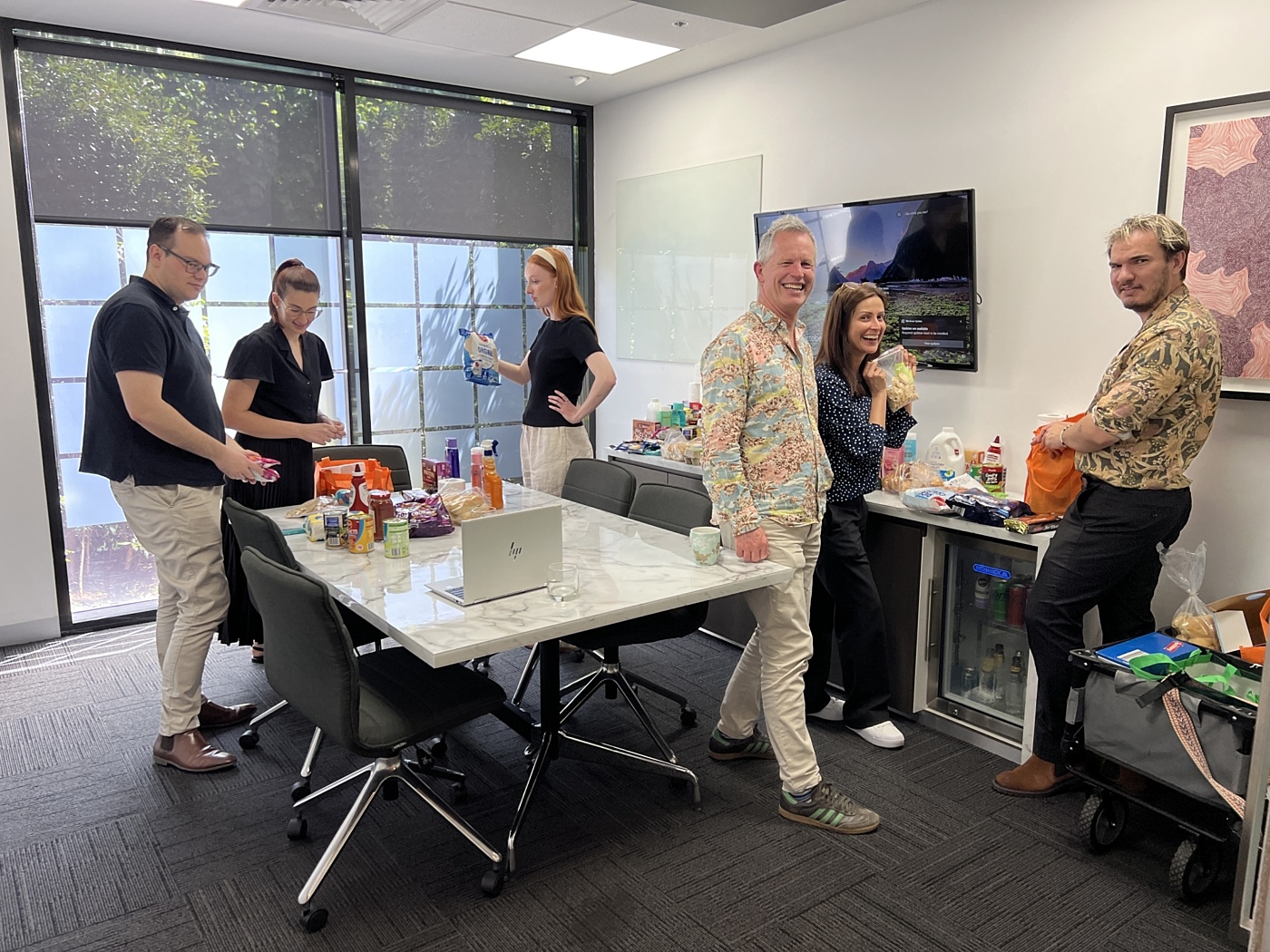
The charity sector’s reliance on a volunteer workforce is well documented, but the ramifications when volunteers don’t show up are less often discussed.
Charity founder Kellie Wishart tells a story about a family violence charity that makes major deliveries for Mothers Day and Christmas. On one occasion, the charity needed to pack thousands of hampers to be delivered by community agencies to women and children escaping violence.
More than 20 volunteers pledged to be available to make this happen, but when the day arrived, only two reported for duty.
In more than half of Australia’s charities, the entire organisation is run by volunteers.
But this wonderful generosity does not always run smoothly.

For starters, running a corporate volunteer program requires significant coordination, logistics and reporting, on top of a charity’s core service delivery that is usually already challenging an overstretched team.
Kellie Wishart is a co-founder of the Social Education Group, which acts as a bridge between corporate entities providing volunteers and the charities who need their help. She and fellow co-founder Rachael Banks aim to avoid the “impact gap” where well-intentioned corporate volunteers are not aligned with needs of the charity or the community being served.
“We recently spoke with a medium-sized community organisation that has great impact in the refugee space, and they have stopped using corporate volunteers, chosen not to, because of the risks that need to be mitigated,” Wishart told the Community Advocate.
“Depending on what your charity does, when corporates come in, they might need a Working With Children certificate, or maybe they need to wear closed-toed shoes, or if they’re doing something with food, they need to come in with their armpits covered; all that kind of thing. But anybody will turn up, people that weren’t on the company’s list will turn up, and they’ll turn up in sandals. This charity said they just don’t do it anymore because of the administrative burden and having to mitigate the risk. The return just wasn’t there.
“We’re working with them to look at whether we can support that corporate relationship to be more values-aligned and carry the admin for them as well,” she said.
Even assuming a corporate volunteer program is founded entirely on goodwill, a strong social conscience and an intent to help, the volunteers’ engagement can be fraught – and this can also be the charity’s fault, especially if the charity itself is run by volunteers who lackspecific skills or structured systems.
“We think that the awareness-raising part of our work is really, really important.”
Wishart, who also founded and runs a charity, said mutual understanding from the start of the volunteering relationship is key, which is why the Social Education Group begins with in-house workshops to educate potential volunteers about the charity world they plan to enter.
“What we’ve heard from corporate people is that charities are very good at talking about charities,” she said. “They’re good at talking about their activity and what they do, and they’re good at telling their story about how they came about, or why they do it. But what they’re not necessarily good at is defining what is ‘food insecurity’? What is ‘homelessness’? What is ‘family violence’? Who experiences it? What’s the human face of it?
“We always raise the lived experience voice. We use national data. And then once we have that context, then we move into what the charity does, and how the volunteers can help. Corporates love it because I think that if you can’t name something, if you don’t know somebody’s experiencing homelessness or family violence or food insecurity, you don’t know that there’s help for that because you haven’t identified it.
“We think that the awareness-raising part of our work is really, really important. But it also aligns values, and then, when the volunteers go into the space to do whatever they’re asked to do, they have a deep understanding of why this matters.”
Wishart said increased understanding of corporate volunteering strategies would benefit both charities and volunteers, and it’s starting to happen. One model that is showing promise is where corporations purchase an agreed number of volunteering days per fortnight or per month with a charity, and then roster people into those slots across the year.
“That type of arrangement is really beneficial for both parties,” Wishart said. “The corporate needs it to be simple, to book the volunteers, and they want to be clear about how it works and the expectation. But then it offers the charity some certainty, as well. The charity knows it has X amount of money, maybe even paid up front, and when these people are coming. Both parties are sorted, instead of sporadic little opportunities that people try and plug themselves into.”
The Social Education Group has also developed a corporate program, Pack and Give Back, for companies whose employees have trouble leaving the office for a day to volunteer. A team-building awareness workshop at the corporate office is followed by an on-site packing event, where volunteers might put together care packages for a charity – such as hygiene packs for women and children arriving at a refuge.
“These programs take the complete burden off the charity. We give them a financial donation from the money that we raise doing that, plus they also get all of the resource,” Wishart explained. “The corporate receives an impact report about how that resource was used, how the money was used, and what was their impact.”
The Social Education Group monitors the impact in all directions, because it can be counter-productive if an under-resourced charity receives a crew of volunteers and can’t provide considered tasks for them to complete.
“Being mindful that the charities are running on fumes and these events take a bit or organisation, sometimes charities need to buy extra resource to keep the corporates occupied,” Wishart said. “But then from corporates, we’ve heard that they were put in a room and told to paint it or sweep the floors, but clearly somebody had painted it two weeks ago. They’re, like, that doesn’t feel like impact.”
The recently released 12th annual Australian Charities Report, from the Australian Charities and Not-for-profits Commission, found that registered charities engaged 3.9 million volunteers in the 2024–25 year, or 2.5 volunteers for every employee.
More information
Social Education Group: www.tseg.com.au
Posted on 07 Oct 2026
A major public campaign launched this morning is calling on the federal government to restore…

Posted on 07 Oct 2026
The Australian Literacy & Numeracy Foundation (ALNF) has announced a partnership with mining…

Posted on 07 Oct 2026
A conference in Darwin will this morning hear detailed, strategic plans for how Australia could…

Posted on 30 Sep 2026
Not-for-profit leaders have been warned to be wary of approaches from potential “funding partners”…
Posted on 30 Sep 2026
More than 200 fully funded Centre for Social Impact (CSI) scholarships will help equip for-purpose…

Posted on 30 Sep 2026
Personal stories are among the most powerful tools a charity can have to raise funds and awareness,…

Posted on 23 Sep 2026
A just-released major global survey of charities has found that demand for charity assistance has…
Posted on 23 Sep 2026
Fresh from welcoming delegates to last week’s Philanthropy Australia conference in Brisbane,…

Posted on 23 Sep 2026
A national strategy to develop Australia's regional cities is needed to break the housing…

Posted on 23 Sep 2026
Eight years after a report to Treasury first suggested the charities regulator should be more…

Posted on 17 Sep 2026
Australia’s biggest gathering of philanthropists, which drew more than 1200 delegates to Brisbane…

Posted on 16 Sep 2026
A new partnership between Paul Ramsay Foundation (PRF) and Atlassian Foundation aims to attract…