
Save Izzy: campaign calls on government to restore funding for vital services directory
Posted on 07 Oct 2026
A major public campaign launched this morning is calling on the federal government to restore…
Posted on 14 May 2026
By Nick Place, journalist, Community Directors

Forty-two years after sexual harassment became illegal in Australian workplaces, and despite the Me Too movement, new data from Diversity Council Australia (DCA) shows that sexual harassment at work remains very real and is rarely reported. The data also says that almost one in four Australians admit they wouldn’t do anything if they witnessed it.
“Everyone deserves to feel safe and respected at work. However, despite decades of action, our findings show that sexual harassment remains a critical issue for Australian organisations,” said DCA chief executive Catherine Hunter.
The research comes from DCA’s Inclusion@Work Index Insights series and paints a disturbing picture. Eighteen per cent of workers reported that they had experienced sexual harassment at work in the previous 12 months, and 22 per cent of those said they didn’t tell their employer.

Of those workers who said they had experienced sexual harassment, one in five (20 per cent) reported inappropriate physical contact, while 16 per cent said they experienced unwelcome touching, hugging or kissing. Comments about a worker’s physical appearance, intrusive questions about their private life, sexually suggestive comments or jokes and inappropriate leering or staring were also reported.
Formal action by an employer in reponse to a report of sexual harassment was rare, with a mere 10 per cent of victims saying their employer had taken disciplinary action, such as issuing a formal warning or dismissal notice against the harasser.
The most common response (14 per cent) by employers was an apology to the employee. Thirteen per cent of employers were reported to have spoken informally to the harasser, while 12 per cent said they would “monitor the situation”.
Ten per cent of those who reported sexual harassment said they had been punished for speaking up. Another 13 per cent said they were not aware of their employer taking any action against the accused harasser.
For anybody experiencing sexual harassment whose hope is that at least their workmates will have their back, the news remains concerning. The report says that 24 per cent of workers admitted they would not take any action if they witnessed sexual harassment against a colleague, and only 33 per cent said they would check in with the target afterwards.
However, speaking up can be frightening, and workers are not unjustified in worrying it could have adverse effects on their own careers. The Community Advocate asked Catherine Hunter for suggestions on how workers could step up safely.
“Many people don’t step in because they don’t want to make things worse, they’re not sure what to say, or they’re worried they’ll face negative consequences for speaking up,” she said.
“A good place to start is remembering that your safety matters too. There are safe, practical ways to respond, and direct confrontation isn’t always necessary. For example, you can interrupt the behaviour in subtle ways, like changing the subject, or creating an excuse for the target to leave the situation,” she said.
Follow-up with the target of harassment was also important, she said.
“Often the most powerful action is checking in privately with the person affected and letting them know they’re not alone. Something as simple as, ‘I saw what happened. Are you okay?’ or ‘That didn’t seem right. How can I support you?’ can make a real difference,” she said.
Because many workers aren’t sure what to do, DCA has partnered with Our Watch, based on the report’s findings, to create Being an Active Bystander, “a practical resource that workplaces can use to encourage safe and effective active bystander behaviour,” Hunter said.
“Many people don’t step in because they don’t want to make things worse, they’re not sure what to say, or they’re worried they’ll face negative consequences for speaking up.”
She added that those who had suffered harassment – and those who had witnessed it – were justified in worrying about their career prospects if they spoke up.
“That fear needs to be taken seriously,” she said. “Our data shows that fear of backlash is real – 10 per cent of people who reported their experiences of sexual harassment to their employers were penalised for speaking up. That’s not acceptable. No worker should have to choose between doing the right thing and protecting their livelihood, and organisations now have a legal responsibility to ensure they don’t.
“Ultimately, the best outcomes come from workplaces where people feel supported to speak up, harmful behaviour is challenged early, and everyone can feel safe and respected at work.”
The best way to deal with potential sexual harassment is to stop it before it starts, and the DCA data indicates that “inclusive” workplaces are clearly safer places in this regard, with 13 per cent of workers in inclusive organisations reporting sexual harassment, compared to 28 per cent in non-inclusive work environments.
The Community Advocate asked Hunter to define ‘inclusive’, to help organisations know what they should be aiming for to thwart future abuse.
“When we talk about inclusion, we’re not talking about slogans, values statements or one‑off training sessions,” she replied. “Inclusion is about what people actually experience day to day at work.”
Hunter said inclusive organisations are places where people feel respected for who they are, where they feel a sense of belonging, and where they have fair opportunities to progress and contribute their talents at work.
“In these environments, harmful or unreasonable behaviour is challenged early, leaders are clear about what’s acceptable, and speaking up doesn’t come at a personal cost,” she said. “That matters because our data shows workers in inclusive organisations are around half as likely to experience sexual harassment.
“In practical terms, that means having leaders who model respectful behaviour, training managers to recognise risk and respond early, clear and consistently enforced policies, and consequences when standards are breached. Importantly, it means listening to workers, using feedback to understand where people feel unsafe or excluded, and being transparent about how issues are handled.
“Most importantly, inclusion is preventative. It reduces the power imbalances, silence and fear that allow harassment to continue. When people believe they’ll be taken seriously, harmful behaviour is more likely to be challenged early, and that’s when real cultural change happens.”
DCA plans to release a report in August this year providing more evidence of the links between inclusive workplaces and sexual harassment prevention, and offering practical guidance on how employers can use inclusion to make employees safer, she said.
Being an Active Bystander is available here, as are more details from the Insights survey.
The Inclusion@Work Index is based on a survey of 3000 workers across Australia, conducted biennially since 2017. Click here for more details.
Posted on 07 Oct 2026
A major public campaign launched this morning is calling on the federal government to restore…
Posted on 07 Oct 2026
The Australian Literacy & Numeracy Foundation (ALNF) has announced a partnership with mining…

Posted on 07 Oct 2026
A conference in Darwin will this morning hear detailed, strategic plans for how Australia could…

Posted on 30 Sep 2026
Not-for-profit leaders have been warned to be wary of approaches from potential “funding partners”…
Posted on 30 Sep 2026
More than 200 fully funded Centre for Social Impact (CSI) scholarships will help equip for-purpose…

Posted on 30 Sep 2026
Personal stories are among the most powerful tools a charity can have to raise funds and awareness,…
Posted on 23 Sep 2026
A just-released major global survey of charities has found that demand for charity assistance has…
Posted on 23 Sep 2026
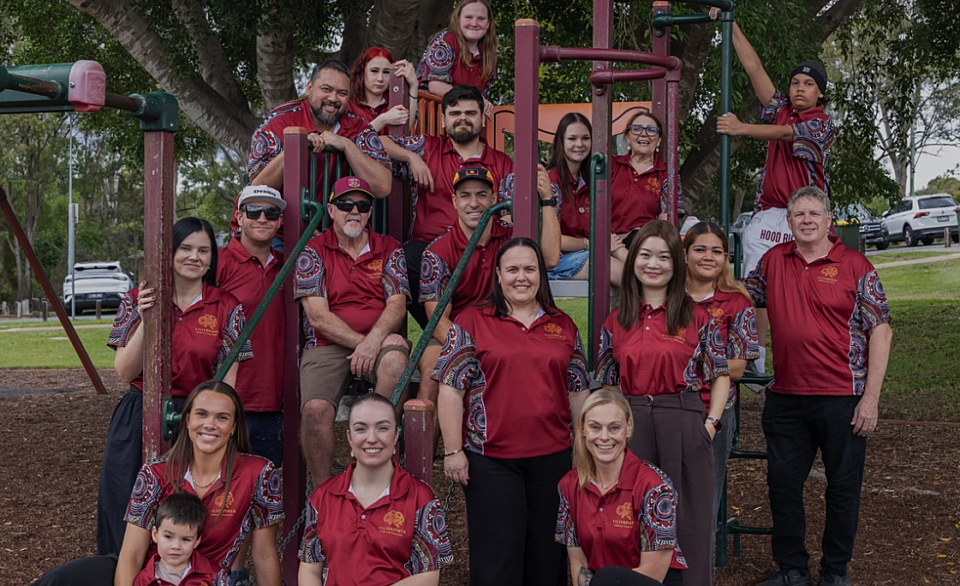
Fresh from welcoming delegates to last week’s Philanthropy Australia conference in Brisbane,…

Posted on 23 Sep 2026
A national strategy to develop Australia's regional cities is needed to break the housing…

Posted on 23 Sep 2026
Eight years after a report to Treasury first suggested the charities regulator should be more…

Posted on 17 Sep 2026
Australia’s biggest gathering of philanthropists, which drew more than 1200 delegates to Brisbane…
Posted on 16 Sep 2026
A new partnership between Paul Ramsay Foundation (PRF) and Atlassian Foundation aims to attract…