
Save Izzy: campaign calls on government to restore funding for vital services directory
Posted on 07 Oct 2026
A major public campaign launched this morning is calling on the federal government to restore…
Posted on 14 May 2026
By Nick Place, journalist, Community Directors
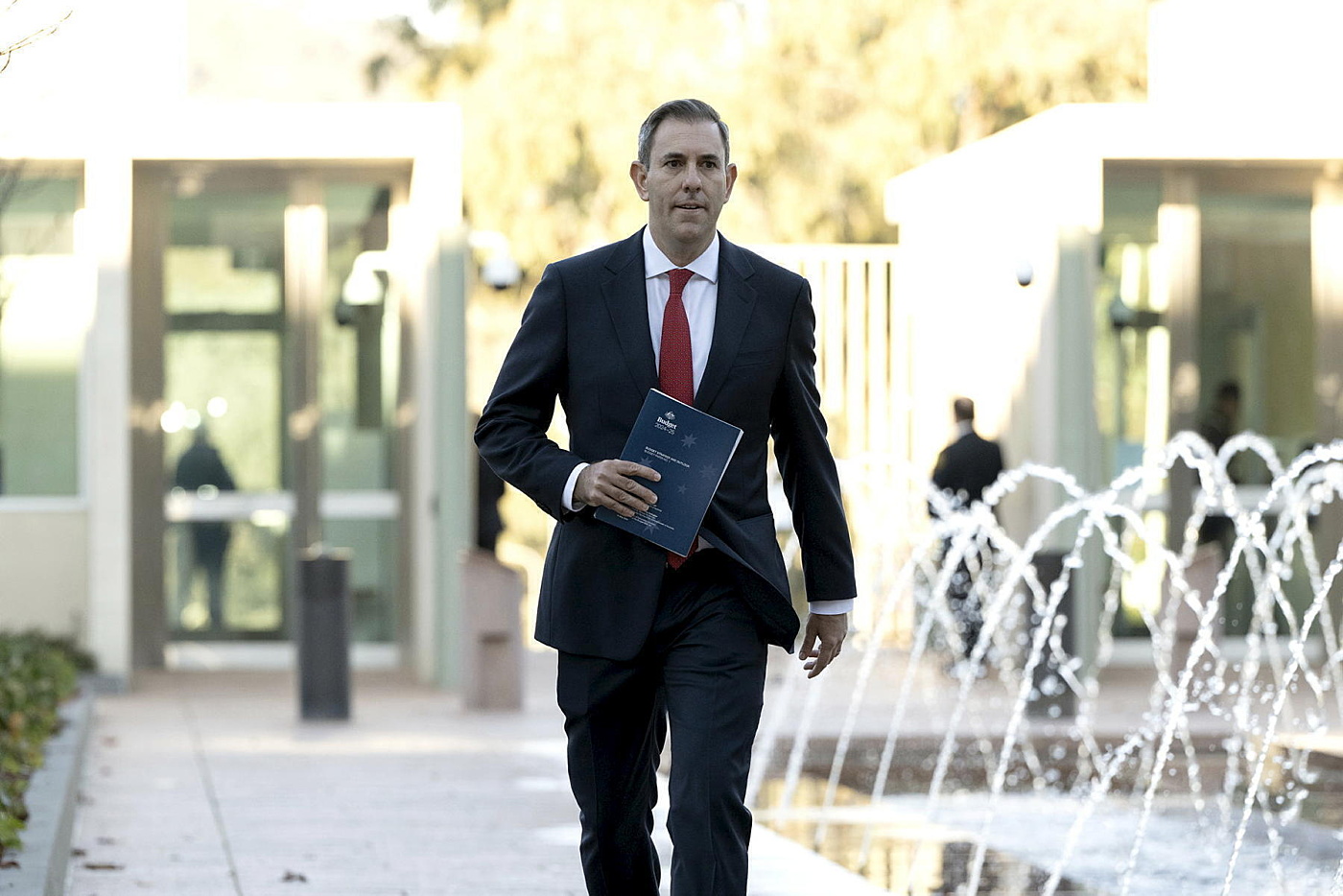
The federal Budget was a mix of attempted wealth redistribution through significant changes to the capital gains tax (CGT), negative gearing and private trust distributions, along with tax cuts for working Australians and slashing of National Disability Insurance Scheme (NDIS) coverage.
The for-purpose sector has greeted the Budget with cautious optimism, while flagging concerning gaps in funding for specific areas of not-for-profit need.
The CEO of the Australian Council of Social Service (ACOSS), Dr Cassandra Goldie, said the changes to negative gearing, the CGT and trusts were long overdue, and she also applauded measures to improve migrant skills recognition, to prioritise the safety of women and children in the child support system, and to fund help for 4000 young people to source community housing.
However, Goldie also said the government had got it wrong by prioritising another income tax cut for Australians in paid work, “right up the income scale”, while doing nothing to assist the “more than 4 million people on the lowest incomes in the country, including people receiving the $409 per week JobSeeker payment, pensions and single parents without paid work.
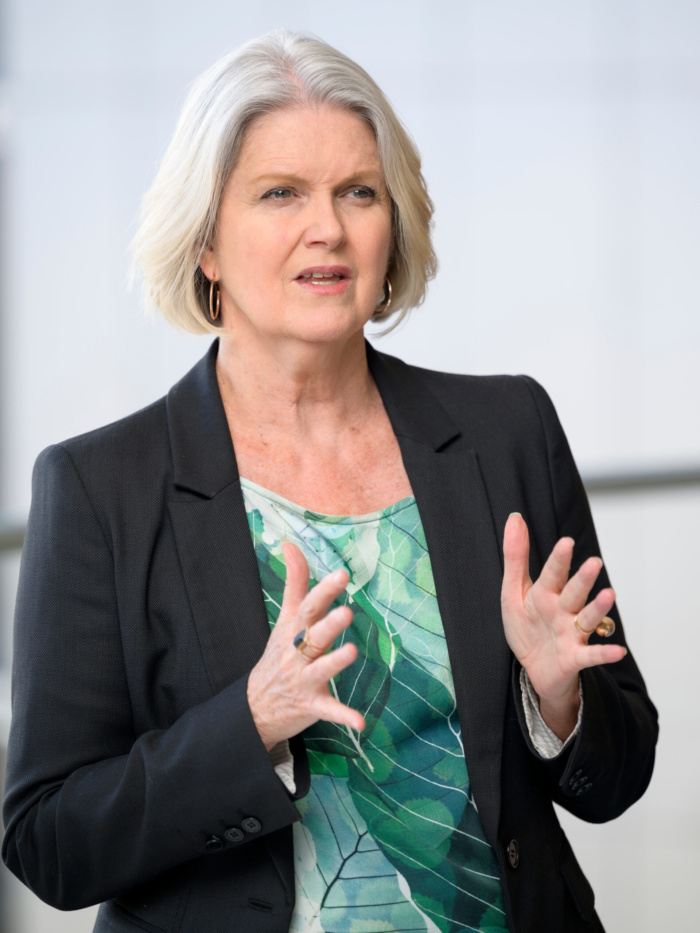
“Around 30 per cent of adults’ incomes are too low to pay income tax, and they are most in need with unemployment and cost of living rising,” she said.
“This comes in the same Budget as $37 billion in cuts to the NDIS – the biggest cut in the Budget. We are deeply concerned about the effect of these cuts on people with a disability, who must be at the centre of any reform to this vital scheme.”
Per Capita welcomed the Budget’s tax reform, arguing it had been asking for such measures for a long time. “We are pleased that the Government is addressing intergenerational inequity. For over 10 years, Per Capita has argued to reduce the capital gains tax discount and restrict negative gearing. The Government has listened and delivered,” Per Capita executive director Dr Wesa Chau said.
The Brotherhood of St Laurence listed elements of the budget that it believed specifically targeted the vulnerable Australians it engages with:
The Funding Centre has also put this list together, of key announcements for community groups and social sector services.
The Brotherhood of St Laurence was an enthusiastic observer of Dr Jim Chalmers’ budget, saying the significant reforms offered in tax, health, support for children, housing and employment promised to help create a fairer economy and increase trust in our democracy and institutions.
Settlement Services International (SSI) was also pleased with the multimillion-dollar plan to accelerate skills recognition for migrants, a sentiment echoed by ACOSS.
“This is a Budget that does not duck the difficult issues”, said Dr Travers McLeod, BSL’s executive director. “We know our tax, housing, and social security systems have grown inequity and undermined our social compact. The Budget elevates the national focus on fairness and should accelerate a shift towards a more equal society.”
“Our democracy is weakened by growing inequality and people feeling disconnected from communities and the economy. When the wealth gap widens without reforms to improve the lives of those who need it most, it hurts morale, it erodes trust, and it splinters society.
“Our tax and social security systems should grow human capability and national prosperity. More Australians will be trapped in poverty and left behind without extensive tax reform. It is reassuring to see the Australian government make this a priority at a time of global uncertainty.”
SSI CEO Violet Roumeliotis said the budget’s assistance for migrants showed that the for-purpose sector could sway political action when it worked together.
“Last night shows that the for-purpose sector can drive real economic change when we speak with one voice,” she told the Community Advocate. “Over 130 organisations came together to make the case that Australia cannot afford to keep wasting the skills of migrants already living here, and tonight we saw real movement.
“What we take from this announcement is that the government recognises it cannot be taken seriously on productivity without fixing skills recognition for migrants. There is still more to do to extend these reforms to health workers, teachers and the many professions yet to benefit, but tonight gives us every reason to keep pushing.
“What comes next will determine whether we realise the productivity gains that could deliver real benefits for all Australians."
Along with ACOSS’s criticism that the Budget did not address the struggle of the most low-income Australians, Mission Australia recognised the government’s provision of $60 million in funding for the youth housing supplement, announced pre-Budget, but said the Budget did not do anywhere near enough beyond that to make an impact on the wider cost-of-living pressure facing many Australians.
“Young people aged between 19 and 24 are the cohort most at risk of experiencing homelessness,” Sharon Callister, CEO of Mission Australia, said.
“We applaud the federal government for acknowledging this and allocating $60 million in funding for the youth housing supplement, which will help more young people at risk of or experiencing homelessness to access social housing. It’s a welcome step towards creating a fairer housing system in which young people have the safety and security they need to thrive.
“But the government could have made more significant investments in social and affordable housing, homelessness prevention and poverty alleviation measures, including raising income support payments to at least $600 a week, boosting Commonwealth Rent Assistance by 60 per cent and funding more dedicated supported housing, like Youth Foyers.
“Instead, we have efforts that aren’t enough to truly reduce inequality and create a fairer Australia.”
Callister said revenue from the changes to negative gearing and CGT should have been directed towards measures that help Australians on the lowest incomes.
“We urge the government to use the revenue to fund much-needed investment in social and affordable housing and homelessness services, rather than general tax relief. We call for a new $500 million Homelessness Prevention Fund that would see people helped earlier, before rental stress or other pressures turn into homelessness.”
Callister said too many Australians were on the brink. “People are hurting and looking for fixes to a system that is not working for them. They want housing they can afford and to be able to provide for their families without stressing over how every dollar is spent,” she said.
“The increasing cost of fuel, food and other essentials are an additional burden for the many people who were already struggling to pay their rent or mortgage. With families and individuals pushed to their limits, the number of people experiencing homelessness continues to grow.
“Mission Australia staff are seeing more people reaching out for support than ever before, and our homelessness services are hitting capacity. They’re helping working people who can’t find a home to rent, women and children needing support after escaping domestic and family violence, young people seeking safety and older people struggling to survive on the aged pension. These are the people our governments should be prioritising.”
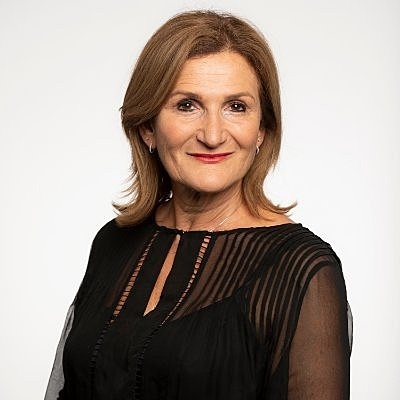
The Australia Institute applauded the budget’s scaling back of tax breaks for property investors, saying it was the “first policy change in a generation” that could actually make housing more affordable.
“This is probably the single best thing in the budget,” said Greg Jericho, chief economist at the Australia Institute. “It will have a lasting positive effect for so many people.”
Jericho also enthused about the minimum 30 per cent tax rate being applied to all discretionary trusts from July 2028, with the money going towards a $250 tax offset for workers, from that same date.
“This is a great reform. Discretionary trusts have been increasingly used as a way for the rich to hide assets and avoid paying their fair share of tax,” he said.
However, the Australia Institute was dismayed at the knife being taken to the NDIS, where 160,000 participants will be cut off, saving $36 billion over four years, and Jericho pointed out that the government was still making more money from taxing beer than from taxing multinational companies extracting Australia’s resources.
In a comment today for the Community Advocate, Community Council for Australia CEO David Crosbie said people with disability could suffer.
“Unless the States and Territories are suddenly willing to reinstate some of the disability expenditure they removed when the NDIS came into being, many people with a disability are facing a reduction in services through this budget.
“Half the budget’s $63.8 billion in savings is coming from projected NDIS expenditure reductions ($36.2 billion). Of course the NDIS could be more efficient and effective, but $36 billion is a lot of money.”
The acting CEO of People with Disability Australia, Megan Spindler-Smith, said the Budget had cut the supports people with disability rely on to live ordinary lives, without delivering the alternatives that people are being told will replace them.
People with disability understood the need for reform, but the government had made a political choice to cut supports before building the systems people would have to rely on instead, she said. “This budget is relying on 60 per cent of its savings coming from people with disability, when we are only 25 per cent of the population.”
The national disability rights and advocacy organisation said the budget had funding for Thriving Kids, as well as for information, linkages and capacity-building programs, but it lacked a coherent strategy and agreements with states and territories about what they would fund, where, and how much they could afford.
“You cannot responsibly remove support first and work out the alternative later. That is how people fall through gaps, end up and stay in crisis and lose trust in the system entirely,” Spindler-Smith said.
“The government has announced cuts first and promised supports later. That is not a safe or credible reform pathway for people with disability.”
Autism Association Australia CEO Nicole Rogerson said that while her organisation was extremely disappointed not to receive the $1.5 million per year it had requested in its pre-Budget submission, the cuts to the NDIS could be what saves the overall scheme by making it sustainable in the long term.
“Most Australians would agree that the scheme must be sustainable, well governed, and focused on delivering meaningful outcomes for people with disability, and we remain committed to working with government to support an orderly transition that is in the best interest of families who are coping with autism,” she said.
“However, governments must ensure that short-term savings do not create far greater long-term costs for individuals, families, and the broader community.
“The government will need to provide detail soon before people will stop looking at the changes as a sustainability measure, and start looking at them as a savings one.
“The evidence is clear that there is a financial as well as a moral reason to ensure that gaps are filled as the system changes.
“Early intervention is not simply an expense, but a long-term investment that can significantly reduce support needed later in life, improving education, employment and independence outcomes,” she said.
“Around 30 per cent of adults’ incomes are too low to pay income tax, and they are most in need with unemployment and cost of living rising.”
Despite wide support for a 25 per cent export tax on gas exporters, the government did not introduce the measure, continuing to “allow the gas industry’s free ride,” said the Australia Institute’s senior economist, Matt Grudnoff.
“This would have raised more than $17 billion a year and made the savage cuts to disability support unnecessary," he said.
The Climate Council was equally incensed that the government had bowed to international exporters.
“This Budget maintains the $19 billion gravy train for big fossil fuel corporations. That is $19 billion in the wrong direction, keeping us tied to foreign oil, rather than supporting the expansion of renewable energy solutions that Australians want to deliver a safer, cleaner, more secure energy future,” said Climate Council CEO Amanda McKenzie.
“People all over the country are clamouring for a broadscale shift to cleaner, more secure solutions like rooftop solar and electric vehicles, which give us control over our own energy. Unfortunately, this Budget leaves too many Australians wanting.
“If the government is serious about intergenerational fairness, the Budget must address not just housing but climate harm landing on young people. We can’t secure young Australians' futures while expanding coal, oil and gas.”
The Australian Conservation Foundation (ACF) responded to the Budget with the observation that “the Budget contains at least seven times more spending on initiatives that damage nature and the climate than it allocates to climate and nature protection.”
“This is a budget of thinly veiled fossil fuel subsidies that redirects public money to coal, oil and gas giants,” said ACF’s national climate policy adviser, Annika Reynolds.
“Australians are left exposed to highly inflationary fossil fuels in our homes, cars and lives.
“While we welcome measures to ensure the longevity of the electric vehicle FBT exemption and the successful cheaper home batteries program, these are modest measures,” Reynolds said.
“In this moment, Australians are calling for government to tax gas exports fairly and use that money for cost-of-living relief and the restoration of nature.”

The Royal Australian College of GPs welcomed Budget measures such as training places for 2000 more future GPs in 2027, as well as re-establishing health checks for three-year-olds and expanding the Comprehensive Health Assessment Program as part of the Thriving Kids initiative.
“We were also pleased to see the announcement of a digital baby book for all Australians, an extension of funding for quality improvement in general practice through the Practice Incentives Program Quality Improvement Incentive, RSV [vaccine] funding for all Australians over 75 and Aboriginal and Strait Islander people over 60 as part of the National Immunisation Program, and $144.1 million over the next two years to meet urgent infrastructure needs of the Aboriginal Community Controlled Health Services sector to deliver better health services to First Nations people,” said RACGP president Dr Michael Wright.
However, the college did not get its pre-Budget submission wish of more government-funded long consultations, which offer detailed and more nuanced care for vulnerable Australians. As a result, the RACGP said it was urging the government to act to prevent the health impacts of racism in the healthcare system.
“Culturally and racially marginalised groups have been suffering the health impacts of racism for too long, impacts which are so profound they cost Australia almost $38 billion a year,” Dr Wright said.
“We cannot wait any longer [for] culturally safe and equitable healthcare for everyone in Australia.
“Health is invaluable and we want to see funding continue to reflect that so every Australian can afford to regularly spend time with a GP who knows them and their history and can tailor care to their individual needs.”
The college wasn’t thrilled with the government’s announcement of $1.8 billion in permanent funding for Medicare Urgent Care Clinics for the next four years, and $0.5 billion every year after, but Treasurer Jim Chalmers said that by July, four in five Australians will live within a 20-minute drive of one of the 137 clinics around the country. “Medicare Urgent Care Clinics reduce out-of-pocket costs, because more bulk billing means less pressure on household budgets and emergency departments,” he said.
Social Enterprise Australia said the budget was an endorsement of the Outcomes Fund, which is intended to pay service providers and social enterprises for outcomes, either directly or through payments to state and territory governments.
“The Australian government previously committed $100 million over 10 years to back social impact investing, funding approaches that tackle entrenched disadvantage,” SEA said on LinkedIn.
“So far, $18.8 million will flow to projects in New South Wales, Victoria and South Australia.
“The Outcomes Fund focuses on families and children, people facing or experiencing homelessness, and people facing barriers to employment. Sound familiar? It should. These are the same communities social enterprises have been showing up for, long before the policy caught up.”
Community Council for Australia CEO David Crosbie said the Budget was still wanting.
“I wonder if we’ll ever hear a federal treasurer delivering the budget say, “The government is investing more in the sector that not only supports Australia’s economic growth and productivity, but also builds real resilience, strength and wellbeing in communities across Australia and the charities and NFP sector.
“This Budget again reminds me that if we want to achieve the kind of Australia we want to live in, we may need to become better advocates and do things differently.”
Posted on 07 Oct 2026
A major public campaign launched this morning is calling on the federal government to restore…
Posted on 07 Oct 2026
The Australian Literacy & Numeracy Foundation (ALNF) has announced a partnership with mining…
Posted on 07 Oct 2026
A conference in Darwin will this morning hear detailed, strategic plans for how Australia could…
Posted on 30 Sep 2026
Not-for-profit leaders have been warned to be wary of approaches from potential “funding partners”…
Posted on 30 Sep 2026
More than 200 fully funded Centre for Social Impact (CSI) scholarships will help equip for-purpose…

Posted on 30 Sep 2026
Personal stories are among the most powerful tools a charity can have to raise funds and awareness,…
Posted on 23 Sep 2026
A just-released major global survey of charities has found that demand for charity assistance has…
Posted on 23 Sep 2026
Fresh from welcoming delegates to last week’s Philanthropy Australia conference in Brisbane,…

Posted on 23 Sep 2026
A national strategy to develop Australia's regional cities is needed to break the housing…

Posted on 23 Sep 2026
Eight years after a report to Treasury first suggested the charities regulator should be more…
Posted on 17 Sep 2026
Australia’s biggest gathering of philanthropists, which drew more than 1200 delegates to Brisbane…
Posted on 16 Sep 2026
A new partnership between Paul Ramsay Foundation (PRF) and Atlassian Foundation aims to attract…