
Save Izzy: campaign calls on government to restore funding for vital services directory
Posted on 07 Oct 2026
A major public campaign launched this morning is calling on the federal government to restore…
Posted on 06 May 2026
By Nick Place, journalist, Community Directors
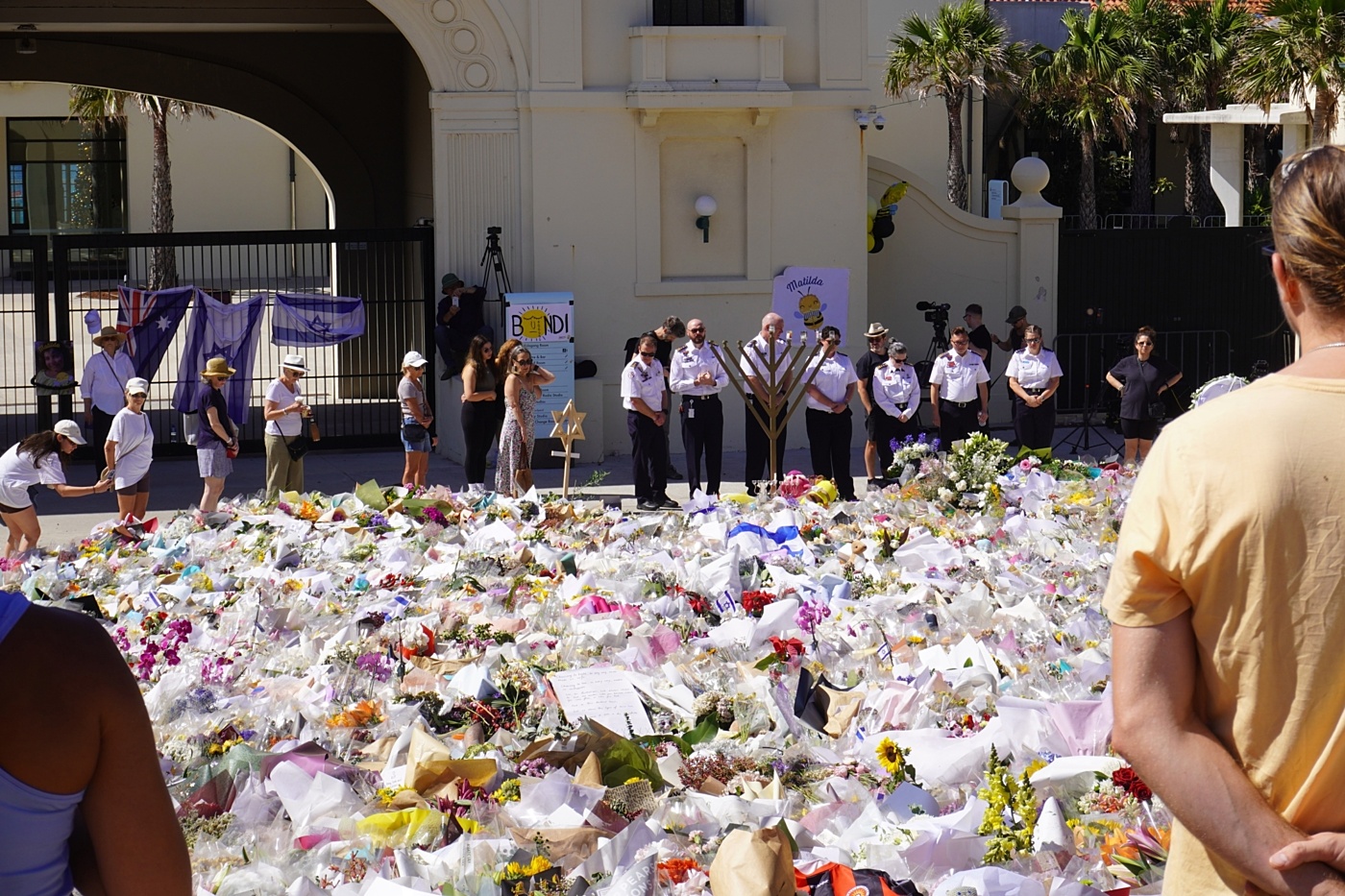
Institute of Community Directors Australia executive director Adele Stowe-Lindner has applauded the Royal Commission on Antisemitism and Social Cohesion for recognising that good governance could play a role in solutions to the problems being examined by the Royal Commission.
The Royal Commission’s interim report was released on Thursday so that urgent recommendations could be implemented while hearings are ongoing. The Royal Commission was established in the wake of the Bondi massacre that targeted a Jewish event and killed 15 people in December last year. Its final report will be presented to the Governor-General at the end of the year.
Of interest to the community sector, the Royal Commission has responded to concerns for the physical safety and life experience of thousands of staff, volunteers, board members, not-for-profits, social enterprises and charities as well as school children and university students.

Stowe-Lindner said three of the interim report’s recommendations had the potential to affect community institutions. “Those who have attended governance training with the Institute of Community Directors Australia will not be surprised that these were identified by the Royal Commission,” she said.
Recommendation 2 relates to how much human resources time should be dedicated to each component of an organisation’s remit, and it specifies that the role of Commonwealth Counter Terrorism Coordinator needs to become a full-time role.
The thinking behind this could be applied to the third sector, Stowe-Lindner said. “The scope of a role must always be matched by the time allocated to fill it, and counter-terrorism leadership is no exception to a principle that applies equally to every board chair, CEO and committee member in the community sector,” she said.
“Those who have attended governance training with the Institute of Community Directors Australia will not be surprised that these were identified by the Royal Commission.”
Recommendation 3 focuses on role clarity, saying: “If the Australia-New Zealand Counter-Terrorism Committee (ANZCTC) is to be used again as a crisis committee, the ANZCTC should be included in the Australian Government Crisis Management Framework so its role is clear.”
Stowe-Lindner noted that “role clarity in community organisations and in the government is less about bureaucratic tidiness and more about the foundation on which effective crisis response is built.”
Recommendation 4 is about updating handbooks and policies, stating, “The Counter-Terrorism Handbook should be updated promptly and then at least every three years in coordination with updates to the Counter-Terrorism Plan and the ANZCTC triennial review.”
This was essential for all policies in the community sector, Stowe-Lindner said. “A policy that is not regularly reviewed is a policy that has quietly stopped reflecting reality. Governance documents are only as useful as they are current.”
She said that preventing problems was preferable to reacting to them, and that it was heartening that the interim recommendations were focused on how the government can prevent a repeat of the tragedy.
Recommendations about improved clarity, documentation, review and reporting, as well as those focused on reforming gun laws, were critical to protect Australians, she said, although she observed that the majority of antisemitic attacks over the past three years have been carried out without the use of guns – in both Australia and the UK, which has stricter gun laws than here.
The full report at the end of 2026 is expected to make recommendations for improving social cohesion in Australia to prevent a social climate that could continue to sow the seeds of attacks.
Posted on 07 Oct 2026
A major public campaign launched this morning is calling on the federal government to restore…

Posted on 07 Oct 2026
The Australian Literacy & Numeracy Foundation (ALNF) has announced a partnership with mining…
Posted on 07 Oct 2026
A conference in Darwin will this morning hear detailed, strategic plans for how Australia could…

Posted on 30 Sep 2026
Not-for-profit leaders have been warned to be wary of approaches from potential “funding partners”…
Posted on 30 Sep 2026
More than 200 fully funded Centre for Social Impact (CSI) scholarships will help equip for-purpose…

Posted on 30 Sep 2026
Personal stories are among the most powerful tools a charity can have to raise funds and awareness,…

Posted on 23 Sep 2026
A just-released major global survey of charities has found that demand for charity assistance has…
Posted on 23 Sep 2026
Fresh from welcoming delegates to last week’s Philanthropy Australia conference in Brisbane,…

Posted on 23 Sep 2026
A national strategy to develop Australia's regional cities is needed to break the housing…

Posted on 23 Sep 2026
Eight years after a report to Treasury first suggested the charities regulator should be more…

Posted on 17 Sep 2026
Australia’s biggest gathering of philanthropists, which drew more than 1200 delegates to Brisbane…

Posted on 16 Sep 2026
A new partnership between Paul Ramsay Foundation (PRF) and Atlassian Foundation aims to attract…