
Save Izzy: campaign calls on government to restore funding for vital services directory
Posted on 07 Oct 2026
A major public campaign launched this morning is calling on the federal government to restore…
Posted on 04 Feb 2026
By Nick Place, journalist, Community Directors
In this time of escalating climate impact, the head of Australian Ethical Foundation, Kate Saunders, is bemused by the statistic that less than four per cent of Australian philanthropic funding is dedicated to the environment, with an even smaller percentage targeting the protection or nurturing of nature.
Australian Ethical has decided to step into the void, dedicating 10 per cent of profits, after bonuses and tax, to its foundation to fund climate and nature as part of a new, long-term strategy.
“Without nature, we don't have a planet, and we don't have people and profit too, right?” Saunders said. “So, nature is not a nice to have. It’s actually an essential, it’s key to human survival.
“The degradation of nature threatens our food, water, air, health, and life as we know it. If left unchecked, we will see an acceleration of climate change and biodiversity loss, and an increase in the frequency and severity of extreme weather events. These impacts will be catastrophic for our communities, ecosystems, and economy, and will disproportionately affect vulnerable populations, especially First Nations communities.

“So, for us, it’s quite hard to believe that we don’t have more than four per cent of philanthropy being devoted to the environment.”
Saunders pointed to World Economic Forum data showing that more than half of the world’s total GDP – in excess of $US44 trillion in economic value generation – was reliant on nature, including but by no means limited to the construction, agriculture, food and beverage industries.
Looking to lead by example, Australian Ethical Foundation has announced $1.55 million in grants specifically targeting environmental and nature initiatives, with another $1 million allocated for future grants by the end of the 2026 financial year.
The money has been spread across more than a dozen recipients, including Australian Democracy Network, Environmental Justice Australia, Accounting for Nature, Indigigrow, ACOSS, Environs Kimberley, Original Power, Environment Centre NT, Groundswell Major Giving Circle, WWF Australia, Martuwarra Fitzroy River Council and Places You Love Alliance.
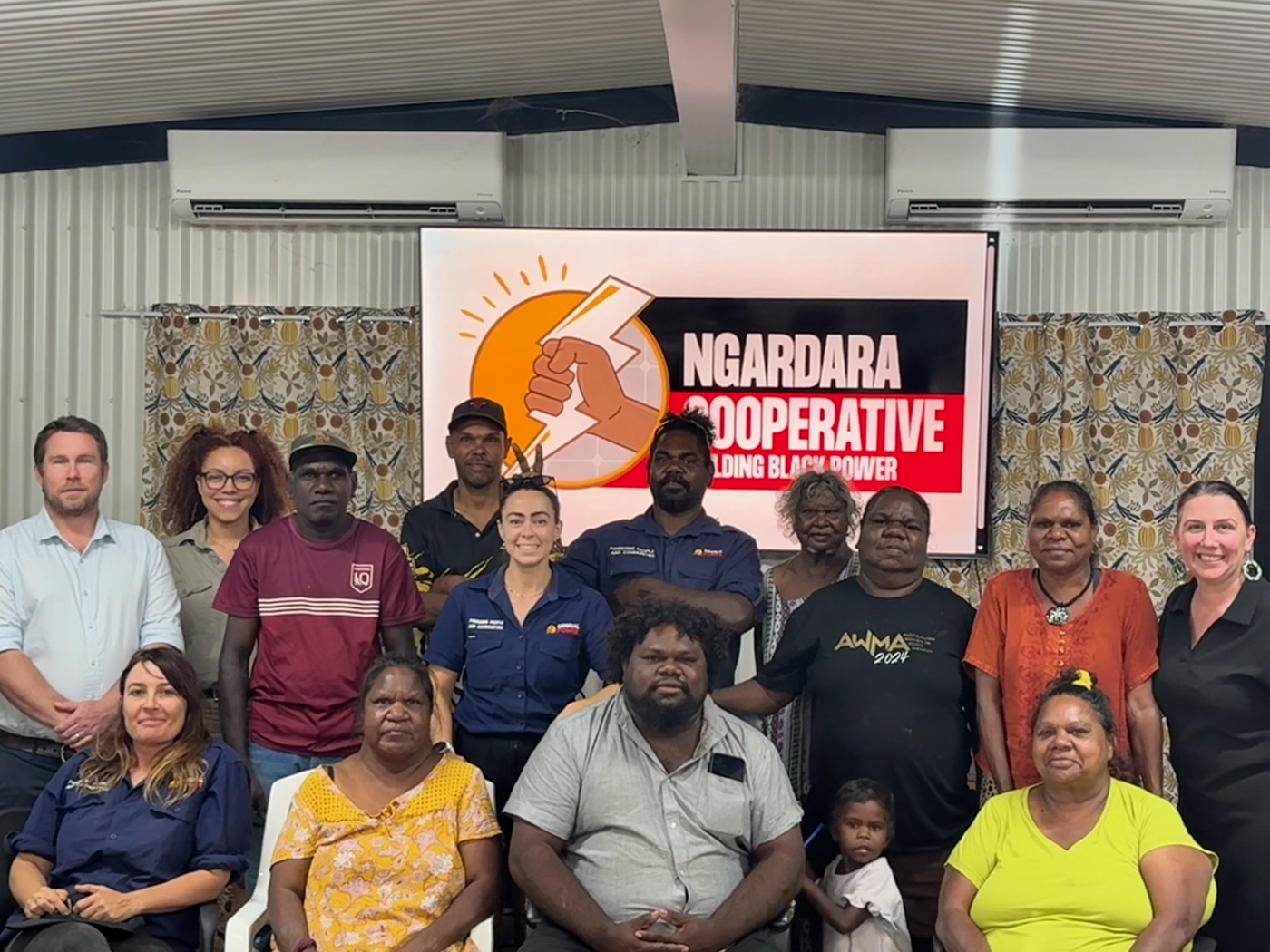
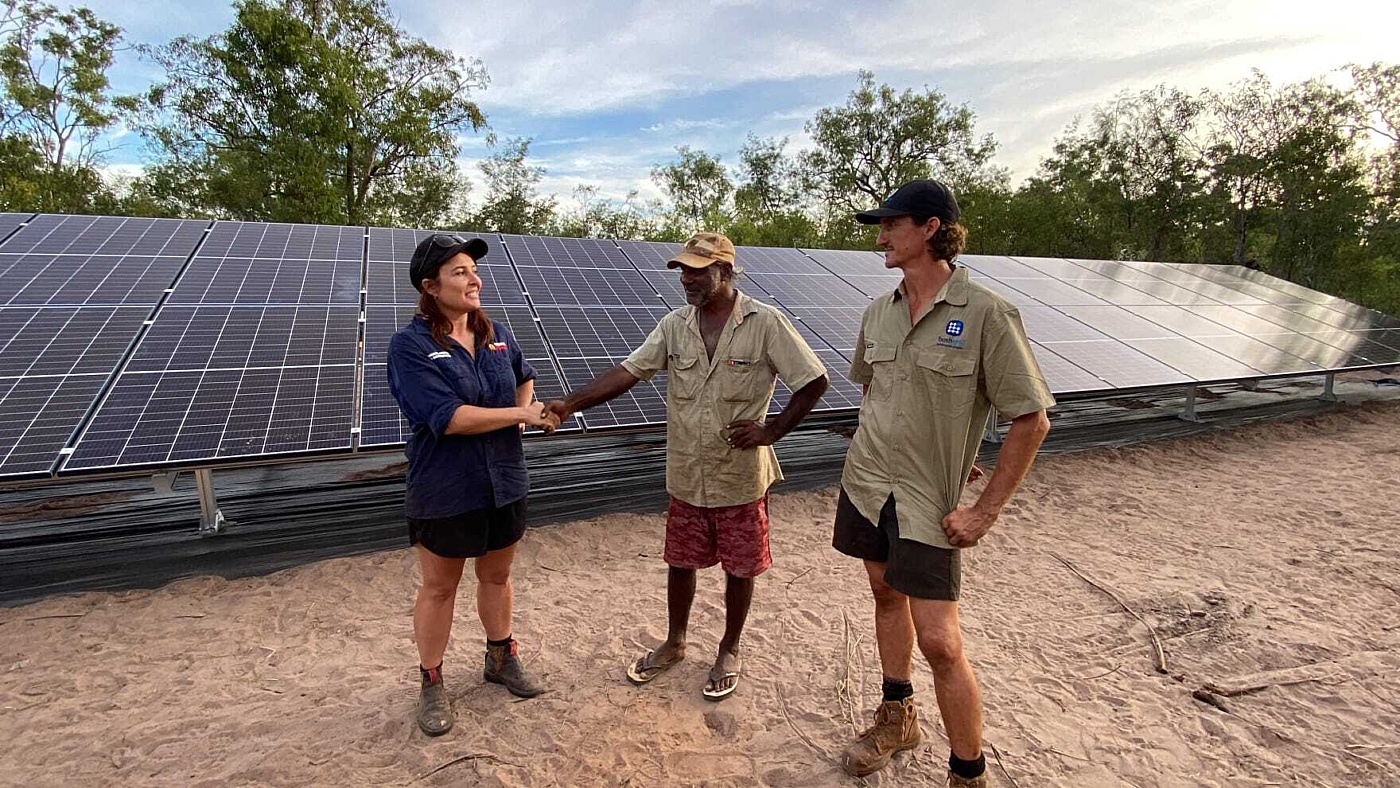
Saunders said the foundation had found longer-term, outsized impact could be seeded by strategic, targeted small grants, such as in the remote Northern Territory town of Borroloola, where the Ngardara Co-Operative is developing solar and battery systems that will change life in the region, from creating jobs and community to delivering clean, low-cost power. Original Power, an Indigenous-led community technical partner, is being supported by the Australian Ethical Foundation, along with two years’ worth of Commonwealth funding for a feasibility project.
“For us, it’s quite hard to believe that we don’t have more than four per cent of philanthropy being devoted to the environment.”
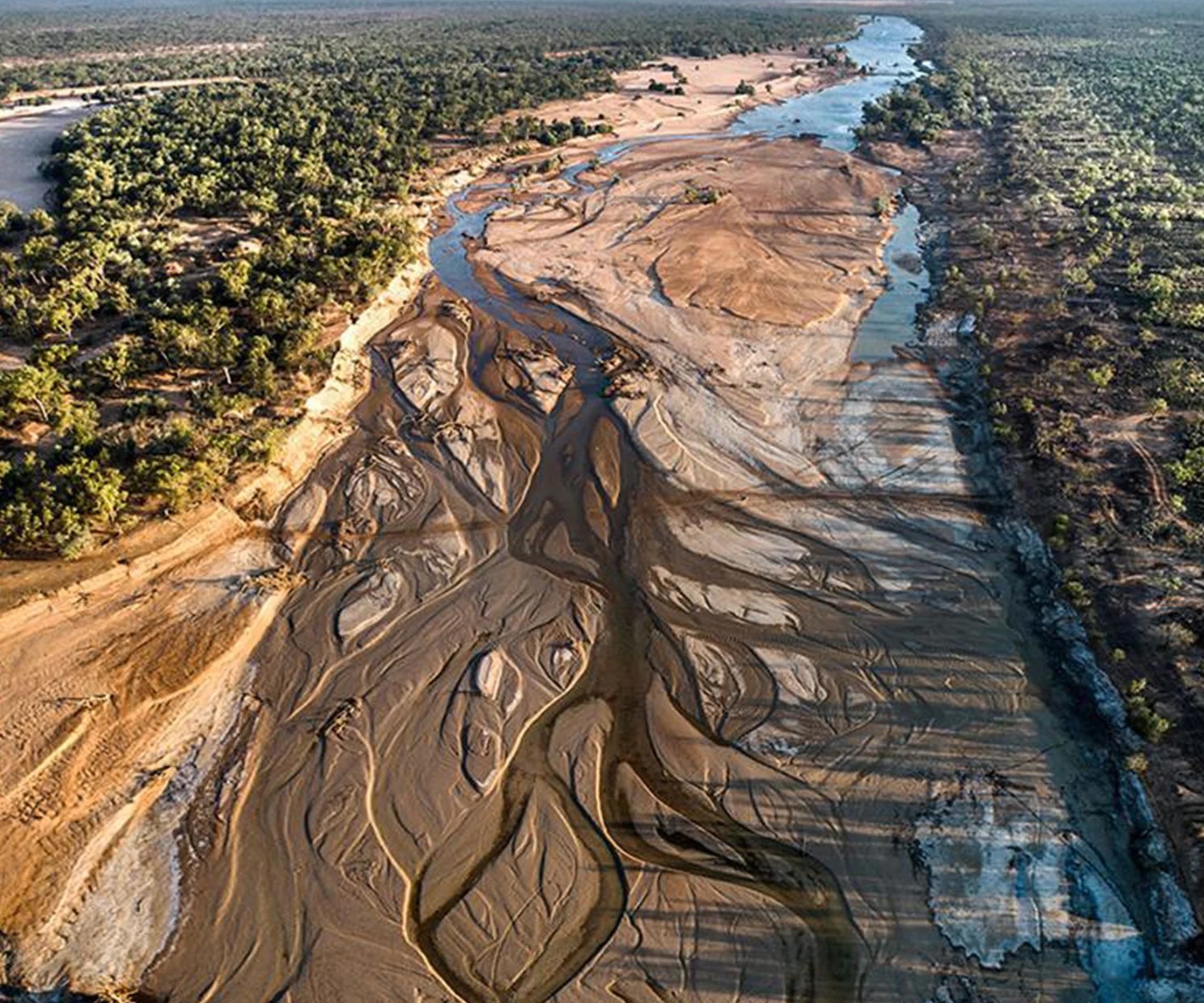
Likewise, in the western Kimberley, where the foundation is involved in a pilot to create landscape-scale restoration, led by traditional owners, with the foundation collaborating with others to attract more funding by backing the work.
“In general, we are trying to do larger grants to less organisations, but there are really key strategic areas that we think are important and therefore we’re spreading our capital across those organisations,” Saunders said. “What we try to do with those smaller grants is to be really tactical and catalytic.”
A key part of the foundation’s plan is to think beyond short-term outcomes. Repairing nature is not a quick-fix project.
“I think that we need more government support towards the environment and climate, and I think it’s an interesting dynamic, philanthropy in nature and the environment, where it takes a long time to see the impact,” Saunders said.
“It’s much harder to measure the outputs and the outcomes that you’re delivering by doing nature and environmental philanthropy. At Australian Ethical Foundation, we’re willing to commit for the long term, we’re willing to do three-to-five year strategic grants and have long partnerships with organisations doing good so that we can deliver those long-term outcomes. But that’s not as easy for some of the more traditional philanthropic organisations and foundations that tend to need to deliver short-term, tangible, measurable outputs and outcomes.
“I'm pretty optimistic that philanthropy is shifting and that we’re getting a lot more momentum towards environmental philanthropy, because I think, arguably, we’re all seeing it right now – the impact isn’t in the future, we’re seeing it now.”
Saunders added that the foundation had recently decided to provide a grant to support the work of the Nature Media Centre, established by the Biodiversity Council and the Australian Land and Conservation Alliance, to create media aimed at raising mainstream public awareness of the need to prioritise the protection and repair of nature and the environment.
Saunders believed that the social ramifications of climate impact was moving traditional philanthropists towards looking for solutions, even more than the physical reality of nature struggling.
“I think certainly we’re seeing the intersection between the social impact and the social outcomes that are of the consequences from environmental degradation,” she said. “Even in the philanthropic world, I’m seeing quite a lot of the traditionally social philanthropists actually starting to look much more at the environmental side because there are implications for health, huge implications for education. If you look at First Nations people and vulnerable populations, they’re disproportionately affected by the
decline in the degradation of our environment and the impacts of climate change.
So low-income people, First Nations, remote and regional communities, people living in rural areas are all massively affected. They have less access to health institutions, emergency services, etc, and so we are optimistic that philanthropy towards the environment will continue to increase and, in fact, is increasing.”
She said Australian Ethical Foundation’s new strategy to focus on nature and environment was open-ended.
“We are making a minimum of three-year commitment to quite a lot of our partners, and arguably we will continue to roll over those partnerships because we understand that you’ve got to be in it for the long haul to really generate the impact.”
Posted on 07 Oct 2026
A major public campaign launched this morning is calling on the federal government to restore…

Posted on 07 Oct 2026
The Australian Literacy & Numeracy Foundation (ALNF) has announced a partnership with mining…

Posted on 07 Oct 2026
A conference in Darwin will this morning hear detailed, strategic plans for how Australia could…

Posted on 30 Sep 2026
Not-for-profit leaders have been warned to be wary of approaches from potential “funding partners”…
Posted on 30 Sep 2026
More than 200 fully funded Centre for Social Impact (CSI) scholarships will help equip for-purpose…

Posted on 30 Sep 2026
Personal stories are among the most powerful tools a charity can have to raise funds and awareness,…
Posted on 23 Sep 2026
A just-released major global survey of charities has found that demand for charity assistance has…

Posted on 23 Sep 2026
Fresh from welcoming delegates to last week’s Philanthropy Australia conference in Brisbane,…

Posted on 23 Sep 2026
A national strategy to develop Australia's regional cities is needed to break the housing…

Posted on 23 Sep 2026
Eight years after a report to Treasury first suggested the charities regulator should be more…

Posted on 17 Sep 2026
Australia’s biggest gathering of philanthropists, which drew more than 1200 delegates to Brisbane…
Posted on 16 Sep 2026
A new partnership between Paul Ramsay Foundation (PRF) and Atlassian Foundation aims to attract…