Billion-dollar community funding pool is making a difference
Posted on 21 Oct 2026
Backed by tangible successes and government support, community foundations are gaining momentum as…
Posted on 07 Oct 2025
By Matthew Schulz, journalist, Community Directors
Community groups are far more powerful than they realise, one of Australia’s leading pollsters declared at a sector summit in Melbourne this week.
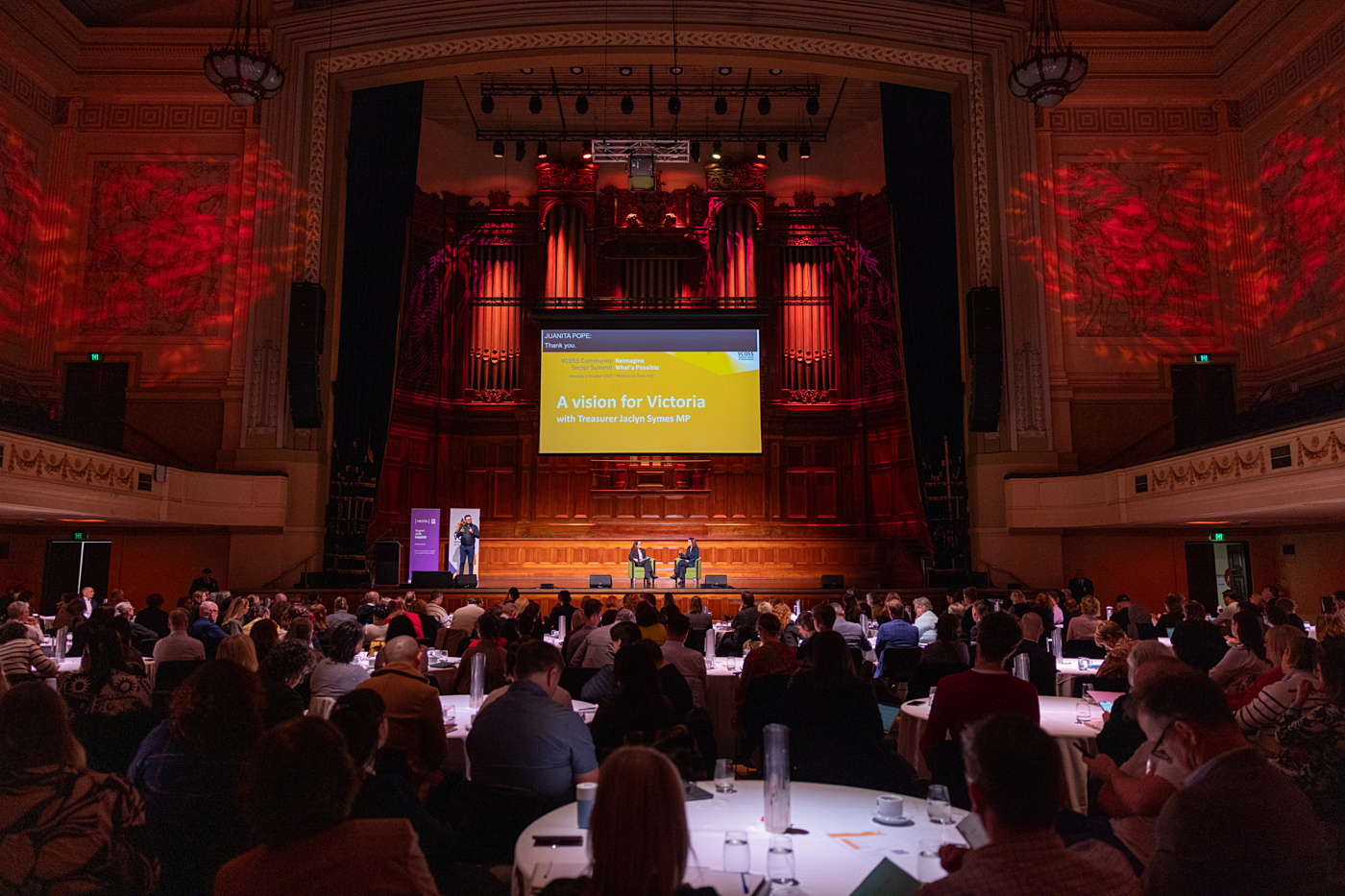
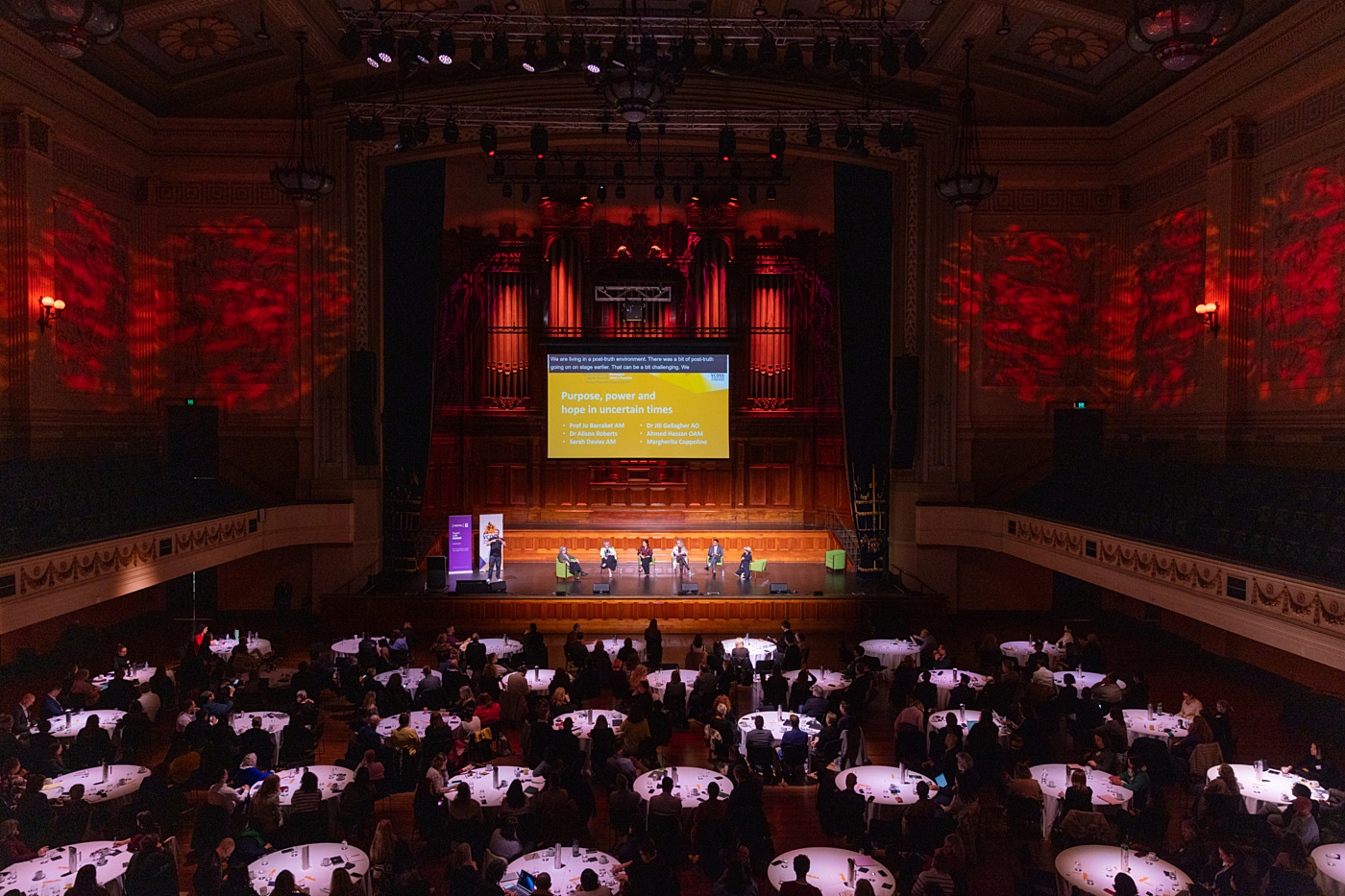
Three hundred and fifty delegates filled the Melbourne Town Hall for the day-long VCOSS Community Sector Summit, the first in-person event of its kind by the Victorian Council of Social Service since before the pandemic.
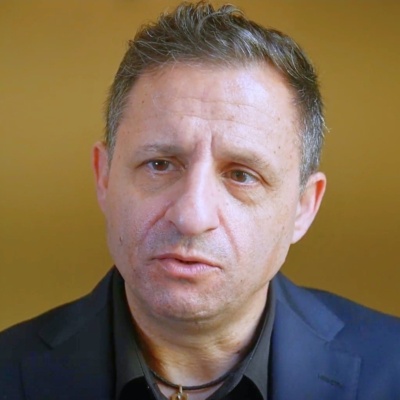
Kos Samaras from the polling and demographic research agency Redbridge told the Community Advocate shortly before taking the stage that in a world of divisions, community organisations are trusted, well connected, and the best way for political leaders to reach voters.
“If we look around the Western world in particular, the one constant theme that we're seeing is groups of citizens being economically stressed, struggling to survive. That is no different in this country, and what that is doing is fuelling political volatility.
“Our message to governments is that if you really want to send a very strong signal that you are in the business of not just national reform, fixing the big problems, but also taking care of issues on a weekly and daily basis, you need to be aligning with organisations in this sector. And that's fundamentally, I think, the change that has occurred probably since the pandemic.”
“If I was in politics right now, and I was thinking about how I get re-elected, I'll be doing everything in my power to align my brand and my values with the not-for-profit sector.”
“There's a perception that governments are aligned with the corporate sector, which many Australians – particularly those who are fuelling the volatile political environment at the moment – feel, that the major political system is not in the business of taking care of their needs, but in the business of taking care of the needs of those with power.”
He said populist right wing movements – in the UK and elsewhere – were largely concentrated in areas he described as “economically bereft”.
“If I was in the business of trying to realign myself with a part of society that feels left behind, I would be pivoting towards organisations that have a relationship or an existing relationship with any of these communities.”
The former Labor strategist said organisations were in a strong position to seek extra funding to build and maintain the fragile community connections so vital for a functioning democracy.
“We asked Australians as to who they trust … and right at the top are not-for-profits.”
He said at the bottom were corporates, multinationals and governments.
“If I was in politics right now, and I was thinking about how I get re-elected, I'll be doing everything in my power to align my brand and my values with the not-for-profit sector.”
The Community Summit attracted the state’s top politicians and drew a roll call of national sector leaders, several of them fronting a panel discussion on the big issues facing the NFP sector.
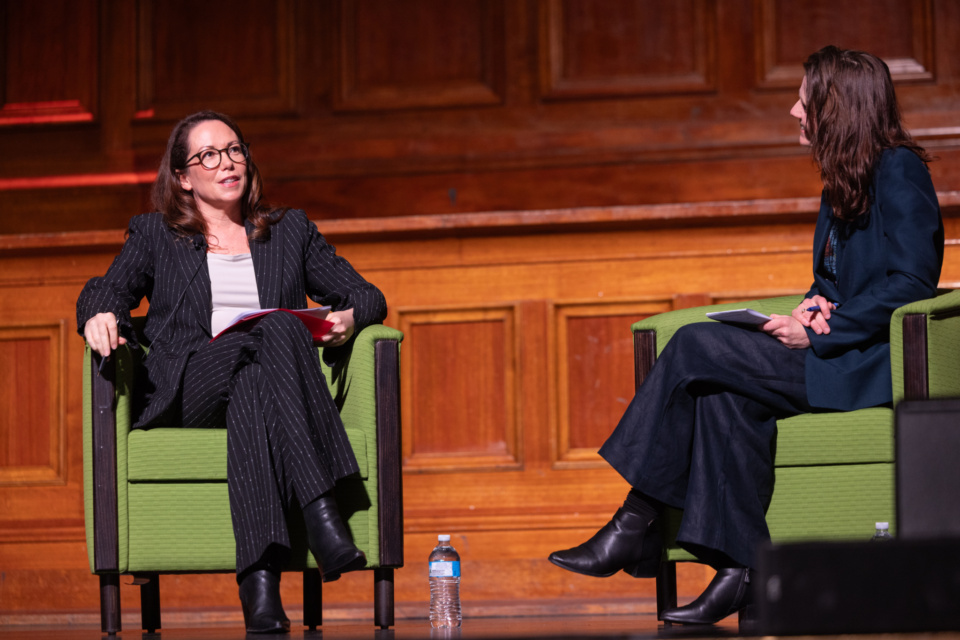
The presence of Victorian Treasurer Jaclyn Symes and Opposition Leader Brad Battin as headline speakers was indicative of the sector’s pulling power, and its political edge.
Both were quizzed at length by VCOSS CEO Juanita Pope about policies affecting the community sector, the state’s difficult financial position, crime prevention, the First Nations Treaty currently before Parliament, their personal motivations, and how they would support and protect the sector.
The Community Advocate asked the treasurer, “Given Victoria's tight budget, how should not-for-profits and charities work to ensure that they don't lose funding? How will you protect the sector's work?”
In response, Syme – a former disability support worker – said, “I would convey again the value of the sector. It's vital to the way Victoria operates … It is making sure that I can be your champion, because I know how good you are, but I need you to have the evidence that supports your programs, to make sure that we are keeping you at the top of the pile. My commitment is that this a sector that I value, and I want to see you grow.”
The Victorian Government’s support for the sector includes a focus on an “early intervention investment framework” (EIIF), which has seen billions allocated to early intervention programs involving homelessness, children and youth at risk, and people with mental illness and chronic health conditions. It’s hoped the approach will reduce the need for acute care, allowing for further investment in EIIF projects.
Syme said she was a long-time advocate of the idea that “early investment is great investment, it’ll save you money in the long term, whether it’s health, whether it’s crime”.
“This room knows early investment is where it’s at, that’s where you get good results. What I have to do as treasurer is make sure that we can stack that up.”
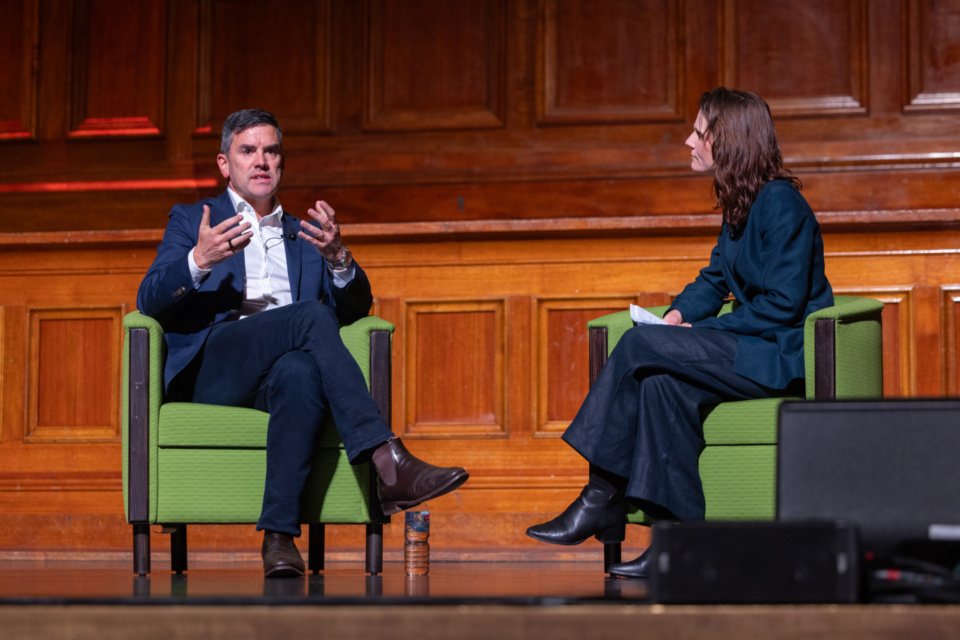
In Battin’s conversation with Pope on the stage, he spruiked the Liberal Party’s push for “less tax, less crime, less waste”, arguing that by redirecting the billions “wasted” on infrastructure projects such as the Suburban Rail Loop or $350 million earmarked for the Victorian Treaty rollout, and by creating a stronger economy, more funds would be available to the sector.
Citing housing as an example, he said, “there’s been a lot of missed opportunities when it comes to your sector … I can only imagine what you could do with $50 billion in any sector.”
Confirming the Liberal Party’s opposition to a Victorian Treaty, he said that $350 million could instead be directed to services, such as dental services for First Nations groups in Mildura, or to Indigenous justice initiatives.
The political dimension of the event was also evident in negative media coverage of Premier Jacinta Allan’s decision to withdraw at the last minute – citing a meeting with Prime Minister Anthony Albanese – only to emerge that morning at an event to celebrate a key milestone for the multi-billion-dollar Metro Tunnel infrastructure project.
“Today is about showing up as a sector that has something to say, a sector that is willing to activate our collective power and influence change for the benefit of the communities and the causes that we serve.”
But the political conversations were just a starter ahead of the main event, which was a chance for community leaders to converge to consider the sector’s challenges and create momentum for coordinated action ahead of next year’s Victorian election.
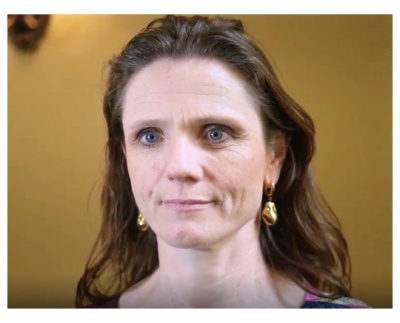
VCOSS chief Pope said the sector in Victoria, as in other parts of the country, faced “strong headwinds” from issues such as rising economic inequality, the cost of living, the housing crisis, intergenerational inequity, rural and regional service reach and disaster resilience, Aboriginal self-determination and Treaty, gender-based harms and violence, climate change, artificial intelligence, social cohesion, NDIS reforms, workforce demands, and simply the rising demands on services.
As one regional Victorian CEO told Pope on her travels: “You can count the beans you give out, but investing in changing lives is hard to count.”
Pope described the summit as a “safe space for big conversations … to join the dots, to strategise, and to get stuff done”.
“Today is about showing up as a sector that has something to say, a sector that is willing to activate our collective power and influence change for the benefit of the communities and the causes that we serve.”
To that end, the event was a who’s who of national sector leaders, with those in the audience including the newly appointed national children’s commissioner, Deb Tsorbaris. Out front, Professor Jo Barraket, the lead author of the NFP Sector Development Blueprint, moderated a panel discussion involving:
The views of the panellists held common ground and also highlighted different priorities, as Barraket challenged the panellists to foresee a positive future for the community sector, 10 years from now.
Hassan called for more engagement with young people, and a new one-stop-shop approach to services, and he stressed housing and food insecurity as key issues.
Coppolino’s focus was on intersectionality, advocating for safe spaces, inclusive co-design, and recognition of collective care.
Gallagher said family-centred systems were needed to enable families to navigate existing fragmented service silos, and she called for a Commissioner for Families.
Davies reflected on the sector’s changing shape over the past decade, observing that larger NFPs and charities enjoyed a concentration of higher revenues. She said she believed it could be time to rethink the “social compact” to create a system in which the economy served the community, rather than the reverse. She said climate action, economic reform and youth agency were all crucial for intergenerational fairness.
Roberts talked about opportunities to reform the care economy, pointing to the potential of AI, cross-silo investment, and culturally responsive place-based service models to improve efficiency and outcomes.
Following the presentations, the summit allocated nearly three hours for delegates to consider practical actions in smaller groups. Responding to several “provocations”, delegates were invited to join one of four groups, addressing equity, social cohesion, basic support or innovation, before nutting out advocacy, strategies and tactics aimed at strengthening the sector’s hand.
Posted on 21 Oct 2026
Backed by tangible successes and government support, community foundations are gaining momentum as…
Posted on 21 Oct 2026
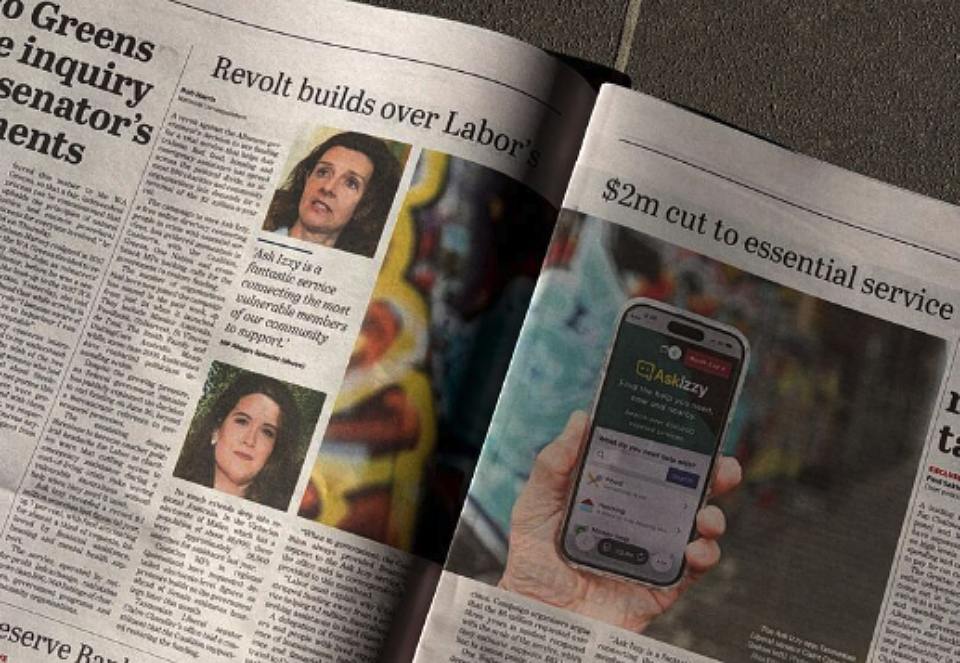
A national campaign to restore federal funding for Ask Izzy has attracted such strong grassroots…
Posted on 21 Oct 2026
In the wake of an act of violence against federal independent MP Helen Haines, Charities Minister…

Posted on 21 Oct 2026
If your charity takes a stance that happens to align with a political party’s stance in a public…

Posted on 14 Oct 2026
The federal government’s special envoy for social housing and homelessness, Josh Burns MP, has…

Posted on 14 Oct 2026
The Reserve Bank’s move to ban card payment surcharges has led to complications for charities and…
Posted on 14 Oct 2026
A special guest with her finger on the pulse of one of the biggest issues facing Australia –…

Posted on 07 Oct 2026
A major public campaign launched this morning is calling on the federal government to restore…

Posted on 07 Oct 2026
The Australian Literacy & Numeracy Foundation (ALNF) has announced a partnership with mining…

Posted on 07 Oct 2026
A conference in Darwin will this morning hear detailed, strategic plans for how Australia could…

Posted on 30 Sep 2026
Not-for-profit leaders have been warned to be wary of approaches from potential “funding partners”…
Posted on 30 Sep 2026
More than 200 fully funded Centre for Social Impact (CSI) scholarships will help equip for-purpose…