
Save Izzy: campaign calls on government to restore funding for vital services directory
Posted on 07 Oct 2026
A major public campaign launched this morning is calling on the federal government to restore…
Posted on 24 Sep 2025
By Nick Place, journalist, Institute of Community Directors Australia

Cultural and music festivals have long been a central part of community-building across Australia, but a new study has raised serious questions about their future, in the face of climate change and other threats.
Climate Resilience and Australian Festivals is a pilot study by academics from LaTrobe and RMIT universities, in conjunction with Creative Australia. The researchers studied two very different festivals to explore the challenges posed by climate change and extreme weather, as well as the rising costs of mitigating climate threats.
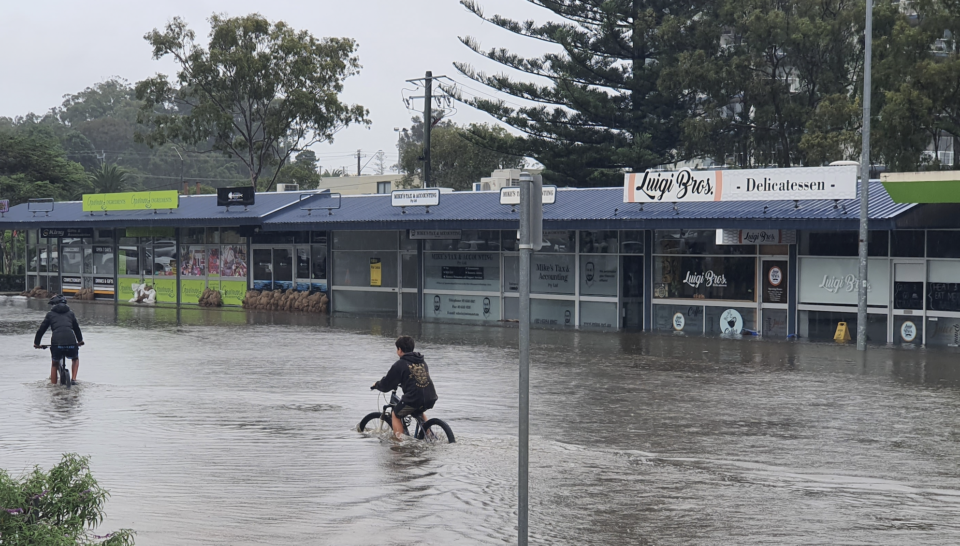
It found that not only was weather affecting festivals, particularly extreme heat, but flow-on threats included bushfires, wind, hail and heavy rain.
The uncertainty of weather conditions, plus fears of last-minute or mid-event cancellations, has changed the behaviour of attendees, the report found. At non-ticketed events, crowds turn up later, leave early if conditions become too hot, and come prepared for difficult conditions.
Climate impacts have added to the costs of running festivals, from services and equipment to infrastructure such as cool misters and extra shading. And that’s before you get to the increasingly oppressive cost of insurance.
Another challenge for festival organisers is considering where their event sits within the wider community. “Festival decision-makers must take into account that emergency services have to respond to the broader community as well as festival emergencies. Council-run festivals must also compete for funds with other council expenses arising from extreme weather events,” the report said.

The report details changes festival organisers are already making in running their events, while offering ideas such as creating an industry-specific insurance scheme, developing shared resources and infrastructure, and addressing the regulatory and liability issues festivals face, to ensure public safety as well as festival viability.
“Festivals are an important part of the cultural infrastructure of Australia, providing attendees with entertainment, cultural enrichment, leisure and community-building experiences,” the report said. “Festivals are also an important economic contributor to tourism and regional communities, as well as the broader Australian music ecosystem.”
Associate Professor Catherine Strong was one of the study’s authors, along with RMIT University colleagues Dr Todd Denham and Dr Ben Green, and LaTrobe University’s Professor Lauren Rickards.
“I think that we come from a place where all of us are concerned about the change in climate and about what it is going to do to arts and culture in countries like Australia, where the climate risk assessment report that was released [last week] has shown that there are large parts of Australia that are going to be hit really, really hard by the effects of climate change,” Strong said. “And if we don’t start thinking now about how we protect the parts of our culture that we value, then those things are just going to disappear without us even realising. And music festivals are part of that picture of what it is that our culture is and what it is that we might need to do to keep those things in place.”
The report pointed to “the increasing fragility of the sector”, with several well-established festivals, such as Groovin’ the Moo and Falls Festival, being cancelled in recent years. But Strong said the research aimed to find solutions to protect everything from major festivals to half-day community cultural events, all of which the report said played an important role in social cohesion and combating climate change.
“If we don’t start thinking now about how we protect the parts of our culture that we value, then those things are just going to disappear without us even realising.”

“Festivals are vital community assets,” the report said. “They provide social connection, creativity and financial income. They also build relationships, skills and capital, all of which are needed to manage climate change well. This underlines the value of helping festivals, and related industries like music, adapt. Festivals bring together communities, encouraging tourism and building social capital, as well as providing opportunities for both emerging and established artists. Non-ticketed, not-for-profit events extend these benefits to large parts of the community, so understanding the specific ways these events are experiencing climate impacts is key to effective adaptation planning for Australian festivals.”
The report researched five festivals across Australia, as well as examining the African Music and Cultural Festival at Melbourne’s Federation Square, and Moomba, Melbourne’s major and long-running annual festival.
Strong said the researchers hoped to expand their work to build on their discoveries.
“The ideal thing to do would be a sort of sector-wide piece of research that looks at different types of festivals, different geographic areas where festivals are held, different genres, different types of audience attendance, and to be able to then compare and contrast what’s going on with these different types of festivals to work out what is needed, because it’s not going to be the same for every festival,” she said.
“There are going to be some things that will work for your big for-profit festivals while those things may be completely useless to these smaller community festivals.”
One of the biggest issues facing festivals is the exploding cost and demands of insurance, as festivals are cancelled or threatened by natural disasters, covid and other challenges.
“Insurance is a really, really big deal,” Strong said. “All of the festivals that we’ve spoken to so far for this project and for other things that we’ve done have said that yeah, insurance is killing them, and you could see from the climate risk assessment report that it is going to become an increasing issue for all Australians. I think it might’ve been like 1.5 million houses are going to be uninsurable within the next few decades, because of things like worse weather and seas rising. So, it isn’t just festivals that are going to be grappling with that issue. However, if in 10 years we turn around and we realise that there are no festivals left, is that something that we feel has fundamentally changed what our relationship is with music in this country? Now’s the time that we need to be looking at how you work out a way that these festivals can be insured that isn’t going to just bankrupt them.”
Read the report here.
Posted on 07 Oct 2026
A major public campaign launched this morning is calling on the federal government to restore…
Posted on 07 Oct 2026
The Australian Literacy & Numeracy Foundation (ALNF) has announced a partnership with mining…
Posted on 07 Oct 2026
A conference in Darwin will this morning hear detailed, strategic plans for how Australia could…

Posted on 30 Sep 2026
Not-for-profit leaders have been warned to be wary of approaches from potential “funding partners”…
Posted on 30 Sep 2026
More than 200 fully funded Centre for Social Impact (CSI) scholarships will help equip for-purpose…

Posted on 30 Sep 2026
Personal stories are among the most powerful tools a charity can have to raise funds and awareness,…

Posted on 23 Sep 2026
A just-released major global survey of charities has found that demand for charity assistance has…
Posted on 23 Sep 2026
Fresh from welcoming delegates to last week’s Philanthropy Australia conference in Brisbane,…

Posted on 23 Sep 2026
A national strategy to develop Australia's regional cities is needed to break the housing…

Posted on 23 Sep 2026
Eight years after a report to Treasury first suggested the charities regulator should be more…

Posted on 17 Sep 2026
Australia’s biggest gathering of philanthropists, which drew more than 1200 delegates to Brisbane…
Posted on 16 Sep 2026
A new partnership between Paul Ramsay Foundation (PRF) and Atlassian Foundation aims to attract…