
NFP tech experts urge orgs to scale up cybersafety
Posted on 15 Oct 2026
Good cybersecurity must be the foundation of not-for-profits’ efforts to adopt artificial…
Posted on 19 Aug 2025
By Nick Place, journalist, Institute of Community Directors Australia
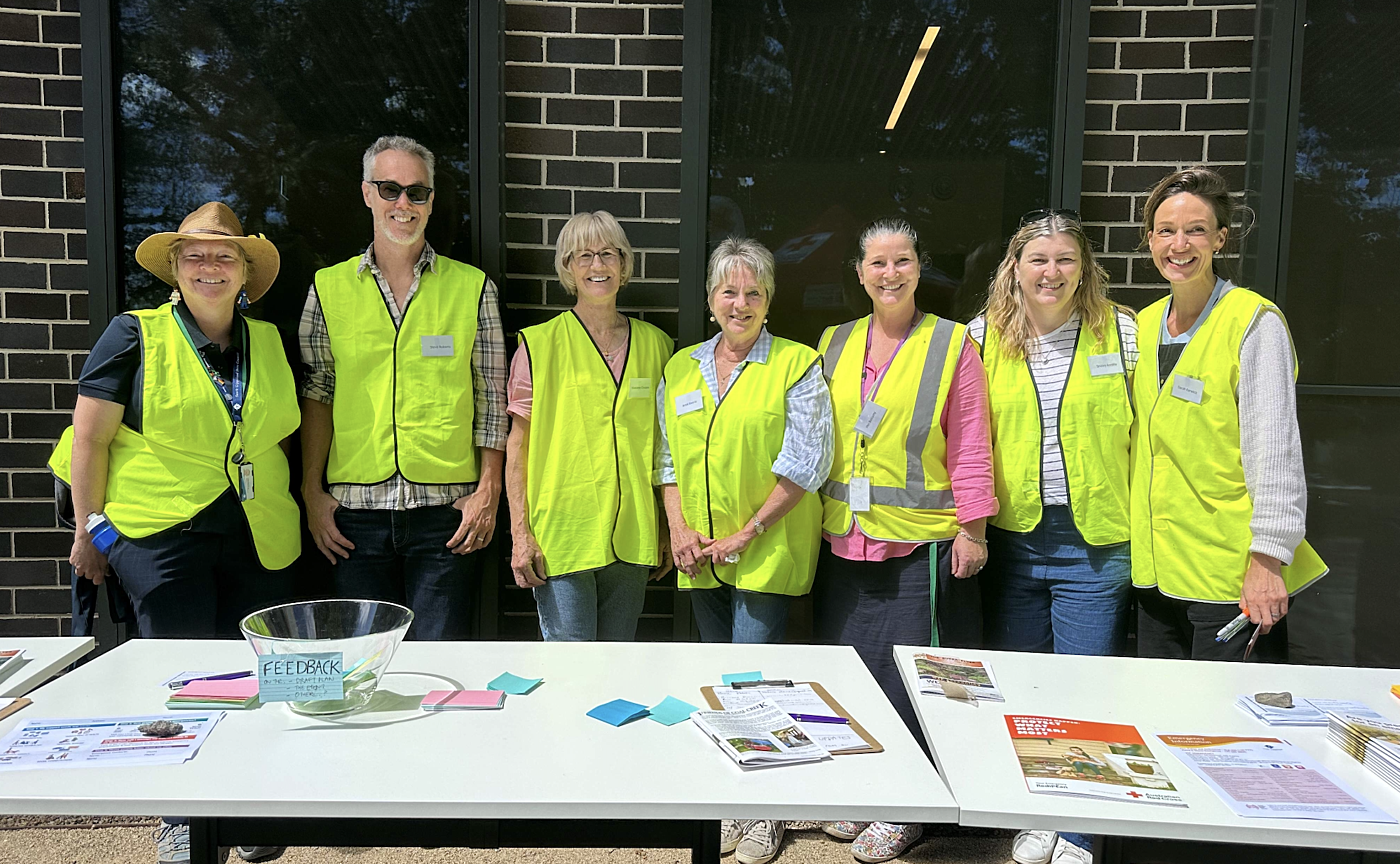
When the flames, floodwaters or other natural disasters arrive – often very quickly – it is essential that Australian communities have in place strong frameworks for real-time disaster response, pre-conceived strategies, and trusting relationships between community members, emergency services and other vital cogs in the immediate and ongoing response to that disaster.
This is the finding of a new report by the Foundation for Rural & Regional Renewal (FRRR) and the University of Sydney, based on four years of research in three Victorian communities.
Entirely funded by philanthropy, Disaster Resilient: Future ready Victoria program found that resilience-building is not an off-the-shelf product. “It is not linear,” said Nina O’Brien, FRRR’s disaster resilience and recovery lead. “It requires time, trust and tailored support that reflects the unique context of each community.”
Last week, in a quiet mid-winter moment between natural disasters, FRRR held a webinar to discuss the report’s findings with communities, emergency management teams, all levels of government and anybody else with an interest in being ready when nature challenges them.
Australia has always been, but is increasingly, a place that burns, floods and becomes parched, and sometimes all three at the same time, and that’s before you get to cyclones, plagues, and other challenges. O’Brien said FRRR considers helping communities to be ready to be a vital part of its role.

“We teamed up with the University of Sydney and some New South Wales agencies to test this idea that if you invest in certain aspects of community life, then it strengthens the community's ability to respond when a disaster or any other type of disruption occurs,” she said.
That work resulted in “the resilience dimensions”, a theoretical framework to help make sense of the complex ways a community works when responding to a natural disaster response.
“The resilience dimensions look at the importance of investing in things like inclusion and in networks and in communities having access to the right information and being able to communicate that to people that needed it, as well as being connected with formalised emergency management,” O’Brien said.
The new report drew on these insights, considering Victorian towns’ disaster preparedness response: did people understand formalised decision-making? How many tools and how much equipment did people have for sandbagging or chainsawing? Who was good on social media and could update urgent information on the town’s Facebook page?
Even in non-critical times, how well-equipped was the local hall to host dinners and information sessions? Did it have an adequate kitchen and the right data projector?
“The research formalised our understanding of what we’ve observed over many years, so that was the theoretical underpinning of our approach to Victoria,” O’Brien said.
FRRR and the university researchers worked with communities in Korumburra, Whittlesea and Myrtleford for the report, underlining the fact that all plans need a localised approach and will vary, town by town and state by state. This is because of the range of threats faced but also because each state and territory has its own unique formalised emergency management system.
“Honestly, sometimes it can be as simple as knowing who your neighbour is, and whether they’re vulnerable. If there’s a storm and the power has gone out, which old people might need oxygen. Communities are the ones who can know that.”
The outcomes for the three Victorian communities were tellingly diverse. The Korumburra community created “Korumburra Stay Strong”, a community-led hub of everything required for disaster resilience. Meanwhile, Whittlesea worked to become formally recognised within the state’s emergency management system, and Myrtleford created an advisory group centred on the existing Neighbourhood Centre.
Unique local knowledge saw Myrtleford community leaders advocate that in a flood, the showgrounds should be avoided because they are likely to be underwater, whereas in a bushfire, the showgrounds become a “Bushfire Place of Last Resort”.
“That’s the fascinating thing about building resilience, what that actually looks and feels like in each community,” O’Brien said of these diverse outcomes. “When we commence this work, we have no predetermined ideas about what that community might choose to take action on. So, we introduce the resilience dimensions as a concept, really to guide their thinking and help them make sense of some of the complexity of common issues, and then we move through a process over time where they define the types of initiatives that they’d like to invest in based on what’s going on in their community, but also based on their disaster profile, previous disruptions that might have occurred in the community, a whole range of variables.”
This forward planning matters when a disaster arrives, allowing communities to work together and not find themselves trying to formulate plans under pressure. “The reason why we take a complex systems approach to building resilience is because it’s not just building resilience to bushfires or floods or other disasters, because we know that it could be any one of those things at any time in the future,” O’Brien said. “It’s taking that three-dimensional approach to how communities flourish or best respond to challenges when they emerge. For communities right across Australia, an issue is the increasing number of disasters and the overlaid nature of them. They've barely got time to ‘recover’ before the next disaster arrives.”
FRRR has found it pays to build understanding between state emergency services, ambulance, police, government departments and other official players while also investing in informal existing community-based systems and relationships, which are crucial to a community working together when it matters.
“At Korumburra, there was a community expo on the main street, inviting all the emergency services along to engage informally with communities, have a sausage and have a yarn,” O’Brien said. “It was organic community-based relationship building but afterwards the emergency management people themselves said, ‘We just don’t usually get time to talk to other emergency services.’
“That’s where the work gets done and the relationship-building occurs, but honestly, sometimes it can be as simple as knowing who your neighbour is, and whether they’re vulnerable. If there’s a storm and the power has gone out, which old people might need oxygen. Communities are the ones who can know that.”
Posted on 15 Oct 2026
Good cybersecurity must be the foundation of not-for-profits’ efforts to adopt artificial…

Posted on 15 Oct 2026
A few years ago, I sat on a small community board that was still held together by email threads and…

Posted on 15 Oct 2026
“Build a better mousetrap, and the world will beat a path to your door”, the old saw goes.…

Posted on 15 Oct 2026
The nation's digital inclusion advocate is pushing for more equity in the rollout of AI in light of…

Posted on 15 Oct 2026
Not-for-profit leaders should be conducting regular “fire drills” that replicate AI-powered…

Posted on 15 Oct 2026
Boards that leave cybersecurity to the one director with IT expertise are leaving their…

Posted on 15 Oct 2026
Community Directors has a warehouse-style office filled with artworks, and if I glance up towards…
Posted on 15 Oct 2026
As the manager of a palliative care service, Stephanie Kirkman Meikle has learnt that the prospect…
Posted on 14 Oct 2026
In the ongoing political debates about migration levels, Asylum Seeker Resource Centre founder Kon…

Posted on 14 Oct 2026
Over the weekend, federal Liberal leader Angus Taylor told the Conservative Political Action…

Posted on 14 Oct 2026
The federal government’s special envoy for social housing and homelessness, Josh Burns MP, has…
Posted on 14 Oct 2026
Carers Victoria is holding an event this afternoon (October 14) during National Carers Week to…